


August is peak thunderstorm season across most of the country, and if you spend enough days on the water, one is eventually going to find you. A clear, flat morning can turn into a wall of black cloud by mid-afternoon, and the boaters who get into trouble are almost never the ones who saw it coming early. They're the ones who kept fishing or kept swimming and told themselves it would slide by. Here's what to actually do when the sky turns on you, so a rough hour stays nothing more than a rough hour.
Spot the Storm Before It Becomes an Emergency
The best way to survive a thunderstorm is to see it coming while you still have options. Watch for towering clouds that build straight up into an anvil shape, a sudden drop in temperature, or a wind that shifts direction and picks up out of nowhere. Those are your early warnings. I check the radar on my phone before I leave and again anytime the sky starts to change, but I don't rely on the phone alone, because signal disappears fast offshore. A lot of this comes down to knowing what to look for, which is why I've written before about reading marine weather before you ever untie the lines. The moment you're confident a cell is heading your way, stop what you're doing and start heading in. Distance and time are the only two things that help you, and both run out quickly.
Get the Boat and Crew Ready Before It Hits
If you can't outrun it, use the minutes you have to prepare. Get everyone into a properly fitted life jacket now, not after the first gust knocks you sideways. Close hatches, ports, and the companionway to keep water out, and stow or secure anything loose on deck that can become a projectile. Bring passengers down off the bow and into the cockpit where the boat is most stable and the center of gravity is lowest. If you have a handheld VHF, keep it on you, because if the storm takes out power or you end up separated from the helm, that radio is your lifeline. If you're not fluent with yours yet, it's worth learning how a marine VHF works long before you actually need it in a squall.
Run for Shelter or Ride It Out?
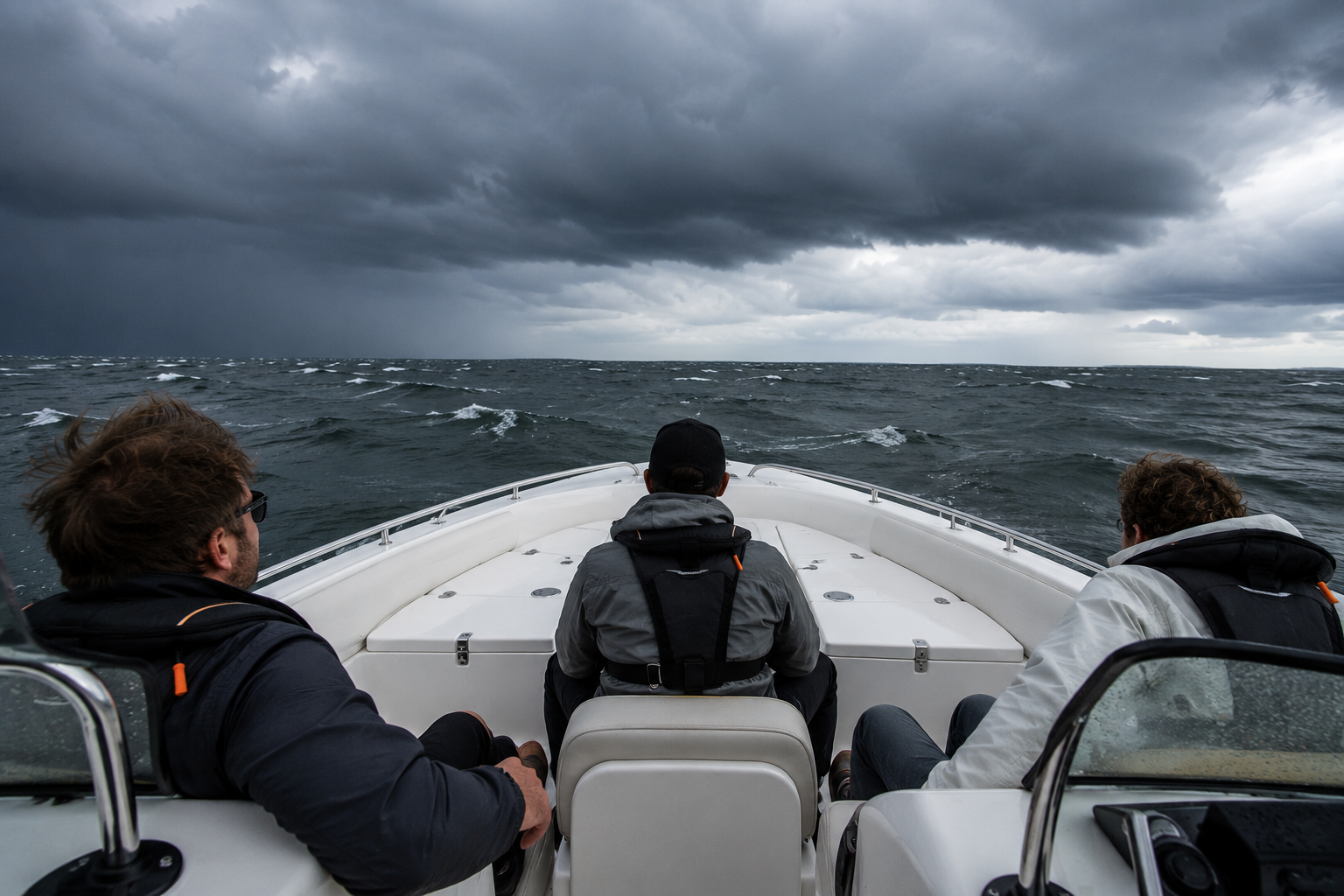
This is the call that trips people up. If safe harbor is genuinely close and you can reach it before the storm arrives, go. But punching across open, exposed water toward a far-off marina while lightning is already popping is usually the worse choice. If you're caught out with nowhere to hide, the safer play is often to ride it out under control. Point the bow into the wind and waves at a shallow angle, throttle back to just enough speed to keep steerage, and take the seas on the bow rather than letting them slam you broadside. In a protected cove, dropping the hook can hold your bow into the wind and keep you off a lee shore, and the same principles behind setting an anchor that actually holds apply here, only faster and with higher stakes. Never anchor by the stern in a blow, because a following sea over the transom can swamp you in seconds.
Handling Lightning on an Open Boat
Lightning is the part everyone fears, and there's no way to make an open boat completely safe from it. What you can do is lower your odds. Get people off the flybridge and away from tall metal like outriggers, antennas, and fishing rods, and have everyone stay low and toward the centerline. Keep hands off metal railings, the wheel, and anything wired into the boat during the worst of it. If your vessel has a bonded grounding system, it's designed to give a strike a path to the water, but don't count on that and stand next to the mast to test it. Ride out the electrical part crouched low, then get back to handling the boat once the closest cells move off.
After It Passes, Slow Down and Check In
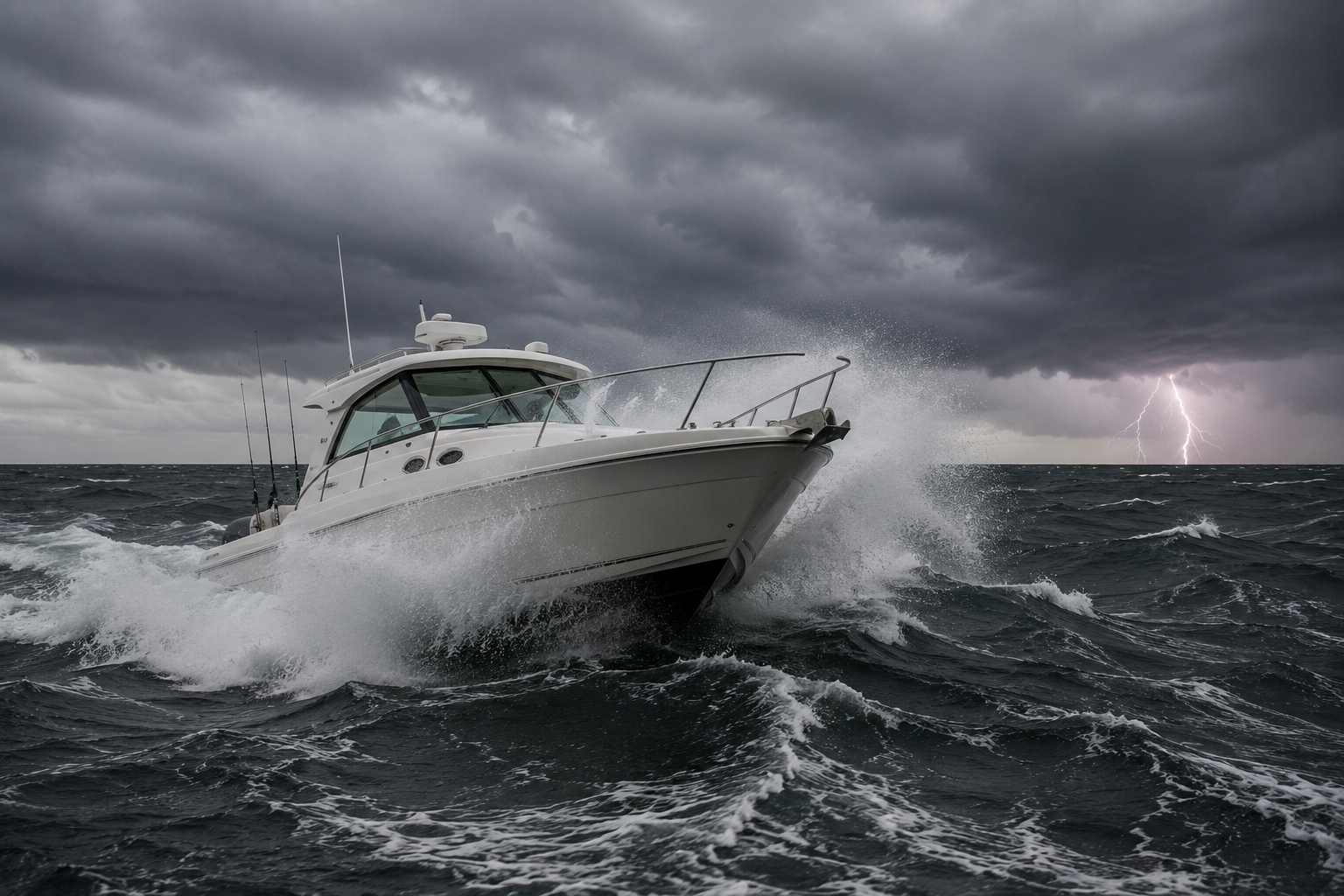
Once the storm moves through, the water is still confused and visibility is often terrible, so resist the urge to gun it for home. Check that everyone aboard is accounted for and unhurt, look for water in the bilge, and make sure your engine and steering respond the way they should before you commit to a run. This is also the moment you're glad someone ashore knew your plan, because a float plan left with a friend means help knows where to start looking if the day had gone worse. Storms are part of boating, and getting through one calmly is a skill worth building. Take it seriously, keep your crew low and buckled, and you'll come home with a story instead of a scare.
If you've been caught out in a bad one, I want to hear how you handled it. Drop your experience in the comments so the rest of the community can learn from it.