



There is nothing quite like waking up on the water at sunrise, coffee in hand, your boat sitting exactly where you left it the night before. But if you’ve ever anchored overnight and spent half the night checking your position because you weren’t confident in your set, you know how quickly that peaceful image falls apart. Getting your anchor to hold reliably isn’t complicated, but it does require understanding a few things most people skip over.
I’ve dragged anchor. Every boater has, at least once. The difference between those who do it once and those who do it repeatedly is usually not luck — it’s technique, gear selection, and knowing what you’re dropping into. Here’s what I’ve learned from years of overnighting on the hook.
Choosing the Right Anchor for Your Bottom Type
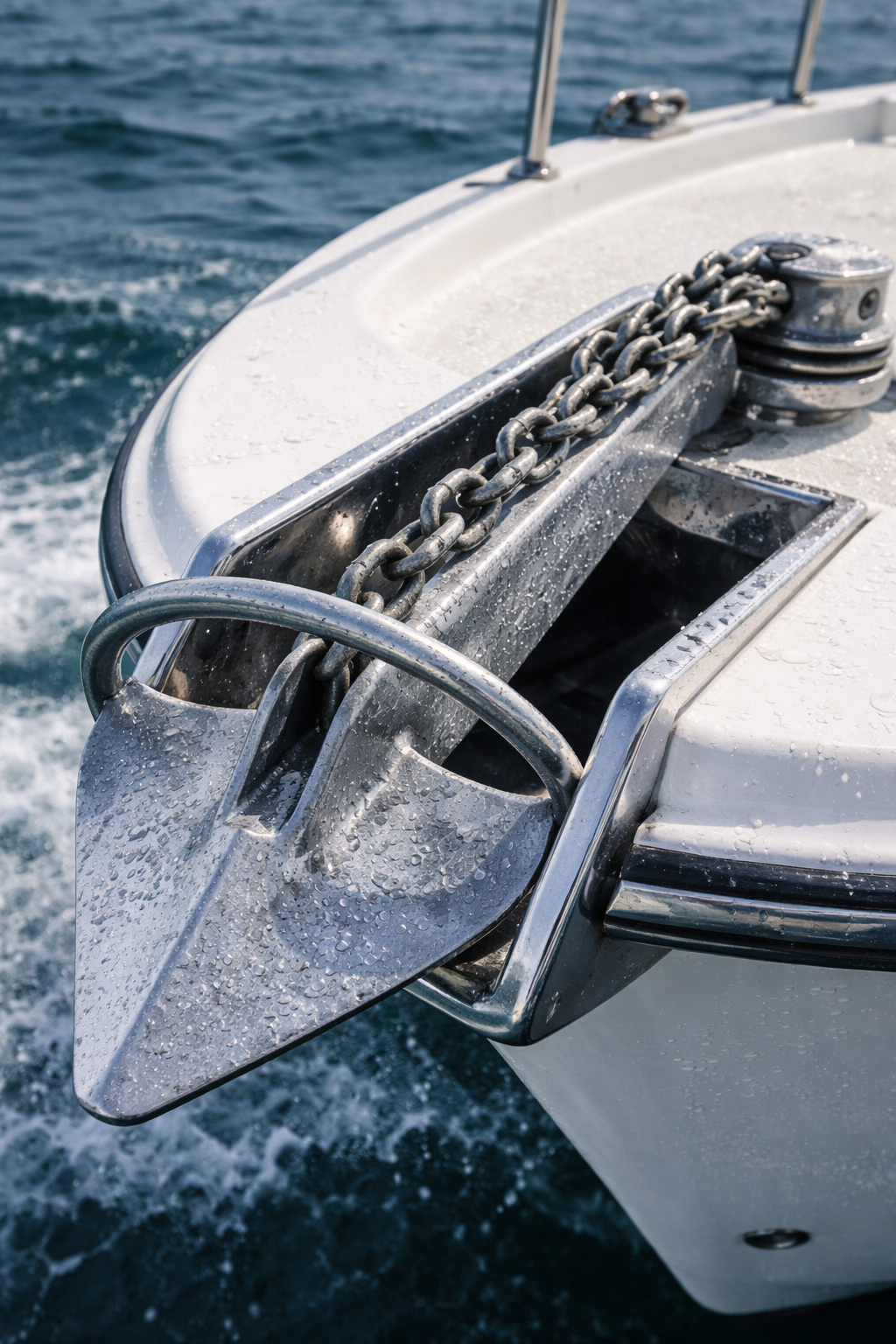
The most common mistake I see is boaters running a single anchor type regardless of what’s on the bottom. A plow-style anchor like a CQR or Delta sets beautifully in mud and sand but can struggle on rock or heavy weed. A Danforth-style (fluke) anchor shines in soft sand but tends to skip across harder bottoms. Modern alternatives like the Mantus or Rocna — both plow-style variants with a roll bar — are about as versatile as it gets and worth the investment if you anchor regularly.
Before you drop, look up the anchorage on a chart or app. Many chart platforms mark bottom composition — mud, sand, rock, grass. If you don’t know what you’re anchoring on, a clear water column or a quick snorkel look during the day can save you a restless night.
Scope: The Part Most People Get Wrong
Scope is the ratio of anchor line (rode) to the depth of water plus freeboard — that is, the height of your bow above the waterline. The general rule for overnight anchoring is 7:1. That means in 10 feet of water with 3 feet of freeboard, you want to let out 91 feet of rode. Most people let out far less than they should, especially in busy anchorages where they’re trying to stay compact. The result is a steep angle on the anchor that pulls it right out of the bottom.
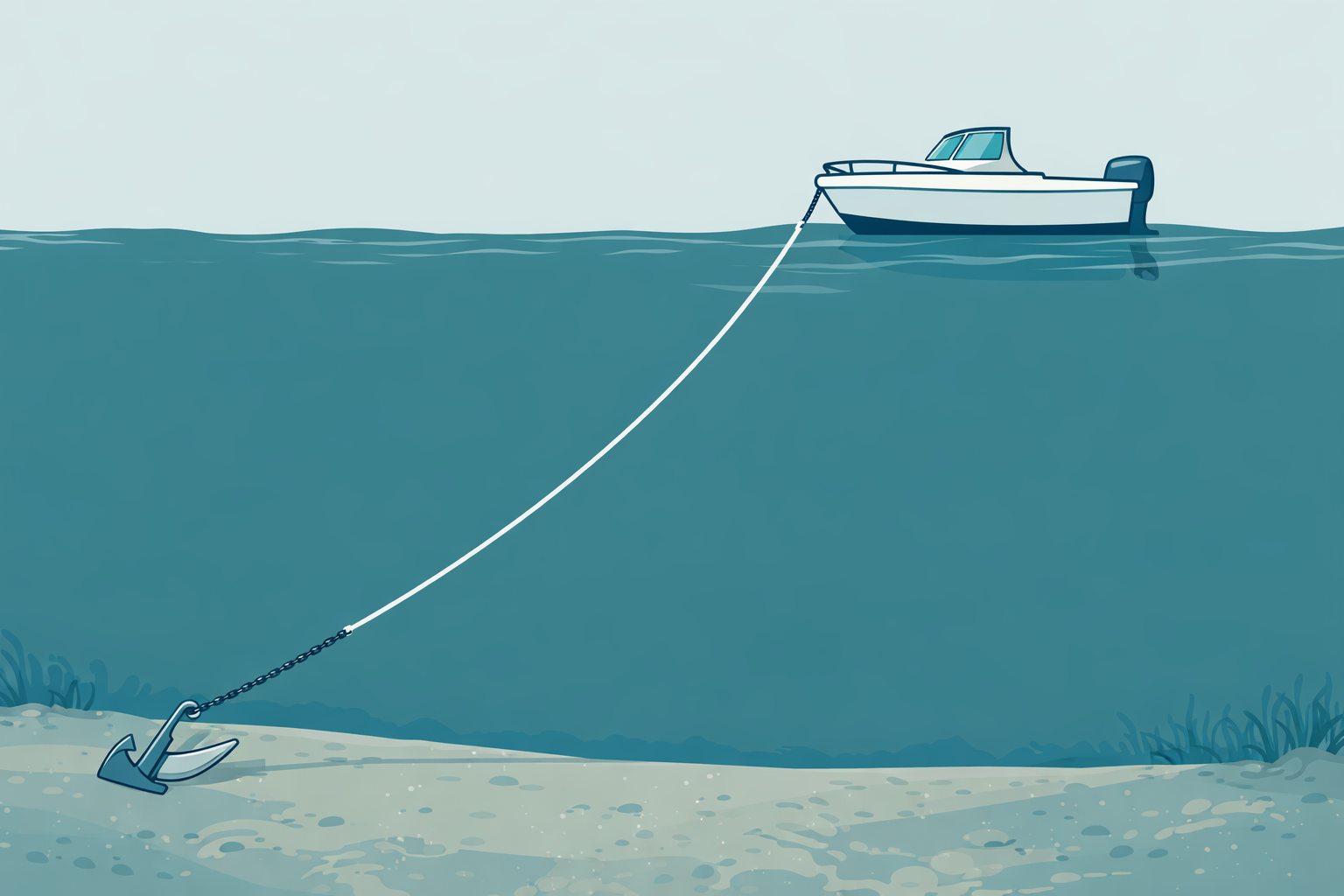
If you’re using all chain rode, you can get away with 5:1 in calm conditions because the weight of the chain itself helps keep the angle low. But when the wind picks up overnight, I always let out more. The extra 20 feet of line costs you nothing and can mean the difference between a solid hold and waking up on a reef.
Setting the Anchor Properly Before You Call It a Night
Dropping the anchor and letting the boat drift back isn’t setting the anchor — it’s hoping for the best. Once you’ve let out your scope, put the engine in reverse at a gentle idle and apply slow, steady backward thrust for about 30 seconds. Watch your chartplotter or a nearby landmark for movement. If the boat holds its position under light reverse throttle, your anchor has dug in.
Then test it harder. A brief burst of throttle in reverse — maybe a third of your power for a few seconds — will tell you whether the anchor has a real grip or is just sitting on top. If it drags under moderate load, reset. Better to know now than at 2 a.m. when the tide changes and the wind fills in.
Keeping Watch and Using Your Anchor Alarm
Even after a solid set, conditions change overnight. Tides shift the current direction, wind can clock around, and chop can work an anchor loose over several hours. The best tool you have is an anchor alarm on your chartplotter or phone. Set a drag radius of 50 to 100 feet and let it watch for you while you sleep.
Before you turn in, drop a waypoint on your position or note two visible bearings — a light on shore, a channel marker, something fixed. If you wake up and those bearings have shifted significantly, you’ll know before your alarm goes off that something has changed. It’s one of those seamanship habits that becomes second nature once you’ve done it a few times. If you want a deeper look at reading current and tidal movement before you anchor, I’ve put together a guide on
Before you turn in, drop a waypoint on your position or note two visible bearings — a light on shore, a channel marker, something fixed. If you wake up and those bearings have shifted significantly, you’ll know before your alarm goes off that something has changed. It’s one of those seamanship habits that becomes second nature once you’ve done it a few times. If you want to understand the current shifts you’ll face overnight, reading up on tides and current patterns before you drop the hook is time well spent.
How Much Anchor Rode Is Enough? (Gear Checklist)
A lot of boaters underbuy on rode. My recommendation: carry at least 200 feet of rode on a 30-foot boat, and more if you cruise in areas with significant tidal range or deep anchorages. If you anchor in 30 feet of water at high tide, you need 210 to 245 feet of rode before you even start — and you want a margin on top of that.
At minimum, have 30 feet of chain between your anchor and the nylon line. Chain adds weight to keep the angle flat and resists chafe on rocks or coral. Make sure your windlass (if you have one) is properly sized for your anchor weight, and that your cleats or bitts can handle the load if you’re holding on a cleat overnight rather than the windlass drum.
A Good Night’s Sleep Starts Before You Anchor
The difference between a white-knuckle night on the hook and a genuinely restful one comes down to preparation. Pick a protected anchorage with the right bottom type, let out proper scope, set the anchor under load, and have your alarm running. Do those four things and you’ll wake up exactly where you went to sleep.
If you found this useful, there’s more hands-on seamanship content on the JakeSea YouTube channel — and if you’ve got a hard-won anchoring lesson of your own, drop it in the comments. Fellow boaters appreciate it more than you might think.
If you want to sharpen more foundational boat skills alongside this one, I’ve also written about what to look for when buying a used boat — because knowing your vessel is just as important as knowing your anchorage.