


Most of us treat heading out for the day the same way we'd grab the keys for a quick errand: untie the lines, throw on a life jacket, and go. The water feels familiar, the engine sounds right, the weather looks fine. Then something small goes sideways — a fuel issue, an unexpected fog bank, a battery that decides today's the day — and suddenly you're trying to remember if anyone on shore actually knows where you went.
That's the entire reason a float plan exists. It's not paperwork. It's the simple act of telling someone where you're going, who's with you, and when to start asking questions if you're not back. After enough years on the water, I can tell you: the boaters who get found quickly are almost always the ones who left a float plan, and the ones who don't are the ones who turn into a long, scary search.
What a Float Plan Actually Is
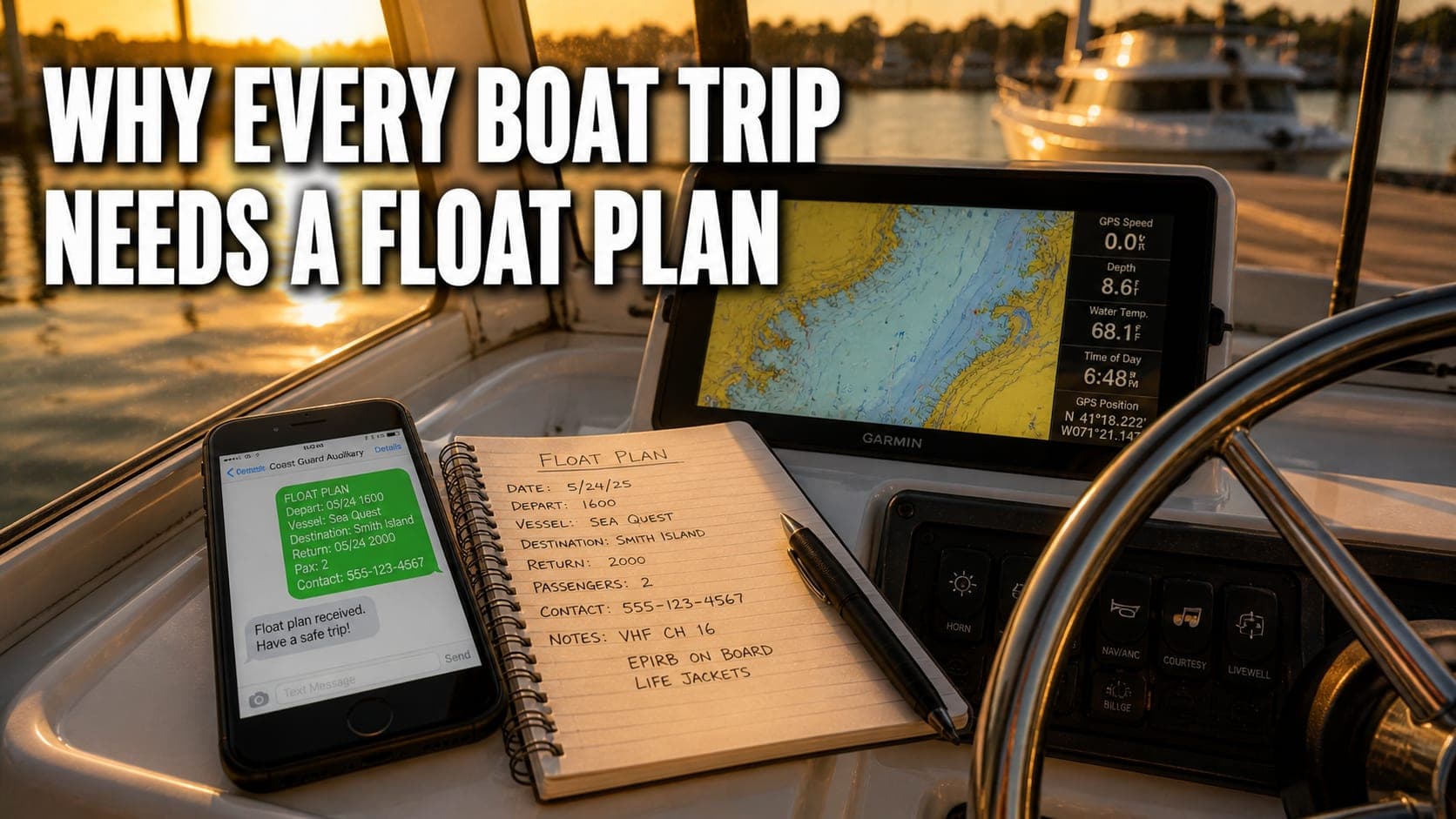
A float plan is a short written document that captures the basics of your trip — vessel description, departure point, destination, intended route, who's onboard, and your expected return. You leave a copy with someone who isn't going with you. That's it. There's no agency to file it with for a typical day trip; the Coast Guard doesn't want to receive a stack of these from every weekend boater. The plan lives with a trusted person on land, and they're the one who calls the Coast Guard if you don't check in.
The idea sounds almost too obvious — and that's exactly why people skip it. But when something goes wrong out there, the first 30 minutes are everything. A search-and-rescue team that knows you left Newport Harbor at 8 AM heading toward Catalina with three souls aboard on a 32-foot Sea Ray has a fighting chance. A team that gets a call from a worried spouse who only knows you 'went boating somewhere' is starting from zero.

What to Include and Why Each Line Matters
Start with the vessel itself. Boat name, registration number, length, make and color, and any standout features that would help someone spot you from the air. A white 30-foot center console looks like every other white 30-foot center console from 500 feet up — but a 'blue T-top with a yellow kayak strapped to the bow' is something a rescue helicopter crew can actually find.
Next, the people. List everyone aboard with full names, ages, and any medical issues a first responder would need to know. If you've got a guest with a heart condition or a kid who's allergic to bee stings, that's the kind of detail that changes how a rescue is run.
Then the trip itself: departure marina, destination, your planned route (waypoints if you have them), and the time you expect to be back. Add what gear you have onboard — life jackets, EPIRB, VHF, flares, fire extinguishers — because that tells responders what your survival window looks like. If you plan to stay out overnight or anchor somewhere, write that down too. A boat that's overdue for a 6 PM return is treated very differently from a boat that's running late from a planned overnight on the hook.
Finally, your communication setup. The VHF channels you'll monitor, your cell number, and any sat communicator or AIS info. If you're the kind of boater who's already nailed down marine VHF basics, make sure that's reflected here so the person on shore knows how to try to reach you before they pick up the phone.
Who Gets the Float Plan
Pick one person. Two if you want a backup. The point is to give it to someone who actually expects to hear from you and will act if they don't. A spouse, a parent, a buddy who knows the difference between 'running an hour late' and 'something is wrong' — that's the right person.
Make sure they know exactly what to do if you're overdue. The standard sequence is to first try your cell, then try your VHF (if they have one), then call the marina or harbormaster, and finally call the Coast Guard. Give them the local Coast Guard sector phone number on the float plan itself so they're not Googling it in a panic. The U.S. Coast Guard Auxiliary publishes a downloadable float plan template at floatplancentral.cgaux.org that handles the formatting for you and includes the right contact info.
Make It a Habit, Not a Special Occasion
Here's the thing — a float plan only works if you actually use one. Filing it for the once-a-year crossing to Catalina but skipping it for the local sandbar trip is exactly backwards: most people who get into trouble are doing something they've done a hundred times before. The familiar water is where you let your guard down.
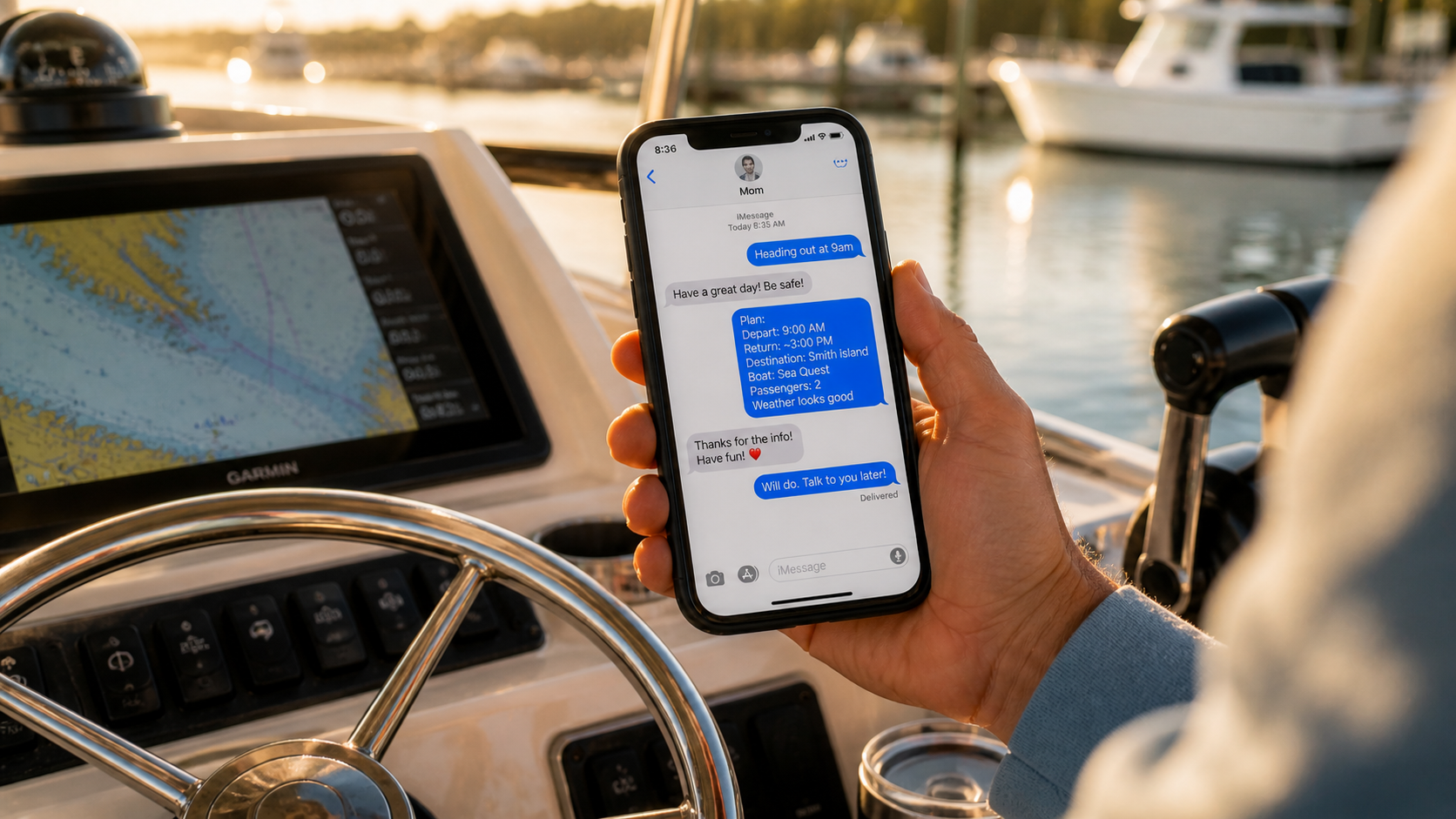
I keep a simple template saved as a note on my phone. Before I leave the slip, I fill in the date, route, and crew, screenshot it, and text it to my person. That whole process takes about 90 seconds. If I get back when I said I would, nothing happens — and that's the goal. If I don't, the call gets made on time, with real information attached.
How It Fits Into Pre-Departure Routine
A float plan is one piece of a larger habit — leaving the dock prepared instead of hoping nothing goes wrong. It pairs naturally with a real pre-season safety gear inspection, a quick weather check, and the kind of pre-trip routine experienced boaters run on autopilot. If you're newer to the water and still building those habits, the rookie-mistake roundup is a useful next read — most of those mistakes get caught by exactly the kind of pre-departure thinking a float plan forces you to do.
Filing a float plan doesn't make you paranoid. It makes you the boater your crew, your family, and the search-and-rescue community all wish more people were.
Closing Thought
The boat owners I respect most are the ones who treat preparation as part of the fun, not a tax on it. A float plan costs you 90 seconds and gives the people who care about you the peace of mind they deserve. Build it into your routine this season — make it as automatic as topping off your fuel — and you'll never regret a single minute of it.
If you've got your own float-plan habit, drop it in the comments. I'm always curious how other boaters handle it, especially for longer crossings or overnight trips.