


If there is one piece of equipment on your boat that you genuinely hope you never need in an emergency, it’s your VHF radio. And if there’s one piece of gear most boaters don’t fully understand until it’s too late, it’s also the VHF radio. I’ve seen people pull into a marina unable to raise the dockmaster on 16, and I’ve heard of distress calls that went unanswered because the operator didn’t know how to operate the radio under pressure. That’s a solvable problem.
A handheld or fixed-mount VHF radio is still the most reliable communication tool on the water. Cell coverage drops offshore, satellite devices cost money per message, and neither replaces the real-time, all-boats broadcast capability that VHF gives you in a distress situation. Here’s what you actually need to know to use one correctly.
Channel 16 Is Not Optional
Channel 16 is the international distress, safety, and calling channel. You are legally required to monitor it whenever your VHF radio is on. That’s not a guideline — it’s a rule from the FCC for any vessel fitted with a VHF. The only exception is when you’re actively communicating on a working channel, and even then you should have a second radio or a dual-watch function set to hold 16 in the background.
When another boat wants to talk to you, they call on 16 and you switch to a working channel together. The standard language is: ‘Vessel X, this is Vessel Y, over.’ They respond, you agree to switch — ‘Switch to channel 68’ — and you both move. Don’t have side conversations on 16 itself. It keeps the channel clear for anyone who actually needs it.
How to Make a Distress Call
This is the part worth drilling. If you’re ever in a genuine emergency — your vessel is sinking, someone is overboard, there’s a fire you can’t control — the sequence on Channel 16 is: MAYDAY, MAYDAY, MAYDAY. Then your vessel name three times, your position (GPS coordinates or a bearing from a known landmark), the nature of the distress, the number of people on board, and any other relevant information. Then say ‘Over’ and listen for a response.
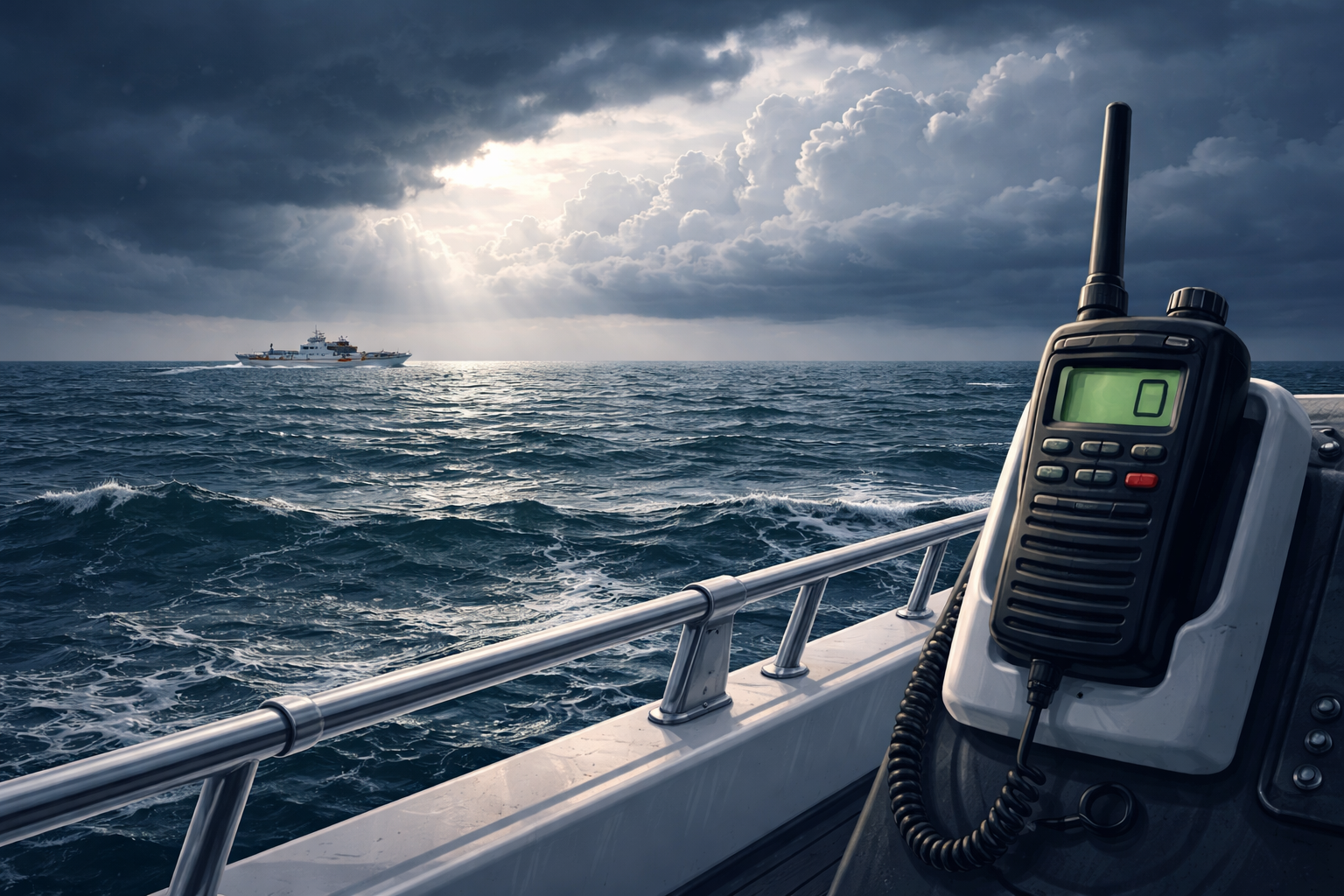
Position is the most critical piece. If you don’t know your coordinates, look at your chartplotter or phone GPS before you key the radio. A Coast Guard crew cannot find you based on ‘somewhere off the coast near the bay.’ Practice calling out your current position on demand — it’s a five-second habit that could save your life.
Fixed-Mount vs. Handheld: Which One You Actually Need
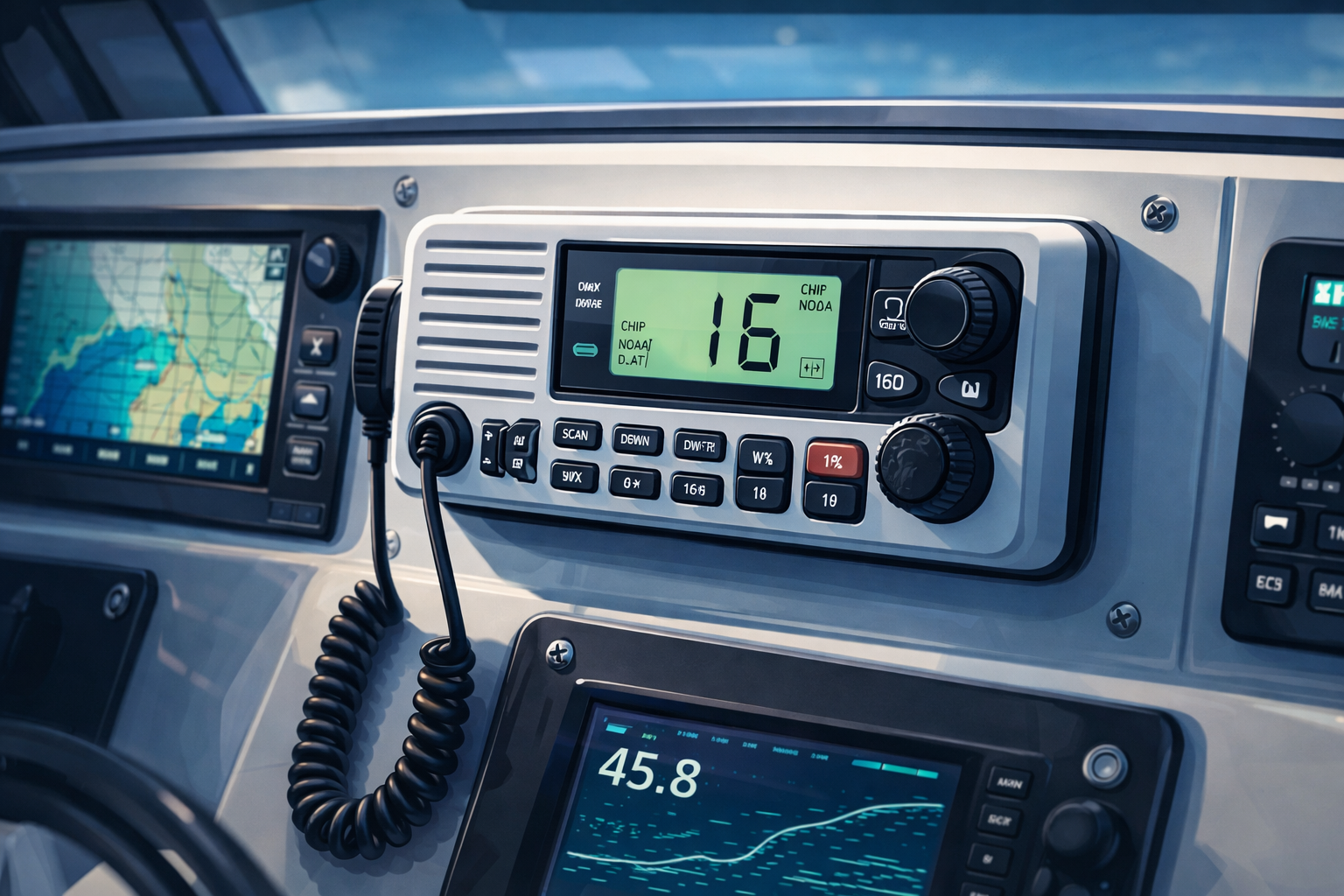
The short answer: both, if you can manage it. A fixed-mount VHF with a proper antenna runs significantly more transmit power — typically 25 watts compared to 5 or 6 watts on a handheld. That increased range matters offshore. Fixed-mount radios also integrate with your DSC (Digital Selective Calling) system, which allows you to send an automated distress signal with your GPS coordinates attached — no voice transmission required.
A handheld is your backup and your dinghy radio. It comes with you when you leave the boat, it works when the main power is down, and it’s what you grab when you’re abandoning ship. Carry one that’s fully charged any time you’re on the water. If your fixed-mount ever fails mid-passage, that handheld is the only radio on board — treat it that way.
DSC and MMSI: What They Are and Why You Need to Register
Digital Selective Calling is built into most fixed-mount VHF radios sold in the last decade. It lets you send a digital distress signal with a single button press — your MMSI number, GPS coordinates, and vessel information all transmit automatically to the Coast Guard and any DSC-equipped vessel within range. The problem is that DSC only works if your radio is programmed with your MMSI number and connected to your GPS.
MMSI (Maritime Mobile Service Identity) is a nine-digit number assigned to your vessel. In the United States, you register for one free through Sea Tow, BoatUS, or directly with the FCC if your vessel sails internationally. Once registered, program it into your radio — your manual walks through the process in about five minutes. Without it, your DSC button does almost nothing useful.
A Few Working Channels Worth Knowing
Beyond 16, a handful of channels cover most of what you’ll use day-to-day. Channel 9 is an alternate hailing channel used by recreational boaters in some areas. Channels 68, 69, 71, 72, and 78A are common recreational working channels. Channel 22A is used for communications with the US Coast Guard after establishing contact on 16. Channel 6 is intership safety. WX channels (WX1 through WX3) broadcast NOAA weather around the clock — check them before every departure.
For an overview of the safety gear that pairs with your VHF out on the water, I’ve covered a range of practical topics in my guide to boating safety essentials — a good companion read to this one.
Use It Before You Need It
The worst time to learn your radio is in an emergency. Get on Channel 16 when you leave the dock. Test your weather channels before a passage. Make a routine call to a marina or a buddy boat just to confirm your transmission sounds clear. Familiarity with the radio makes everything else easier, and it means that if a real situation ever develops, you’re not fumbling with buttons in the dark.
More on marine electronics and gear on the JakeSea YouTube channel. If you’ve got a tip or a story about a VHF save on the water, leave a comment — I read every one.