


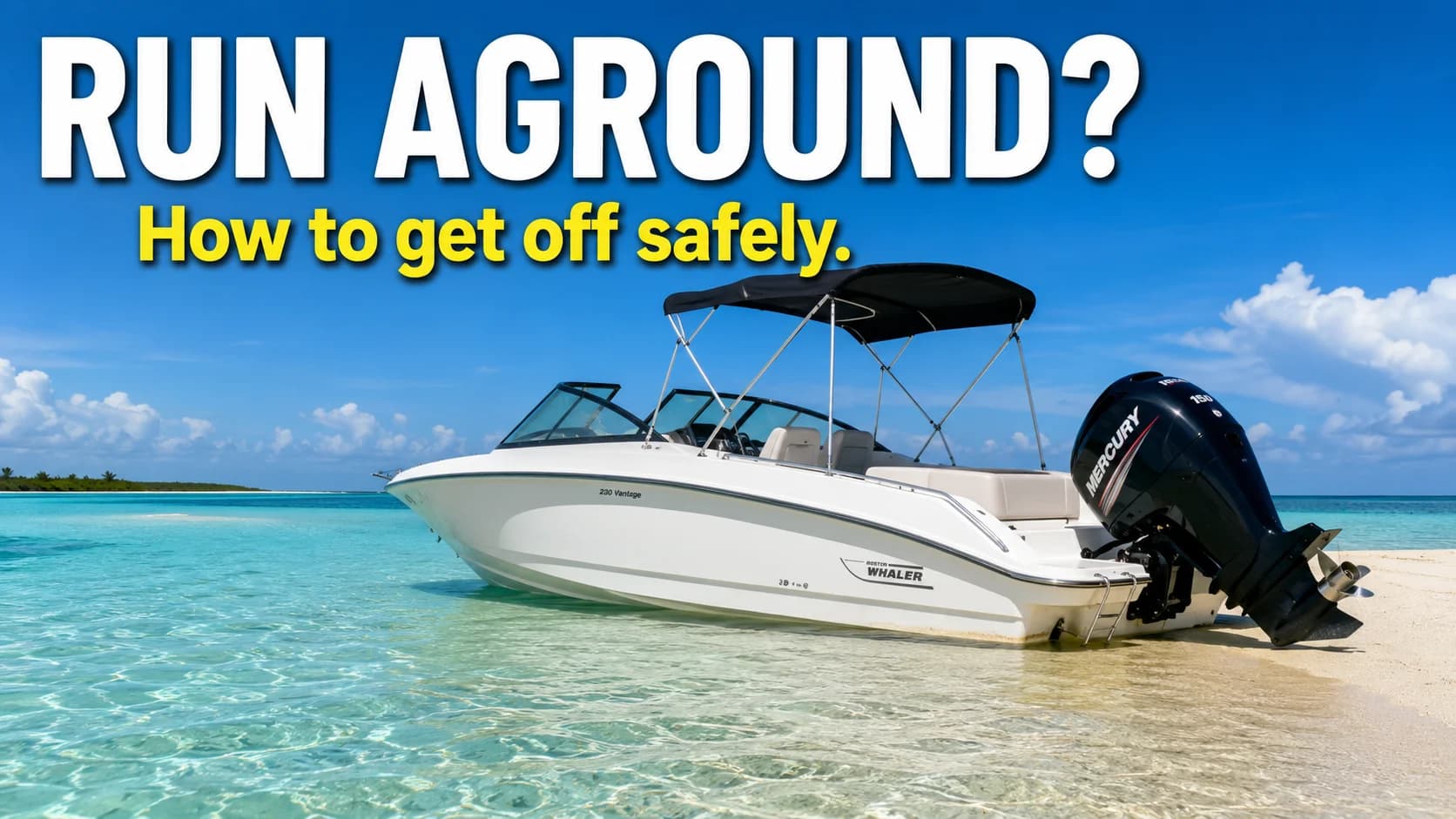

Sooner or later, you are going to touch bottom. It happens to careful captains in familiar water, usually on a beautiful summer afternoon when you cut a corner tighter than you should have. Running aground is not the disaster people think it is — but the first minute decides whether you go home with a story or with a repair bill. Almost every grounding that turns expensive turns expensive because the captain panicked and slammed the throttle down.
The First Sixty Seconds Decide Everything
The moment you feel that soft shudder or hard stop, pull the throttle back to neutral. Do not power forward, and do not immediately reverse hard. If you are aground on sand and you gun the engine, you pull sand and silt straight into your raw water intake, and now you have an overheating engine on top of a grounded boat.
Shut down if you have any doubt about what is under you, then take stock: is anyone hurt, is water coming in, and how hard did you hit? Send someone below to look at the bilge and around your through-hulls. A soft grounding in mud rarely breaches anything. A hard grounding on rock at speed is a different animal, and you need to know which one you have before you try anything clever.
Find Out Where the Water Went
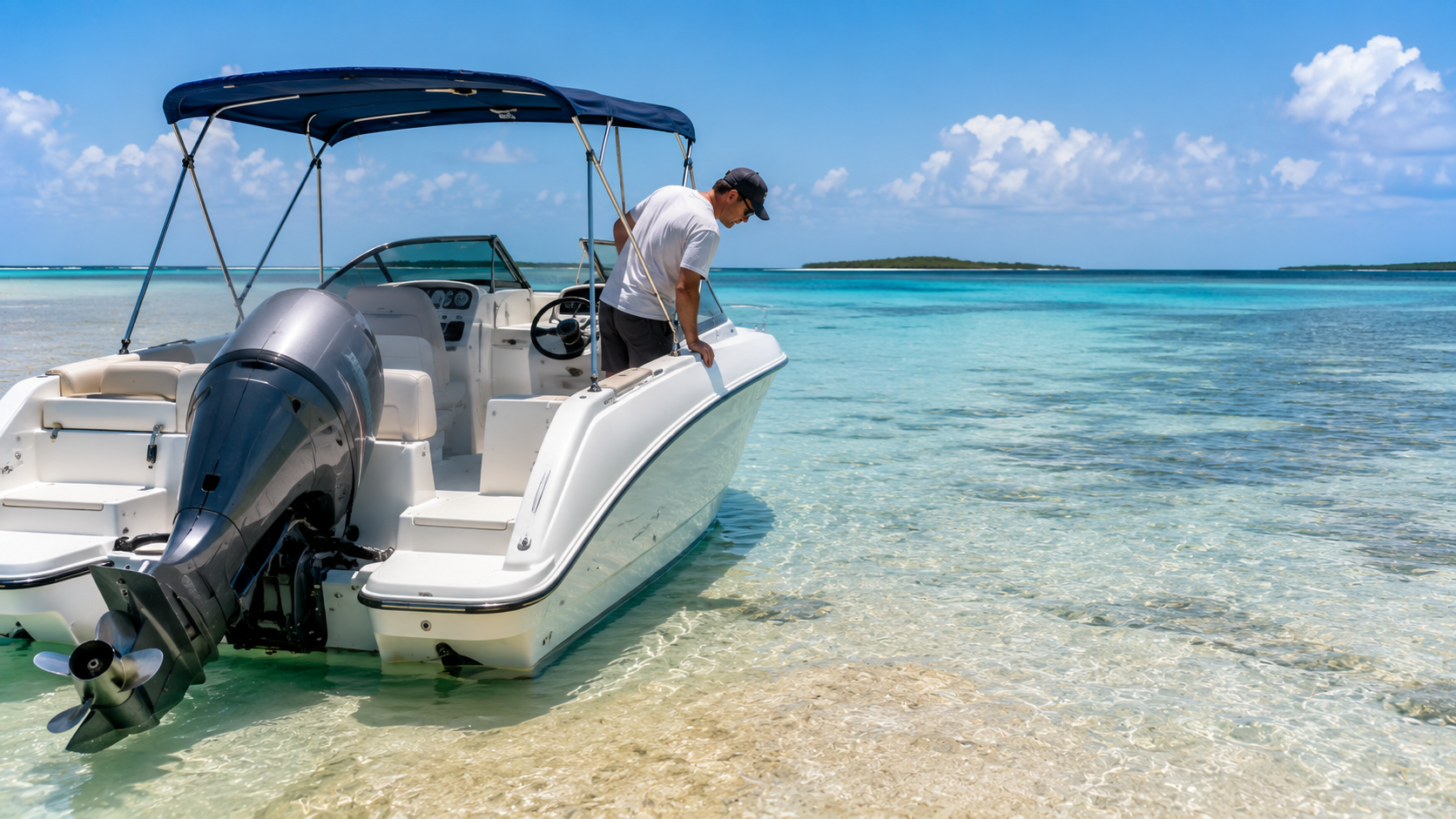
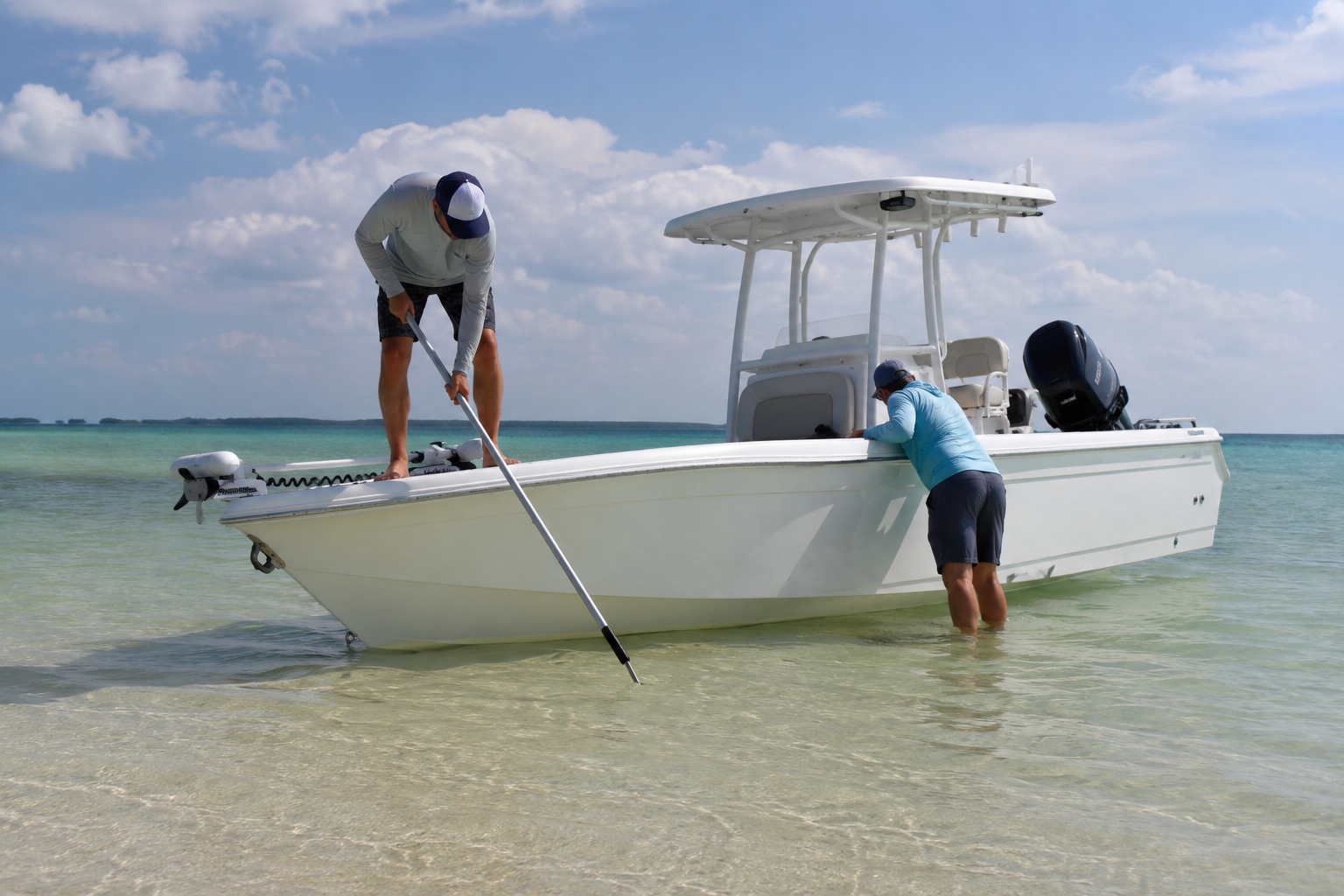
Once you know the boat is sound, walk the deck with a boat hook and probe the depth around the hull — bow, both sides, stern. You are looking for the direction you came from, because that is almost always the deepest water and the way back out.
Then check the tide. This is the single biggest factor in whether you are getting off in ten minutes or waiting six hours, and it's why knowing the tide before you leave the dock is not optional. If the tide is still rising, patience is your best tool — the water will come get you. If it's falling, you have a very short window, and every minute you spend deliberating is water leaving the area. That's the one situation where you move fast.
Getting Off Under Your Own Power
If the bottom is soft and the tide isn't running out from under you, the boat usually comes off with a little finesse. Trim the outdrive or outboard up to reduce your draft, then shift weight — move everyone to the deep-water side or up to the bow, whichever direction unloads the part of the hull that's stuck. On a small boat, three people leaning on one gunwale can heel it enough to break the suction and float you free.
With the weight shifted, ease into reverse at low RPM and back out the way you came in. If the boat moves, keep it slow and steady until you feel water under the keel again. If it doesn't budge after a couple of tries, stop — grinding away at full throttle just buries you deeper and cooks your impeller.
The other move worth knowing is kedging. Row or swim your anchor out into deep water in the direction you want to go, set it properly, and haul the boat toward it. It's slow and it's work, but the same principles that keep you from dragging anchor overnight are what let you pull a stuck boat off a bar.
When to Stop Trying and Call for Help
Knowing when to quit is a skill. If you're hard aground on rock, if the tide is dropping and the boat won't move, if there's water coming in, or if wind and waves are pushing you further onto the shoal, get on the radio. A tow is cheap. A holed hull, a wrecked outdrive, or a boat that ends up on its side as the tide leaves is not.
For a non-emergency grounding, call your towing service on VHF channel 16 and switch to a working channel — and if the situation is deteriorating or anyone is at risk, that's a Coast Guard call, not a tow call. If you're rusty on what to say when you key the mic, get comfortable with it before you need it, because a clear, calm position report gets help to you faster than anything else you can do. While you wait, put life jackets on everyone, especially kids — a boat sitting on a bar with a chop building is not a stable platform.
Check the Boat Before You Run Again
Once you're floating, don't just drop the hammer and carry on. Idle into deep water and check the bilge again, because a slow leak from a stressed seam won't show itself immediately. Watch your engine temperature — a mouthful of sand in the cooling system shows up as an overheat within minutes. Feel for new vibration, which usually means a dinged prop or a bent shaft.
Then take a hard look at how you got there. Most groundings I've seen came down to somebody reading the water instead of the aids, and the markers were telling the truth the whole time. Charts and buoys don't care how many times you've run that channel before.
Touching bottom isn't a character flaw — it's a thing that happens to boaters. Handle it calmly, protect the engine, respect the tide, and know when to make the call, and it stays a story instead of an insurance claim. If you've run aground and gotten yourself off, drop what worked in the comments — somebody's going to need it this summer.