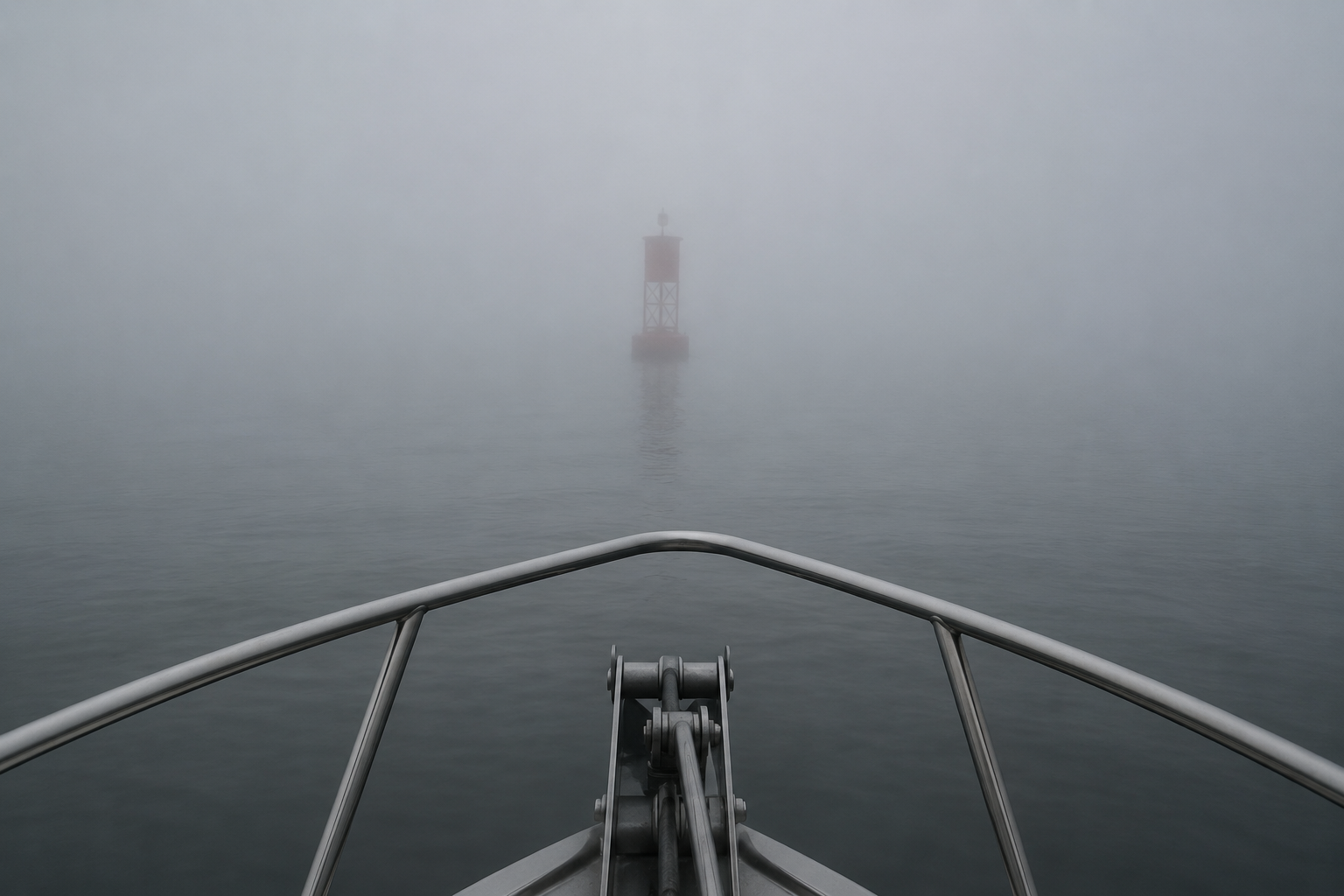



Fall is when the fog shows up. The water is still holding summer heat, the air over it is cooling off fast, and you get mornings where the harbor entrance you've run a hundred times turns into a grey wall about four boat lengths ahead of you.
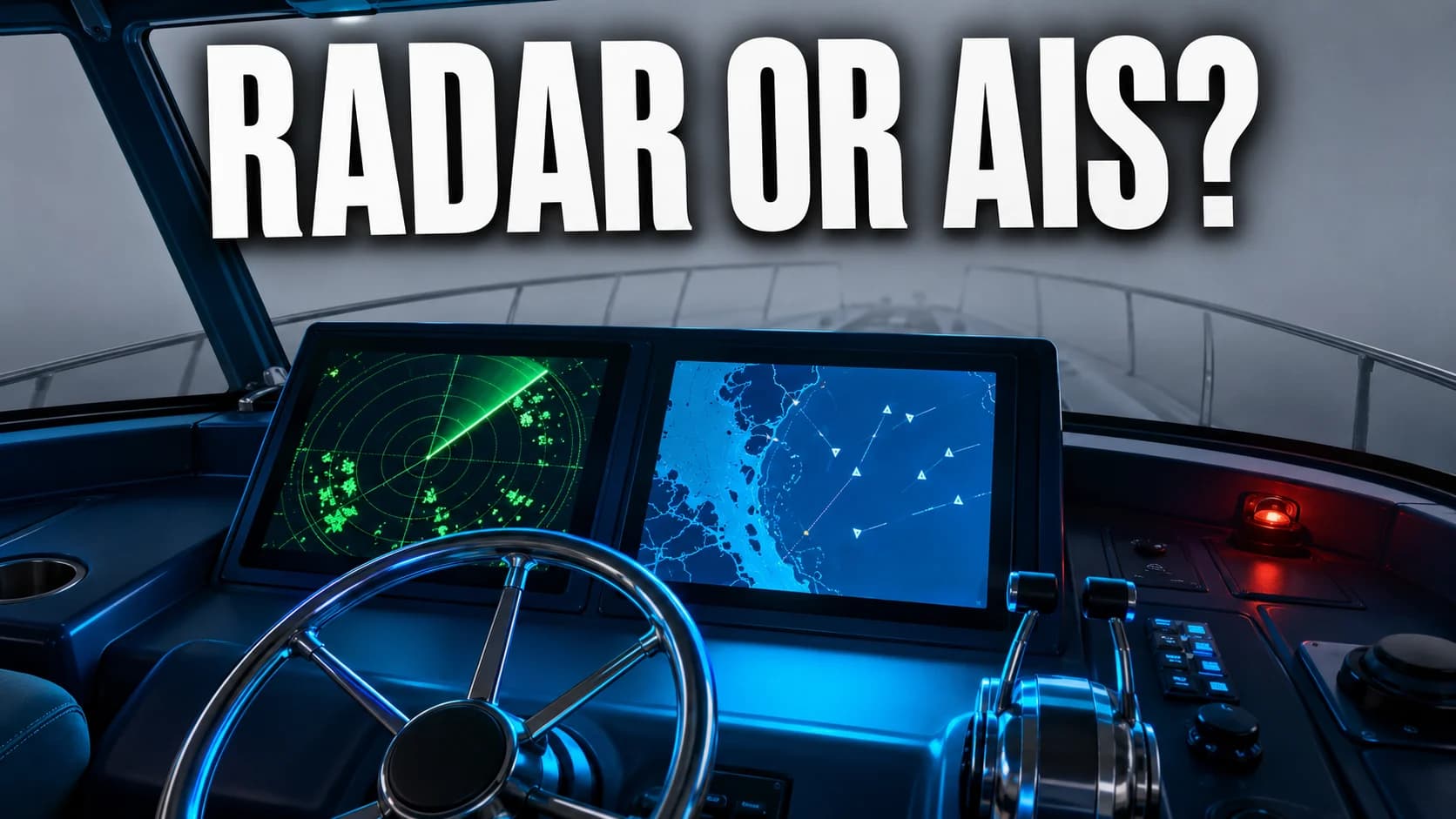
That's usually when boaters start shopping, and the same two answers come back: get radar, or get AIS. They are not the same tool and they do not do the same job. Buying the wrong one first is an expensive way to still be nervous in fog.
AIS Shows You Who's Talking, Radar Shows You What's There
AIS is a digital conversation. Vessels equipped with a transceiver broadcast their position, course, speed, and identity over VHF frequencies, and your unit listens and plots them. It's remarkably good information — you get the ship's name, how fast she's closing, and how near she'll pass. Commercial traffic is required to carry it, so ferries, tugs, and freighters all show up.
The limit is right there in the description. AIS only shows vessels that transmit. The unlit skiff, the paddleboarder, the crab pot float, the deadhead log riding half-submerged, the rock that isn't going anywhere — none of them are on AIS and none of them ever will be.
Radar doesn't care what anyone is broadcasting. It sends out a pulse and paints whatever bounces back. Boats without electronics, breakwaters, channel buoys, rain squalls, the shoreline itself — if it returns energy, it's on your screen. The trade is that radar hands you a picture you have to learn to read, not a labelled target.
Where AIS Wins
Cost, mostly. A receive-only AIS is one of the cheapest meaningful safety upgrades on a boat, and a Class B transceiver still costs a fraction of a radar install. Most units feed straight into a chartplotter over NMEA 2000, and if you're already running a portable plotter at the helm the targets just appear on the screen you're using.
The half people undervalue is transmitting. A receiver lets you see the ship. A transceiver lets the ship see you — as a named target with a heading, on the bridge display of a vessel that would never have picked your fiberglass hull out of the chop. Being visible to the thing that can run you over is worth more than seeing it a minute earlier. Just make sure the MMSI is programmed correctly and matches the number in your DSC setup, because the same registration that makes a distress call work is what makes your AIS target mean anything.
Where Radar Wins
Everything else in the fog. Radar is the only thing on your boat that sees an unlit, un-equipped object in zero visibility, and that's the exact scenario that scares people into shopping in the first place. It also gives you the coastline, which is quietly the best part — when the plotter says you're mid-channel and your eyes say nothing at all, a radar image of the shore either confirms it or tells you something's wrong.
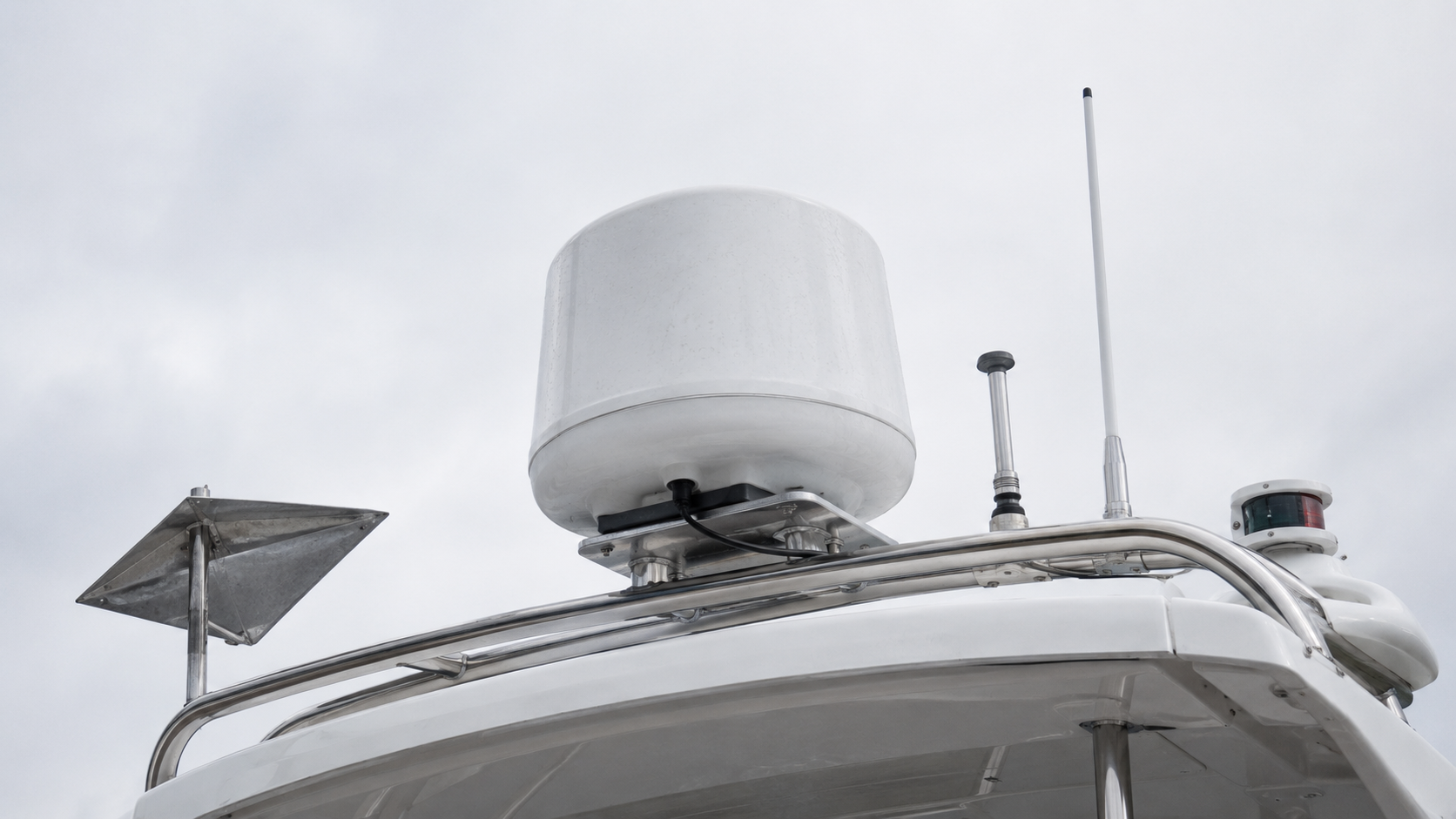
Modern solid-state domes changed the math. They draw little power, need no warm-up, are safe to stand near, and hold detail close to the boat where the old magnetron units went blind. The real cost now is the mount and the install, not the scanner.
There is a learning curve, and it's not optional. Sea clutter, rain returns, and shadowed targets all look like something until you've spent time with them. Run the radar on clear days so you know what a channel buoy looks like before you need it — the same principle as practicing the run home in the dark before you have to do it for real.
What I'd Actually Buy First
If you run inshore, mostly in daylight, in water shared with ferries and commercial traffic, buy the AIS transceiver first. Every time. It's cheaper, it solves the biggest single risk on that kind of water, and it starts working the day it's wired in.
If you run offshore, at night, in genuine fog, or anywhere with rocks and unlit recreational boats, you want radar — and you'll still want AIS alongside it. They're complements, not alternatives. The boat that has both is reading the same situation two different ways, and that's the whole point.
Neither One Replaces Looking Out the Window
Both are aids to navigation, not substitutes for seamanship. In fog you slow down to a speed you can stop in, you sound the proper signals, and you put somebody on the bow whose only job is to listen. Screens don't hear a horn. The best fog decision is usually made at the dock, which is why reading the forecast before you cast off matters more than any box at the helm — and when the marks finally do appear out of the murk, knowing what each one is telling you is what actually gets you home.
Running either of these this season? Tell me what convinced you — I'm curious how many of you went AIS first and never looked back. Drop it in the comments.