


The water feels like a different planet at night. The same harbor you've run a hundred times in daylight gets quiet, cool, and a little disorienting once the sun drops and the shoreline turns into a wall of confusing lights. Summer is when most of us end up out after dark — a late dinner at anchor, the run home from a fireworks raft, or just losing track of time on a perfect evening. Night boating isn't dangerous if you respect it, but it punishes anyone who treats it like a daytime trip with the lights off. Here's how to run after dark with confidence.
Know Your Navigation Lights, and Read Everyone Else's
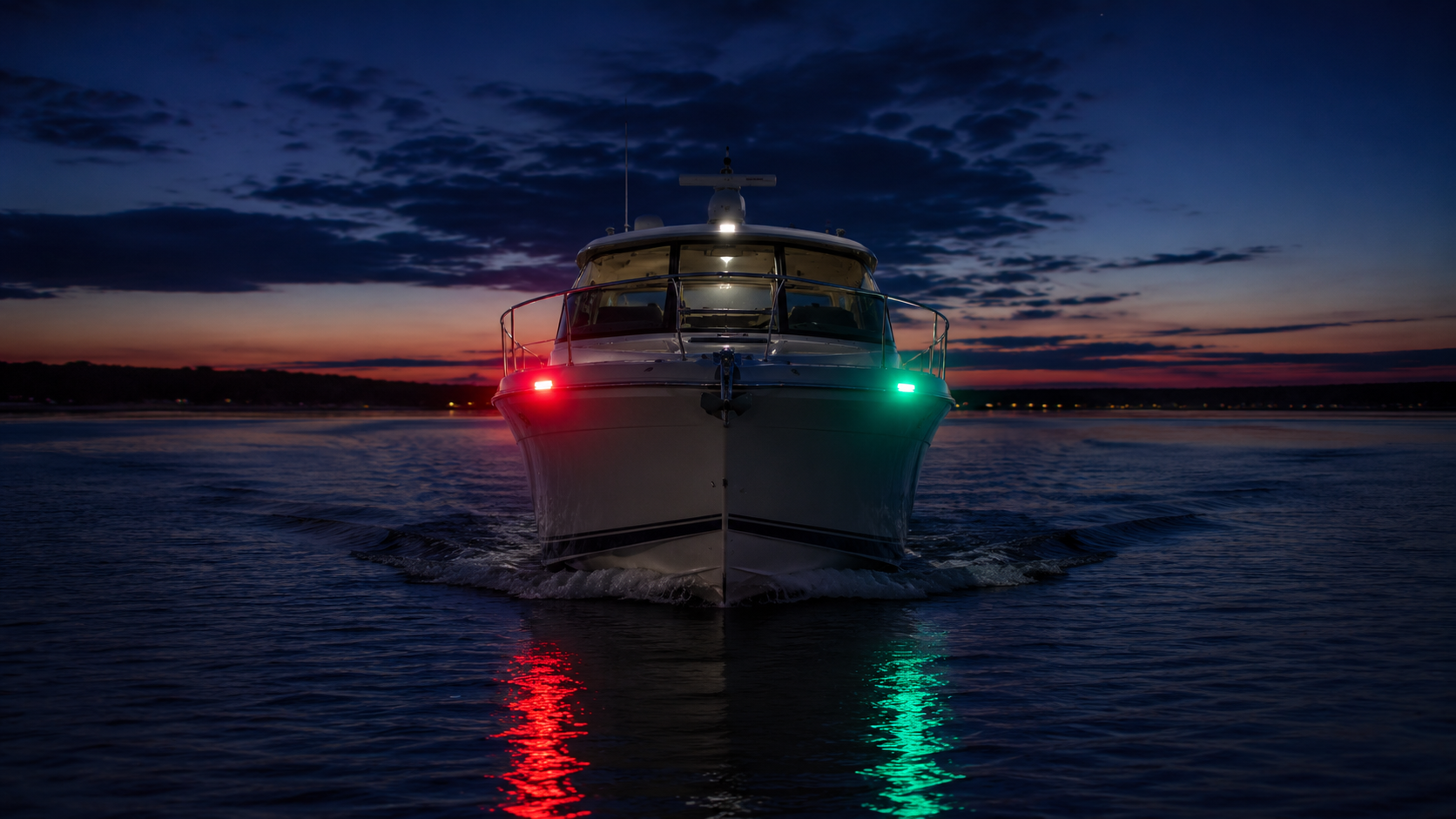
Your navigation lights aren't decoration — they're how every other boat figures out where you are, which way you're pointed, and who has the right of way. Before you ever leave the dock at dusk, confirm your red and green bow lights and your white stern light all work, because a burned-out bulb you can't see is a collision waiting to happen. Just as important is learning to read the lights coming at you. Red means you're looking at another boat's port side, green means starboard, and a white light alone usually means you're seeing a stern or an anchored boat. If you see both red and green together, that boat is pointed right at you, and it's time to make your intentions obvious early.
Protect Your Night Vision
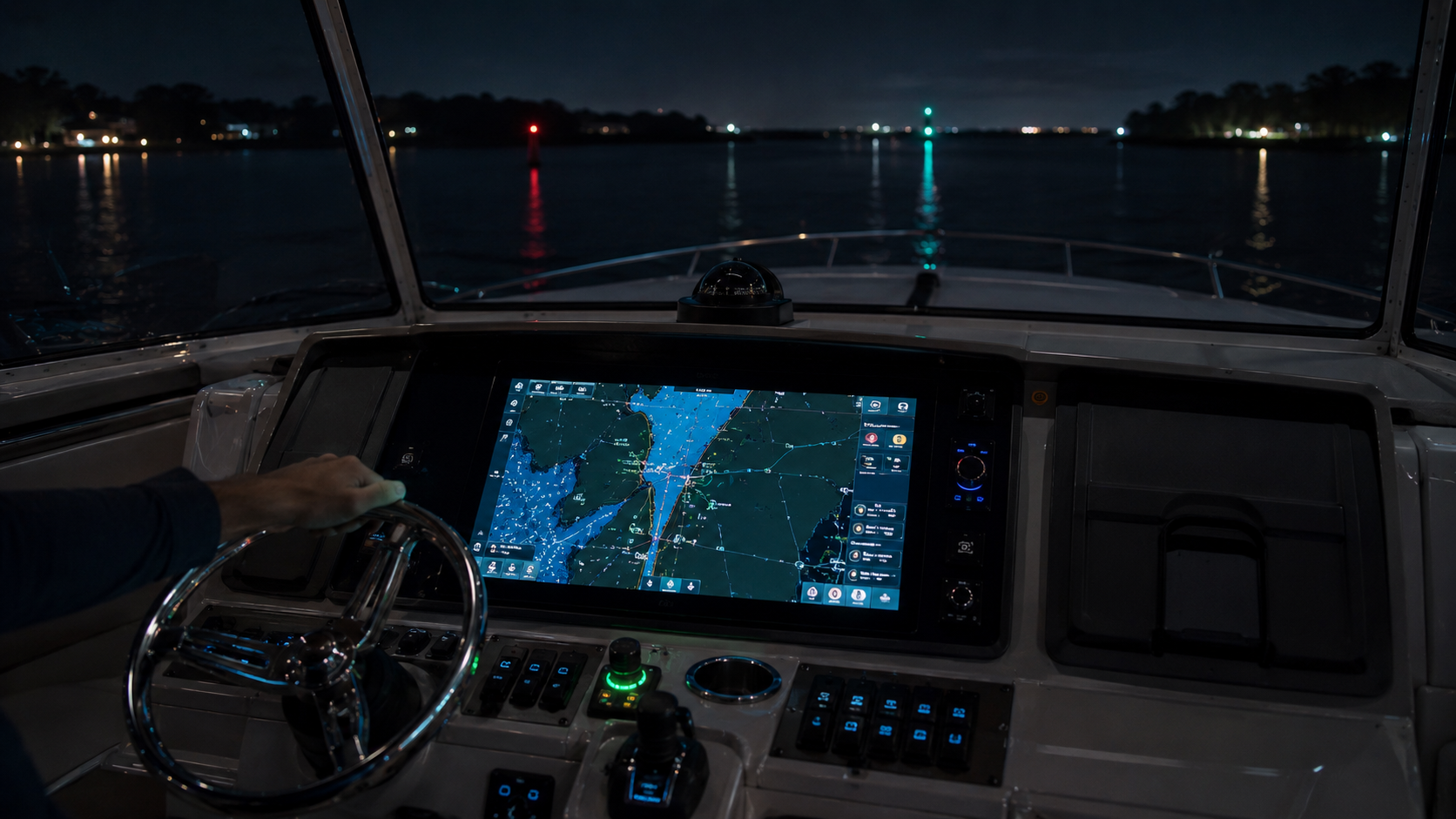
This is the part new night boaters get wrong, and it's the easiest fix on the list. Your eyes need a solid twenty minutes to fully adjust to the dark, and one glance at a bright white phone screen or a cabin light wipes all of it out in a second. Kill every white light you don't absolutely need. Dim your chartplotter all the way down or switch it to night mode, turn off the cockpit and cabin lights, and keep phones face-down. If you need to see something on deck, use a red flashlight — red light lets you read a chart or find a cleat without destroying the night vision you spent twenty minutes building. Once your eyes adapt, you'll be amazed how much you can actually see by moonlight and starlight alone.
Slow Down and Trust Your Instruments
At night you should be running at a speed that lets you stop within the distance you can actually see, and after dark that distance is short. Slowing down buys you time to react to a crab pot, a paddleboarder with no lights, or a deadhead log you'd never have spotted in time at cruising speed. This is where your electronics earn their keep — your chartplotter and depth sounder become your primary eyes, so trust the screen and cross-check it against what few lights and landmarks you can make out. Keep your VHF on and the volume up, because at night radio chatter is often your first warning of traffic or trouble nearby, and knowing how to actually use that radio matters even more when you can't see what's around you. And make sure everyone aboard has a life jacket on after dark — a person in the water at night is far harder to find, which is exactly why the right life jacket for each person should already be on, not stuffed in a locker.
Find Your Markers and Hazards in the Dark
Channel markers don't disappear at night — many of them light up, and learning their flash patterns turns a black harbor into a connect-the-dots you can actually follow. The same red-right-returning logic you use by day still applies, so if you're solid on reading markers and buoys, you're already halfway to navigating after dark. Pick out the lit markers, confirm each one against your chart before you steer for it, and never assume an unlit shape in the distance is friendly until you've identified it. Go from known light to known light rather than cutting corners across water you can't see. And before you ever leave for an evening run, check what the weather is doing, because fog or a building wind that's just annoying in daylight becomes genuinely serious once you lose your visual references.
Night boating rewards the captain who slows down, protects their vision, and trusts what their instruments and lights are telling them. Run it that way and a night passage becomes one of the most peaceful things you can do on the water — cool air, quiet engine, a sky full of stars. Take it casually and it'll teach you a hard lesson fast. Ease into it on a calm, familiar stretch of water first, and build from there. If you run at night regularly, I'd love to hear how you handle it — drop your tips in the comments.