

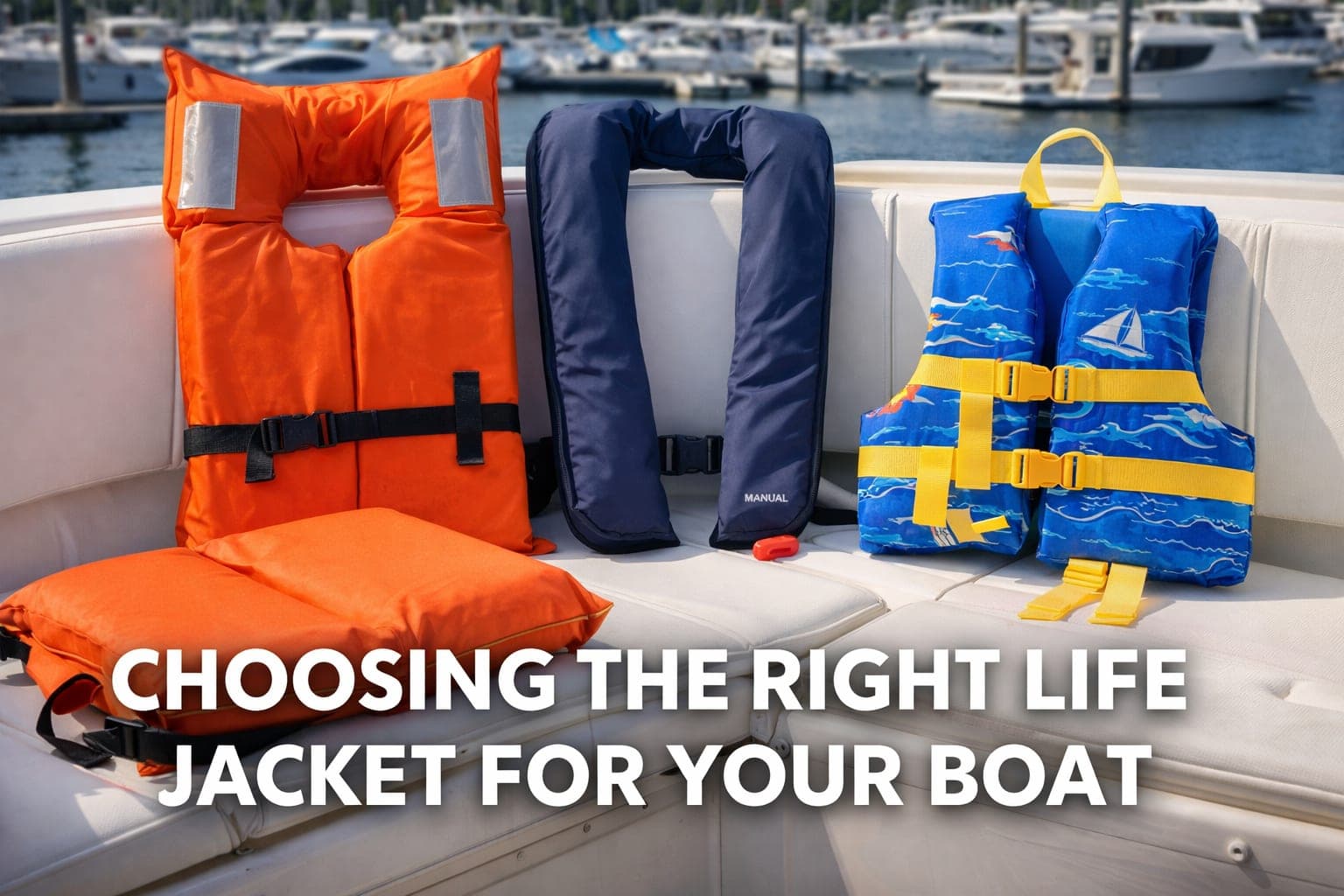

Most boaters have life jackets on board. Fewer of them have the right life jackets — properly fitted, in the correct type for how they actually use their boat, and accessible enough to matter in an emergency. That gap between having a PFD and having the right one is where the USCG accident statistics live.
With spring on the water approaching and more people heading out for the first time this season, choosing the right life jacket deserves a real conversation — not just a checkbox on your pre-departure safety list.
Why PFD Type Actually Matters
The Coast Guard classifies life jackets into five types, and the type determines what kind of water and situation the jacket is designed for. Type I jackets — the big, bulky offshore life jackets — are designed for rough open-water conditions and will turn an unconscious wearer face-up in most cases. They're meant for situations where rescue may not come quickly. Most people don't wear them because they're uncomfortable, but if you're offshore or doing coastal passages, that discomfort is the trade-off for genuine survivability.
Type II jackets are the classic near-shore buoyancy vests you see on rental boats everywhere. They'll keep you afloat in calm conditions but won't reliably turn an unconscious person face-up. Type III is where most recreational boaters land — they're comfortable enough for active water sports and day use but require a conscious wearer to stay face-up. Type V covers specialized inflatables and work vests that meet specific activity requirements. Type IV is a throwable device, not a wearable — it's the floating seat cushion or ring buoy you throw to someone in the water.
The real question isn't which type you prefer — it's which type matches your actual boating environment. Cruising inshore in calm water is a different situation than crossing open ocean, and your PFD should reflect that.
Fit Is the Thing Nobody Gets Right

A life jacket that doesn't fit correctly is almost as dangerous as no life jacket at all. For adults, the basic test is simple: put the jacket on, buckle it up, and have someone grab the tops of the arm openings and lift. If the jacket rises above your chin, it's too big. If you can't fully close it, it's too small. Snug and secure is what you're going for — not so tight you can't breathe, but not loose enough to slip over your head in the water. I write more about essential safety practices every boater should know, and PFD fit is near the top of that list.
For kids, fit is even more critical. Children's PFDs are sized by weight — not age, not height. A child who has outgrown their life jacket needs a new one before they get on the boat, not after. For infants and toddlers under 33 pounds, look for a jacket with a crotch strap and a grab handle at the collar. The strap keeps the jacket from riding up over the child's face, and the handle lets you grab them quickly if they go overboard.
Inflatables vs. Foam: What to Know Before You Buy
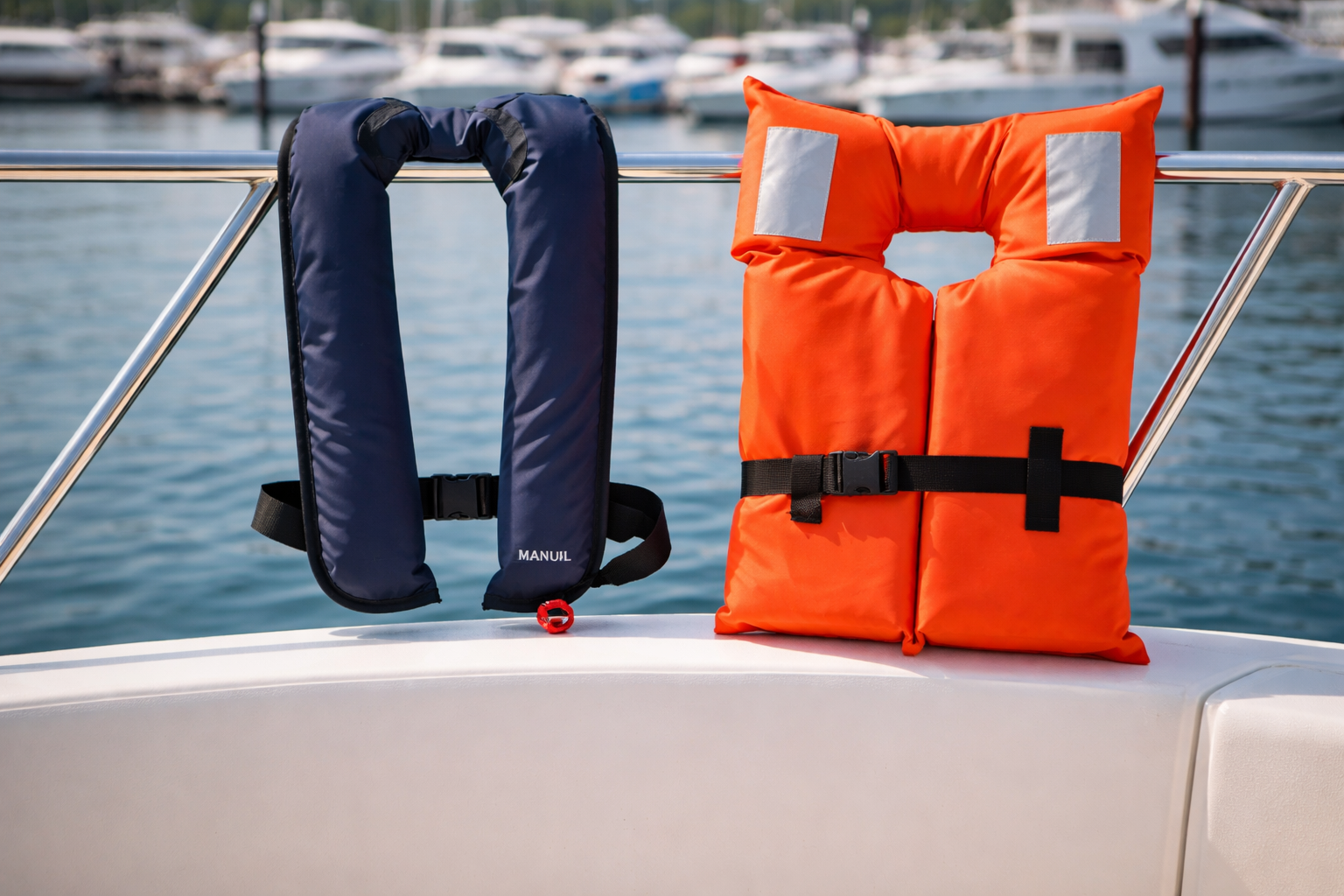
Inflatable PFDs have become the go-to for a lot of experienced boaters because they're lightweight, comfortable to wear all day, and don't get in the way on deck. The trade-off is maintenance and activation. An inflatable only works if it inflates — which means you need to check the CO2 cylinder and re-arming kit annually, keep the oral inflation tube functional, and know how yours activates (automatic vs. manual). Automatic inflating jackets are great for situations where you might be knocked unconscious, but they can inflate unexpectedly if they get wet from spray. Manual inflatables are more reliable in messy conditions but require you to pull a cord, which assumes you're conscious and calm enough to do so.
Foam PFDs require zero maintenance and will always work — that's a real advantage. They're the right choice for children, non-swimmers, and anyone who won't reliably inspect and re-arm an inflatable before every season. They also don't require the wearer to do anything in the water, which matters for people who panic.
What the USCG Requires on Your Boat
Federally, any vessel 16 feet or longer must have one wearable USCG-approved PFD for every person on board, plus one Type IV throwable device. Boats under 16 feet need a wearable PFD for each person but no throwable is required. Children under 13 must wear a USCG-approved life jacket at all times while underway on federally controlled waters, unless they're in an enclosed cabin. State requirements vary — many states extend the mandatory wearing age to 17 or require PFDs to be worn in canoes and kayaks regardless of age. Check your local rules before you assume federal minimums are enough. Getting comfortable with the regulations before you leave the dock is something I'd encourage every new skipper to do — the rules exist because they work.
Beyond the legal minimum, the practical standard is straightforward: every person on your boat should have a PFD that fits them correctly and is within reach. A life jacket stuffed in a locker doesn't save anyone.
Choosing the right life jacket isn't complicated — but it does require a few minutes of honest thinking about how you actually boat and who you bring with you. Get the right type for your environment, make sure every jacket fits the person wearing it, and check your inflatables before the season starts. It's the kind of preparation that costs almost nothing and changes everything if things go sideways on the water.