

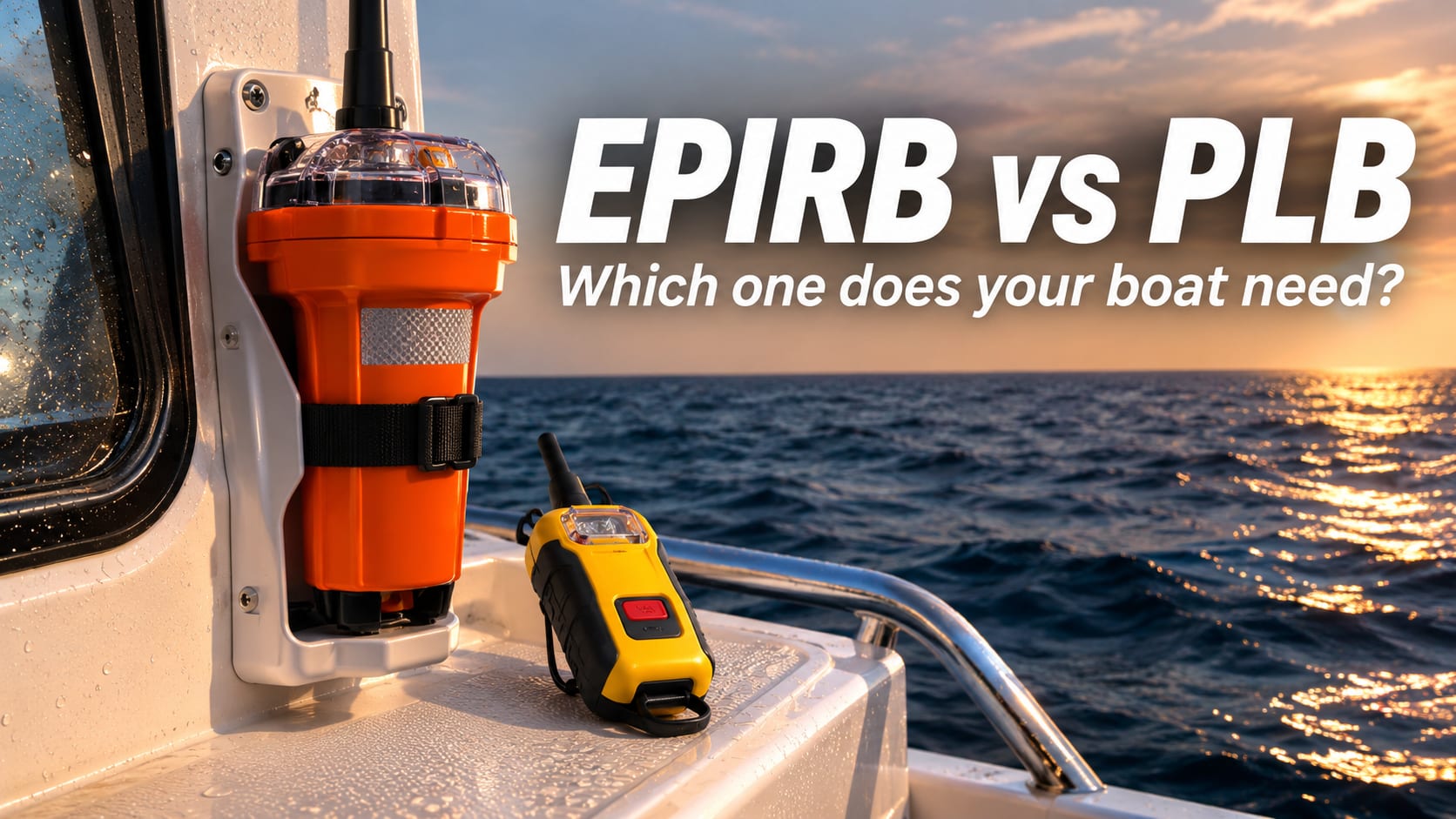

If your boat goes down or someone goes over the side, a VHF call is only as good as the person within range to hear it. An emergency beacon is the one piece of safety gear that works when everything else has failed, and the EPIRB vs PLB question is where most boaters get stuck. Both send a distress signal, but they are built for different situations, and picking the wrong one can leave a gap you don't find out about until it matters.
Here's the thing: you don't have to guess. Once you understand what each beacon actually does on the water, the right choice for your vessel becomes pretty obvious.
What an EPIRB Does on Your Boat
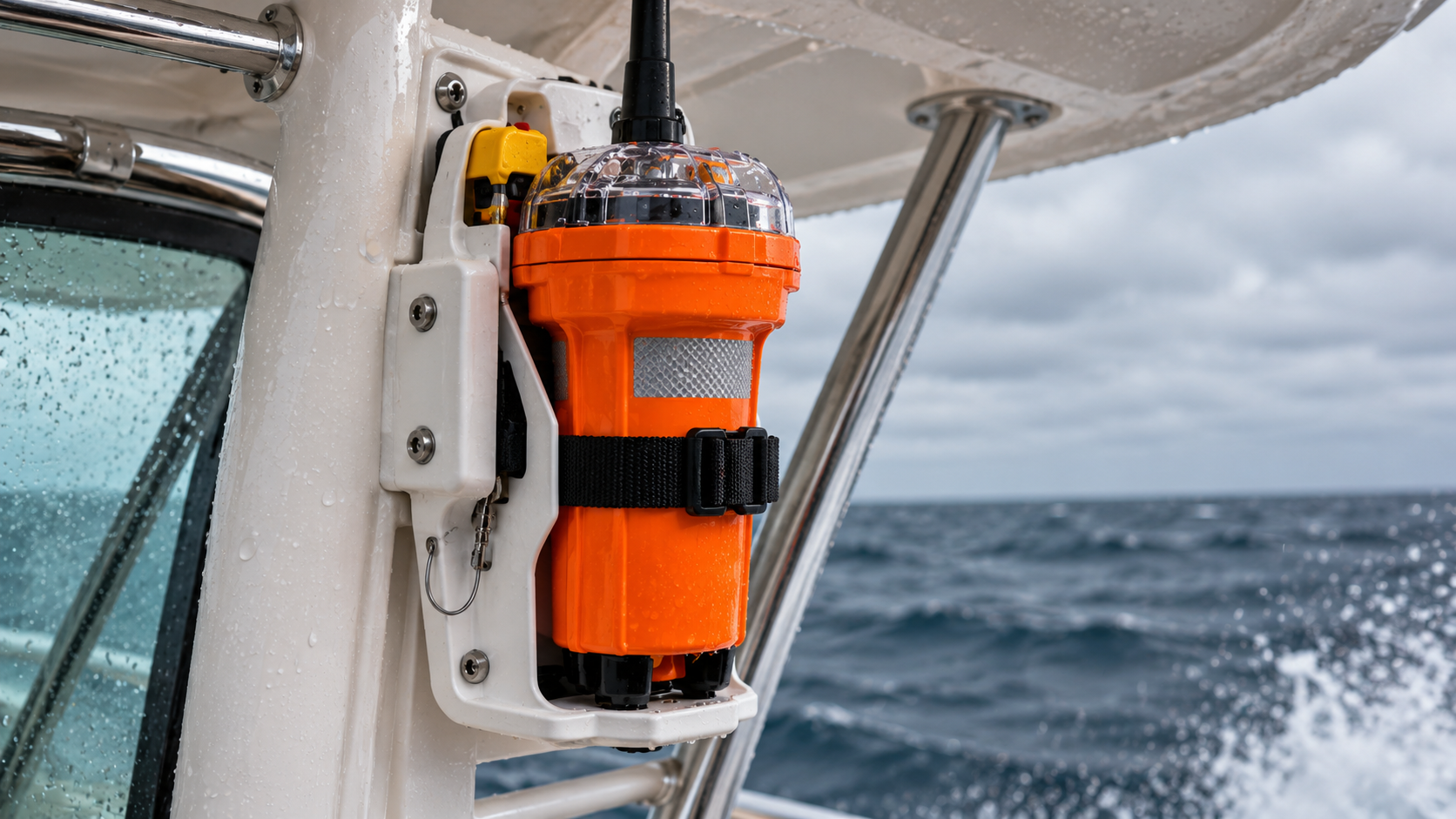
An EPIRB, or Emergency Position-Indicating Radio Beacon, is a boat-mounted beacon that transmits on 406 MHz to the Cospas-Sarsat satellite network. Most are stored in a bracket with a hydrostatic release, so if the vessel sinks the unit floats free and switches itself on. That matters because the worst emergencies rarely give you time to reach for anything.
EPIRBs are also designed to run for a long time. The standard is a minimum of 48 hours of transmission, which gives search and rescue time to find you. The tradeoff is size and cost. An EPIRB is a bulky unit that lives on the boat, so it protects the vessel and everyone aboard, but it does nothing for the person who has already been separated from the boat.
Where a PLB Fits In
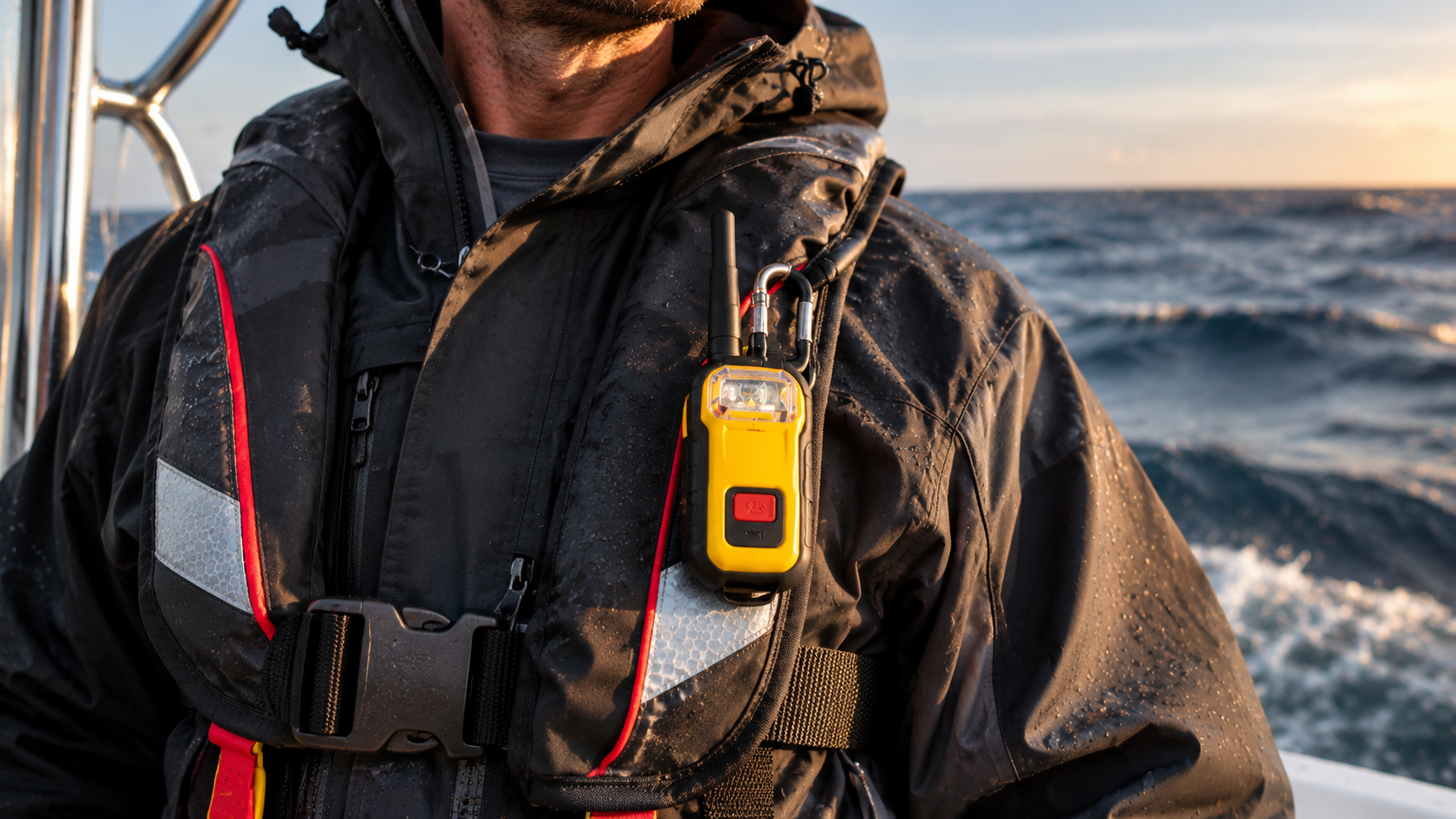
A personal locator beacon uses the same 406 MHz satellite system, but it is small enough to clip to a life jacket or carry in a pocket. It is activated by hand, and the minimum run time is 24 hours. Because it is registered to a person rather than a vessel, it goes wherever you go, which makes it useful on kayaks, tenders, and day trips on boats that don't carry an EPIRB.
The real question is what you are protecting against. If your main worry is a sinking or a fire on the boat, the EPIRB is built for that job. If your main worry is someone ending up in the water alone, a PLB on the person is far more likely to be within reach. A beacon sitting in a bracket can't help a crew member who is already a quarter mile astern, which is why a good man overboard drill and a personal beacon work well together.
Registration, Batteries, and Testing
Either beacon is only useful if rescuers know whose it is. In the United States both must be registered with NOAA, and you need to update that registration whenever you change boats, phone numbers, or contacts. An unregistered beacon will still send a signal, but it takes rescuers much longer to figure out who is in trouble and who to call.
Batteries are the other thing people forget. Most beacons carry a battery expiration date, commonly around five years, and the unit has to go back to the manufacturer or a service center for replacement. EPIRBs with a hydrostatic release also have a release that expires and needs swapping. Use the self-test function on the schedule in your manual, and do not use the live activation to test it. Check all of this during your pre-season safety gear check so you are not discovering a dead battery at the dock in July.
What I'd Put on Your Boat
For any boat that goes offshore, runs past easy cell and radio range, or carries a family, the EPIRB is the baseline. It is the one you want working automatically if things go wrong fast. For inshore boaters, a PLB on each person who is regularly on deck is a smart and affordable step up from nothing, and it fits in the same pocket as your VHF radio habits: you hope you never use it, and you check it before you leave.
Many experienced boaters carry both, an EPIRB on the boat and a PLB on whoever is standing watch or fishing alone. That is the setup I'd lean toward if the budget allows. Whatever you choose, make sure someone ashore knows where you are going, and a simple float plan covers that for free.
If you already carry a beacon, I'd like to hear which one and how you mount it. Drop your setup in the comments, and fellow boat owners can learn from what works on your vessel.
