


The first time you'll wish you'd practiced a man overboard drill is the exact moment you'll regret skipping it. By then, the only thing standing between a scary moment and a real tragedy is whatever muscle memory you bothered to build. So before the season really kicks off — before the guests, the rosé, the long anchored lunches — spend an hour running a proper drill with whoever you boat with most.
Here's the thing — most boat owners I know are sharp on the gear. They've got the right life jackets, a throw cushion within reach, maybe even an AIS-enabled MOB beacon. But almost none of them have actually practiced what happens between the second a person hits the water and the second they're safely back aboard. That gap is where this drill lives.
Why Spring Is the Right Time to Run It
The season opener is the perfect window. You're already pulling the cover, checking systems, and re-learning where everything lives on the boat after a long winter. Adding a real MOB drill to that first weekend is the cheapest insurance you'll get all year. The water is cold, the crew is rusty, and any habits you had last August have faded — which is exactly why you want to rehearse before you actually need it.
It also resets the family. A 12-year-old who watched dad pull off a clean recovery in May is going to take the next outing more seriously than one who only ever sees the boat as a moving picnic table. Running the drill out loud, with everyone watching, is also the moment to point out the throwable, the swim ladder, and the VHF — three things your crew should be able to find without you.
What a Real Drill Looks Like
Pick a calm morning and a quiet stretch of water. Brief the crew on what you're about to do, then throw something visible overboard — a fender, a cushion, a bumper with a flag stuck in it. Nothing biodegradable that sinks, nothing alive. The goal is a target you can see from the helm and recover without help from anyone else.
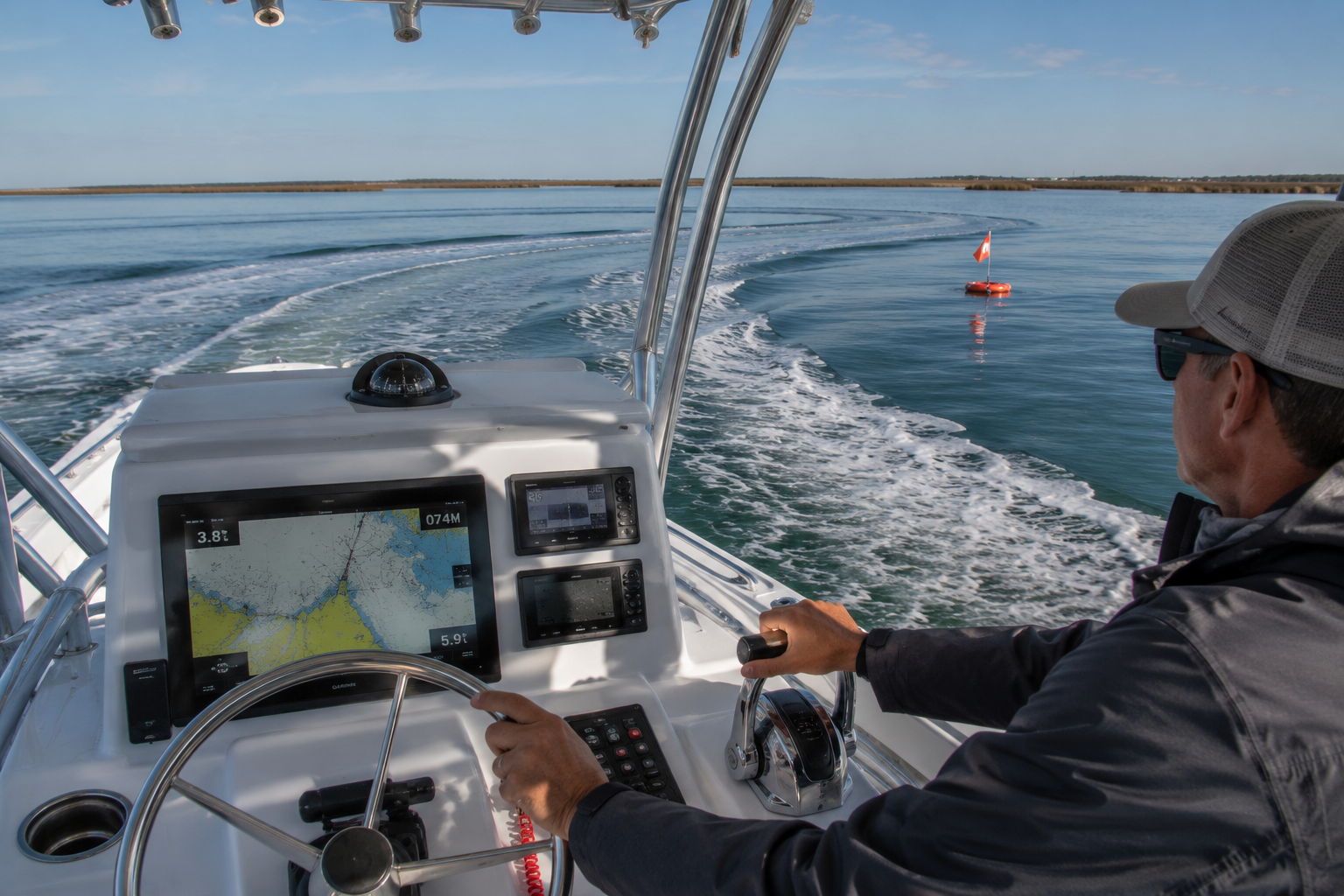
Now run the full sequence. Someone shouts "man overboard" and points. The helm responds out loud: throws the closest flotation, marks the position on the chart plotter (most modern units have an MOB button right on the front), and reduces speed without losing sight of the target. From there, choose your recovery turn — the Williamson, the Anderson, or a simple quick stop depending on conditions and the boat — and bring the bow back into the wind so the target ends up alongside, not under the hull.
The recovery itself is the part most people get wrong. Approach slowly, kill the engine well before you make contact, and bring the swimmer up the stern or a low-freeboard side — never near a running prop. If you don't have a powered swim platform, rig a stirrup or a folded line ahead of time. A wet, tired, scared adult is shockingly heavy to haul over a gunwale, and you do not want to be figuring that out for the first time during a real one. If you want to bake a strong recovery routine into the way you run your boat day-to-day, fold this into your general season-opening checklist so it gets the same attention as the engine and the through-hulls.
Tools That Make the Drill Easier
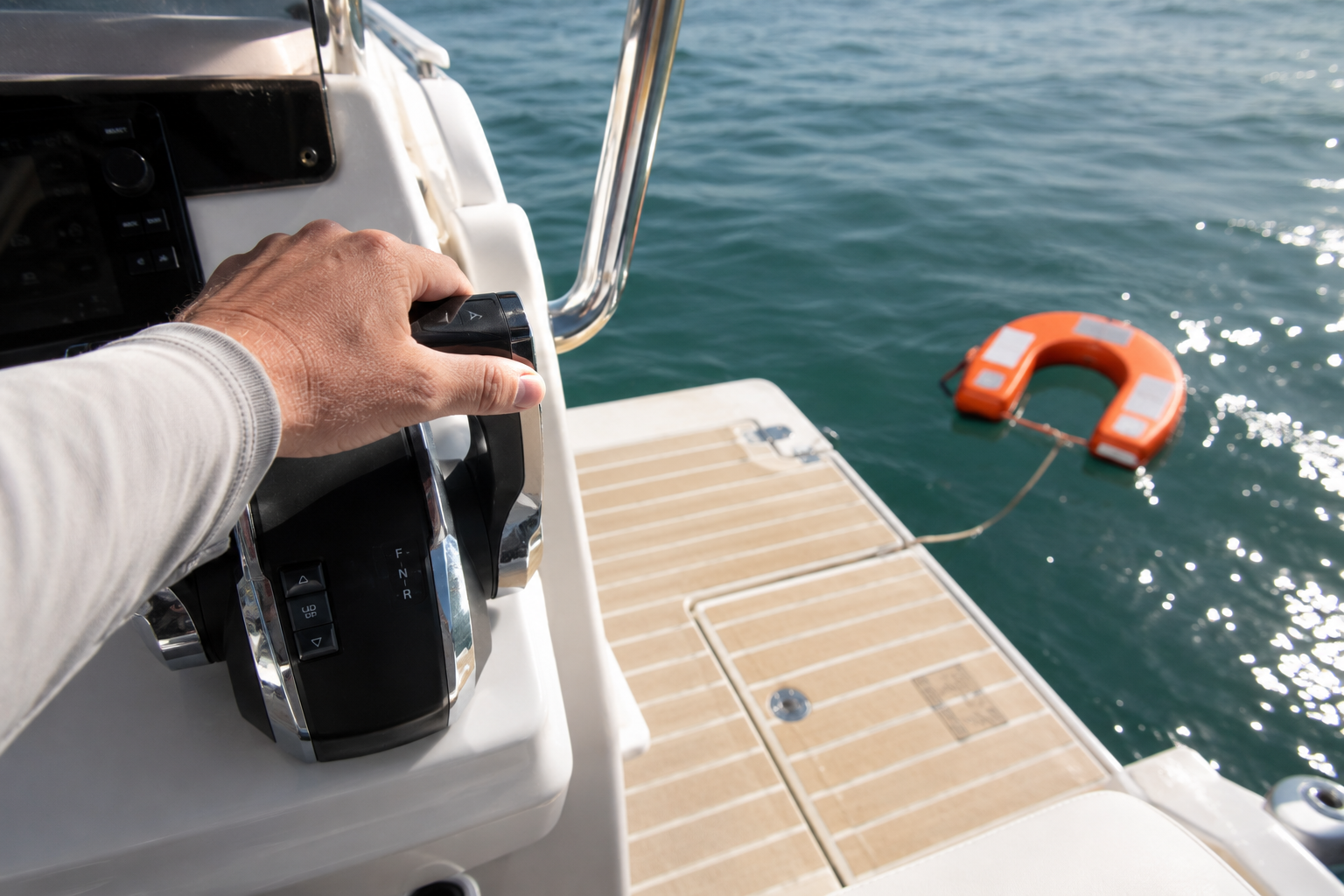
Three things change everything. First, a Type IV throwable in arm's reach of the helm — not buried under cushions, not lashed to a rail. Second, a horseshoe buoy with a drogue and a strobe if you boat at dusk or overnight. Third, an MOB beacon — the small AIS units that clip to a life jacket and broadcast a position the second they hit salt water. They're not cheap, but for serious offshore use they're the difference between a fast pickup and a long, frantic search.
Don't overlook the basics either. Every adult onboard should know how to use the VHF. Channel 16 exists for a reason, and a good MAYDAY call gets help moving while you handle the boat. If you're newer to the radio, this is also a great spring to brush up — the same way a fresh boater would walk through any of the other core safety habits that separate a calm captain from a panicked one.
Make It a Family Thing, Not a Solo Performance
The captain falling overboard is the version of this scenario no one wants to talk about, but it's the one most worth rehearsing. If you go in the water and your spouse, your kids, or your buddy is left at the wheel, can they actually bring the boat back to you? Can they kill the engine without panicking? Can they get on the radio?
Run the drill at least once with you as the swimmer. Stay close, stay safe, but make them do it. The first time my wife had to circle back to pick me up, she missed her first approach by a boat length and a half. The second time she nailed it. That kind of confidence cannot be lectured into someone. It has to be earned in the water, in the spring, before it counts.
Closing Thought
A man overboard drill is not a dramatic exercise. It's a 30-minute habit that quietly raises the floor of every trip you take for the rest of the season. Brief the crew, throw the fender, run the turn, recover the target, and talk about what went wrong. Do it twice. Then go enjoy the rest of your day.
If you've got a recovery technique that's worked for you on your own boat, drop it in the comments. The best MOB conversations I've had on the dock came from boaters who'd already tested their setup — and learned something they didn't expect.