


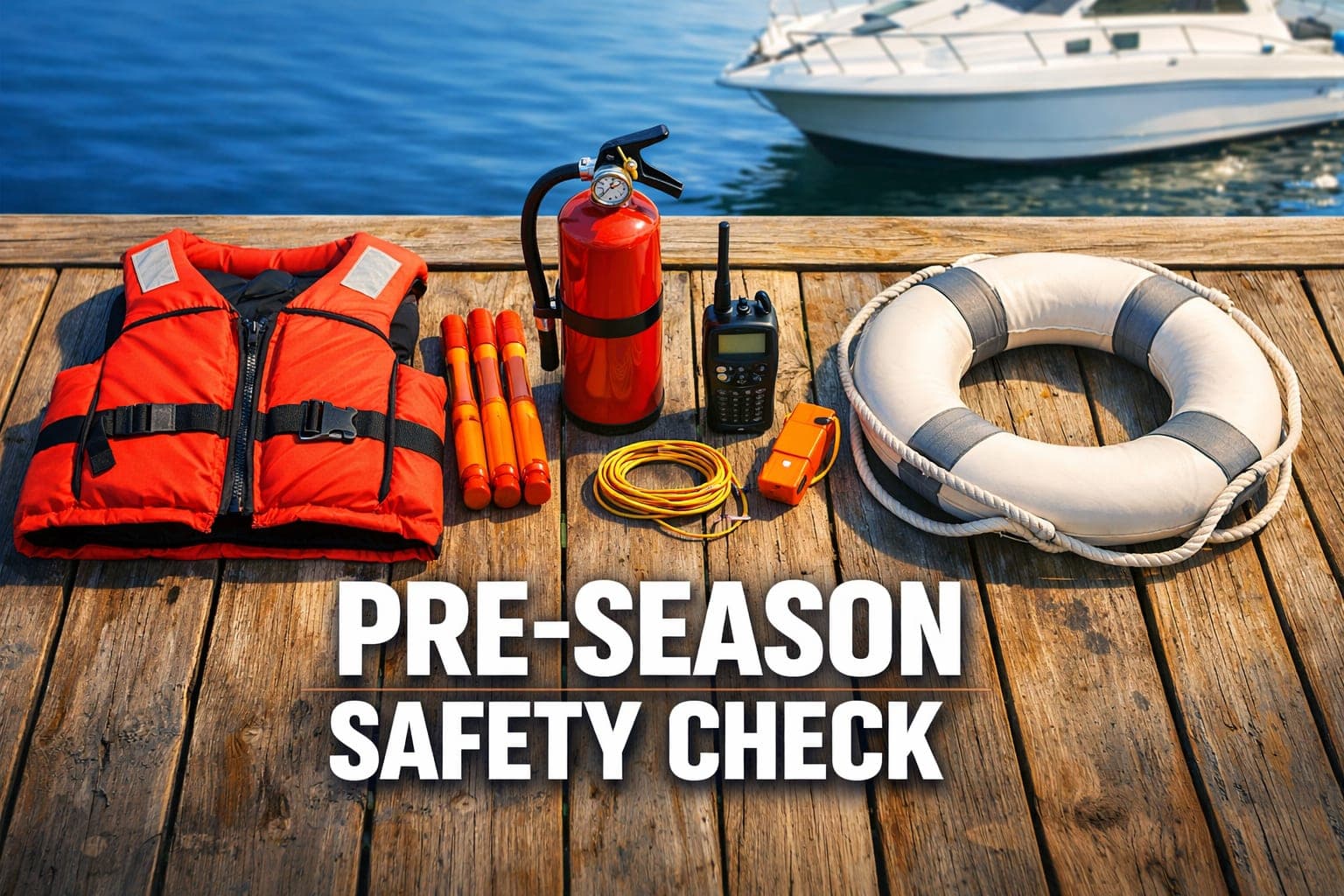

The first trip of the season is supposed to be the fun part. You've had the boat out of the water all winter, you've paid the yard bills, and now the weather is finally cooperating. The last thing you want is to discover your flare kit expired in 2021 when you actually need it.
Safety gear is one of those things every boater technically knows about but most of us skim over when we're eager to get moving. I've pulled out life jackets that were clearly chewed by mice, fire extinguishers that had lost all their charge, and EPIRBs with batteries older than my dog. Spring is the only window you get to actually look at this stuff in daylight before you need it, so slow down and do it properly.
Life Jackets and Throwable Devices
Start with the basics. Every person on board needs a properly fitting life jacket, and the definition of "properly fitting" changes if you've picked up a kid or a partner since last season. Pull each one out, check the buckles, zippers, and straps for cracked plastic or frayed webbing. Inflatable PFDs need their CO2 cartridges checked — the little green indicator should be green. If it's not, replace the cartridge before you leave the dock, not after.
Don't forget the throwable. A Type IV cushion or ring that's cracked, faded, or water-logged isn't going to do its job. Keep it accessible, not buried under a pile of fenders. If you're new to this and want a broader primer on what the law actually requires, my writeup on top boating safety tips covers the non-negotiables.

Fire Extinguishers and Flares
Marine-rated fire extinguishers need to be checked every season, and the USCG now requires disposable extinguishers under twelve years old. Flip yours over and find the date stamp. While you're at it, pick it up and shake it — if the powder inside feels caked, it won't discharge properly. Squeeze the handle gently to confirm the pin moves. Anything questionable, replace it.
Visual distress signals are where most of us slip. Flares carry a 42-month expiration date from the date of manufacture, not the date you bought them. Check every single one. Expired flares aren't worthless — keep them aboard as backup — but you need current ones for legal compliance and for the confidence of knowing they'll actually fire when it matters. Electronic distress lights are a solid alternative worth considering if you're replacing flares anyway.
Engine Safety and Cutoff Switches
Since 2021, federal law requires an engine cutoff switch lanyard on most recreational boats under 26 feet. If you've never clipped yours on, now's a good time to start. Test the switch itself — pull the lanyard out with the engine running and confirm it kills the engine. If nothing happens, the switch is dead and needs replacing. Wireless versions are more comfortable to wear but still need a battery check every spring.
Carbon monoxide detectors are another often-ignored item. If you have an enclosed cabin, test the alarm, replace the battery, and confirm the unit is still within its service life. Most CO detectors die silently after 5-7 years, and no amount of fresh batteries will bring them back.
Navigation Lights, VHF, and the Boring Stuff That Saves Lives
Climb up and physically test every nav light. Bulbs fail over winter — it's almost a law of nature. Bring a multimeter if you want to confirm voltage, but a visual check at dusk is usually enough. Masthead, stern, port, and starboard all need to be crisp and visible. Foggy lenses can be polished with plastic compound, cracked ones need replacing.
Fire up the VHF and do a radio check on Channel 68 or another working channel — never Channel 16 for test calls. Confirm you can transmit and receive clearly. If you have DSC capability, test that your MMSI is programmed and the unit is registered. A radio that can't reach help is worse than no radio because it gives you false confidence.

First Aid, Anchor, and Everything You Forgot Over Winter
Your first aid kit doesn't care that it's a boat kit — it still needs to be restocked. Pull everything out, toss expired medications, replace used bandages, and add whatever made you wish you had it last season. Seasickness meds, sunscreen, and a good pair of tweezers go further than you'd think.
Finally, inspect your ground tackle. Walk the chain, look for rust where it hasn't been painted, check the shackle seizing wire, and confirm your rode is still the right length for where you actually anchor. A tired anchor is the kind of thing you only notice when the wind comes up at 2 a.m.
Spending a Saturday on this checklist isn't glamorous, but it's the cheapest insurance you'll buy all year. A dead extinguisher or expired flare costs you nothing to spot in April and everything to discover in July. Pair this check with your normal off-season projects that pay off and you'll hit the water knowing your boat is genuinely ready.
What's one piece of safety gear you almost forgot about this spring? Drop a comment — I'll bet someone else reading this just remembered something they need to replace.