

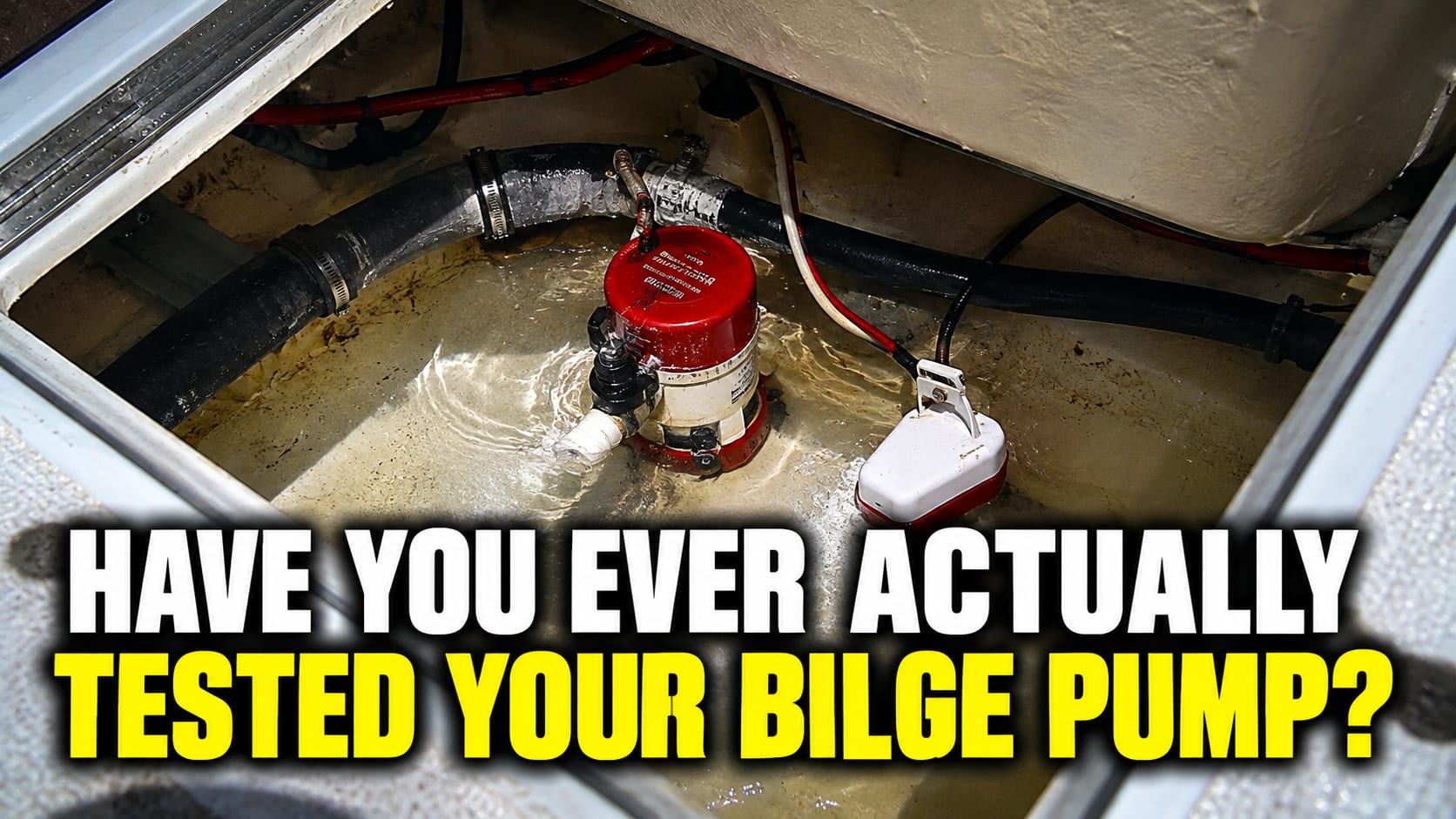

Every system on your boat gets attention except the one that keeps it floating. You check your oil, you watch your fuel gauge, you notice the second your engine sounds off. Meanwhile the bilge pump sits down in the dark under the sole, wired to a float switch you have probably never tested, waiting for the one day it actually matters.
Here's the thing about bilge pumps: they almost never fail loudly. They fail quietly, weeks or months before you need them, and you find out at the worst possible moment. Late summer is a good time to deal with this, because you have been running the boat hard and the same trips that wear out everything else are working on your pump too.
Why the Float Switch Fails Before the Pump Does
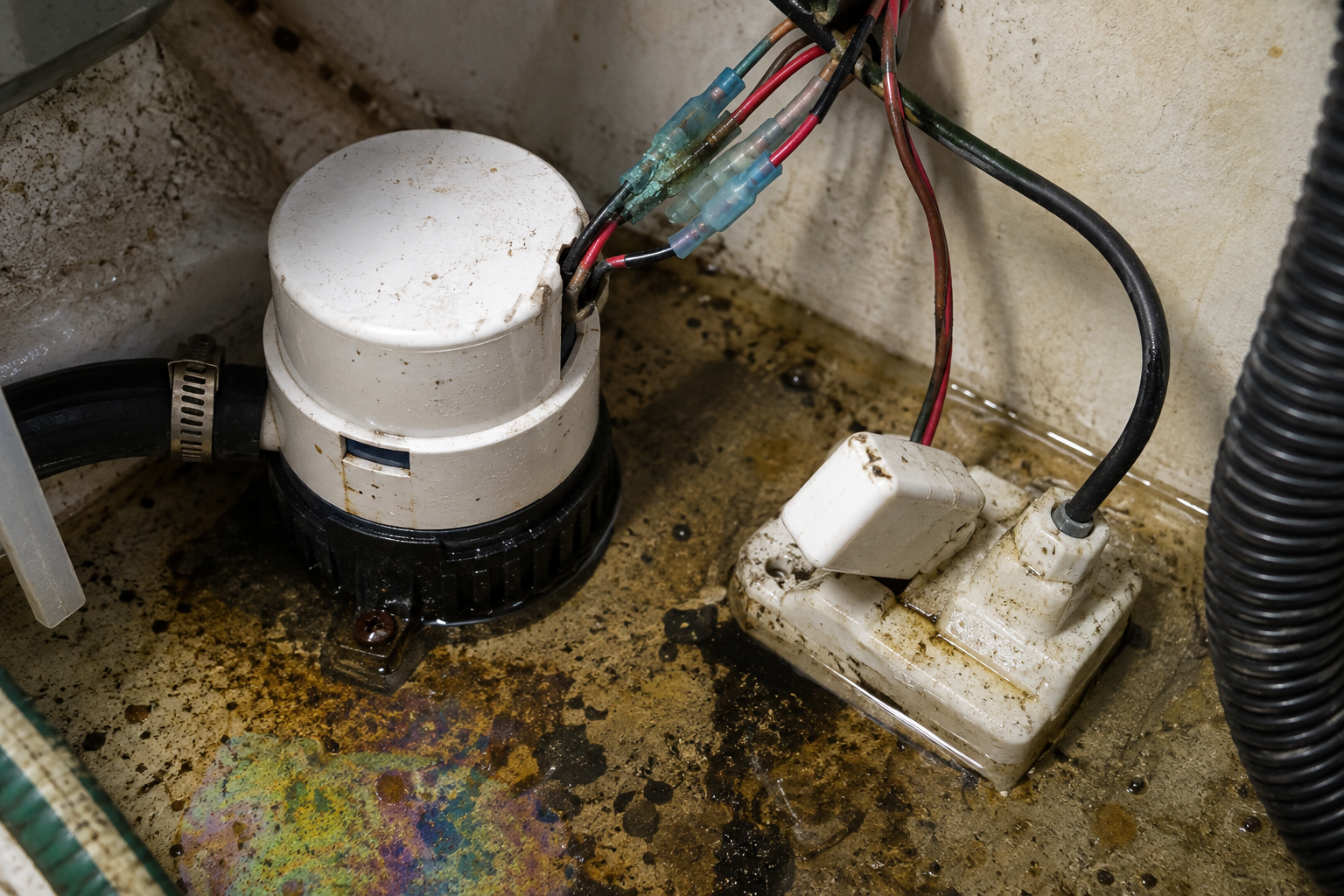
In my experience the pump motor is rarely the first thing to go. It's the float switch. That little hinged arm or mercury-free sensor lives in the wettest, dirtiest part of your boat, and it collects hair, sludge, oil film, and whatever else finds its way into the bilge over a season. It only takes a small amount of gunk under the hinge to keep the float from rising, and a float that cannot rise is a pump that never turns on.
The other common failure is the wiring, not the switch. Bilge pump connections sit in the one place on the boat guaranteed to be damp, and butt connectors that were not properly sealed will corrode from the inside out. The pump will test fine on the manual switch at the helm, draw current, and still fail on automatic because the float circuit has gone high-resistance. Same reason a freshwater rinse after every saltwater trip pays off everywhere else on the boat — salt is patient and it finds every connection you did not seal properly.
How to Actually Test It, Not Just Look at It
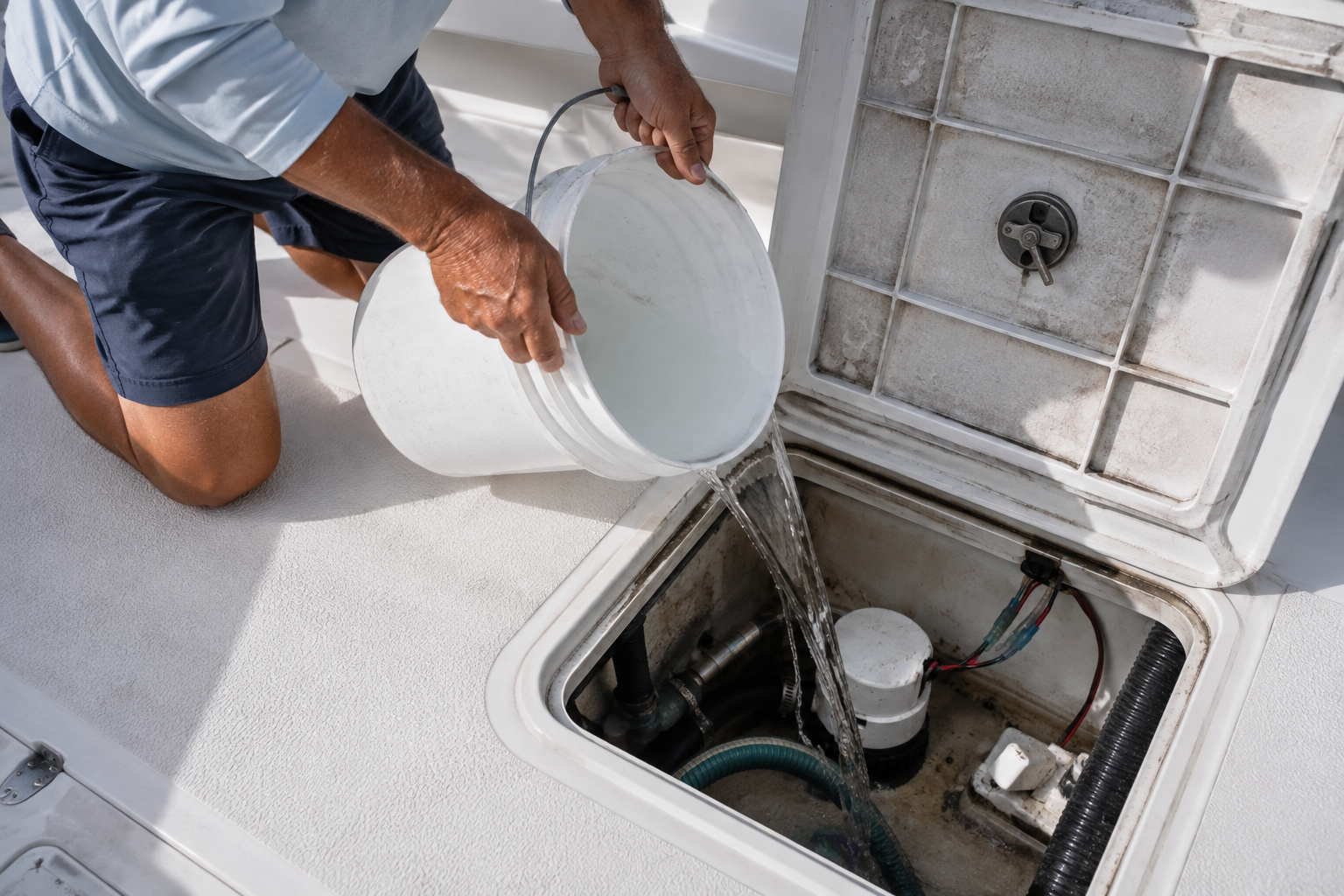
Flipping the helm switch to manual and hearing the pump run tells you almost nothing. All that proves is the motor spins and the manual circuit works. The test that matters is the automatic one, and it takes a bucket of water and about five minutes.
Pour water into the bilge until the float rises on its own and listen for the pump to kick on without you touching anything. Watch where the water goes and confirm it actually leaves the boat through the discharge rather than running back down. Then let the level drop and make sure the pump shuts off cleanly instead of cycling on and off, which usually means the float is hanging up or the discharge hose is dumping back into the bilge because there is no loop or check valve. While you have the sole up, put your hand on the wiring and see whether the connections feel crusty or stiff, and look at how the hose is routed. A discharge hose with a low spot holds water, and held water is exactly what starts the mildew and moisture problems that take over a boat from the inside.
One Pump Is Not a System
A single bilge pump handles rainwater and the nuisance drips every boat has. It does not handle a failed hose clamp, a bad shaft seal, or a stuffing box that lets go, and it was never designed to. If you run offshore or keep the boat in a slip where nobody would notice a problem for days, a second pump mounted higher in the bilge on its own float and its own circuit is the cheapest insurance on the boat.
The high-water alarm matters just as much as the second pump. A pump that runs constantly while you are away is telling you something important, and without an alarm or a counter you will never hear it. Wire the pumps directly to the battery through an inline fuse rather than through the battery switch, so they still work when the boat is shut down — which is precisely when the flooding tends to happen. Just make sure your battery is actually up to the job, because a pump on a tired battery is a pump with a deadline.
Make It Part of the Routine
I test mine at the start of the season, once mid-summer, and again before the boat sits for any length of time. It takes five minutes and a bucket, and I have caught a stuck float twice doing it. Both times the pump itself was perfect and would have passed any manual test I threw at it.
The boat you can afford to lose is not the one you own. Give the pump the same five minutes you would give your oil, and check it before the weather turns and you find yourself needing it — the same way you would rather sort your storm plan out ahead of time than improvise it in a squall. If you have had a pump or float switch fail on you, drop it in the comments so other folks know what to look for.
