




You open the cabin after a hot week away from the boat and it hits you before you're even down the companionway, that damp, musty smell that means mildew has moved in and made itself at home. Summer is peak season for it, and left alone it goes from a smell to black spots on your headliner, your cushions, and every soft surface you own.
The good news is that mildew is preventable, and it doesn't take much once you understand what it's actually feeding on. Let me walk you through how to keep your boat's interior fresh through the hottest, most humid part of the year.
Why Summer Is Prime Time for Mildew
Mildew needs three things: moisture, warmth, and stagnant air, and a closed-up boat in July serves all three on a platter. Heat drives humidity up, a sealed cabin traps it, and the temperature inside a locked-up boat on a sunny day climbs well past comfortable. Add the condensation that forms when cool night air meets warm surfaces, and you've built a greenhouse for mold spores.
It doesn't need standing water to thrive, either. The humidity soaked into a cushion or a corner of the headliner is plenty. That's why a boat can look bone dry and still grow a fuzzy patch behind a locker, and why the fix is about controlling moisture and air, not just wiping up puddles.
Airflow Is Everything
If you do only one thing, get air moving. Stagnant air is what lets moisture settle and spores take hold, so anything that keeps it circulating buys you real protection. Crack the hatches and ports when the boat is attended, and prop open locker doors, the head, and any enclosed spaces so air can reach the corners where mildew loves to start.
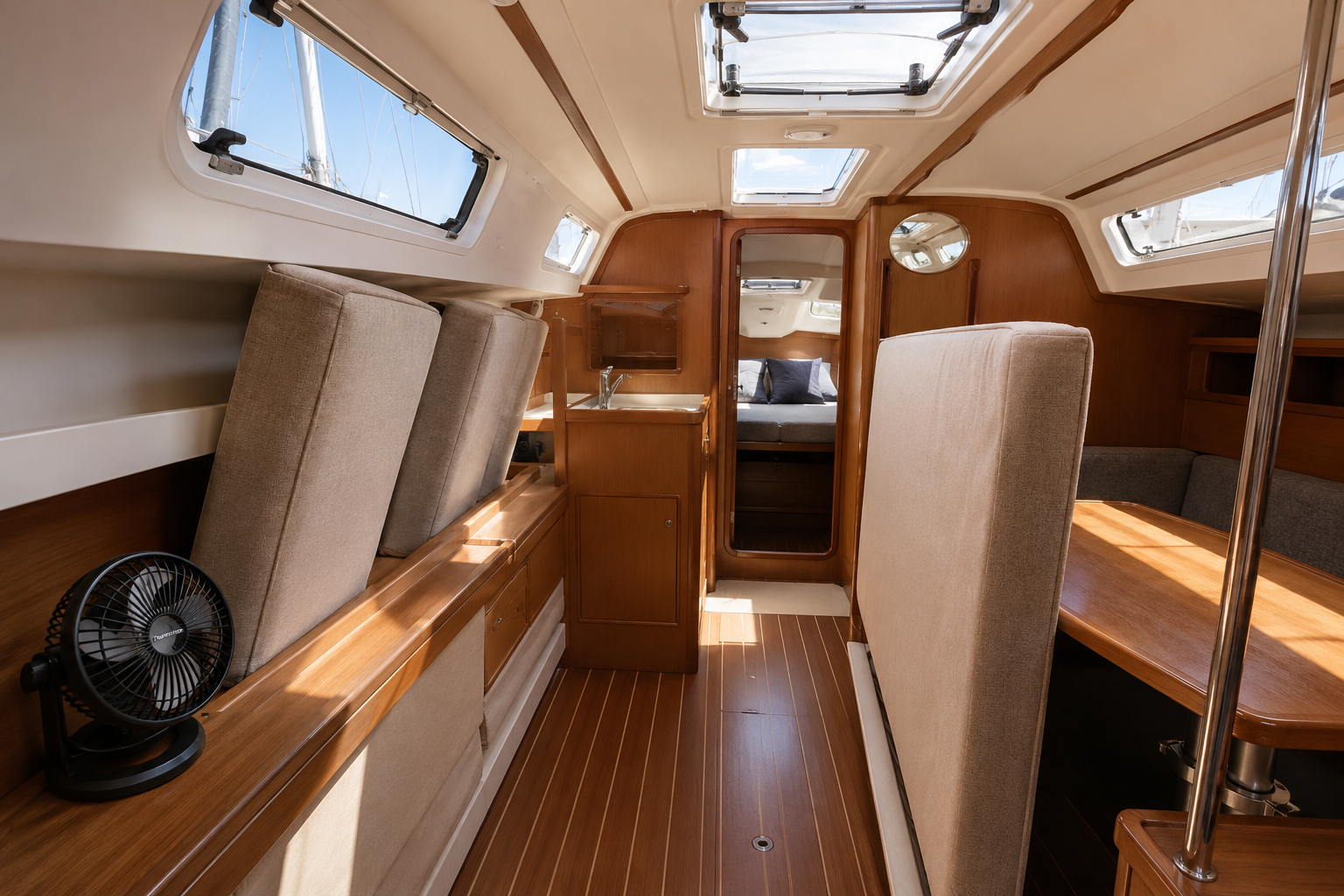
When you button the boat up and leave, you obviously can't leave hatches wide open, so this is where solar-powered vents and small cabin fans earn their keep. A solar vent runs all day for free and keeps a slow, steady exchange of air going through the cabin. Even a couple of cheap battery fans aimed at problem areas make a real difference. Pull the cushions off the settees and stand them on edge so air reaches both sides instead of trapping humidity against the berth.
[IMAGE 1: A boat cabin interior with hatches and ports propped open, sunlight streaming in, cushions stood on edge to allow airflow. Clean and dry. No text.]
Control the Moisture at the Source
Once the air is moving, go after the humidity itself. Moisture absorbers like tubs of calcium chloride crystals are cheap and shockingly effective in a closed cabin; set a few in the lockers and the head and empty the collected water when they fill. For a boat with shore power, a small dehumidifier left running does the same job on a bigger scale and is worth every watt during a humid stretch.
Don't forget the bilge. A little water down there evaporates into the whole boat, so keep it dry and clean, and make sure your bilge pump is actually keeping up. The same goes for the outside of the boat, because a hull rinsed of salt after every outing dries faster and holds less moisture, which is one more reason a freshwater washdown after saltwater trips pays off well beyond just protecting the finish.
Clean It Out Before You Close It Up
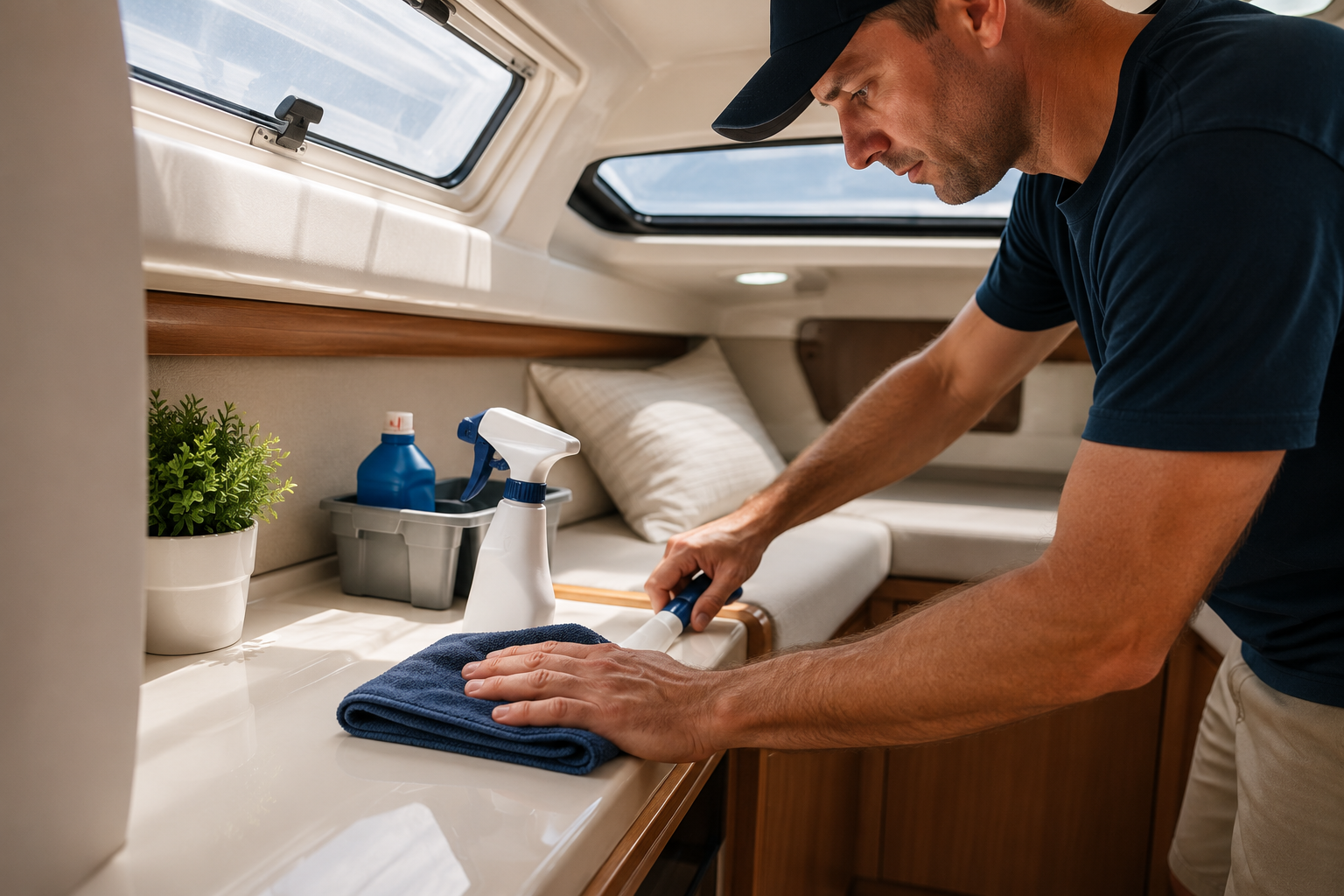
Mildew feeds on the film of grime, skin oils, food residue, and salt that builds up on interior surfaces, so a clean boat resists it far better than a dirty one. Before a stretch away from the boat, wipe down the surfaces that collect that film, air out the refrigerator and leave the door cracked, and take home anything that can go moldy, damp towels, leftover food, wet foulies, and the like.
If you already have spots, hit them early with a marine-safe mildew cleaner before they set and stain. A thorough interior clean is the kind of thing that fits naturally into a full detailing session, and giving the inside the same attention you'd give the hull keeps small problems from becoming permanent ones. The point is to leave nothing behind for the mildew to eat.
[IMAGE 2: A boater wiping down and cleaning the interior surfaces of a boat cabin, bright natural light, fresh and tidy result. No text.]
A Simple Routine That Keeps It From Coming Back
None of this is hard once it's a habit. When you leave the boat, crack the vents, set out your moisture absorbers, stand the cushions up, empty anything perishable, and let the solar vent do its quiet work while you're gone. That five-minute routine is the difference between opening a fresh cabin next weekend and fighting black spots all August.
The same discipline that protects your interior protects the rest of the boat too, and treating your gelcoat right against the summer sun rounds out the same care habit. Keep air moving, keep moisture down, and keep it clean, and mildew simply runs out of things it needs. How do you keep your cabin fresh through the humid months? Share your setup in the comments, I'm always looking for a better trick.