




Your boat has been sitting all winter, and now spring is finally here. The anticipation of getting back on the water is real, but before you crank that engine and head to your favorite fishing spot or anchorage, there’s something that stands between you and a successful launch: a thorough, honest cleaning. After months of storage, your vessel has accumulated dust, grime, oxidation, and whatever else nature threw at it during the off-season. The good news? A solid detailing routine isn’t complicated—it just takes time, the right approach, and a little elbow grease.
I’ve cleaned plenty of boats in my years on the water, and I can tell you that how you approach spring detailing makes a difference in how your boat looks, performs, and holds its value down the road. So let’s walk through what actually works.
Starting with the Exterior
The hull is the first thing people see, and it’s also the hardest working part of your boat. Salt, algae, barnacles, and oxidation don’t take a winter off. Start with a good freshwater rinse and a soft-bristle brush to loosen the buildup without scratching the surface. If your boat sat in saltwater, you’ve probably got some staining—use a marine-specific hull cleaner that won’t damage the gel coat. A pressure washer set to a reasonable PSI works well, but keep it on low to medium settings and maintain distance; you don’t want to strip the protective layers off the finish.
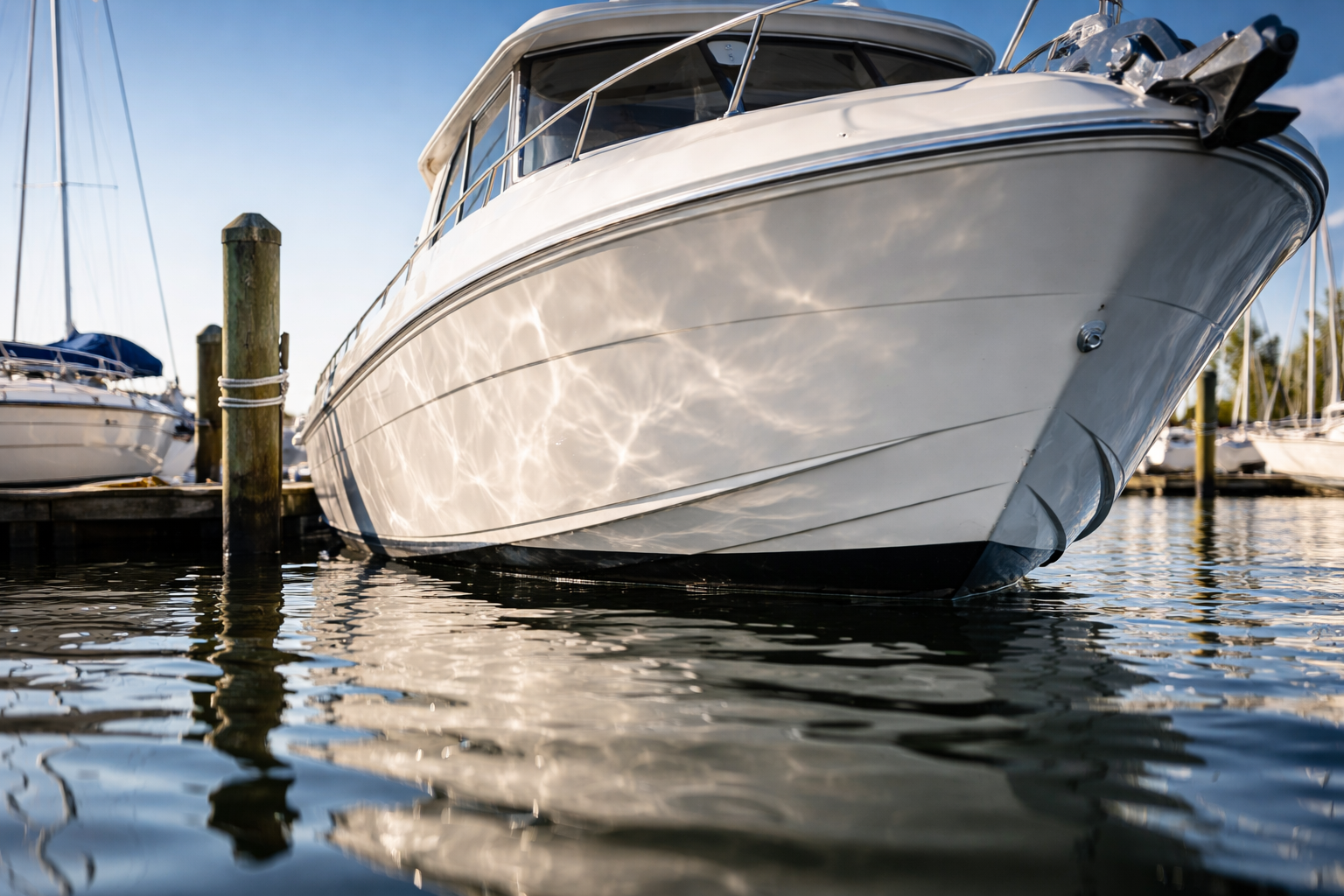
Once the hull is clean and dry, look for oxidation—that chalky, dull film that builds up on fiberglass. Rubbing compound removes it. Work in small sections, and don’t oversand. Once you’ve restored some of that shine, it’s time to wax or seal the gel coat. A good marine wax protects against UV rays and keeps water from bonding to the surface. Two coats make a noticeable difference in how the boat looks and how it sheds moisture. Your boat will gleam, and you’ll have added another layer of protection against the elements.
Topsides and Deck
The non-skid surfaces on your deck are textured for safety, but that texture is a dirt trap. Use a stiff brush and a deck cleaner to get into the grain; a pressure washer follows, but again—keep the nozzle back and use light pressure. If you’ve got canvas bimini tops, t-tops, or vinyl covers, these need their own attention. Canvas can mildew over the off-season, so a marine canvas cleaner and a soft brush bring it back to life without degrading the material. For vinyl, a UV protectant spray does wonders—it restores color and adds a layer of protection against sun damage.
Interior Deep Clean
The cabin is where you spend time, so it matters. Dust everything first—overhead, shelves, and corners. Vacuum the cabin sole and any fabric seating. If you’ve got teak trim, a teak cleaner restores the wood and brings out the grain without the heavy, plasticky feel of varnish. Stainless steel hardware deserves attention too; a marine stainless cleaner removes salt deposits and fingerprints. The galley needs a proper scrub—clean the sink, wipe down the stove, and get rid of any musty smell from sitting closed up. Don’t forget the head. After winter, a thorough cleaning with a marine disinfectant keeps things fresh and prevents odors from taking hold.

The bilge is the engine room of your vessel, and while it’s not glamorous, a clean bilge runs healthier. Pump out any standing water, wipe down surfaces, and make sure water is flowing freely. If you’ve been meaning to tackle some of those off-season projects—storage upgrades, plumbing fixes, or other maintenance items—spring cleaning is the perfect time to address them. A clean, organized interior makes every trip on the water more enjoyable.
Protecting Your Work
Here’s the thing: detailing is only half the battle. Protecting what you’ve cleaned is the other half. UV protectants on canvas, vinyl, and exposed plastic keep colors from fading and materials from degrading. When your boat is docked, a quality cover shields everything from sun, salt spray, and bird droppings. If you’re storing it on land, a full boat cover is worth every penny. And while you’re thinking ahead, investing in regular maintenance habits—rinsing with freshwater after saltwater use, wiping down stainless, keeping the interior dry—means your next spring cleaning won’t be as brutal. Fellow boat owners who stay on top of their maintenance know the difference it makes.
A clean boat runs better, looks better, and holds its value better. Spring detailing isn’t just about aesthetics—it’s about taking care of your investment and making sure you’re ready to enjoy every day on the water. The work is worth it.
Have you tackled your spring detailing yet? Share your best tips and before-and-after photos in the comments. And if you want more detailed walkthroughs on boat maintenance, check out the JakeSea YouTube channel—there’s a community of boat owners out there doing the work, and I’d love to see what you’re doing with your vessel.