

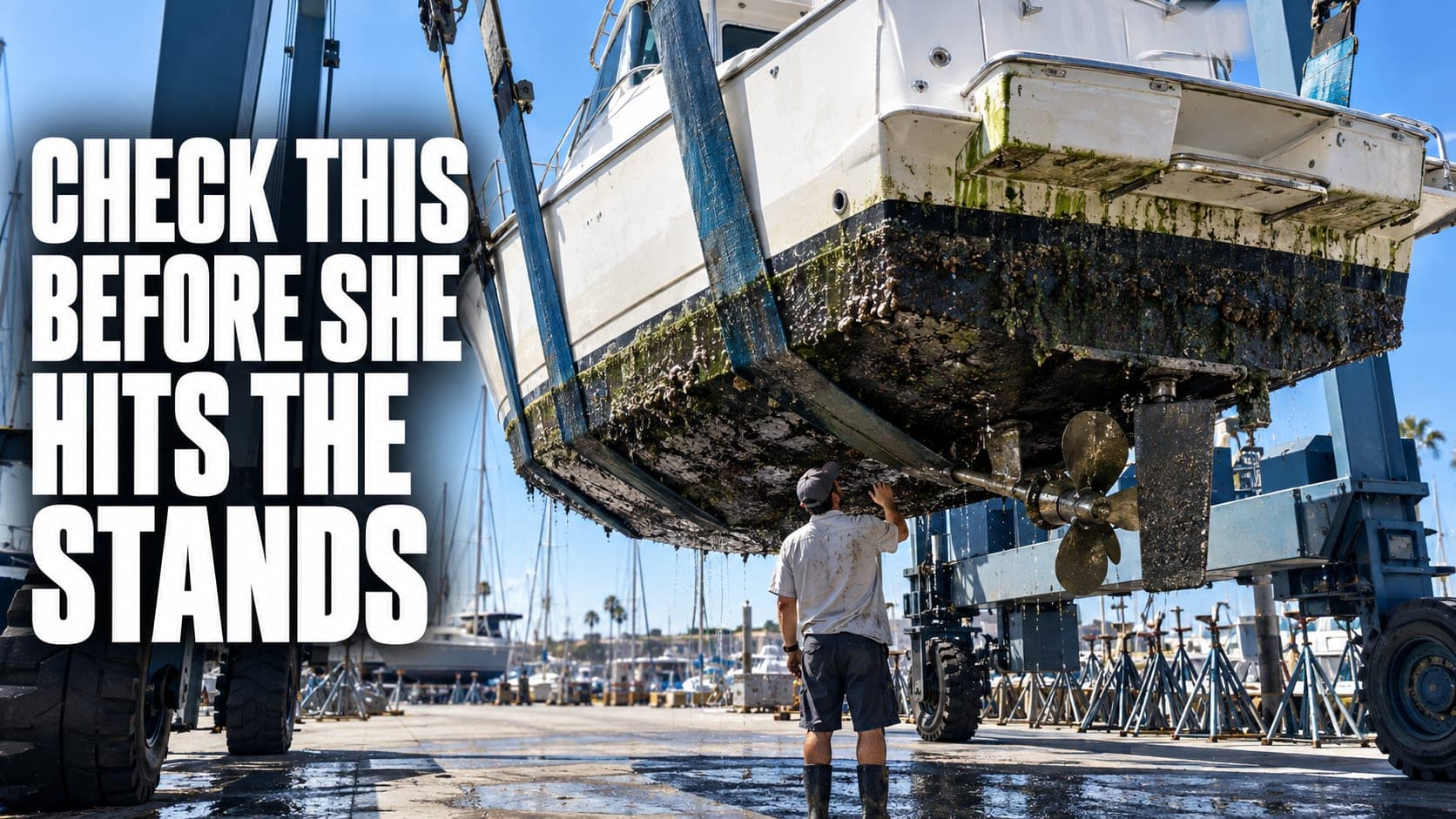

The travel lift picks your boat up once a year, and for about twenty minutes she hangs in the slings with the whole bottom exposed and still dripping. Most owners spend that time in the yard office talking about the invoice. That is a mistake. Everything you cannot see from the dock all season — the running gear, the through-hulls, whatever is left of your anodes, the story the bottom paint is telling — is right there at eye level. A proper haul out inspection is the closest thing to a free survey you get all year, and it takes less time than the wash-down.
Walk It Before Anyone Touches the Pressure Washer
The yard will be reaching for the wand before the boat stops swinging. Hold them off for five minutes. The growth pattern on a dirty hull is information, and once it is on the ground it is gone. Where the slime is heaviest, where barnacles took hold and where the paint is still clean tells you which parts of the bottom are working and which have quit. Walk both sides with your phone out. You will not remember any of this in April.
Then let them wash it, and let them do it now. Growth comes off a wet hull with water pressure alone. Let it bake in the sun for two days and you are looking at a scraper, a respirator and most of a Saturday.
What the Bottom Paint Is Telling You
Once the hull is clean, read it. Even wear across the bottom means the paint did its job and you used up a season. Bare edges and a worn waterline are normal on an ablative. What you want to catch is the abnormal: paint lifting in sheets, chalky patches that rub off on your hand, or heavy growth in one spot while the rest is clean — that last one is usually a thin spot from the last application rather than a paint failure.
Check the gelcoat below the waterline for small raised bumps while the hull is still damp, because blisters are far easier to spot wet than dry. A few pinheads on an older boat is not an emergency, but photograph them so next fall you can tell whether they are spreading. All of it feeds into how much paint you actually need before spring launch, and deciding that in September beats guessing in a cold shed in March.
Running Gear Is the Part You Only Get to See Right Now
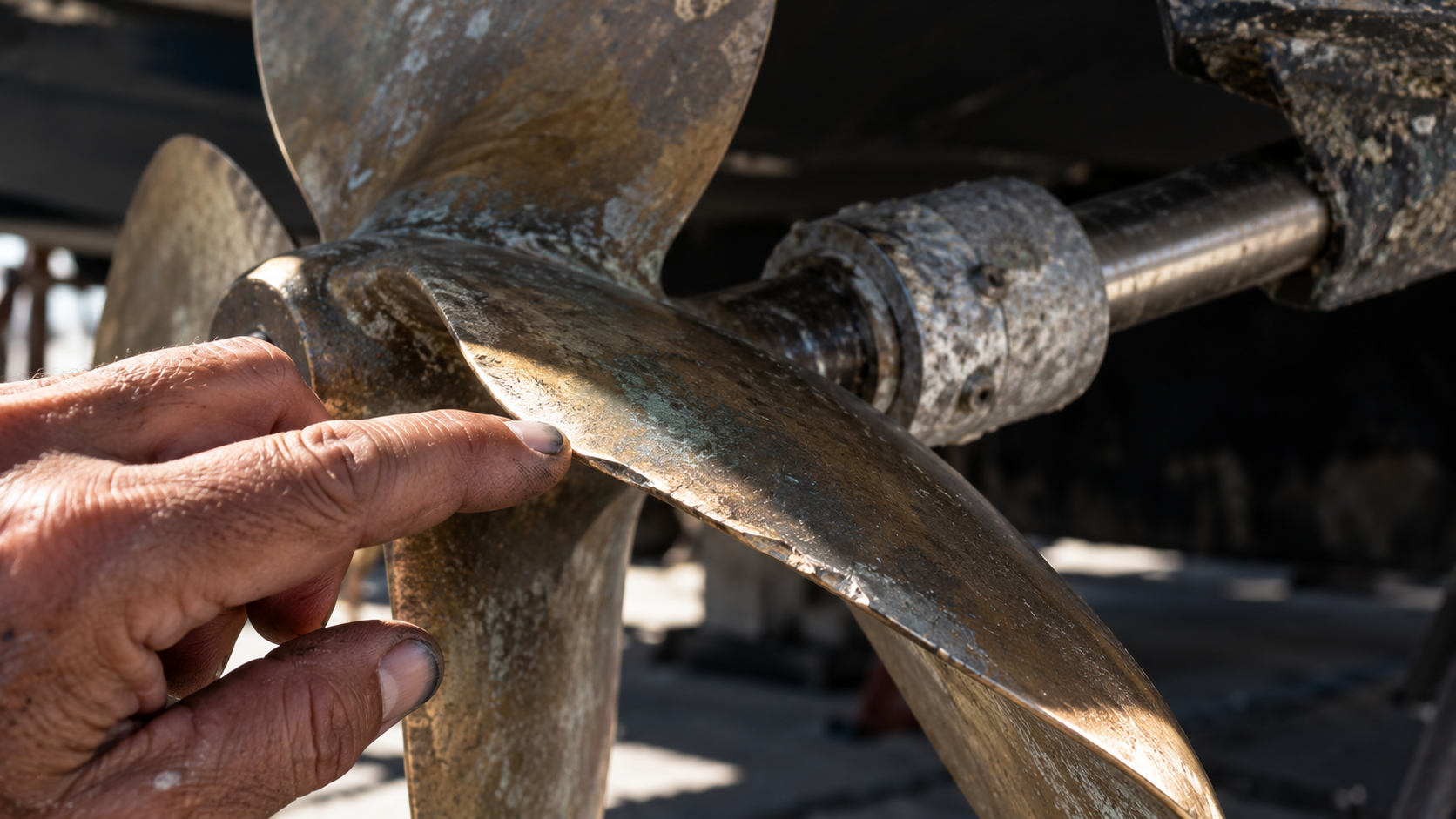
Get under the boat and put your hands on the propeller. Run a finger along every blade edge looking for nicks, curled tips and bent trailing edges. Damage that feels minor to the touch is not minor in the water — even a small ding in one blade throws the wheel out of balance and quietly eats fuel and top end all season. Anything worse than a fingernail catch goes out to be tuned now, while you have months of downtime instead of a queue at every prop shop the week before launch.
Then grab the shaft just forward of the prop and try to move it. You want almost nothing. Noticeable play means a worn cutless bearing, and that belongs on the winter list rather than being discovered when the boat starts humming at cruise next June. Rock the rudder the same way, check the strut where it meets the hull for hairline cracks, and look at the trim tab rams for weeping fluid while you can still reach them standing up.
Anodes, Seacocks, and the Ten Minutes That Save a Haul Bill
Your anodes should be roughly half gone after a season. Much less and the boat is not protected properly. Much more — or a zinc that vanished entirely by September — means something beyond normal galvanic wear, and it is usually stray current coming off the dock rather than anything on your own vessel. Replace them all while she is on stands and match the metal to the water she lives in.
Work every seacock through its full travel a few times, because the one that will not budge in the spring has been seized since August. Look at the through-hulls and hose clamps from the inside too. Clear the transducer face so the depth sounder is not lying to you next season, and scrub the boot stripe now while the scum is still soft.
Write the List Before You Drive Home
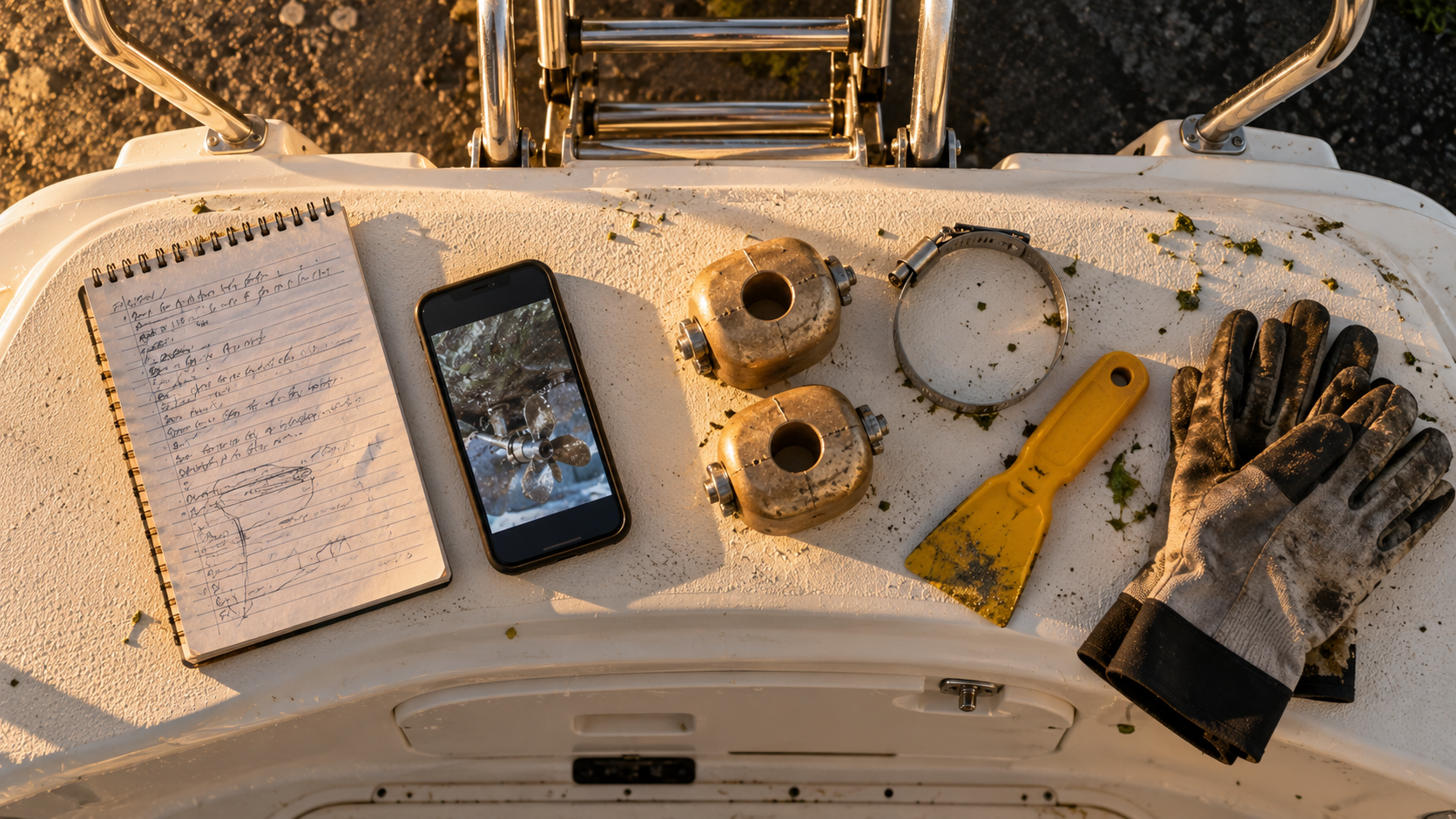
The point of the twenty minutes is walking away with a written list. Stand at the transom, go back through the photos, and turn them into jobs with actual parts: prop tune, two anodes, one seacock, a quart of paint. That list is what makes a winter productive instead of a scramble, and it pairs with putting her away properly for the cold months to decide how smoothly next spring goes.
It costs a cup of coffee's worth of time in the yard, and it is the only look you get at half your boat all year. If you have pulled something ugly out of the slings on haul out day, drop it in the comments — those are always the best stories in the yard.