

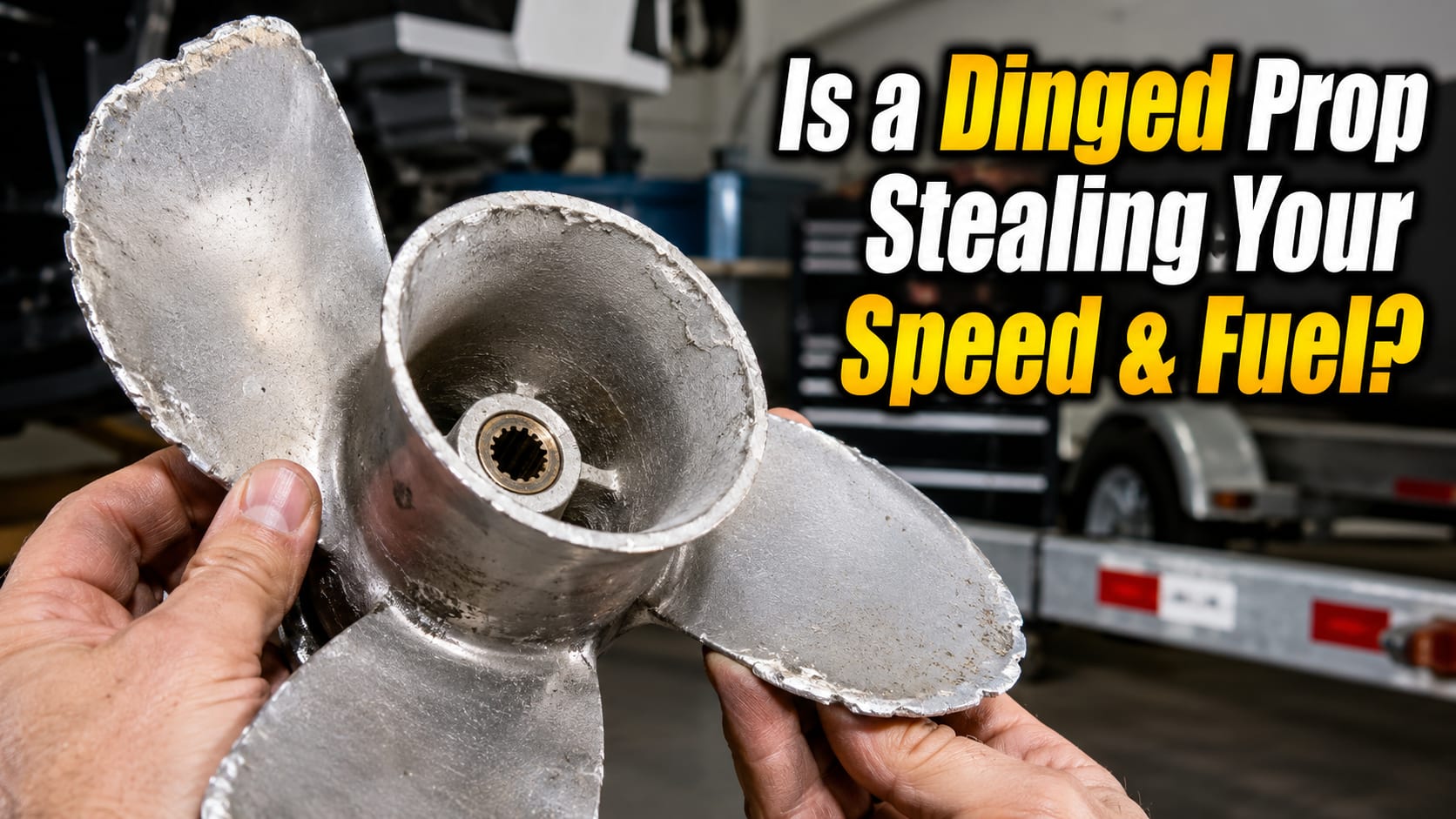

Your boat can feel completely normal at the helm and still be losing you money on every single trip. A propeller doesn't have to be mangled to hurt you. A few small dings on the blade edges, a slight bend you'd never spot from the dock, and suddenly you're burning more fuel to hit the same speed you had last season.
Late summer is when I see the most beat-up props come off boats, because that's when everybody's been running hard all season, brushing sandbars, and clipping the occasional crab pot. Here's how to catch a bad prop before it costs you a whole season of performance and a repair bill you didn't need.
What Prop Damage Actually Does to Your Boat
A propeller works by throwing water backward cleanly, and every blade is shaped to a specific pitch and curve. Even tiny changes to that shape wreck how efficiently it moves water. When the trailing edge of a blade gets nicked or curled, the prop starts to slip. It spins, but it's not gripping the water the way it should. You feel it as a boat that's slow to get on plane, an engine that revs higher than normal for the same speed, and a fuel gauge that drops faster than you remember.
A prop that's knocked out of balance by a bend also sends vibration straight up the shaft into your gearcase, and that vibration quietly chews up your bearings and seals. So a small ding you shrug off in August can turn into a gearcase rebuild by next spring. It's the same reason careful boaters obsess over dialing in a smoother, more efficient ride — small changes at the back of the boat make a big difference in what you burn.
How to Spot Damage You Can't Feel at the Helm
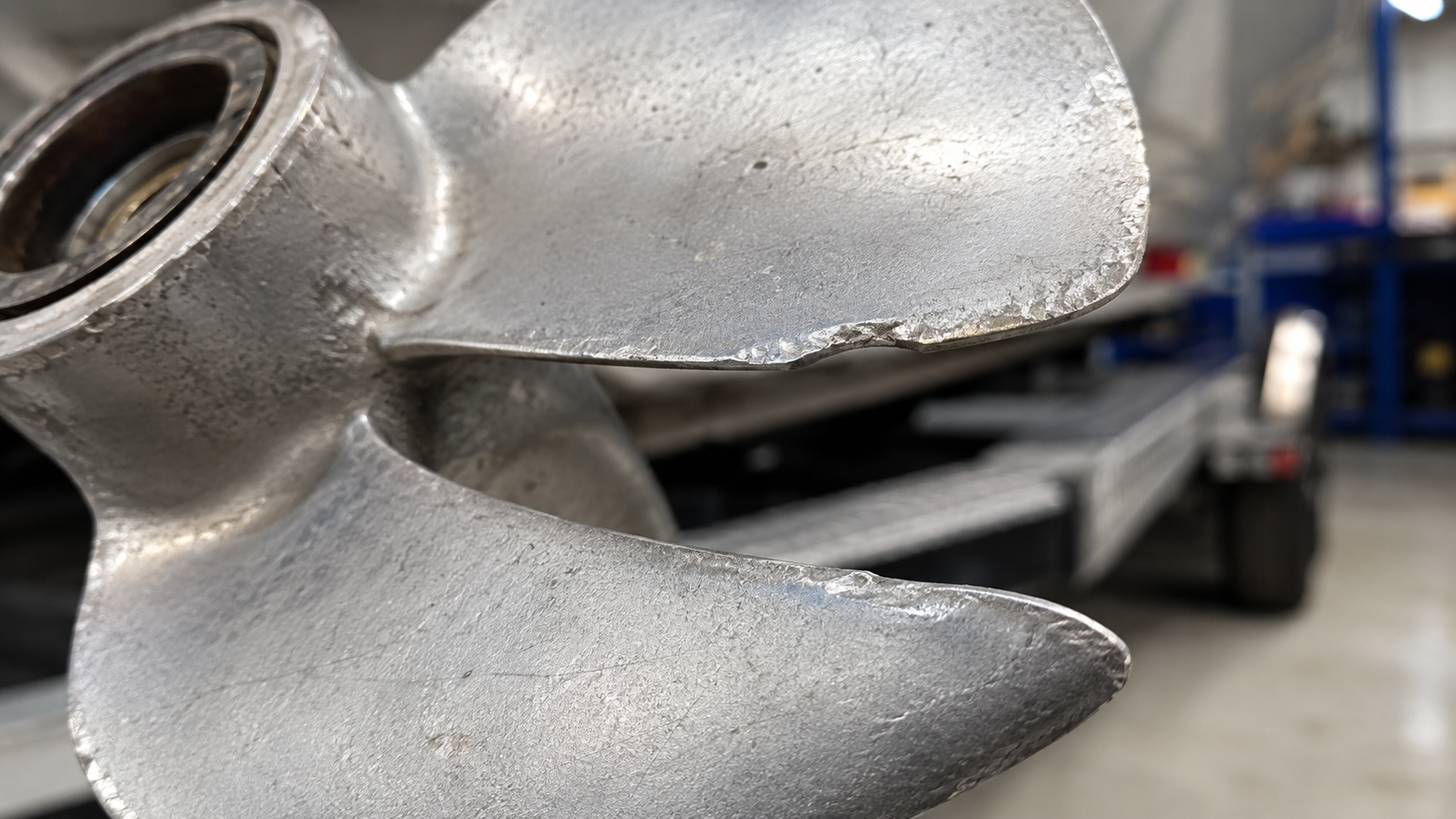
The problem with prop damage is that it comes on gradually, so you get used to it. Your baseline performance slowly drops and you never notice the day it changed. That's why I check my prop by hand, not by feel at the wheel. With the boat out of the water or the engine tilted up and the key removed, run your fingers along both edges of every blade. You're feeling for nicks, curled edges, and thin spots where metal is missing.
Then look down the prop from directly behind to see whether all the blades sit in the same plane; a bent blade jumps right out once you know to look. Check the hub for signs of a spun hub, which usually shows as the rubber insert pushed out one side, and check for fishing line wrapped tight behind the prop where it meets the seal. Wrapped line is a boat-killer, because it works monofilament right past the seal and lets water into your gearcase. If you've ever touched bottom or run aground, pull the prop and inspect it even if the boat seems fine — sand and rock do damage you can't see with the prop still on.
When to File It, When to Send It Out
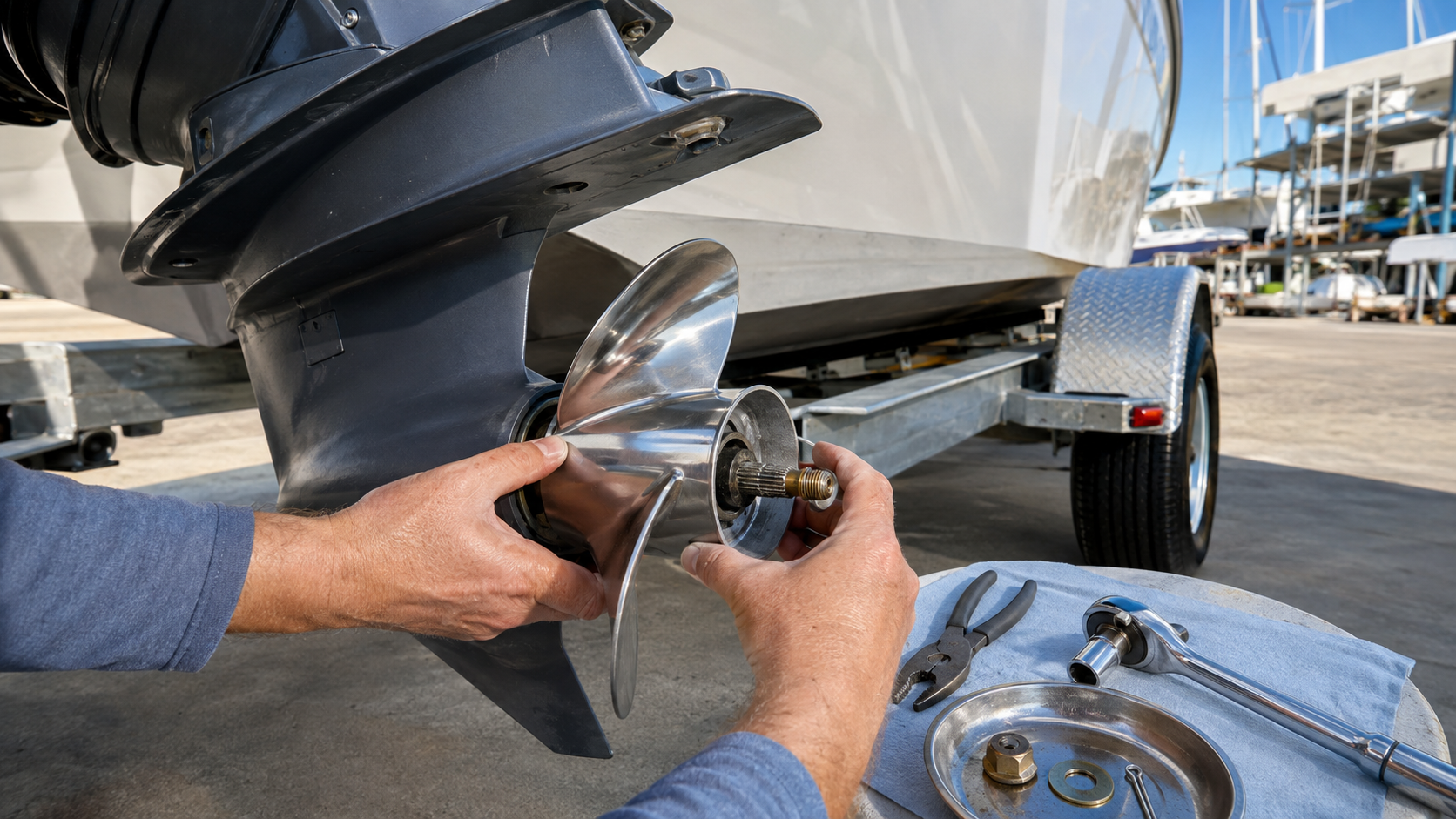
Minor edge dings you can dress yourself with a file, just knocking down the sharp burrs so the edges are smooth and even from side to side. Anything past cosmetic — a real bend, a chunk missing, a crack, or a spun hub — goes to a proper prop shop. A reconditioning costs a fraction of a new wheel, and a good shop can re-pitch and rebalance an aluminum or stainless prop right back to spec. It pays to keep a spare prop, nut, and cotter pin aboard, because a spare turns a ruined afternoon into a fifteen-minute swap on the water. If you run in saltwater, this is one more reason to be religious about rinsing everything down after a saltwater trip, since corrosion pits the blades over time and pits behave just like dings.
Build the Habit
Make the prop part of your routine instead of a once-a-year surprise. I give mine a quick look every time the boat's on the trailer or hauled out, and a proper hands-on inspection at the start and the end of the season. Two minutes with your hand on the blades will tell you more than a whole season of guessing at the helm.
If your boat has felt a little lazy getting on plane lately and you've been blaming the fuel, blame the prop first. Pull it, feel it, and you'll probably find your answer in about thirty seconds. Got a prop horror story or a shop you trust? Drop it in the comments — I always want to hear how other boaters caught theirs.
