

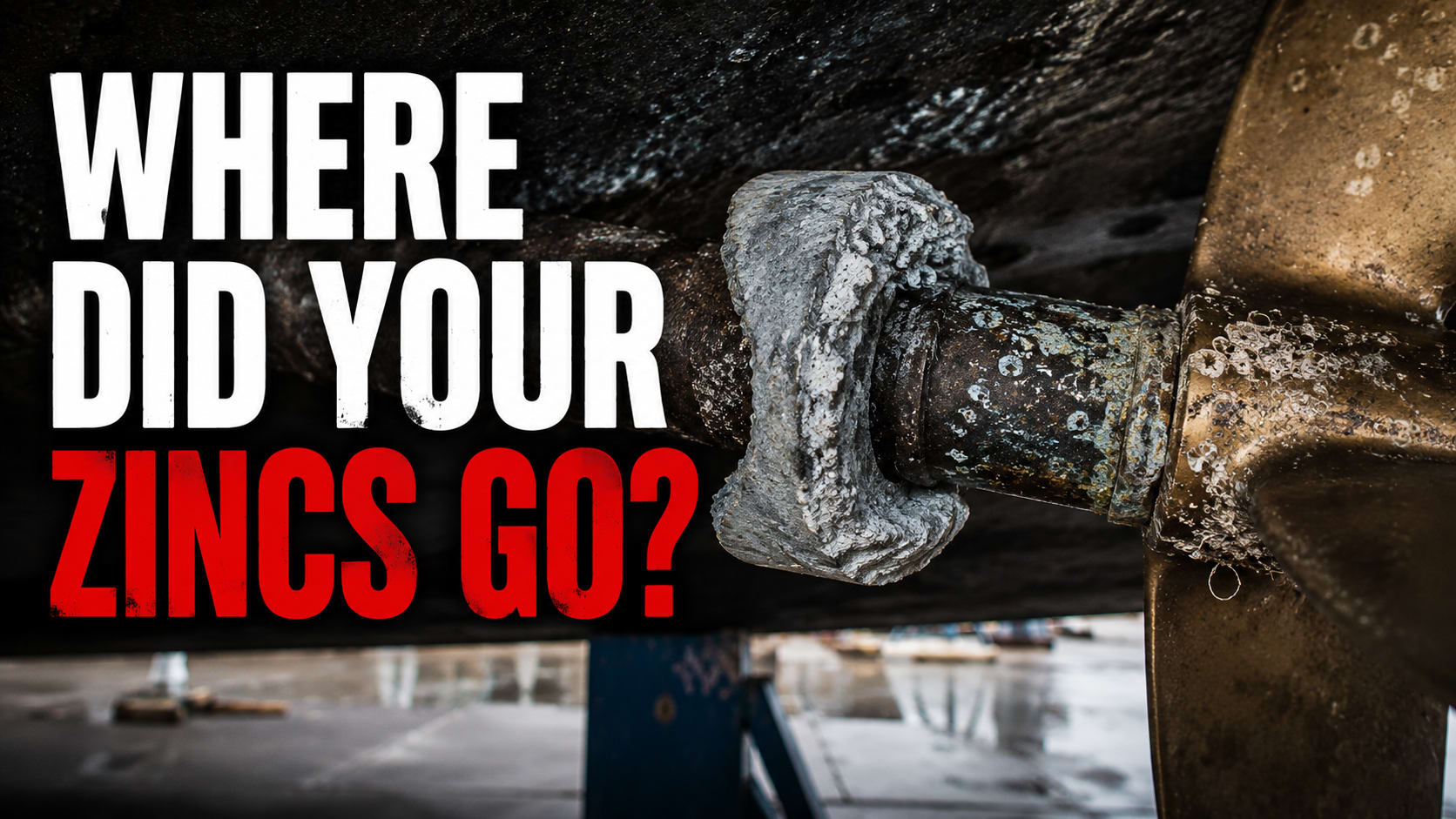

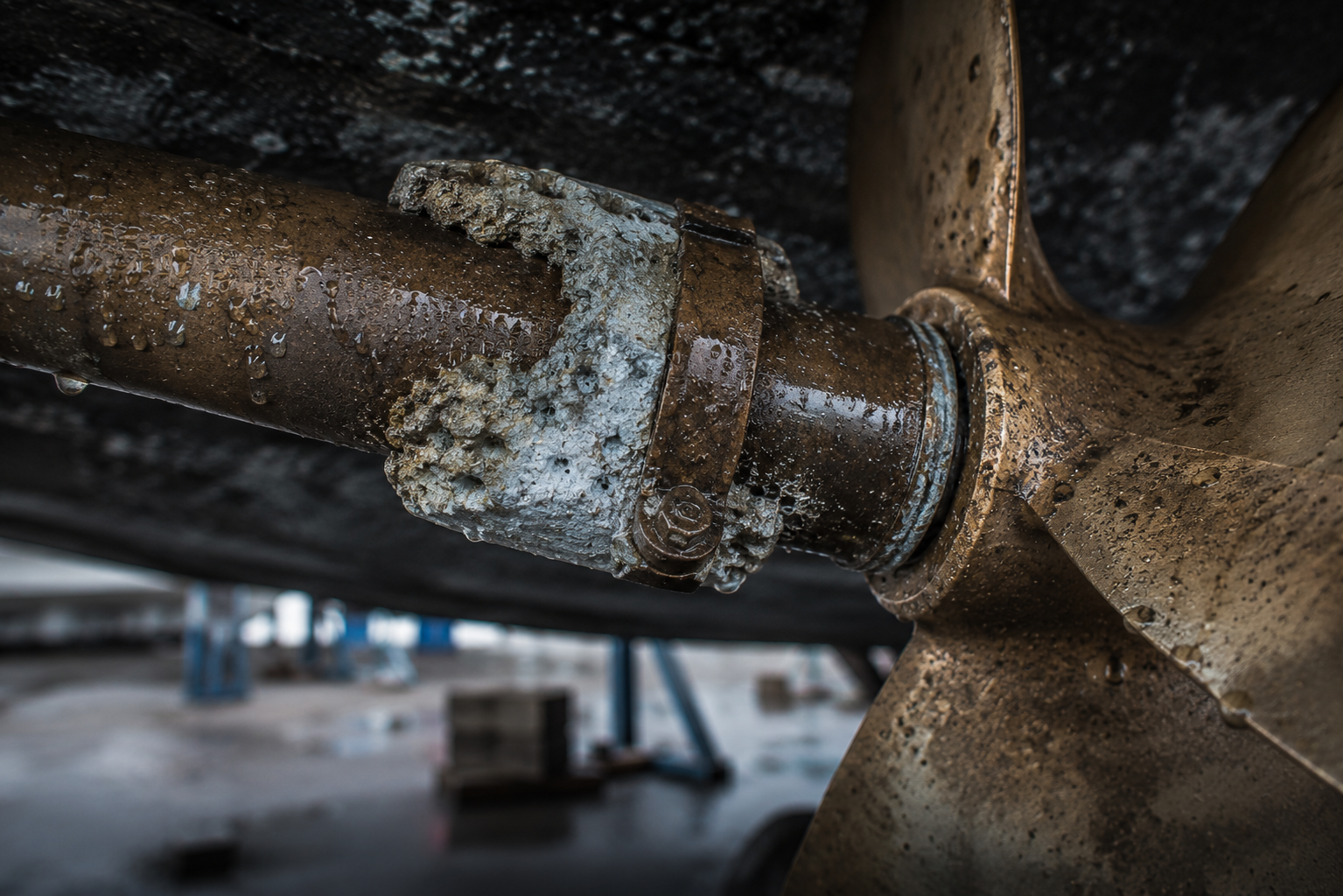
Pull your boat after a season in the slip and look at the zincs. If they are chalky, pitted, and half the size they started at, that is the system working exactly as designed. If they are gone entirely by mid-summer, something on your boat or on your dock is quietly eating metal, and the zincs are the only thing standing between that and your running gear.
Here is the thing most people never get told: sacrificial anodes are a wear item that reports on conditions. How fast they disappear tells you as much as the fact that they are there at all.
What the Anode Is Actually Doing
Put two different metals in salt water with an electrical path between them and you have built a battery. The less noble metal gives up material to protect the more noble one. Your prop, shaft, and underwater hardware are relatively noble, so left alone they would slowly corrode against each other and against everything else in the marina.
A zinc anode is deliberately the least noble thing in the circuit. It corrodes first and it corrodes instead, which is the whole point. That is why a half-eaten zinc is a good sign and a pristine one after a full season is not — a zinc that is not wasting away is usually one that has lost electrical contact with the metal it was supposed to protect.
When They Vanish Too Fast, Look at the Dock
If you are burning through anodes in a couple of months, the usual culprit is stray current, and more often than not it is coming from shore power rather than from your own boat. A neighbor with a wiring fault can dump current into the water, and your zincs will happily protect their boat as well as yours until there is nothing left.
The tell is that it started when you changed slips or when a new boat moved in beside you. Unplugging your shore power for a week and seeing whether consumption slows is a rough but useful test. A galvanic isolator on your shore power connection is the standard fix and worth the money if you keep the boat plugged in year round. This is also why a freshwater washdown does nothing for underwater corrosion — that fight happens below the waterline and it is electrical, not chemical.
Replace at Half, Not at Gone
The rule is simple: replace an anode when it is down to about half its original mass. Waiting until it is a nub on a stud means you spent the back half of the season with reduced protection, and the damage that happens then is to hardware that costs real money.
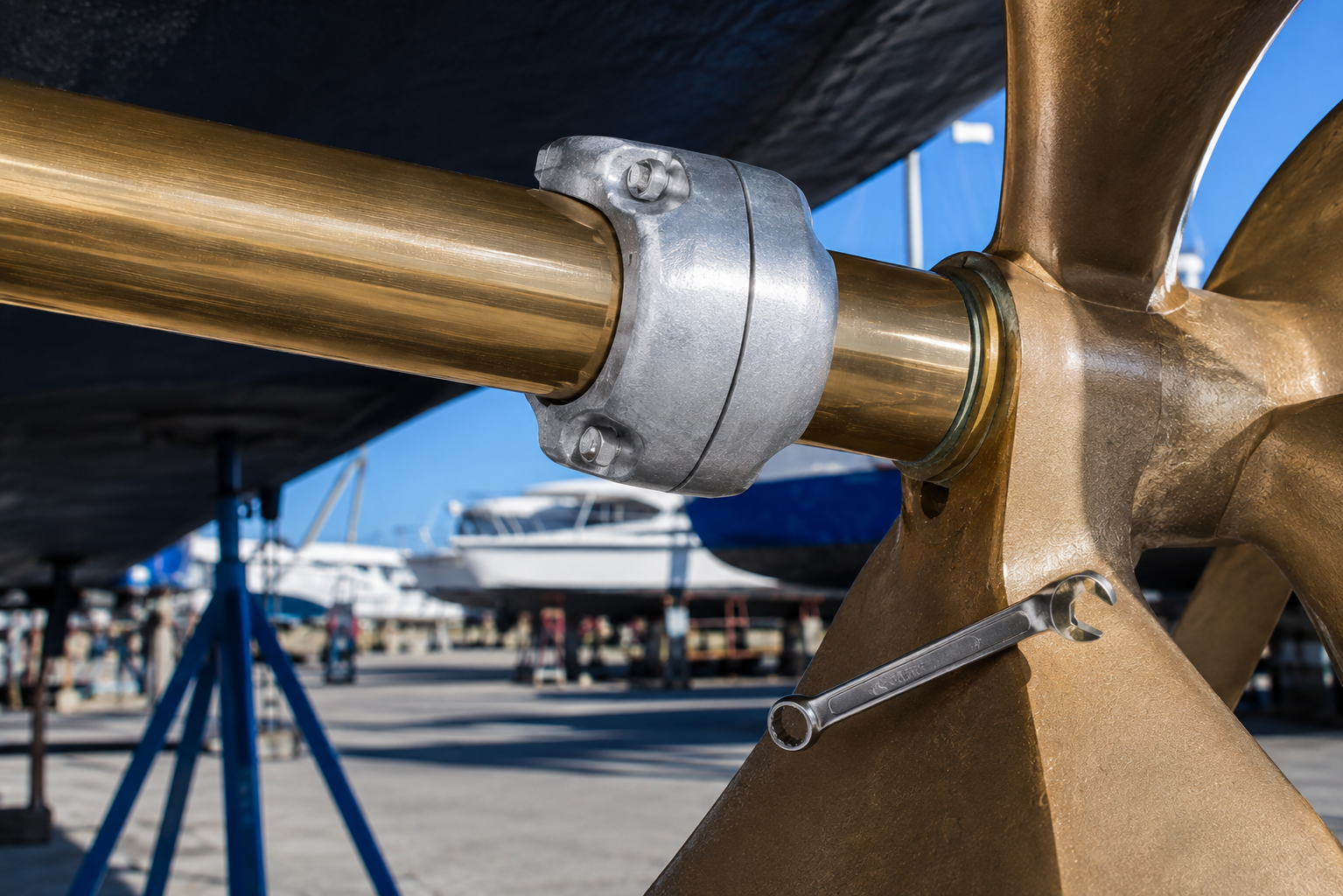
Never paint an anode and never let bottom paint creep onto one, because a coated zinc is an inert lump. Make sure the mounting surface is clean bare metal when you fit a new one, since a layer of paint or growth under the anode breaks the electrical path and gives you the pristine-zinc problem. Worth doing at the same time as bottom paint while the boat is already out.
Match the Metal to the Water
Zinc is for salt water. In fresh water zinc passivates — it develops a crust that stops it working — so freshwater boats want magnesium anodes instead. Brackish water is the awkward middle ground and aluminum anodes are the usual answer there, since they work across the range and are increasingly the default recommendation even in salt.
If you are moving the boat between environments for the season, that matters. Get in the habit of checking the anodes whenever the boat comes out, and note how much is left each time so you have a baseline. When the rate changes suddenly, that is your early warning that something in the water around you changed. Worth folding into your end-of-season routine so it does not get forgotten. If you have chased down a stray current problem in your marina, tell me how it went in the comments.
