


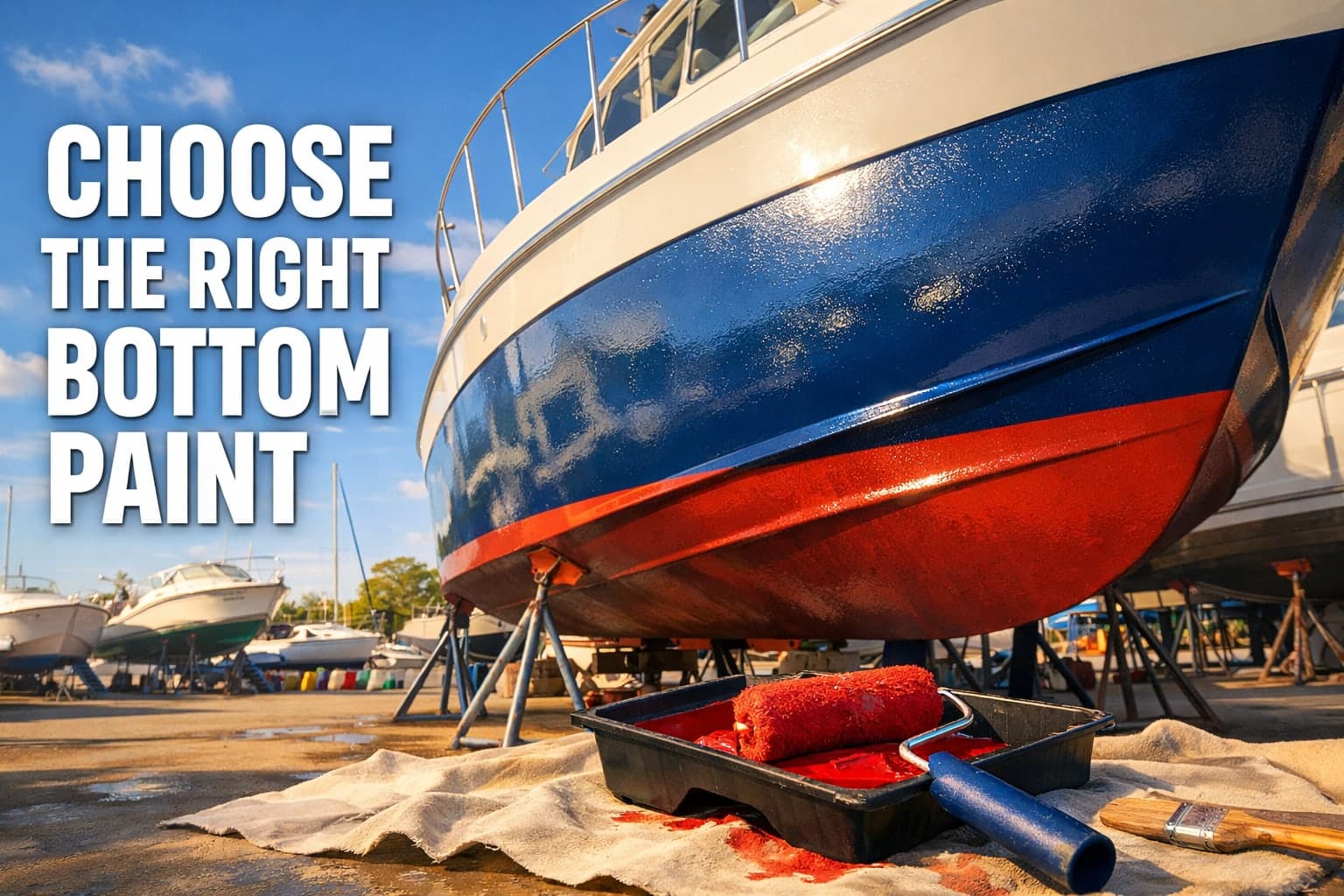

If your boat sits in the water for any stretch of time, bottom paint is not optional. It is the single most important barrier between your hull and a layer of barnacles, slime, and growth that will slow you down and cost you money. Every spring, I watch boaters rush to splash without giving the bottom a thought, and every fall, those same boaters are scraping off an inch of crud wondering why their fuel economy tanked.
Getting your bottom paint right before launch is a job that pays for itself all summer. Here is what you need to know to pick the right paint, prep the hull, and get it done without wasting a weekend.
Why Bottom Paint Matters More Than You Think
Marine growth is a performance killer. Even a thin algae film creates enough drag to cut fuel efficiency by ten to fifteen percent. Barnacles are worse — they damage gel coat, clog through-hulls, and cause corrosion that turns a simple haul-out into a major bill. Antifouling bottom paint releases biocides slowly, making your hull a surface organisms avoid. The right paint keeps your boat faster, cleaner, and cheaper to run all season.

Ablative, Hard, or Hybrid — Which Type Fits Your Boat
Ablative paint wears away gradually as the boat moves, constantly exposing fresh biocide. It works well for sailboats and cruisers at moderate speeds that sit in the water for long stretches. Hard bottom paint forms a tough, slick surface that handles high speeds and abrasion — the right pick for powerboats that trailer between trips. Hybrid paints combine controlled wear with extra durability, and they have gotten popular because they give you the self-polishing benefit of ablatives without sacrificing toughness.
Hull Material and Compatibility
Most bottom paints use copper as the biocide, which works on fiberglass and wood. But copper on aluminum causes galvanic corrosion that will eat through your hull. If you run an aluminum boat or pontoon, use paints with zinc, cuprous thiocyanate, or a non-metallic biocide like ECONEA.
Switching from hard to ablative or vice versa usually requires a barrier coat. Check the manufacturer’s compatibility chart before committing. A few minutes of homework saves you from peeling paint in July. If you are getting your boat ready for spring, bottom paint should be near the top of your list.
How to Prep and Apply It Right
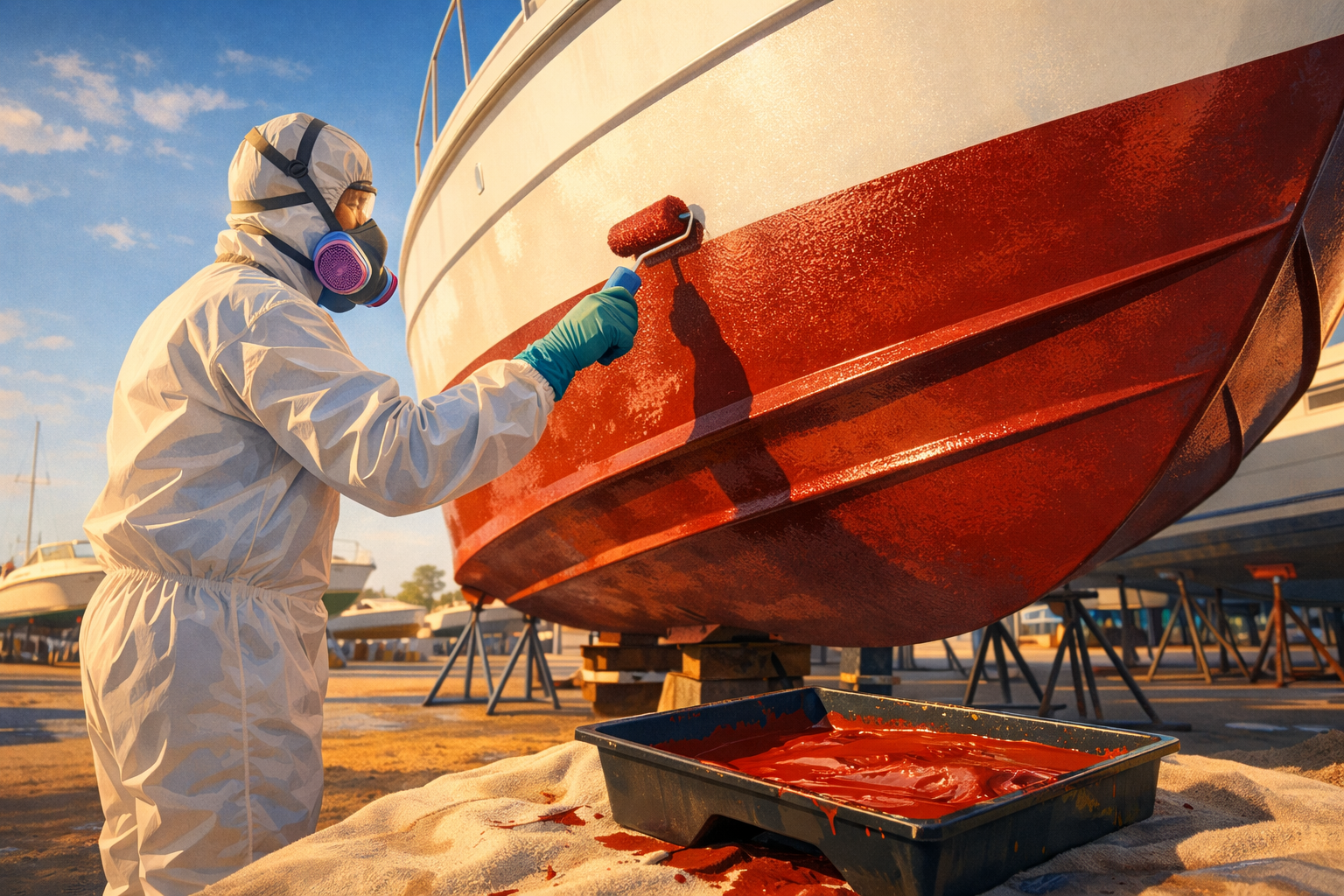
Good prep is ninety percent of the job. Pressure wash the hull to strip old growth, let it dry, then sand the existing paint with 80-grit to give the new coat grip. Wipe down with solvent to remove dust and oils. Apply with a roller for speed and a brush around through-hulls, struts, and the waterline. Two coats is standard, but high-wear zones like the bow and keel benefit from a third.
Manufacturers recommend 50 to 85 degrees Fahrenheit with humidity below 65 percent. In a northern climate, a weekend in late March or April is your window. Give each coat full drying time — rushing leads to soft paint that wears off in weeks.
Time It Right Before Launch Day
Most paints have a launch window — a max number of days between application and splashing. Ablatives give you up to 90 days; hard paints can require launch within 30. Check the data sheet and plan backward from your target date. If you are also tackling off-season projects on your boat, schedule bottom paint as the last item before she goes back in.
Make This the Season You Get It Right
Bottom paint is not glamorous, but it is one of the most impactful things you can do before spring. The right product on a well-prepped hull keeps your boat cleaner, faster, and cheaper to run all season. Take a weekend, do the job right, and you will not think about your bottom again until haul-out. If you have a question about which paint works for your setup, drop it in the comments — I have tried most of them and I am happy to share what worked.