


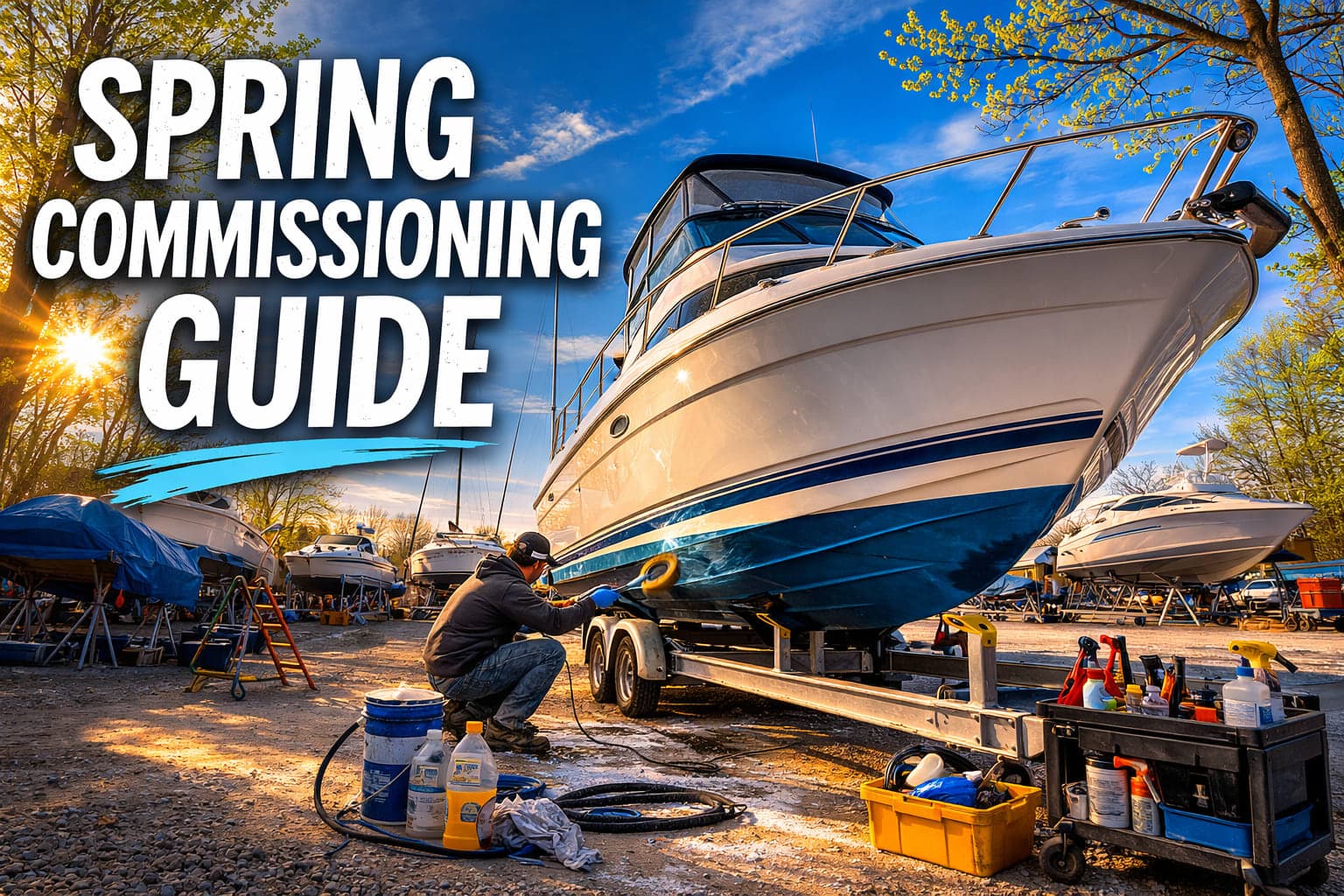

There is nothing quite like that first day back on the water after a long winter. But before you fire up the engine and cast off, your boat needs some attention. Rushing the spring commissioning process is how small problems become expensive ones, and I have seen it happen more times than I can count. Whether you stored your boat yourself or paid a yard to do it, a solid de-winterizing checklist is what separates a great first outing from a tow back to the dock.
If you followed a proper winterizing routine last fall, most of this should go smoothly. If you skipped a few steps back then, now is when you will find out.
Start With the Batteries and Electrical
Your batteries are the heartbeat of your boat, and after months of sitting, they deserve your first look. If you pulled them for the winter, bring them back aboard and check the terminal voltage with a multimeter before hooking anything up. A healthy 12-volt battery should read around 12.6 to 12.8 volts. Anything below 12.4 and you are looking at a battery that may not hold a charge through the season.
Clean the terminals, check all connections, and look for any corrosion or swelling on the battery cases. If you have been thinking about switching to lithium, spring commissioning is honestly the perfect time to do it. You are already tearing things apart anyway.
Check Your Engine and Fuel System
If you fogged your engine before storage, that protective oil coating did its job, but now you need to make sure everything is ready to run. Start with the basics. Check your oil level and condition. If it looks milky or dark, change it before that first start. Inspect the fuel lines for any cracking or soft spots, especially around the fittings. Ethanol-blended fuel is notorious for breaking down rubber over time, and winter sitting accelerates that.
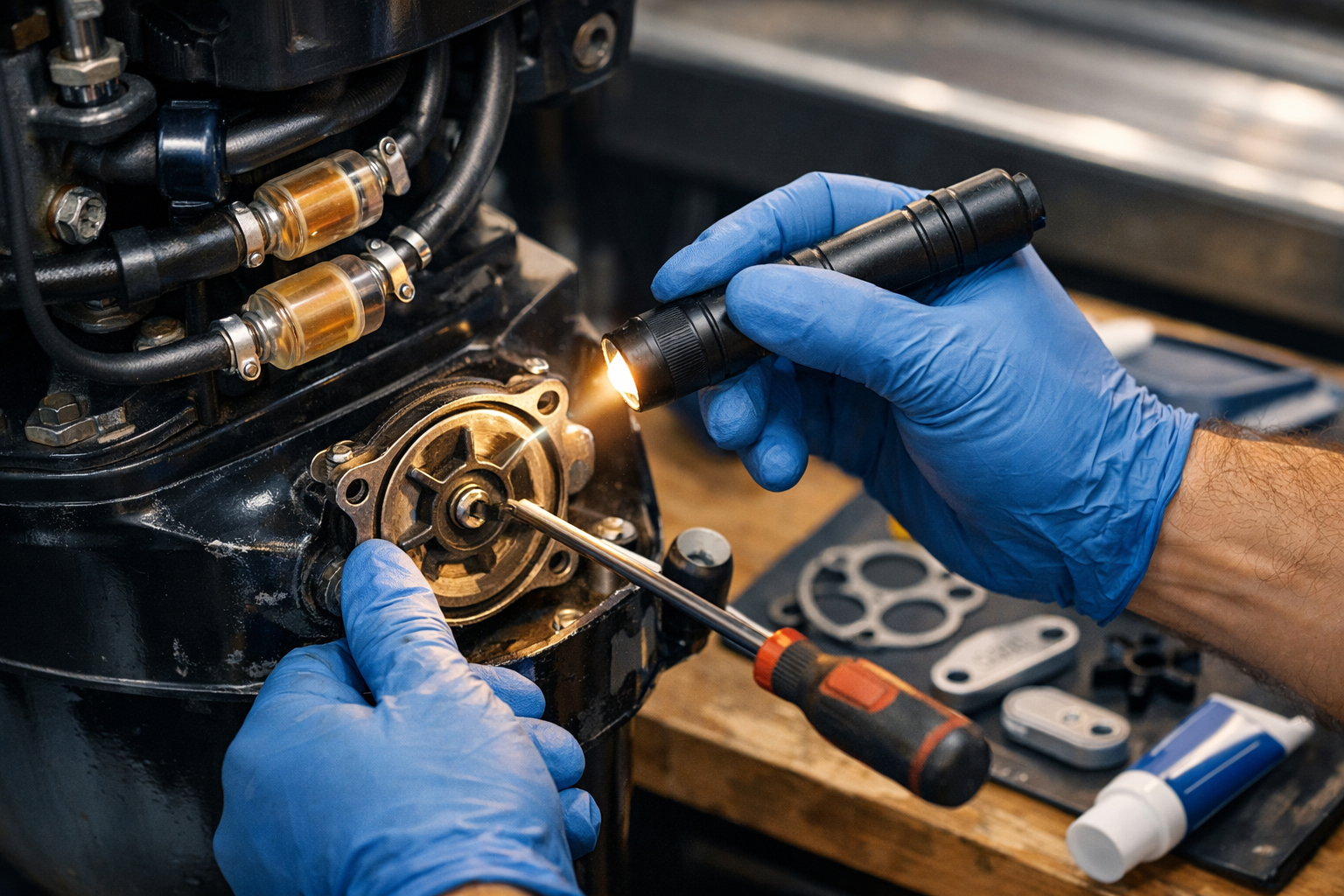
Drain your fuel-water separator and replace the filter if you did not do it in the fall. Check the impeller on your raw water pump. These are cheap, easy to replace, and the number one cause of overheating on that first spring run. If yours is more than a season old, just swap it. A spare impeller is the kind of thing every boat should carry anyway.
Inspect the Hull, Through-Hulls, and Bilge
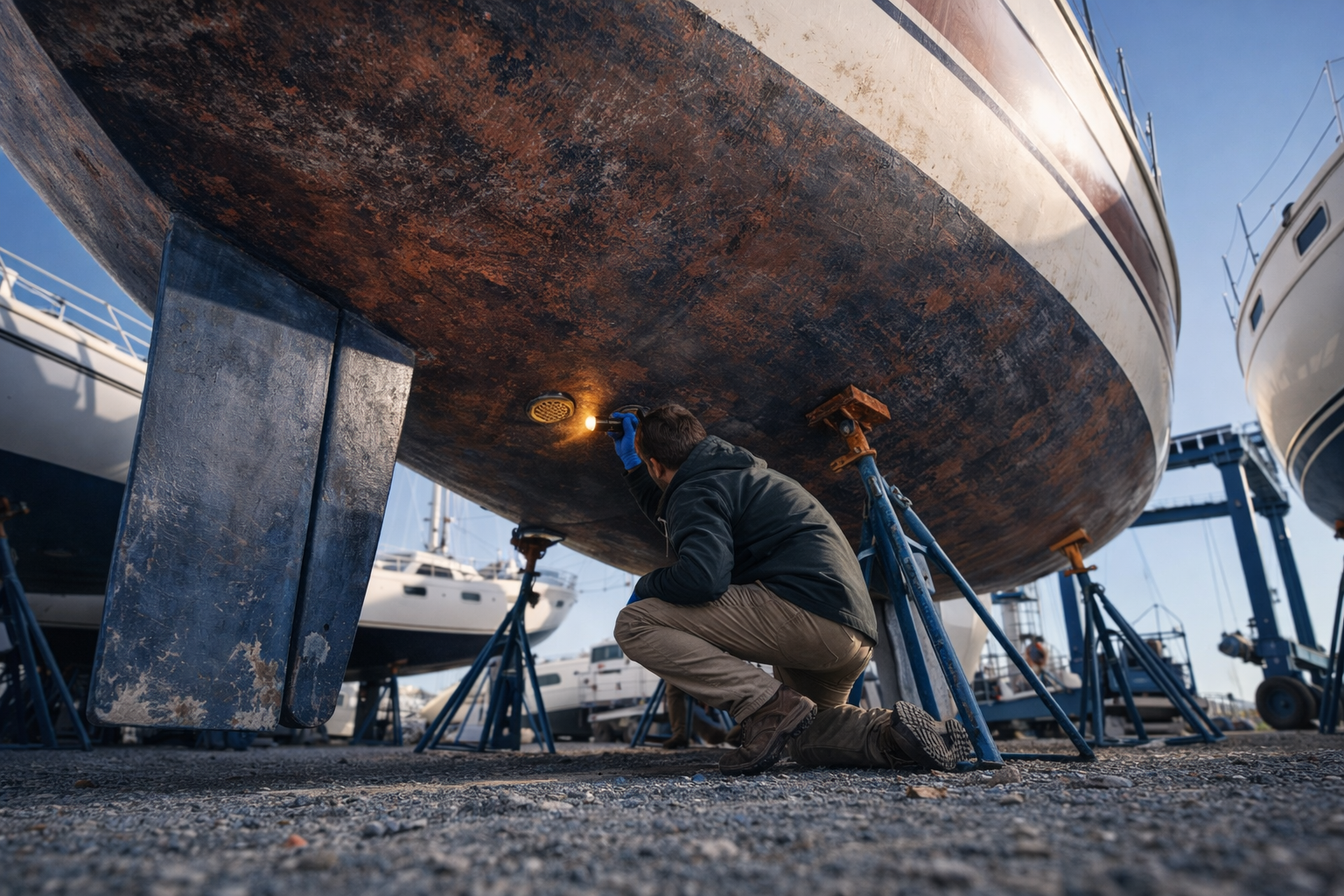
Before your boat goes back in the water, get underneath it and really look at the hull. Check for blisters, cracks, and any damage from winter storage. If you hauled the boat, inspect the keel and running gear for anything that looks off. Run your hand along the bottom and feel for soft spots if you have a fiberglass hull.
Every through-hull fitting needs to be checked. Open and close each seacock to make sure it moves freely. If one is seized, do not force it. Work it loose with penetrating oil or have it serviced. A stuck seacock is a safety issue, not an inconvenience. While you are down there, check that every hose clamp is tight and that no hoses have gone soft or started cracking. The bilge should be clean and dry. If there is standing water from the winter, pump it out and trace where it came from.
Safety Gear, Lines, and Everything Else
This is the part most people rush through, and it matters more than you think. Pull out every life jacket and check for tears, broken buckles, and mildew. If you have inflatable PFDs, check the CO2 cartridges and the auto-inflate indicators. Expired flares need to be replaced. Fire extinguishers need to be checked for charge and expiration dates. Your first aid kit probably needs restocking after last season too.
Inspect all your dock lines and fenders for chafing and UV damage. Lines that look fuzzy or have flat spots from the winter should be retired. Give your anchor rode a once-over and make sure the shackle pin is still moused with wire. If you had any common boat problems last season that you put off fixing, now is when you handle them. Do not carry unresolved issues into a new season.
Spring commissioning is not glamorous work, but it is the foundation of a safe, enjoyable season on the water. Take your time, be thorough, and your boat will reward you with reliable performance all year. The worst thing you can do is skip steps because you are eager to get out there. Trust me, that first trip is a lot better when you are not worrying about what you forgot to check.
*If you want a year-round approach to keeping your boat in shape, take a look at my breakdown of maintaining your vessel through every season.*