

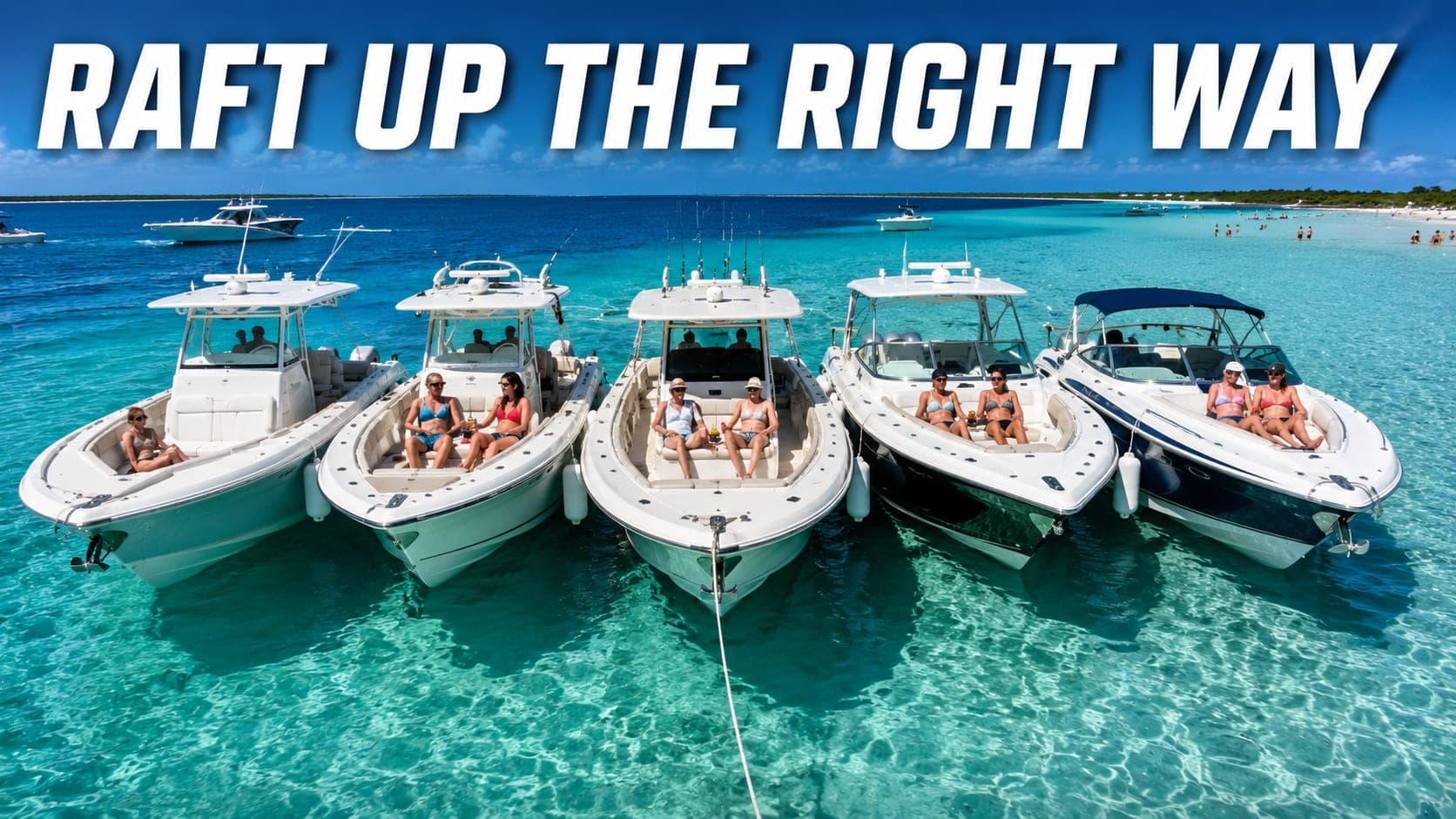

Few things say summer like a string of boats tied together off a sandbar, music going, everybody hopping from deck to deck with a cold drink in hand. Rafting up is one of the best parts of owning a boat. It's also where I see good days turn into expensive ones, because a raft-up is really just a bunch of boats sharing one anchor and a lot of trust. Do it right and it's the highlight of the season. Do it wrong and you're trading gelcoat with the boat next to you. Here's how to raft up the right way so the only thing your crew remembers is the fun part.
What a Raft-Up Really Is (and Where It Goes Wrong)
When you raft up, two or more boats tie alongside each other and hang off one or two anchors instead of each boat setting its own. That's the whole appeal, but it's also the risk. Every boat in that raft is depending on the holding power of the anchor boat in the middle. If that anchor drags, the entire raft moves together, usually toward something you don't want to hit. Most raft-up problems trace back to one of three things: a weak anchor set, sloppy fendering between hulls, or a wind shift nobody planned for. Sort those out ahead of time and you've solved ninety percent of the trouble before it starts.
Start With a Solid Anchor Boat
The biggest boat with the heaviest ground tackle should anchor first and become the center of the raft. That boat sets the hook the same way you would for an overnight stay, and the same rules about scope and bottom type apply here as anywhere else. I've written before about anchoring so your hook actually holds, and a raft-up is exactly the situation where a lazy set comes back to bite you, because now it's not just your boat dragging, it's five. Let the anchor boat settle and confirm it's holding before anyone else comes near. Don't let a second boat tie on until the captain in the middle is happy the anchor is dug in. A few extra minutes of patience here saves you from re-setting the whole raft later.
Come In Slow and Fender Everything
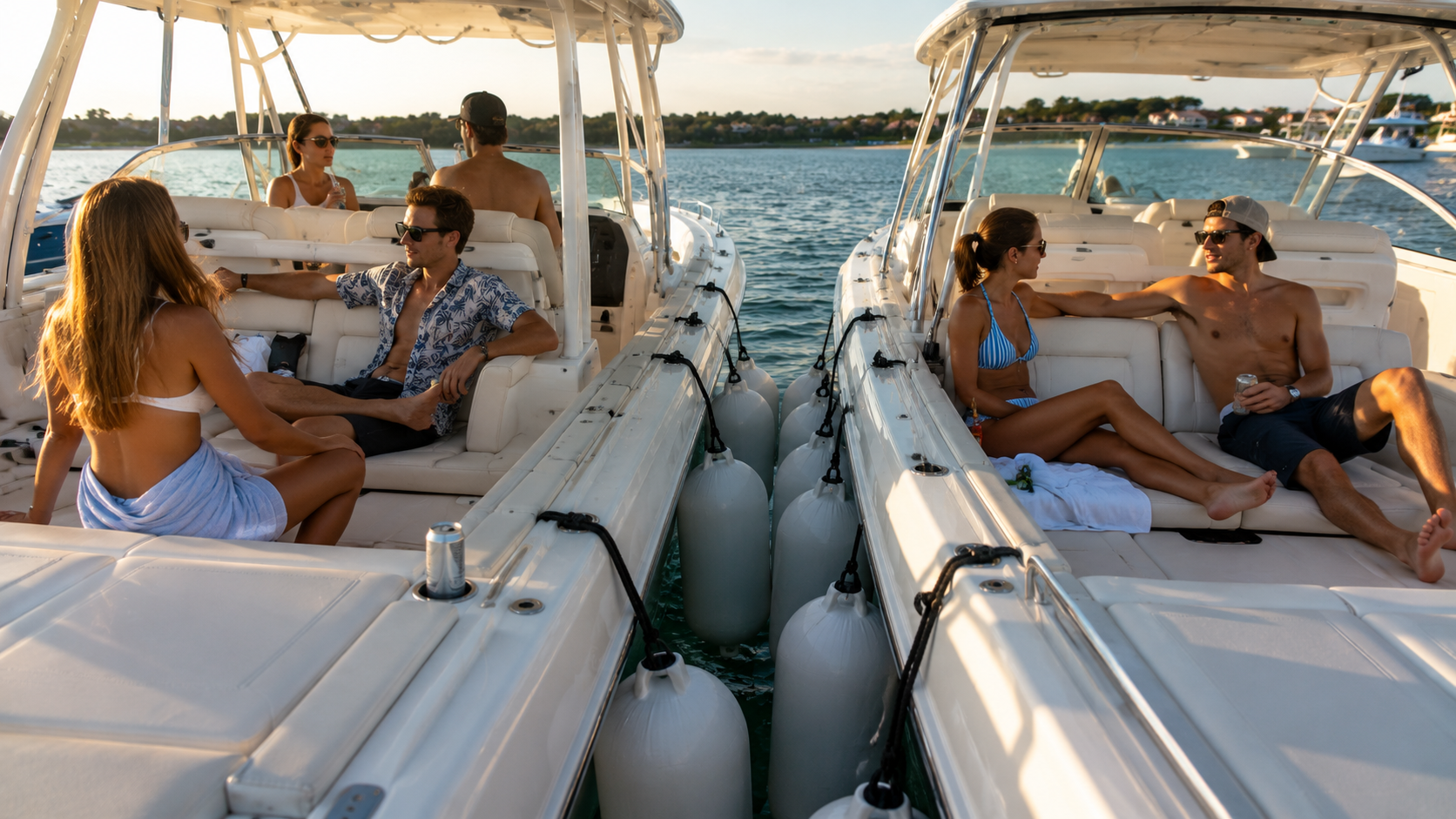
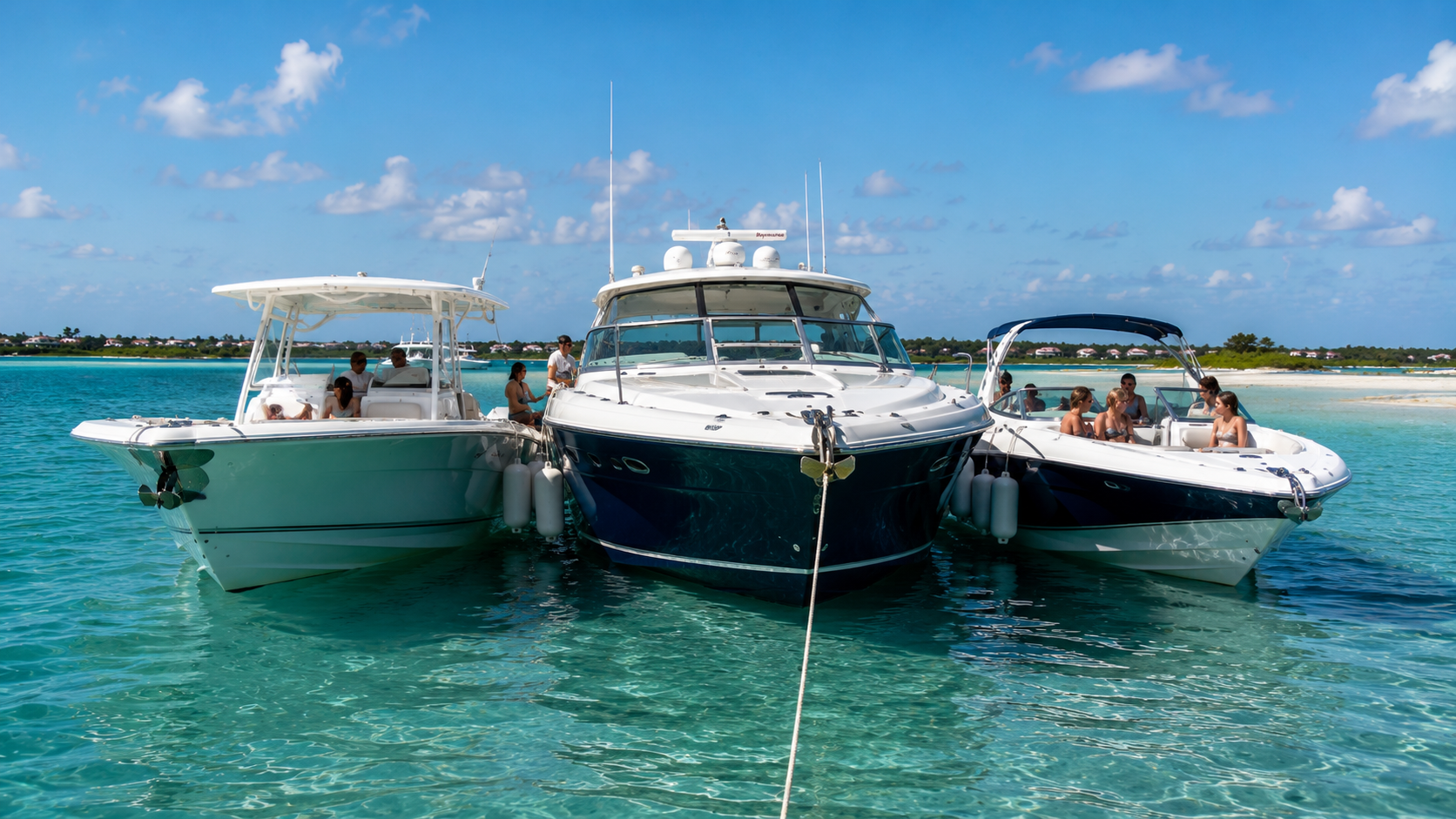
Once the anchor boat is set, everybody else joins one at a time, approaching from downwind and idling in slow. This is low-speed boat handling, and the same instincts that help you read the wind and current at a dock apply when you're easing up alongside another hull. Hang fenders on both boats before you ever touch — you can never have too many, and they should sit where the widest parts of the two hulls will meet, not just wherever they happen to dangle. Approach at an angle, then straighten out parallel right before contact so you kiss the fenders instead of the rub rail. Have crew ready with lines and a hand out, but never let anyone put a body part between two boats to fend off. Fenders take the hit. People don't.
Tie Smart, and Leave Without Drama
Tie the boats together at the bow and stern with spring lines running between them so the hulls move as one unit instead of surging back and forth. Keep the lines snug but not banjo-tight — you want a little give for the wave action without letting the boats wander into each other. Agree on an order before anyone leaves, because the last boat in is usually the first one out. When it's time to break up the raft, peel off from the outside in, one boat at a time, and let each one drift clear before starting engines near the others. The anchor boat leaves last, after everybody else is gone. A raft-up that comes apart calmly is the sign of a crew that planned ahead.
Read the Conditions Before You Commit
A raft-up is only as good as the weather holding it together. Before you tie up, know what the wind and tide are going to do for the next few hours, because a raft that's comfortable in a morning calm can turn into a mess when an afternoon sea breeze fills in. I always check the forecast before leaving the dock, and at a raft-up I keep half an eye on the sky the whole time. If the wind picks up, a building chop starts working the boats against each other, or the anchor starts losing ground, don't wait — break the raft up early while it's still easy. The same goes for a crowded anchorage on a big night like the Fourth, where it pays to think about your exit before you ever drop the hook. If you're rafting up to watch a show, the same planning that keeps you safe anchored among the crowds for fireworks keeps a summer raft-up from turning into a bumper-boat situation after dark.
Rafting up is one of the simplest pleasures in boating, and it stays that way as long as somebody's thinking about the anchor, the fenders, and the weather while everyone else is having fun. Get those three right and you've got the best seat on the water — your own little floating neighborhood for the afternoon. If you've got a raft-up trick that's worked for your crew, drop it in the comments. I'm always looking to steal a good one.