


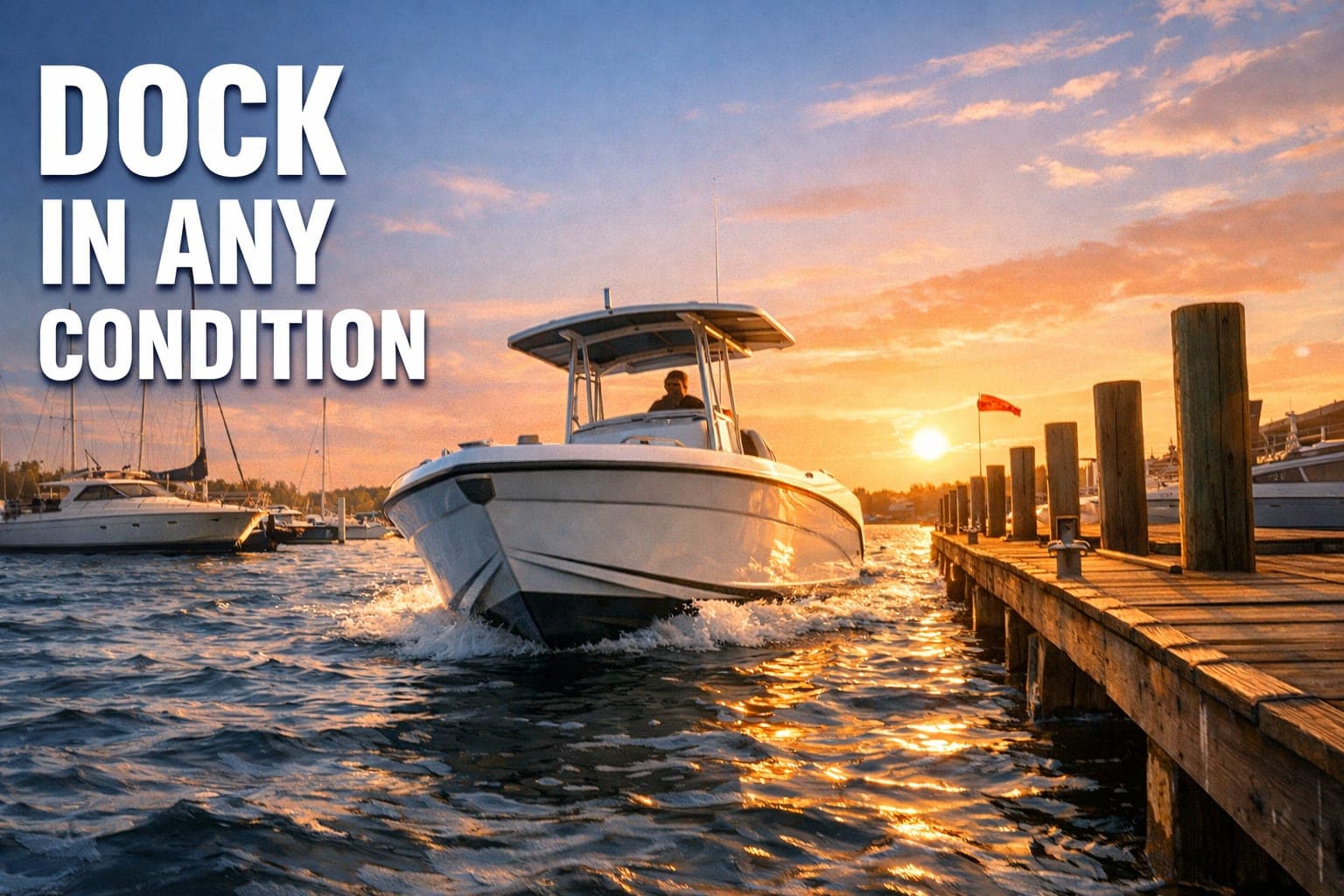

There’s a moment every boat owner knows—when you’re lining up to dock and the wind picks up just enough to make things interesting. Your palms get a little sweaty. You second-guess your approach. And suddenly, that twenty-foot stretch of wooden dock feels a lot smaller than it did five minutes ago. Docking is one of the most stressful moments on the water, especially when wind and current are working against you. But here’s the thing: it doesn’t have to be.
I’ve docked boats in everything from flat-calm mornings to gnarly chop and sideways gusts. The difference between a smooth approach and a white-knuckle one comes down to understanding how wind and current affect your boat, planning ahead, and trusting the fundamentals. Once you nail the basics, docking becomes predictable. Then it becomes routine. And eventually, it becomes one of the easiest parts of running your boat.
Understanding Wind and Current Effects on Your Boat
Before you even approach the dock, you need to understand what’s pushing your boat around. Wind and current aren’t random forces—they’re predictable, and once you learn how they interact with your hull, you’ll start to see them as tools instead of obstacles.
Current pushes the entire boat sideways. If you’re backing into a slip with current moving left to right, your stern will be pushed to the right—it’s that simple. Wind, on the other hand, affects your boat differently depending on where it’s coming from. A stiff breeze on your beam will push you sideways; wind dead ahead will slow your approach; wind from behind tends to accelerate you. The trick is figuring out which force is stronger in your situation. Most of the time, current is more predictable than wind because it’s constant. Wind gusts. You’ll be pointed straight into the slip one second and askew the next.
Pay attention to the water around you as you approach. Watch the ripples, the way other boats are oriented, any floating debris. Your eyes will tell you what you need to know about wind direction and intensity. The same goes for current—if you’re heading into your slip and notice you’re drifting sideways, that’s current talking.
Approach Angles and Planning Your Dock Strategy
The angle at which you approach the dock matters more than most boat owners realize. If wind or current is pushing you, you need enough angle to compensate. This is called “crabbing”—you’re pointed partially into the wind or current to maintain a straight line toward the dock.
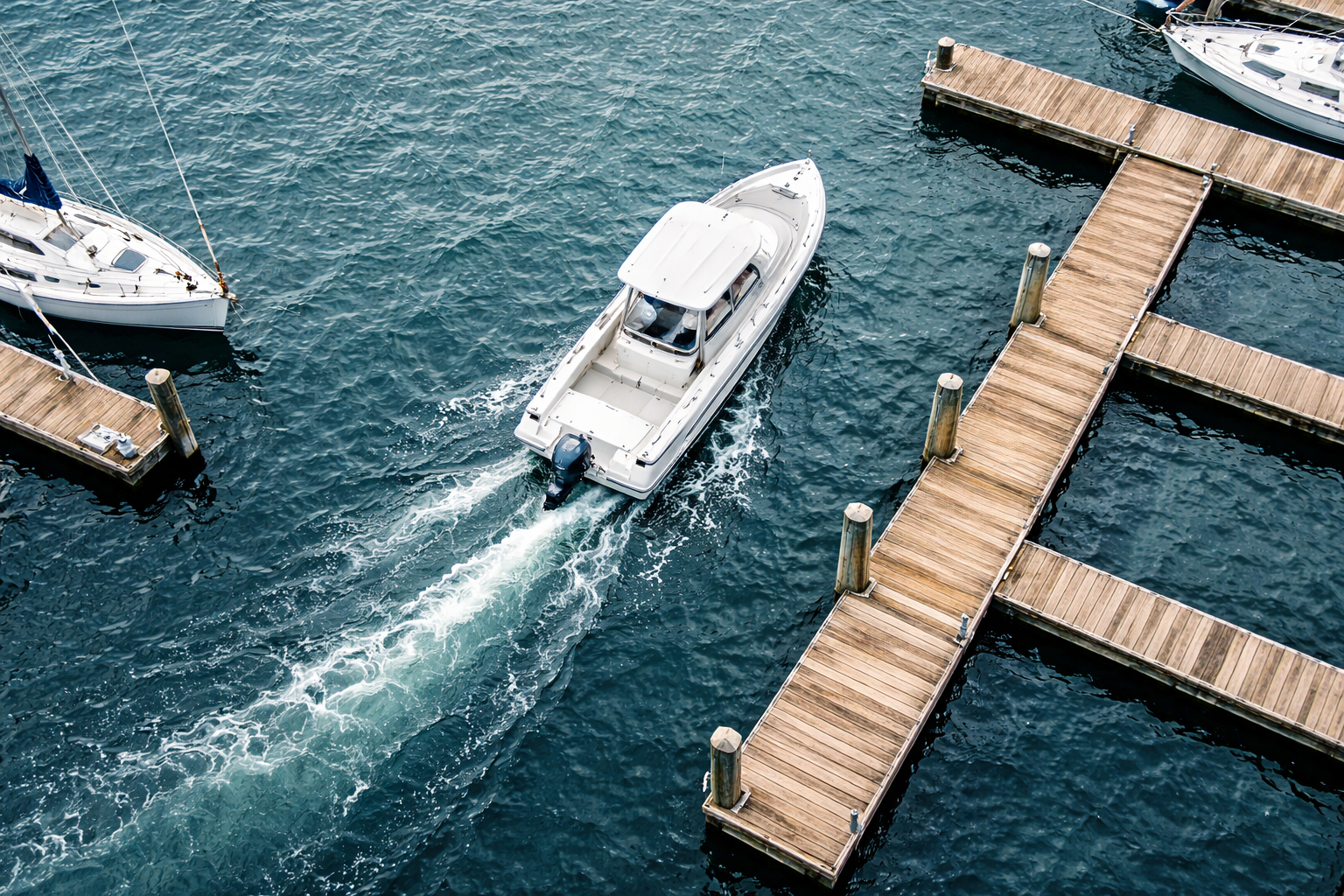
Here’s how it works: if wind is pushing you right, approach at a slight angle to the left so your boat naturally drifts toward the center line of your target slip. You’re not fighting the conditions; you’re using them. The wider your approach angle, the more momentum you’re carrying, which is fine in light conditions. But in heavy wind or strong current, a narrower, more controlled angle gives you better precision. Think of it as the difference between a wide-open throttle pass and a slow, deliberate approach—slow is pro, every single time.
Before you point the bow toward the dock, scan the slip. Is it clear? Are there other boats nearby? What’s the wind direction? Once you’ve identified your line, commit to it. Hesitation leads to bad docking. Commit to your approach, stay smooth with the throttle, and execute.
Using Spring Lines and Dock Lines Effectively
Once your boat is alongside the dock, spring lines are your best friend. A spring line runs diagonally from your boat to the dock—forward spring from the midship to a dock cleat forward, aft spring from the midship to a cleat behind. These lines prevent your boat from moving forward or backward while you secure the other lines. In windy conditions, spring lines are what keep you from bouncing around like a cork.
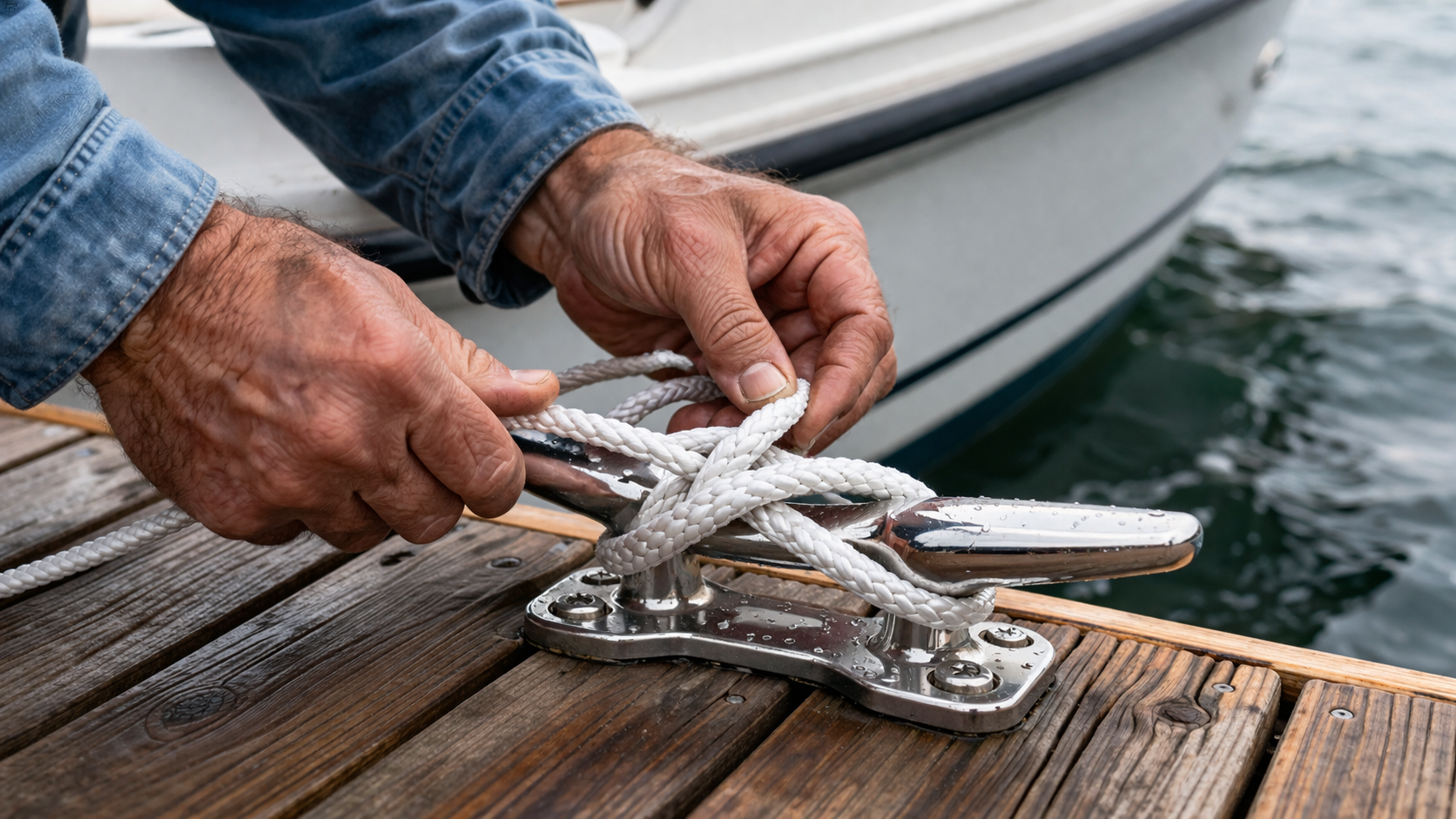
The order matters: get one spring line secured first, then the other. Once both springs are tight, run your bow and stern lines. Keep everything snug but not cranked—your boat needs room to move slightly with the water and wind, or the stress on the hull and cleats builds up. Tight lines are good; over-tensioned lines cause problems. If you’re tied off in strong wind, check your lines every hour or so. Wind changes direction, boat angles shift, and what was perfectly tensioned this morning might be straining by afternoon.
Throttle and Steering Techniques for Precision Docking
If there’s one rule to docking, it’s this: slow. Really slow. Your boat has momentum, and momentum is your enemy in tight spaces. Idle speed or just above idle is what you’re aiming for. At idle, you have time to think, time to correct, and time to avoid problems. Gun the throttle and suddenly you’re committed. You’re moving too fast to stop. You’re moving too fast to compensate for wind or current. You’re set up for disaster.
Use short bursts of throttle to maintain steerage, then neutral to let your boat coast. The goal is controlled momentum, not speed. Your steering becomes more effective at higher speeds, but your margin for error shrinks dramatically. In light conditions, even that slow approach might feel too fast. That’s normal. That’s you learning the limits of your boat.
As you approach, keep your wheel movements smooth and small. Big corrections at low speed don’t work well. If you’re drifting right, a gentle wheel correction to the left will gradually bring you back. Give it time to work. Watch your drift angle, not just your heading. You want the boat pointed straight into the slip and moving straight into it. Anything else is a setup for a contact.
Common Mistakes and How to Avoid Them
The most common mistake is approaching too fast. I’ve watched boat owners gun it toward the dock, realize too late they’re moving too quick, then jab the throttle in reverse and either stall the engine or send the stern swinging. Slow from the start, and the whole thing becomes manageable.
The second mistake is ignoring wind and current. You can’t see wind, so people pretend it’s not there until it is. Spend thirty seconds observing conditions before you commit to your approach. Is the wind gusting or steady? Is there current? Which way is it pushing? That thirty seconds of observation saves you from a hard docking later.
The third is not planning an exit strategy. Before you’re even close to the dock, know what you’ll do if things go sideways. Can you abort and come around again? Is there enough water behind you to reverse out? Do you have room to turn around? Knowing your escape route gives you confidence—and confidence leads to smooth approaches.
Finally, don’t be afraid to ask for help. If you’re single-handing and conditions are rough, drop an anchor in the fairway, take a breather, and wait for a crew member to come down. There’s no prize for docking in sketchy conditions without a spotter. Smart boat owners know when to get help and when to wait.
Docking Gets Easier With Every Rep
The honest truth is that docking improves with repetition. Your first hundred dockings will feel harder than your hundredth. You’ll start to sense what your boat wants to do before it happens. You’ll read wind and current like a second language. You’ll develop an intuition for throttle and steering that you can’t learn from an article—you have to feel it on the water.
Get out there and practice. Dock in different conditions. Watch how other boats handle the approach. Take note of what works and what doesn’t. Over time, you’ll build the muscle memory and confidence that separate casual boat owners from people who make docking look easy. If you want to see these techniques in action, check out the latest videos on the JakeSea YouTube channel—I break down real-world docking scenarios so you can see exactly how it’s done.