



Once the boat is winterized and covered, it is tempting to forget about her until spring. That is how small problems turn into expensive ones. A stored boat should get a short visit every month or so, and a winter check on your stored boat takes about thirty minutes if you know what to look at. Here is a practical routine that catches trouble early.
Start Your Winter Boat Check on the Outside
Walk around the boat before you touch anything. After a storm, check that the shrink wrap or canvas cover is still tight and that no seams have split. Wind-driven rain finds any gap, and a flapping cover can rub through to the gelcoat over a few weeks. Look for pooled water or snow sitting in a sag, because that weight adds up and can pull the cover or the framing down. If you use a tarp or canvas cover, make sure it is still vented so moisture can escape.
Check the stands or cradle too. Ground settles and freezes and thaws, and jack stands that were solid in October can shift. Make sure the boat is level and that the stands have not walked. If something looks off, tell the yard right away instead of waiting for your next visit.
Look Inside for Moisture and Pests
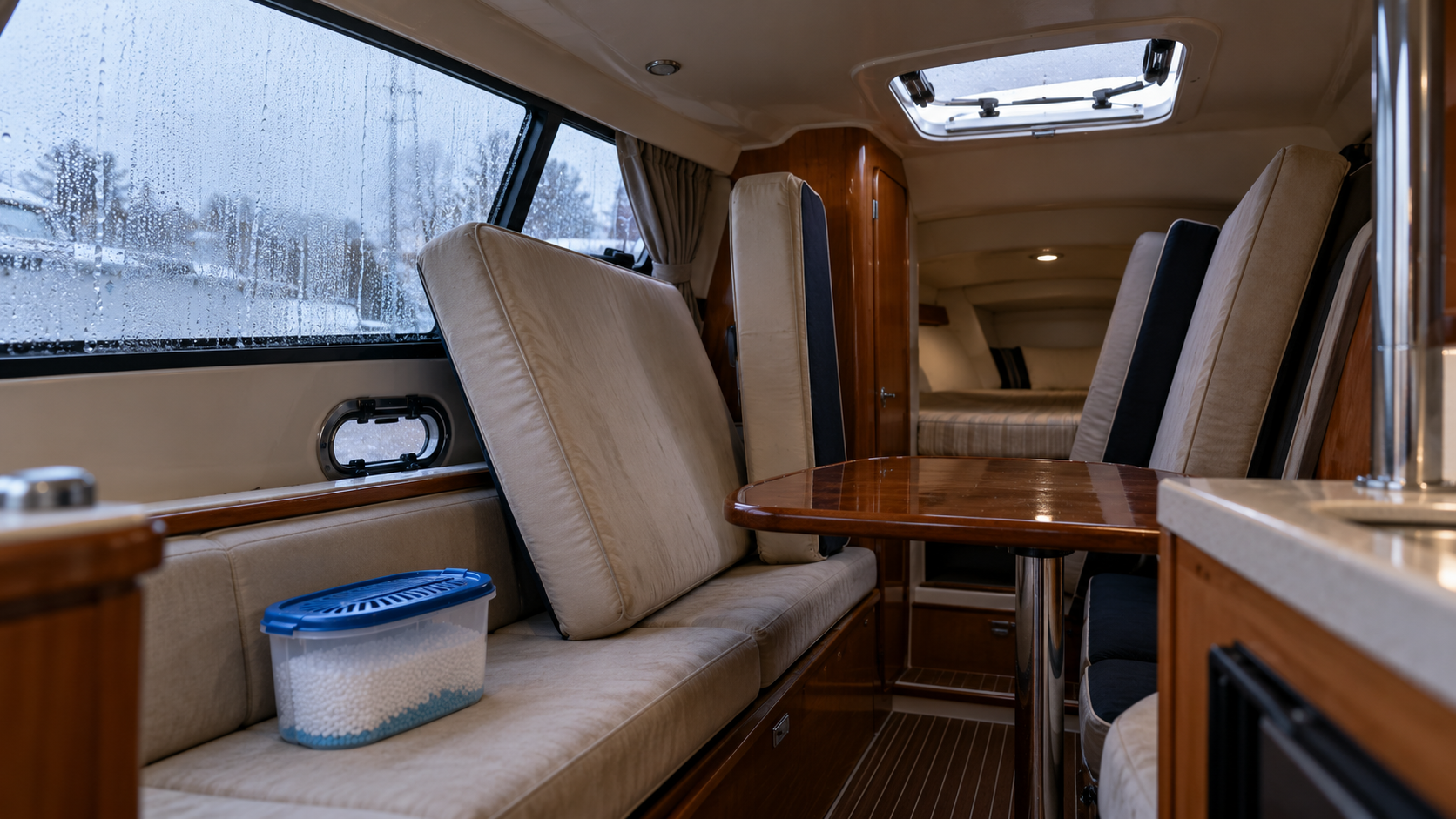
Open a hatch and use your nose. A musty smell is the first sign of trouble, and the fix is airflow. Crack a few hatches or run a small moisture absorber, and take a look at the places where damp likes to hide, like lockers, under cushions and behind panels. I have written about how to stop mildew and moisture, and a winter visit is the best time to put that advice to work, before spores spread through the cabin.
Look for evidence of mice and other pests. Droppings, chewed wiring or stuffing pulled from a cushion mean you have a visitor. Block openings you can find, remove food and anything they like to nest in, and consider traps. Wiring damage is the expensive part, so inspect any harness you can see.
Keep the Batteries Healthy
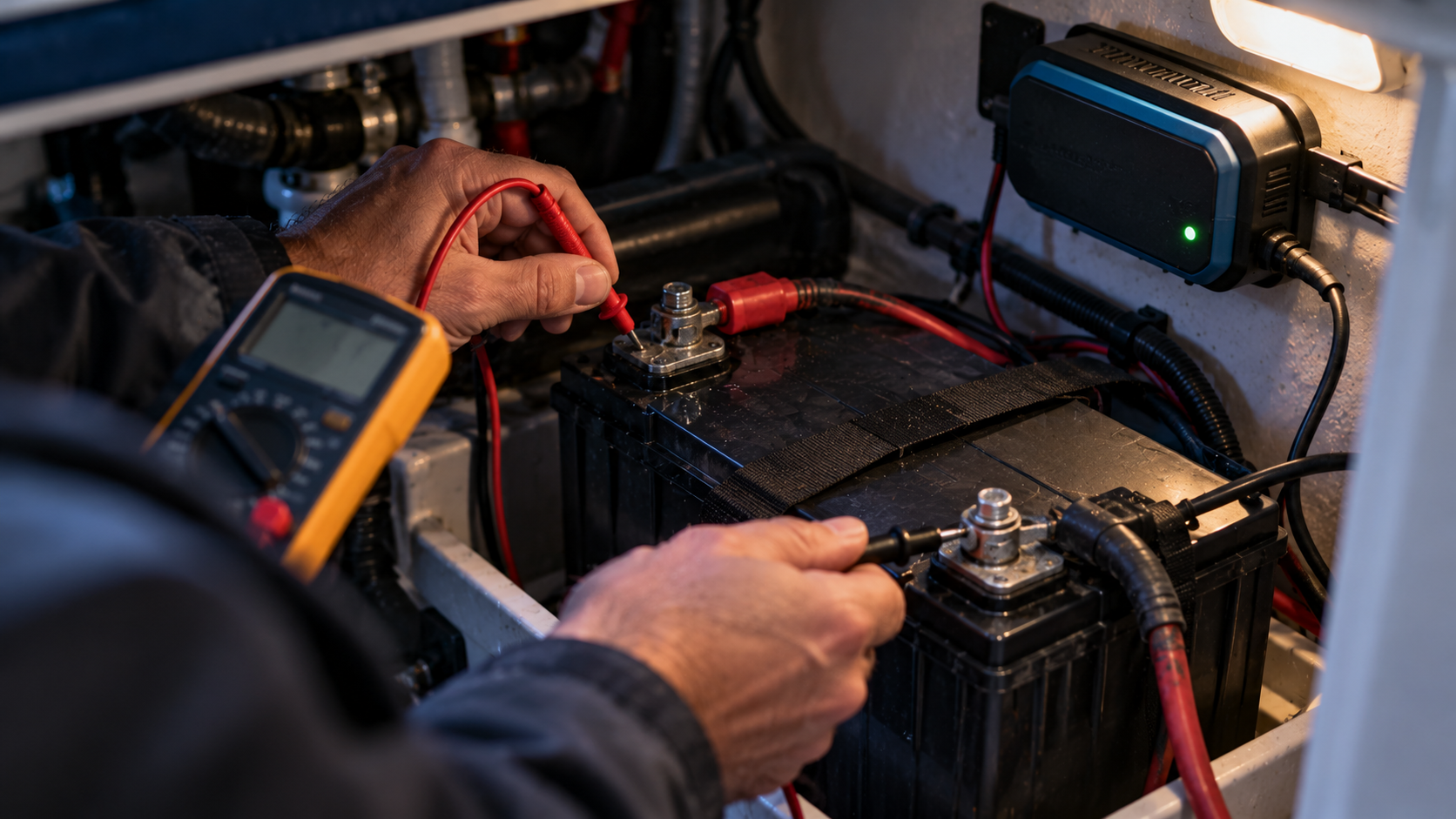
Batteries lose charge in storage, and cold makes it worse. If the batteries are still aboard, check the voltage with a meter and look at the terminals for corrosion. A maintainer that keeps the charge topped up is a good idea for lead-acid types, while lithium wants a different approach, which I covered when I wrote about storing your boat's batteries. A battery left to go flat and freeze can be ruined, and replacing a bank costs far more than a trickle charger.
Check the Bilge and Make a Short List
Open the bilge and look for water. A little condensation is normal, but a rising level means a leak, a failed hose or rain getting in around a deck fitting. Find the source now and you can fix it before spring instead of during launch week. While you are there, note anything that needs attention, whether it is a loose hose clamp, a cracked fitting or a worn belt. Keep a running list on your phone.
Make it a habit and put the visit on your calendar, because the winters you skip are the ones that cost you. Share your own winter check routine in the comments, and tell me what you have found that surprised you.
