

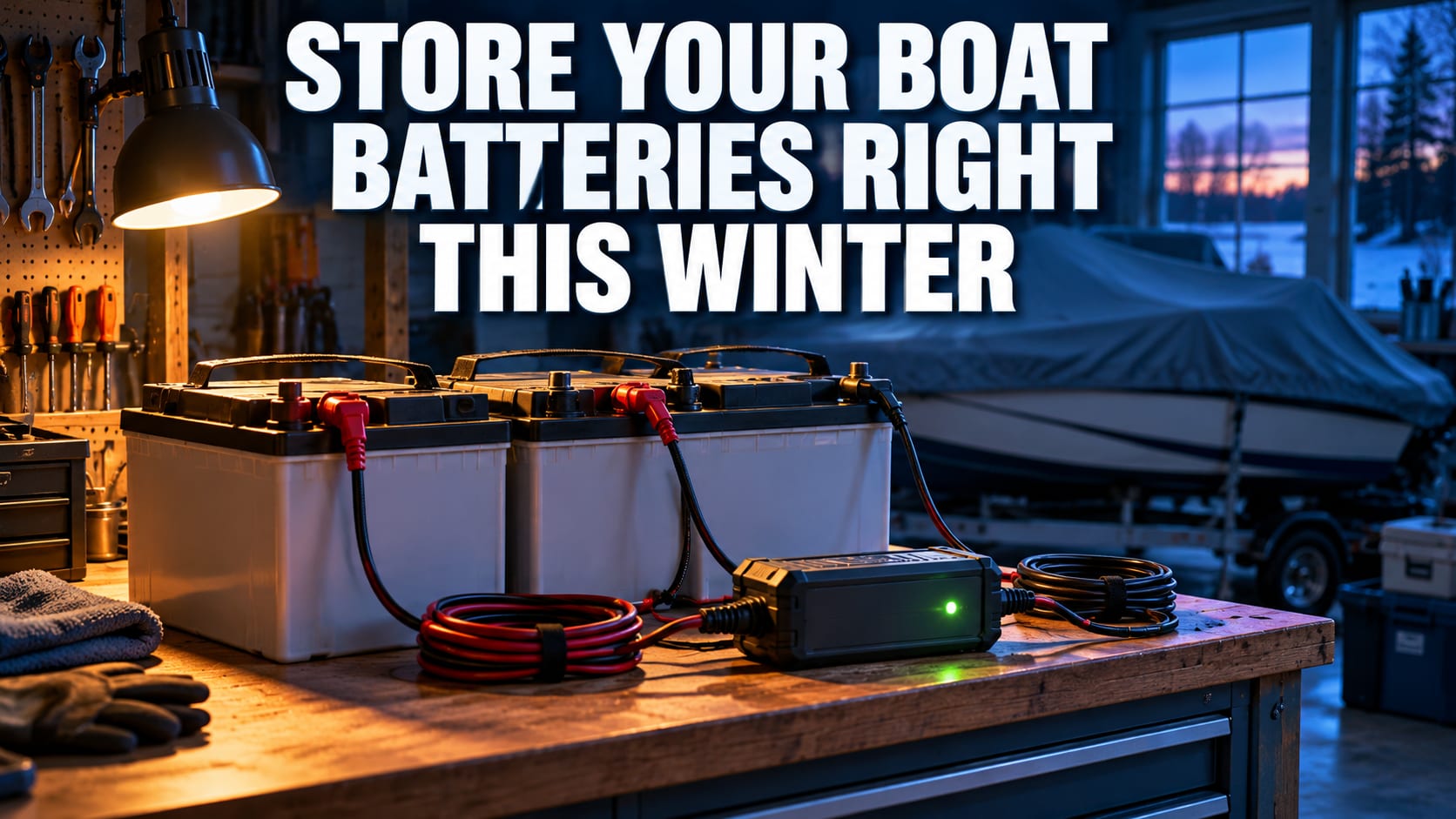

A boat battery that's fully charged in October has a way of showing up dead in April, and it's not bad luck, it's physics. Every lead-acid battery self-discharges even when nothing is drawing from it, and cold temperatures slow that process down without stopping it. If you've ever pulled a battery out of winter storage only to find it won't hold a charge anymore, you already know how expensive that mistake is.
The good news is that keeping a battery bank alive over the off-season doesn't take much, it just takes doing the right thing instead of the easy thing. Setting a battery on a shelf and forgetting about it until spring is the easy thing. It's also the thing that kills more marine batteries than actual old age does.
Why Batteries Die Sitting Still
A lead-acid battery left at a low state of charge starts forming lead sulfate crystals on the plates, a process called sulfation, and the longer it sits that way, the harder those crystals are to reverse. Self-discharge alone can pull a battery down several percentage points a month even sitting idle, and any small parasitic draw left on the boat, like a bilge pump float switch or a stereo memory circuit, will pull it down faster. Cold weather slows the chemical reaction, which is why batteries seem to hold up better in winter than summer, but slower isn't the same as stopped.
Disconnect, Charge, or Trickle: What Actually Works
The minimum move is charging the battery fully and disconnecting it, at least pulling the negative terminal so nothing on the boat can draw it down over the winter. That works fine for a short layup, but for a full winter, a smart battery maintainer does a better job than disconnecting alone. A real maintainer, not just a basic trickle charger, senses the battery's state and backs off once it's full instead of overcharging it, which means you can leave it connected all winter and pull it out in spring exactly where you left it.
If your batteries are flooded lead-acid rather than sealed, check the water level in each cell before you put them away and top off with distilled water if needed, since a maintainer can't do anything for a plate that's exposed to air.
Where You Actually Should Store Them
The old warning about concrete floors draining a battery is left over from decades ago when battery cases were porous enough to actually lose charge to a cold concrete surface. Modern cases don't have that problem, so a concrete garage floor is fine. What actually matters is keeping the battery somewhere dry and at a reasonably moderate temperature, and giving flooded batteries some ventilation since they can off-gas a small amount of hydrogen while charging. A fully charged battery tolerates a hard freeze far better than a discharged one, since a low charge means more water and less acid in the electrolyte, and water freezes and expands, which is exactly how a battery case ends up cracked by February.
AGM, Lithium, and Flooded Batteries Play by Different Rules
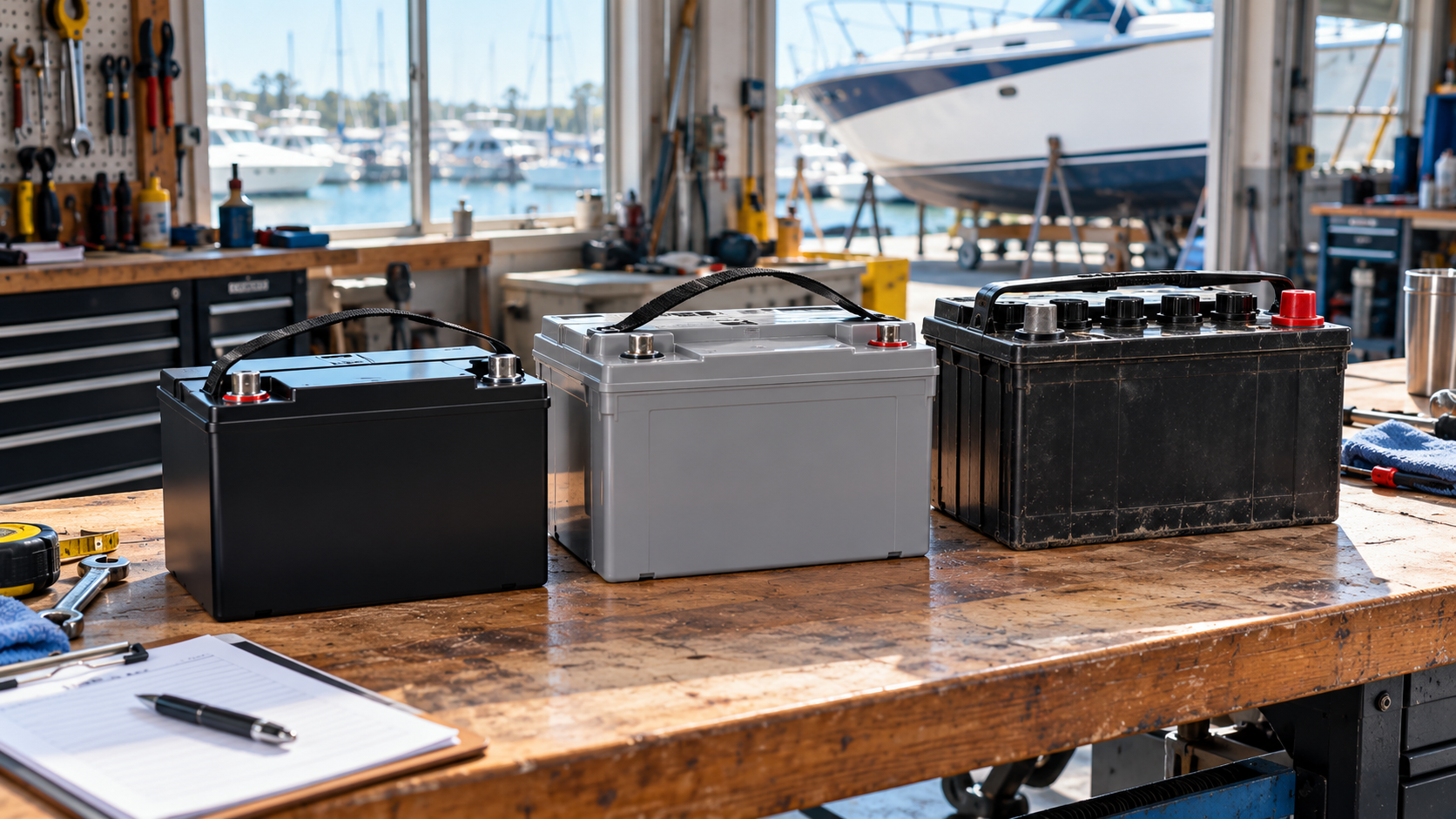
Flooded batteries need the water checks above and benefit the most from a maintainer since they self-discharge fastest. AGM batteries are sealed and lower maintenance, but they still want a smart charger sitting on them through the winter rather than being left alone for four months. Lithium, specifically LiFePO4 house banks, which more owners are running every year, actually prefer being stored at a partial charge, somewhere around fifty to seventy percent, rather than sitting at one hundred percent for months. Lithium's self-discharge rate is a fraction of lead-acid, and most systems have a battery management system built in that protects against deep discharge on its own, so they're the lowest-maintenance option of the three by a wide margin.
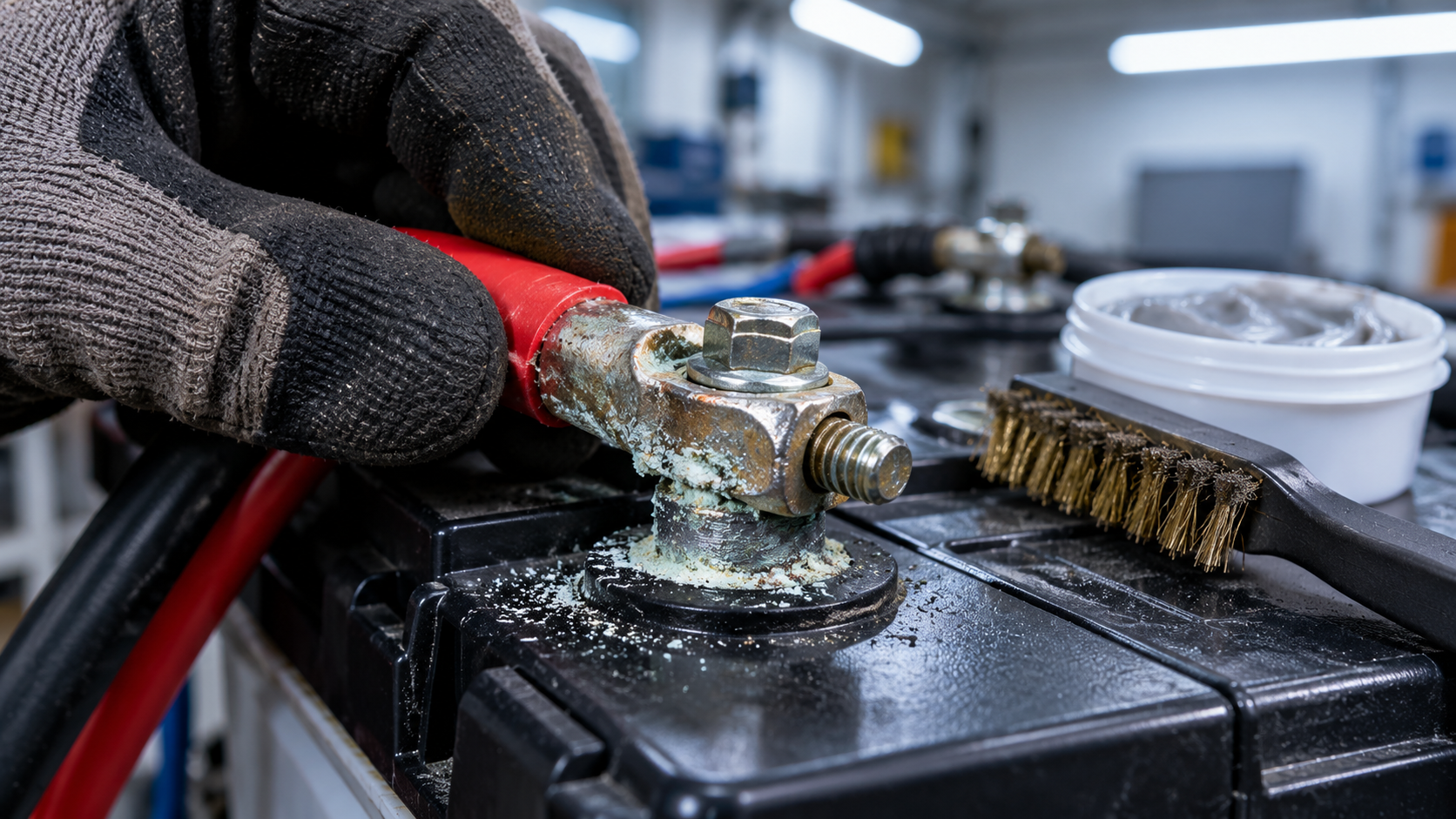
It's also worth checking your grounds and connections before you put the boat away, since the same kind of stray current issues I've written about with zinc anodes and galvanic corrosion can quietly drain a battery bank all winter if there's a bad ground somewhere in the system. A loose terminal or corroded connection left alone for months will cost you more than the battery itself.
A Few Extra Minutes That Save a Battery
Keep a handful of spare terminal ends, some dielectric grease, and a couple of fuses in the same spare parts kit I carry for breakdowns on the water, since a clean terminal makes a bigger difference to battery life than most owners realize. And however you're storing the boat itself over the winter, whether that's shrink wrap, indoor storage, or leaving her in the water, the battery bank deserves the same amount of planning as the hull does.
Test every battery with a real load tester in the spring before you assume it made it through the winter fine, since a battery can read a decent resting voltage and still fail the moment it's actually asked to crank an engine or run a windlass. A few minutes now, and a few more in the spring, is a lot cheaper than a new battery bank.
If you've made the switch to lithium or you're still running flooded batteries after all these years, I'd like to hear how you handle winter storage. Drop it in the comments.
