


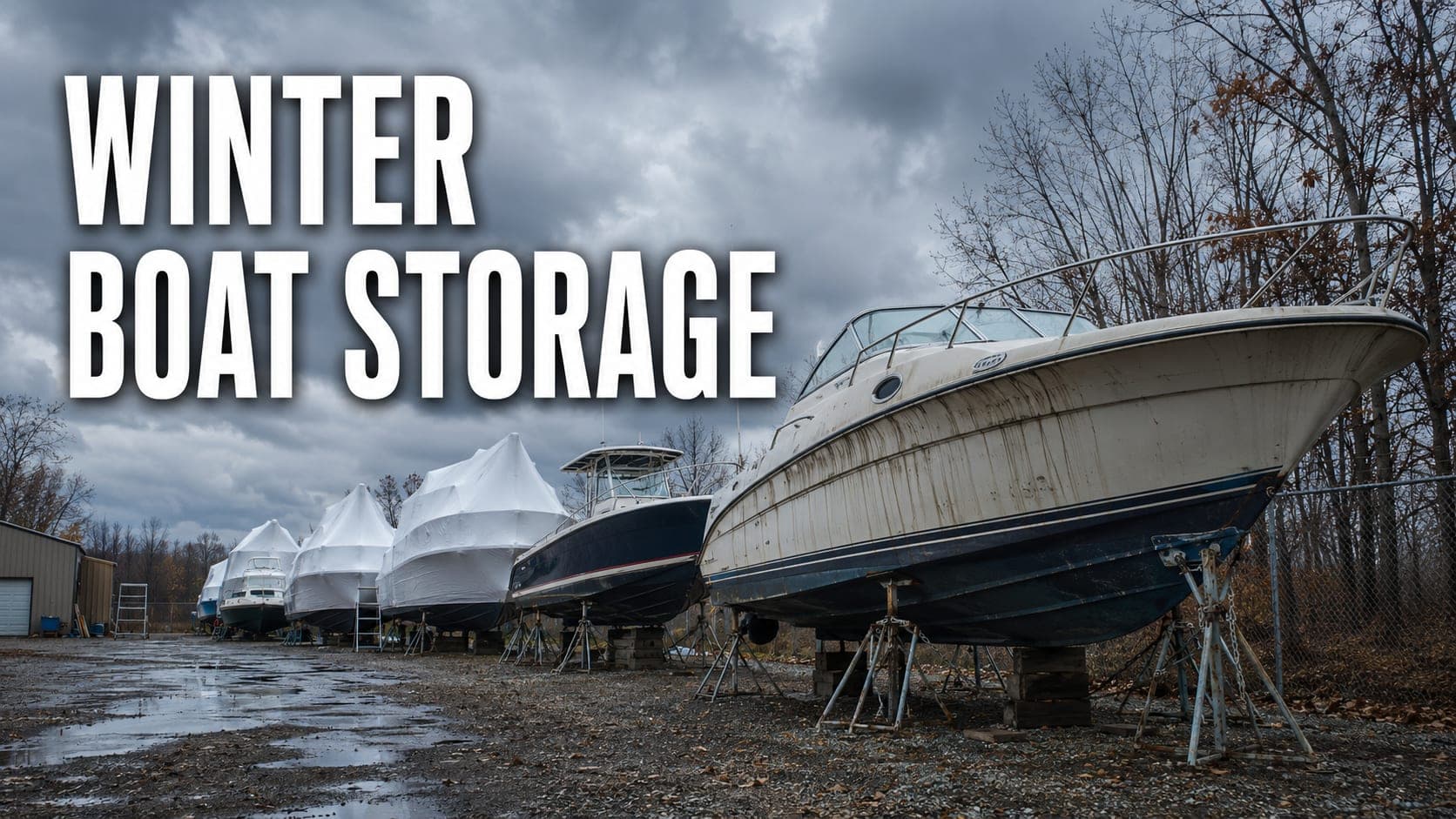

Storage yards fill up in September, not November. By the time the water gets cold enough that you actually want to stop going out, the covered spots are spoken for and the shrink wrap crews are booked three weeks deep.
Here is the thing — winter boat storage isn't one decision, it's three. Where the boat sits, what covers it, and how much you're willing to spend now to make spring easier. Get those right and you splash in April with a dry, clean boat. Get them wrong and your first weekend of the season goes to scrubbing mildew out of cushions instead of running the engine.
Indoor Storage Costs the Most and Solves the Most
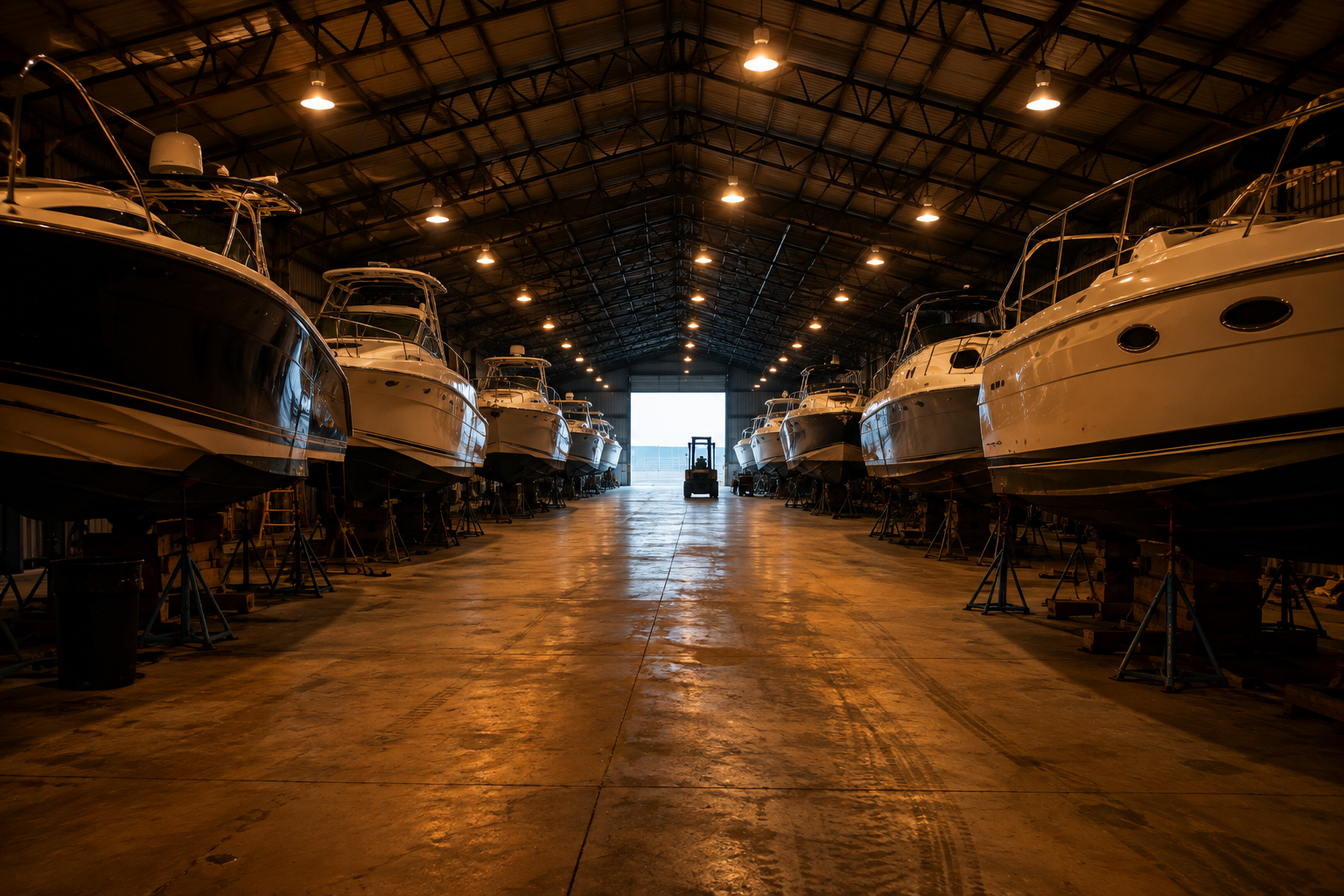
Inside a building, your boat stops fighting the weather entirely. No UV, no snow load, no freeze-thaw cycle working at your gelcoat and your caulk. If you've got real brightwork, canvas you care about, or a finish you've spent years keeping alive, indoor storage buys you more than any product you can put on the hull. All that work keeping a hull from oxidizing in summer sun gets undone fast by a winter outdoors, and a building is the only option that stops that clock completely.
The catch is money and access. Heated indoor is the most expensive thing on the menu at almost every yard, and plenty of facilities block the aisle with a forklift, so you can't wander down on a Saturday in February. Ask about access before you sign — the projects that actually pay off in spring only happen if you can reach the boat.
Shrink Wrap Is the Middle Ground, and Most Boats End Up There
Shrink wrap does one job extremely well: it sheds snow and rain and keeps water off your deck. Most yards price it by the foot, and for the majority of trailerable and mid-size boats it lands well under what a building costs.
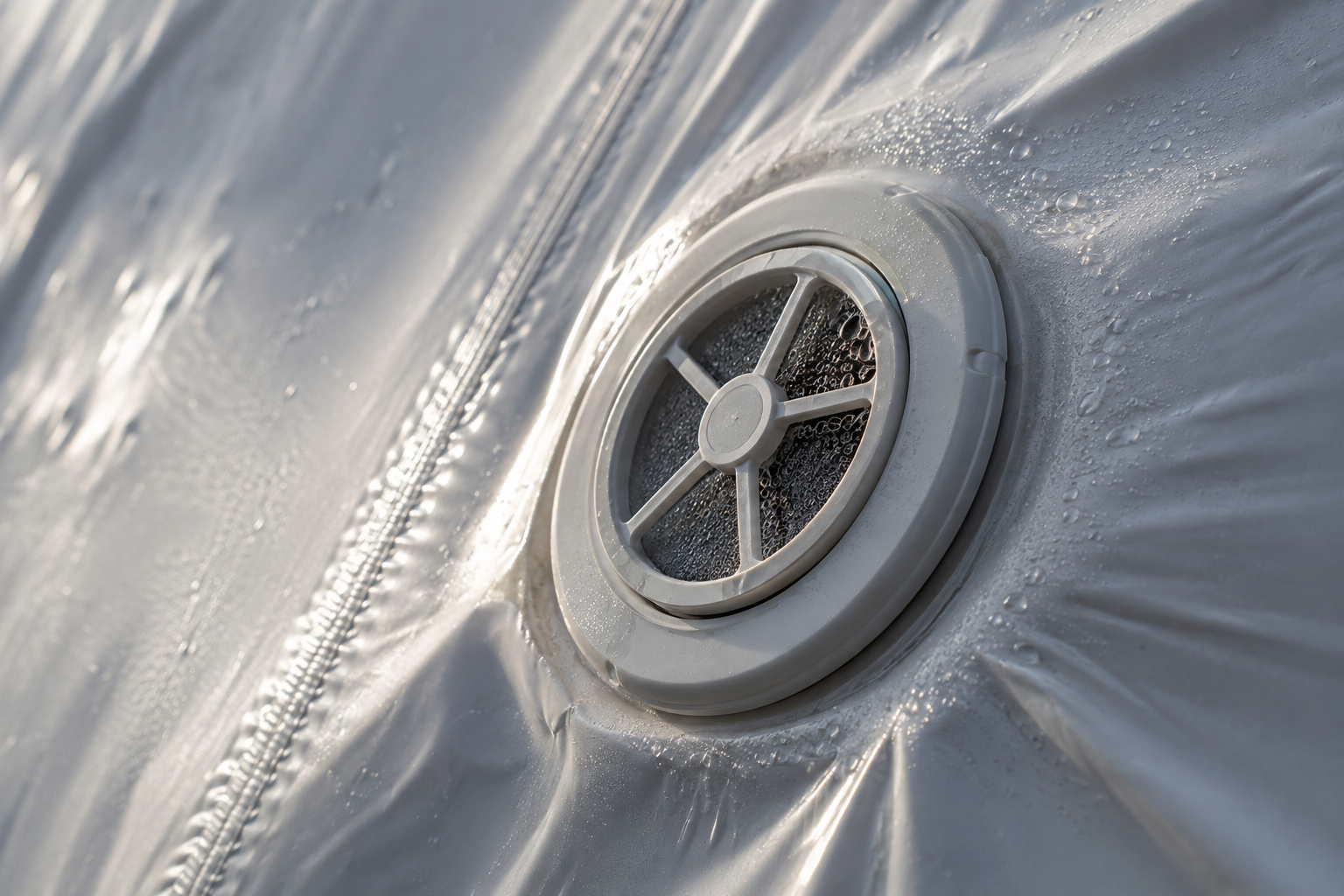
Where people get burned is ventilation. A boat sealed in plastic with no airflow becomes a greenhouse — warm days pull moisture out of the bilge and the cushions, cold nights condense it back onto every interior surface, and by March you have black spots on the headliner. Insist on vents, several of them, and don't let anyone wrap a wet boat. It's the same fight against trapped moisture you deal with all summer, only sealed under plastic where you can't see it happening.
The frame matters just as much. Wrap laid over a cockpit with no ridge pole ponds water, ponded water freezes, and frozen water tears the film open in January when nobody's looking. Pay for the framing — it's the cheapest part of the job and the part that decides whether the wrap still works in February.
Leaving Her In the Water Works in the Right Places
If you're somewhere the water doesn't freeze, wet storage is often the cheapest answer and plenty of boats never come out at all. Even in freezing climates it works with a de-icer keeping ice off the hull, though your insurer will have opinions about that — ask before you assume.
What wet storage really costs you is attention. A boat in a slip in July has somebody walking past it every day. That same boat in January might go three weeks without a set of eyes on it, and a bilge pump that fails or a battery that goes flat in that window is how boats sink at the dock. If you're leaving her in, the pump gets tested, the float switch gets tested, and the batteries get properly prepped for months of low use. Growth keeps happening in warmer water too, so don't be shocked by what's on the running gear in spring.
What You Do Before Storage Matters More Than Where
Whatever you pick, the prep is nearly identical, and the prep is where damage actually gets prevented. Engine and water systems get properly winterized — that's the non-negotiable one, and the full walkthrough of the process is worth reading before you start. Fuel tank goes full with stabilizer, the drain plug comes out for anything on the hard, and everything soft comes off: cushions, life jackets, canvas, and any electronics that would rather winter in your garage than in a damp cabin.
Then it gets cleaned and dried. Not rinsed — dried. Every locker open, every hatch cracked, the bilge wiped out. A boat that goes into storage damp stays damp until spring, and no amount of ventilation fixes water you sealed in yourself.
Make the Call This Month
Call your yard now and ask exactly what's included, because quotes vary wildly. Haul-out, launch, pressure wash, blocking, wrap, and spring commissioning are sometimes bundled and sometimes five separate lines. Ask whether you can get to the boat over the winter, and ask what happens if the wrap tears in January. Get the answers in writing.
There's no universally right answer. A twenty-two footer on a trailer under a good cover is a sound plan; a forty-foot cruiser with teak decks belongs inside. The wrong answer is the one you make in November because it's the only slot left. Book it this week and spend the rest of the fall actually using the boat. How are you storing yours — and has shrink wrap ever let you down? Drop it in the comments.