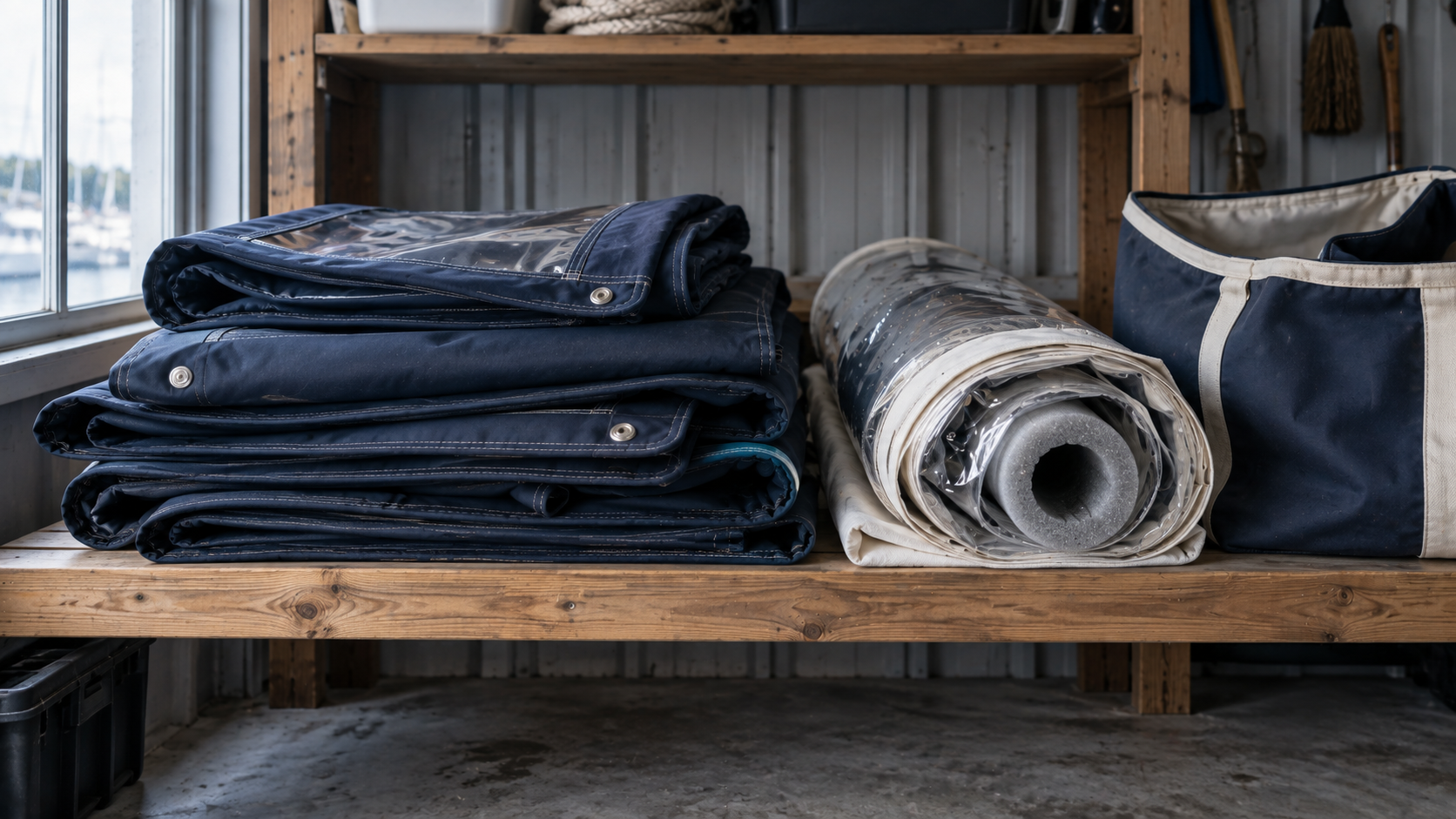




A full canvas set — bimini, side curtains, aft enclosure — runs a couple thousand dollars on a small boat and well past ten on a big one, and most of it dies about five years before it should. Not from storms. Not from hard use. It dies from a pressure washer, a household cleaner, and a winter spent folded up damp in a cockpit locker.
Canvas is the most expensive soft goods on your boat and the part that responds almost entirely to how you treat it in September. This is the month to get it right.
Why Canvas Fails Long Before It Should
Marine acrylic — Sunbrella and the fabrics like it — is solution-dyed, meaning the color runs all the way through the fiber rather than sitting on top of it. It sheds water because of a factory-applied finish combined with a tight weave, not because the material itself is waterproof. Three things kill it: UV working on the stitching, dirt embedded in the weave holding moisture against the fibers, and harsh chemicals stripping that finish faster than the sun ever could.
Here's the thing most owners miss: the fabric usually outlives the thread. Panels that still look good start letting go at the seams, and if your canvas is tearing along a stitch line rather than through the middle of a panel, you don't need new canvas — you need it restitched with UV-stable polyester thread, which costs a fraction of a rebuild. Walk the seams every fall and you'll catch it a season early.
Wash It the Right Way, Not the Fast Way
Rinse the canvas on the boat with a hose before you touch it with anything else — you're flushing grit out of the weave so you don't grind it in later. Then work a mild soap in with a soft-bristle brush, either a capful of dish soap in cool water or a dedicated marine fabric cleaner. Let it sit ten minutes, then rinse until the water runs clear and rinse again, because soap left in the weave pulls dirt all winter.
What you don't do is pressure wash it. A pressure washer strips the finish, opens the weave, and blows out stitching, and it does all three so quietly you won't find out until the first hard rain comes through the bimini. Bleach belongs nowhere near acrylic except heavily diluted on genuine mildew. If you've been fighting stains and musty smells all season, the same airflow and moisture control that keeps a cabin dry applies to a stack of folded canvas.
Isinglass Is Not Glass, So Stop Scrubbing It
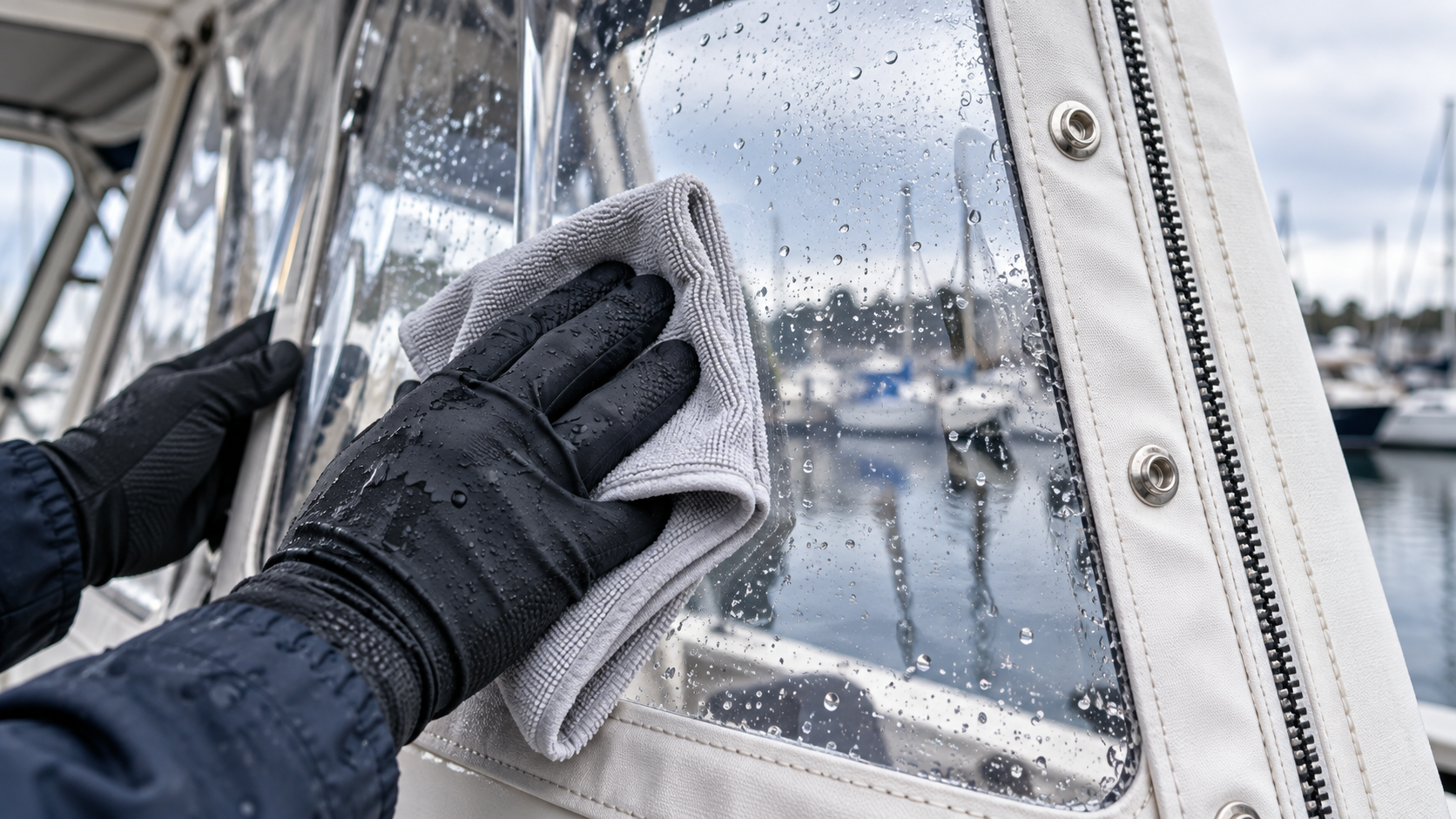
The clear vinyl in your side curtains is the most fragile material on the boat and the one people attack hardest. It scratches if you look at it wrong, and once it hazes it never comes back. Rinse it with fresh water, wash it with a dedicated vinyl cleaner and a clean microfiber towel — never paper towel, never a brush, never the rag you just used on the nonskid — and finish with a vinyl protectant carrying a UV inhibitor.
Two rules save more isinglass than everything else combined. Never roll it up wet, and never roll it tighter than about a four-inch diameter. Vinyl takes a set — crease it in October and you'll be looking through that crease every day next summer, and creases are exactly where it eventually cracks. If the curtains come off the boat, roll them loosely around a pool noodle with a soft cloth between the layers.
Re-Waterproofing Is Not Optional
Every wash takes a little of the water repellency with it. When the canvas stops beading and starts wetting through in a downpour, it isn't worn out — it's just bare. A fluoropolymer fabric guard sprayed onto clean, bone-dry canvas restores it, and a good treatment holds a season or two depending on how much sun the boat lives in.
Do it outdoors on a still day, spray thin even coats rather than one heavy one, and give it a full 24 hours to cure before you fold anything. Most failed re-waterproofing jobs come down to spraying damp fabric or packing it away that same afternoon. The logic is the same as everywhere else on the boat — the finish protects what's underneath, the way wax protects your gelcoat, and once that surface layer is gone the sun goes to work on the fibers themselves.
How You Store It Decides Whether It Survives
Bone dry, loosely folded, up off the floor, somewhere with air moving. That's the whole formula. Canvas that goes into a locker with any moisture left in it grows mildew inside a month, and mildew on acrylic isn't only cosmetic — it feeds on the dirt and finish and leaves permanent staining behind even after you kill it.
Skip the sealed plastic bin and the contractor bag. Use a breathable duffel or an old cotton sheet, keep it somewhere dry rather than on a damp garage slab, and don't stack heavy gear on top. If the canvas is staying on the boat through the winter instead, back the tension off the bimini so standing water and ice can't stretch the panels or load the frame — that call goes hand in hand with whether you're shrink wrapping, hauling indoors, or leaving her in the slip.
Spend one Saturday on this and your canvas will outlive two sets belonging to the guy in the next slip who pressure washes his every spring. Cheap, boring maintenance that quietly saves you a few hundred dollars a year.
Got a canvas trick that has worked for you, or a fabric guard you swear by? Drop it in the comments — I'll try anything that keeps a set of curtains alive one more season.