

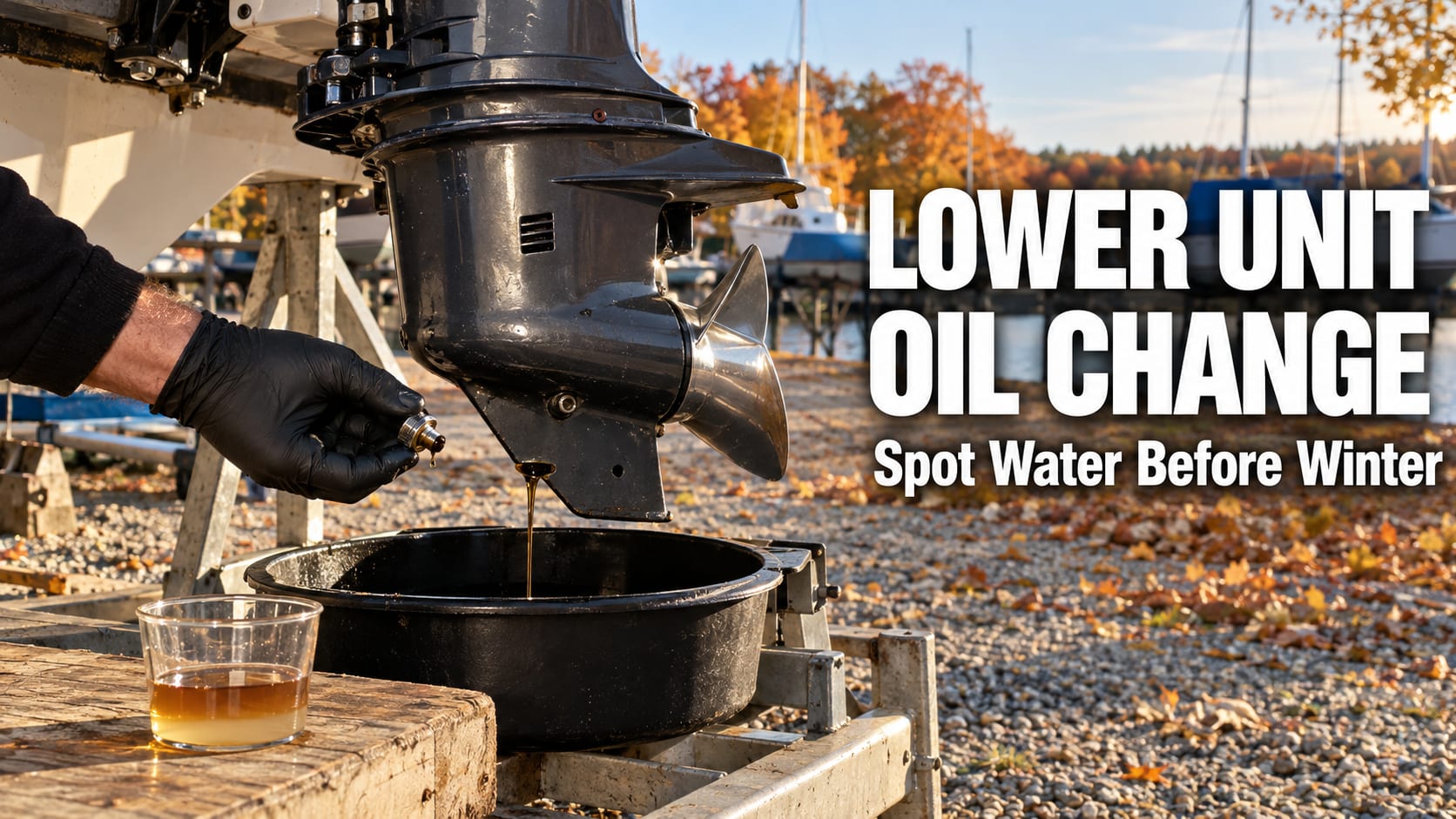

The gear oil in your outboard's lower unit is the one fluid most owners forget about, and it is the one that tells you the most about what is going on below the waterline. A quick lower unit oil change before winter storage takes about thirty minutes, costs very little, and can save you from a gearcase rebuild that costs real money.
Here's the thing: if water has been getting past a seal all season, storing the boat with that wet oil sitting in the gearcase all winter is how a small leak becomes a corroded gear set. Draining it now, while the boat is out of the water, lets you catch the problem on your schedule instead of the boat's.
Why Lower Unit Oil Matters
The lower unit holds the gears and bearings that turn your propeller, and a sealed bath of gear oil keeps them cool and lubricated. The seals around the prop shaft and shift shaft are the only things keeping lake or sea water out. Fishing line wrapped behind the propeller is a classic way to cut those seals, which is why I always look for line when I check what comes up with the boat out of the water.
How to Drain It and Read What Comes Out
Set the outboard upright and level, and put a drain pan under the gearcase. Remove the lower drain screw first, which sits near the bottom, then the upper vent screw so air can get in and the oil flows freely. Most gear oil has a sharp, sulfur smell, so do not be alarmed by that. What you want to look at is the color and texture.
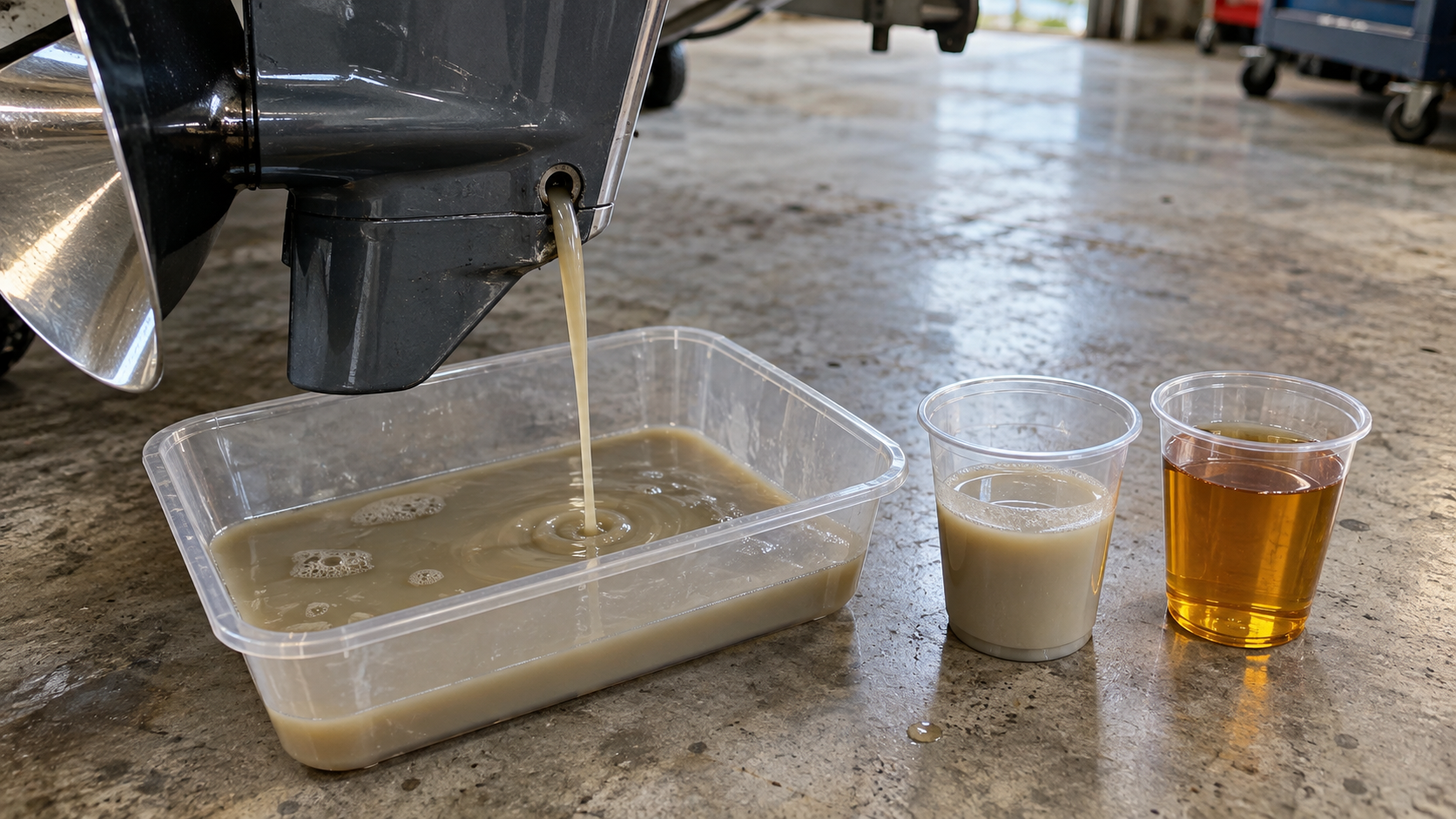
Fresh oil is usually a smooth amber or green depending on the brand. Milky, creamy, or tan oil that looks like a chocolate milkshake means water got in. Metallic glitter in the oil, or a thick pile of fuzz on the magnetic drain screw, means something inside is wearing. A little fine gray paste on the magnet is normal. Chunks are not. If you find water or large metal, do not just refill it and hope. Have a shop pressure test the gearcase before you put the boat away.
Refill From the Bottom Up
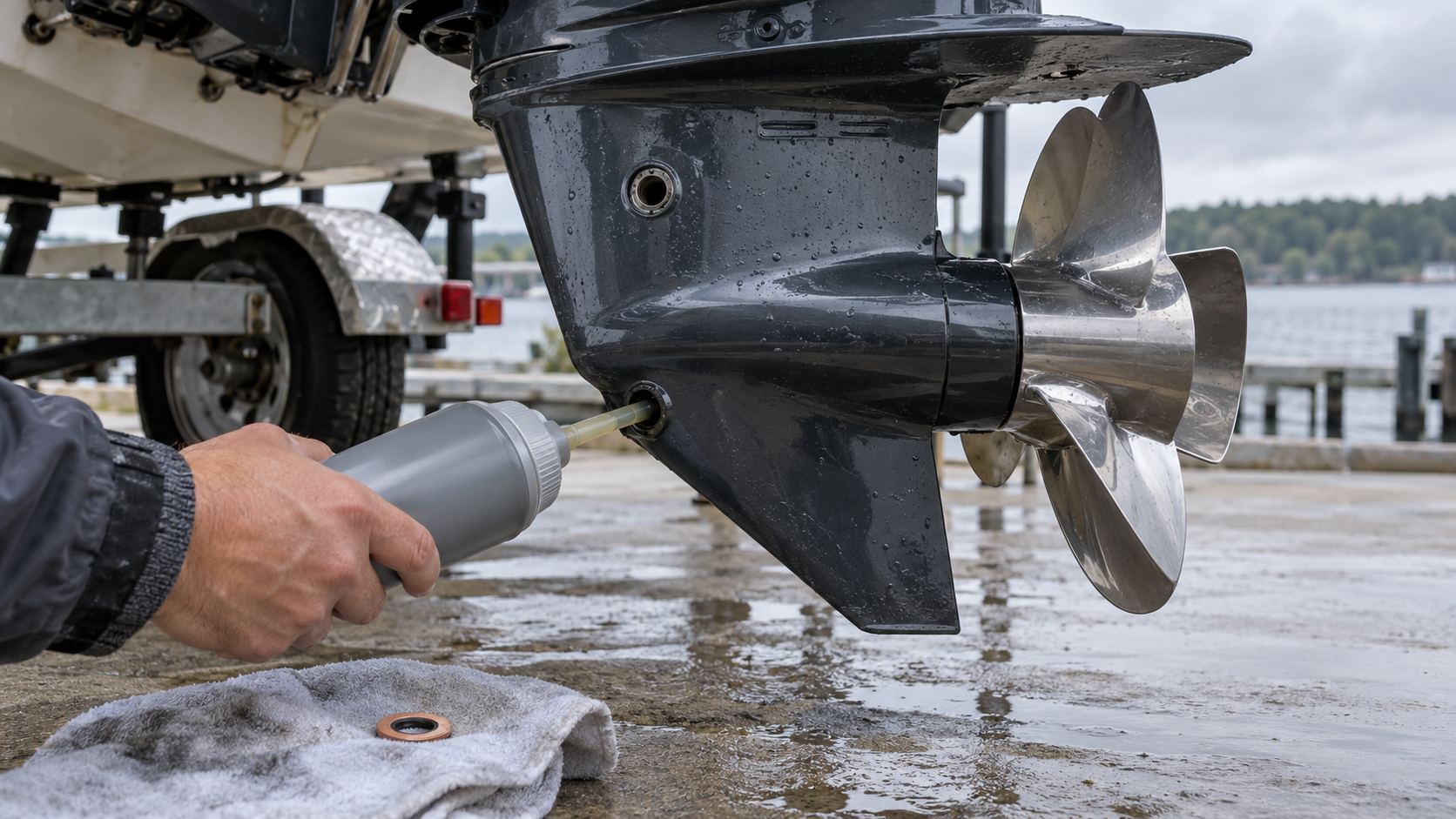
Use the gear oil your engine manufacturer specifies, since the owner's manual is the only place to confirm the right type and capacity for your motor. Replace the sealing washers on both screws, because reusing flattened ones is how leaks start. Screw the oil tube or pump into the lower drain hole and pump oil in slowly until it runs out of the upper vent hole with no bubbles. Install the upper screw first, then pull the tube and install the lower screw quickly so you do not lose oil.
Wipe everything clean and check the area around the screws and the propeller shaft for any weeping. While you are down there, it is a great time to look over the prop for dings, as I explained when I wrote about a dinged propeller costing you speed.
Fold It Into Your Winter Routine
Treat the lower unit as one stop in a larger winter checklist that also covers fuel and engine care, which I laid out in how to winterize your boat's engine. Do the oil change at the end of the season, not the start, so fresh oil is protecting the gears while the boat sits.
If you have ever pulled a drain screw and found milky oil on your own boat, tell me what you did in the comments. Check your gearcase this month and you will know exactly what shape your outboard is in before the first cold snap.
