

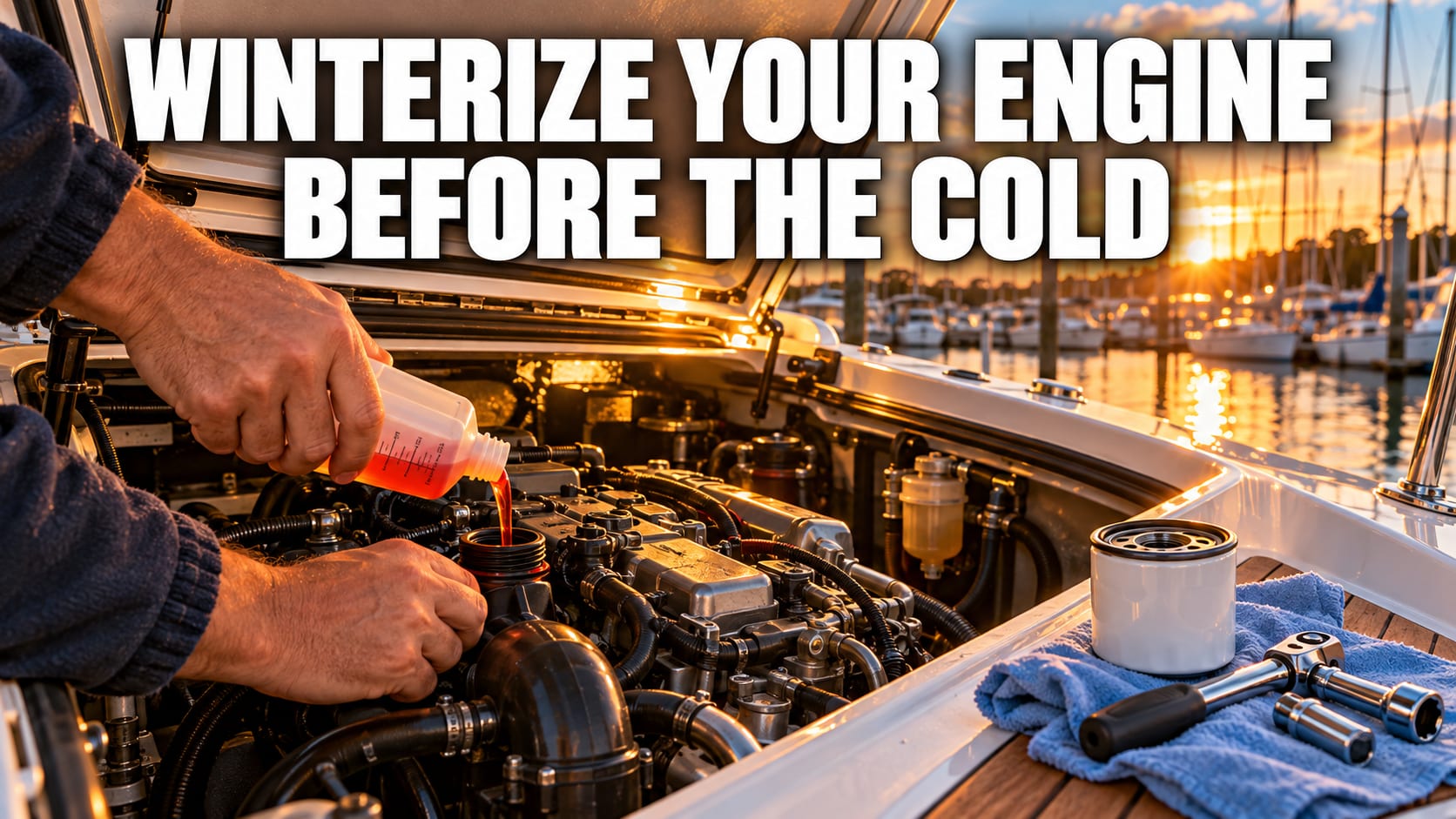

Nobody wakes up in April excited to find out what winter did to their engine. But that's exactly what happens to owners who park the boat, pull the drain plug on the cabin plumbing, and call it done. The water and head systems get all the attention this time of year, and rightly so, since frozen pipes are dramatic and expensive. But the engine sitting in the same boat, ignored, is just as vulnerable to a season of neglect.
Here's the thing: an engine doesn't need freezing temperatures to get ruined over the winter. Stale fuel, acidic oil, and a cooling system full of last summer's water can do more damage sitting still for four months than an entire season of hard running. If you want to turn the key in the spring and hear it fire on the first try instead of paying a mechanic to sort out what winter did, the engine gets the same attention as everything else on the boat.
Why Fuel Left Over Winter Comes Back to Bite You
Most fuel on the water today has ethanol in it, and ethanol pulls moisture out of the air. Sitting in a half-empty tank for four months, that moisture separates out, gums up injectors, and leaves varnish behind in the fuel system that a warm spring day won't fix on its own. The fix is simple and cheap: top the tank off close to full before you put the boat away, which leaves less room for condensation to form, and add a marine fuel stabilizer at the dock before your last run of the season so it actually circulates through the lines, the filter, and the carburetor or injectors rather than just sitting in the tank.
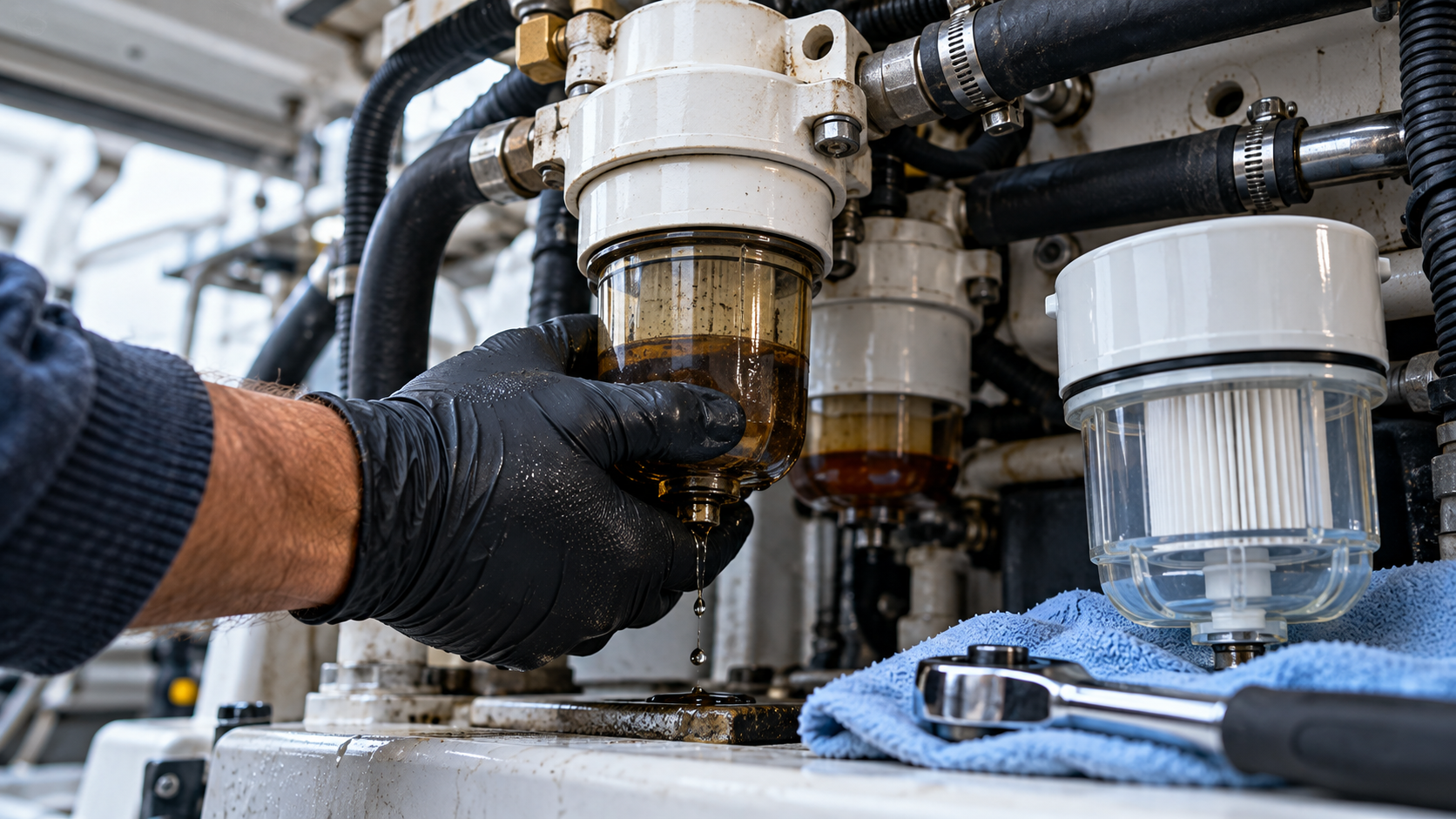
It's worth running the engine for ten or fifteen minutes after adding the stabilizer, not just pouring it in and walking away. That's also a good time to swap the fuel-water separator if it's due, since a fresh filter going into winter means one less thing to second-guess in the spring. I keep a spare filter or two in the spare parts kit I carry aboard for exactly this kind of thing, and it's worth having one on hand before you put the boat away too.
Running Fresh Oil Before It Sits
Used engine oil holds onto combustion acids and moisture that form the moment the engine runs, and those byproducts do their worst damage when they're allowed to sit against bearings and cylinder walls for months instead of getting flushed out. Change the oil and filter before storage, not after, even if you're not technically due by the hour meter. Run the engine first so the oil is warm and flows out cleanly, carrying more of that acidic sludge with it instead of leaving it behind in the pan.
Flushing the Cooling System the Right Way
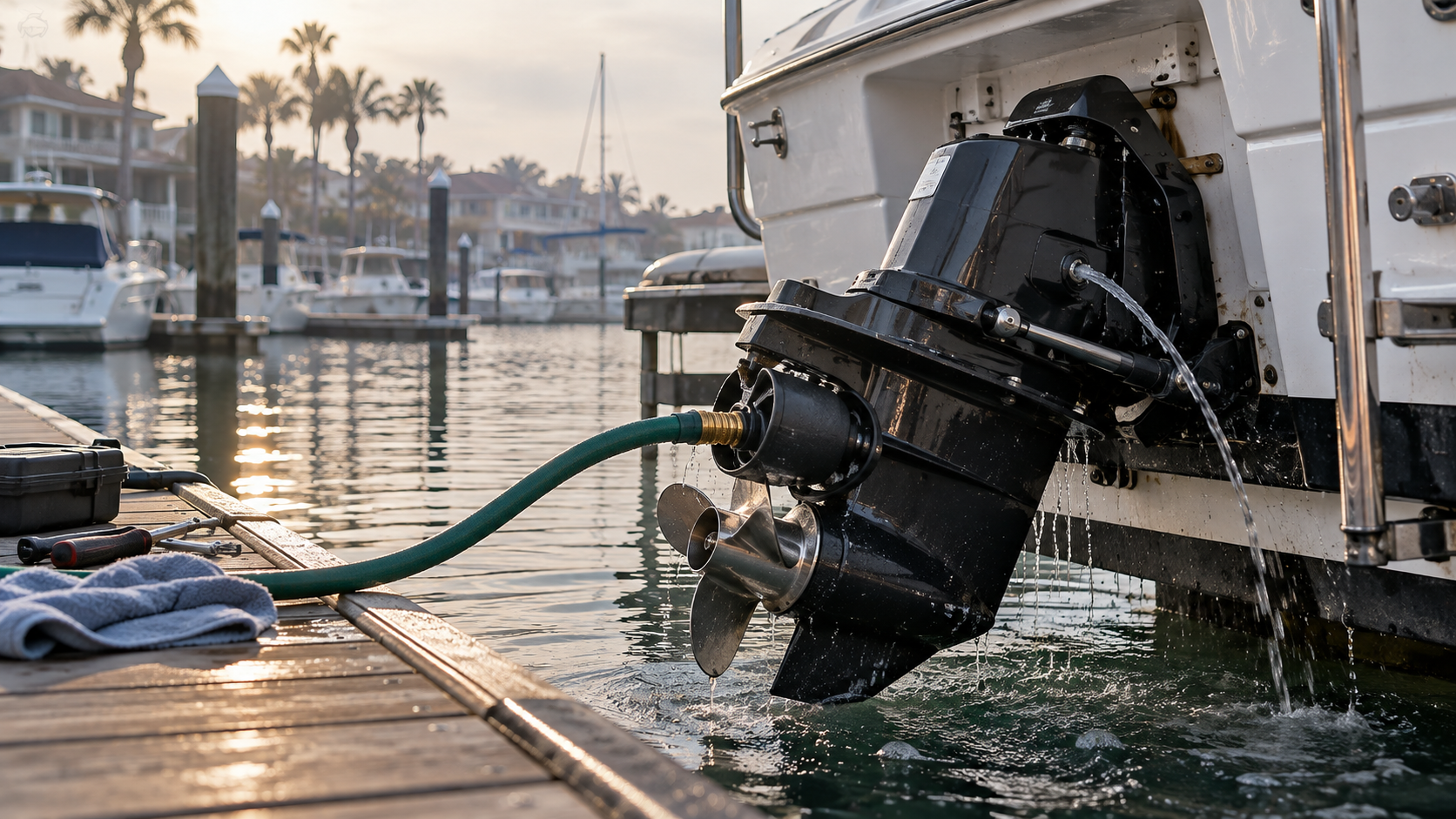
Raw water cooling systems need a fresh water flush before storage, whether that's running earmuffs on an outboard or sterndrive or using a flush kit on an inboard. The goal is getting the salt or brackish water out of the block, the manifolds, and the heat exchanger before it sits and corrodes from the inside all winter. If your boat sees any real freezing weather, the raw water side needs to be drained completely or filled with the right concentration of antifreeze, because a cracked block from a hard freeze is a far more expensive mistake than a couple hours of prep.
If you already worked through winterizing the boat's water and head systems, this part will feel familiar. Pink antifreeze doesn't just belong in the galley plumbing, it belongs in the engine's raw water passages too, and the same freeze-protection logic applies to both.
Fogging the Cylinders on Carbureted and Older Engines
If you're running an outboard or an older carbureted inboard, fogging oil matters. Spraying fogging oil into the carburetor throat or through the spark plug holes while the engine turns over coats the cylinder walls in a protective film that keeps condensation from pitting the metal over months of sitting still. Fuel-injected and diesel engines generally don't need this step the same way, since the injection system and compression-ignition process behave differently, but if you're not sure which category your engine falls into, it costs almost nothing to do and there's no real downside.
Don't Forget What's Around the Engine
Belts, hoses, and clamps are cheap to replace and expensive to have fail, so a quick squeeze-and-look at every hose in the engine compartment before you close it up for the season is worth the five minutes. If your boat is coming out of the water anyway for the winter, this is a good time to do it alongside the haul-out inspection I walked through before, since you're already down in the bilge and around the running gear.
None of this takes a full weekend. Stabilized fuel, a fresh oil change, a proper cooling flush, and fogging where it applies will run you an afternoon, and it's the difference between a spring startup that just works and one that turns into a tow bill. Do it now, before the first hard freeze shows up in the forecast, and you'll thank yourself in April.
If you've got a step in your own winterizing routine I didn't cover here, drop it in the comments. Every boat's a little different, and I always like hearing what's worked for other owners.
