

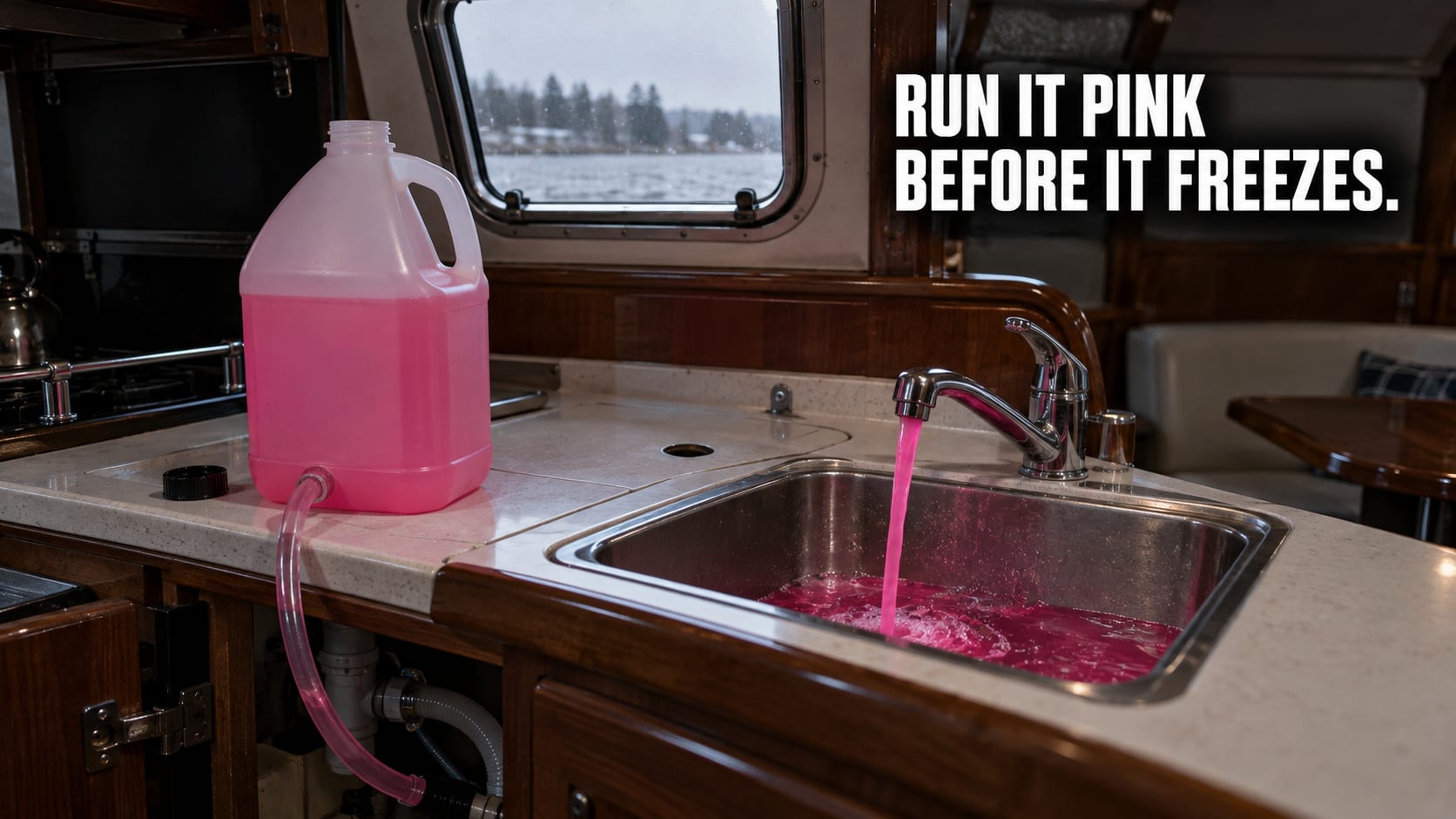

The engine gets all the attention in the fall. It is the expensive thing, it is the thing everybody talks about at the fuel dock, and it is the thing the yard quotes you on first. Meanwhile the repair that actually shows up on a lot of April invoices is plumbing — a split water heater, a cracked pump housing, a hairline fracture in a fitting that does not leak at the dock and starts leaking twenty miles out.
Water expands about nine percent when it freezes, and it does not care what is in its way. Every fixture, hose run, pump, and trap on your boat holds a little of it. Here is how to get it all out.
Use the Right Antifreeze, and Know What the Number Means
Buy non-toxic propylene glycol marine antifreeze — the pink stuff sold for potable systems. Never use the green automotive ethylene glycol. It is toxic, it is illegal to discharge, and it will end up in a water tank you drink out of.
The temperature on the jug is the part people get wrong. A minus-fifty rating is usually a burst rating, not a freeze rating. It means the slush that forms will not split your pipes down to that temperature, not that it stays liquid. It also means dilution matters: antifreeze mixed with the water still sitting in your lines is weaker than what came out of the bottle, which is exactly why you drain first and pump antifreeze second.
Empty the Tank First, Don't Fill It
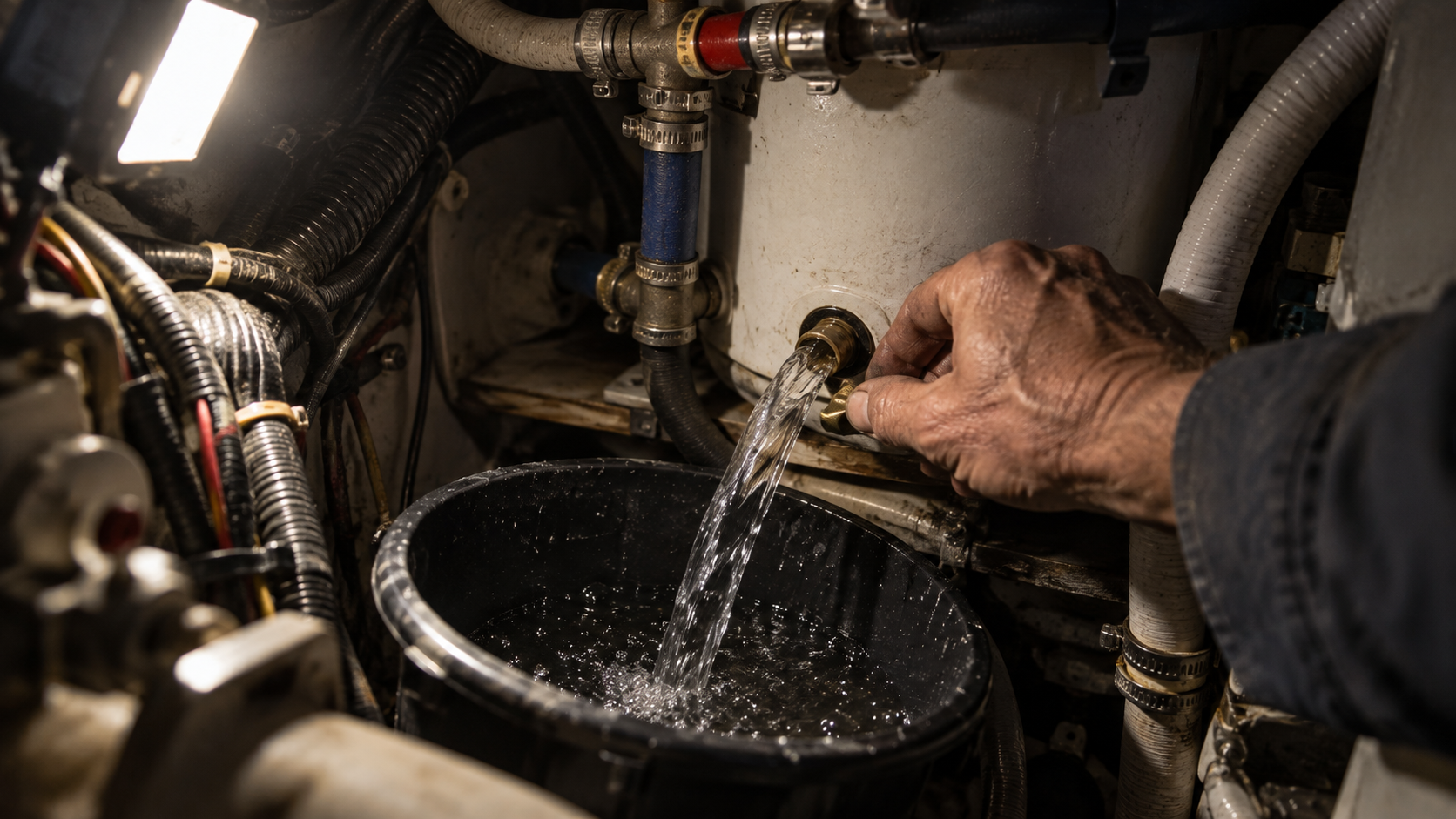
Start by draining the freshwater tank completely and opening every low-point drain you have. Drain the water heater — pull the drain plug and open a hot tap so it actually breathes and empties instead of airlocking half full. Do not forget to bypass the heater afterward if it has a bypass kit; without one you will pump six gallons of antifreeze into a tank you already emptied.
This is the same order of operations as the rest of a proper fall lay-up routine — remove the water, then protect what is left. Skipping the drain and just dumping antifreeze into a full tank is how people end up with pink water and frozen pipes at the same time.
Pull Antifreeze Through Every Fixture Until It Runs Pink
Once everything is drained, put a few gallons of antifreeze into the tank or, better, run the pump's intake hose straight into the jug so you use less. Then turn the pump on and open fixtures one at a time — cold side first, then hot — and run each one until the water coming out is solid pink, not just tinted.
Work through all of them, including the ones you forget every year: the transom shower, the galley sprayer, the anchor washdown, the livewell, the icemaker, the ice maker's supply line, and the cockpit sink. Any run of hose you do not push antifreeze through is a run of hose still holding water. Pour a cup down each drain and shower sump as well so the trap and the sump pump body are protected.
The Head Is the Part People Skip
The head system holds more water than anything else on board and it is the most expensive thing to rebuild in the spring. Pump the holding tank out at a proper station, then rinse it and pump it out again — waste left to sit all winter turns into a smell that no amount of chemical fixes in April.
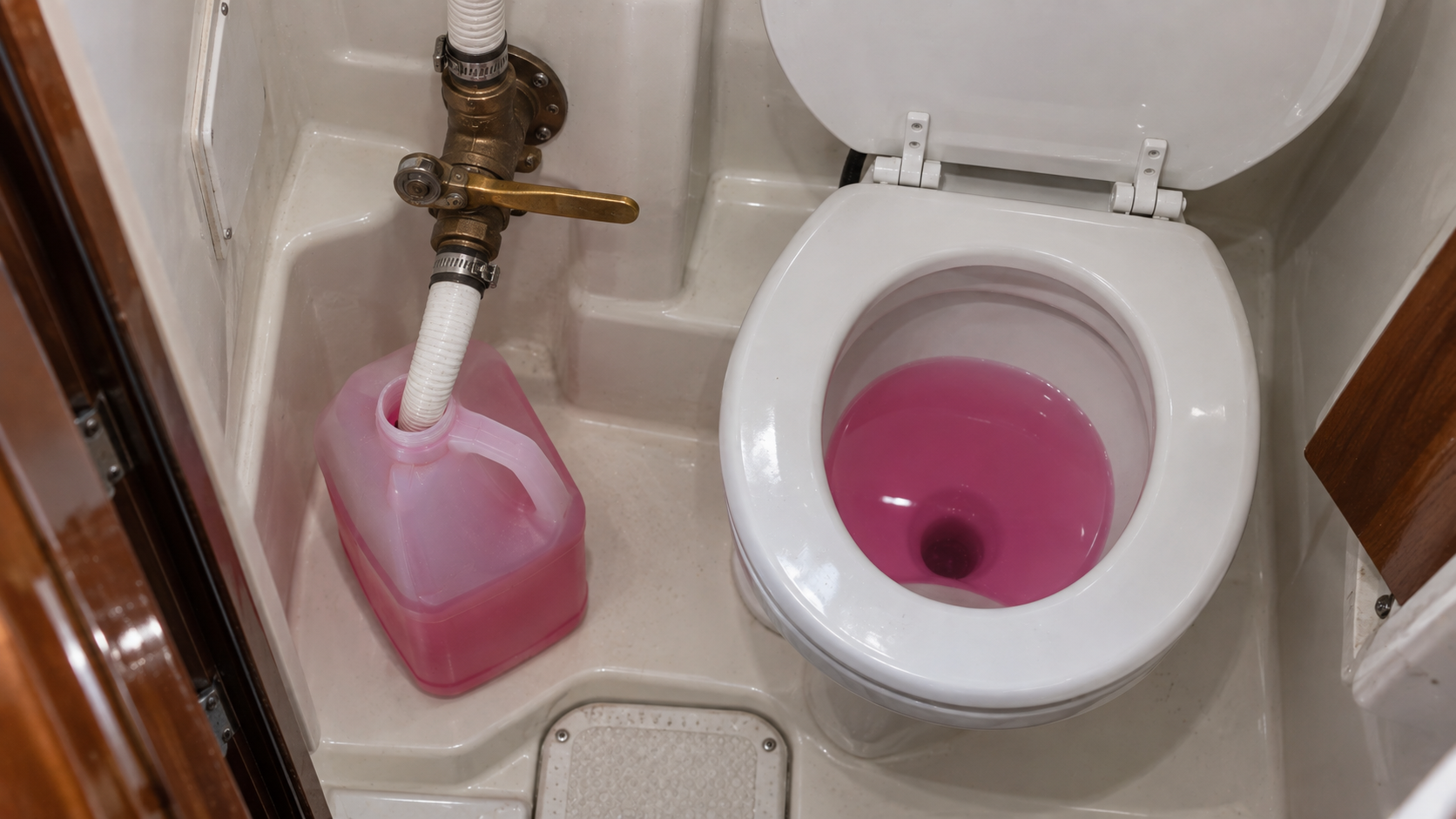
Then close the seacock, disconnect the intake hose, and drop it into a jug of antifreeze. Pump the head until pink comes through into the bowl and down into the tank, so the intake line, the pump, the joker valve, and the discharge run are all protected. Leave a few inches of antifreeze standing in the bowl. The rubber parts in a marine head dry out and crack as much as they freeze, and the glycol keeps them supple through the winter.
Write Down What You Did
The last step takes five minutes and saves an hour. Tape a note at the helm or inside the cabin door listing what you bypassed, which seacocks you closed, and which hoses you disconnected. Come spring you will not be standing in the bilge trying to remember whether the water heater bypass valve is open or closed, and whoever helps you put the boat back in commission will not have to guess either.
How you store the boat changes the stakes a little — a heated indoor building buys you margin that a shrink-wrapped boat in a yard does not — but the plumbing work is the same either way, and it is worth doing properly no matter where the boat spends the winter. The freeze does not check whether you got a good deal on storage.
An Afternoon Now, or a Yard Bill in April
Plumbing is the cheapest winterizing you will do and the easiest to rush. A few gallons of the pink stuff, a couple of hours, and a note taped to the bulkhead is the whole job. The alternative is discovering a cracked pump the first weekend you actually want to use the boat.
If your boat has a system I did not mention — a watermaker, a diesel heater loop, a washer-dryer — those need their own manufacturer procedure, and it is worth pulling the manual before it gets cold. Drop a comment if you want me to cover one of those in detail.
