

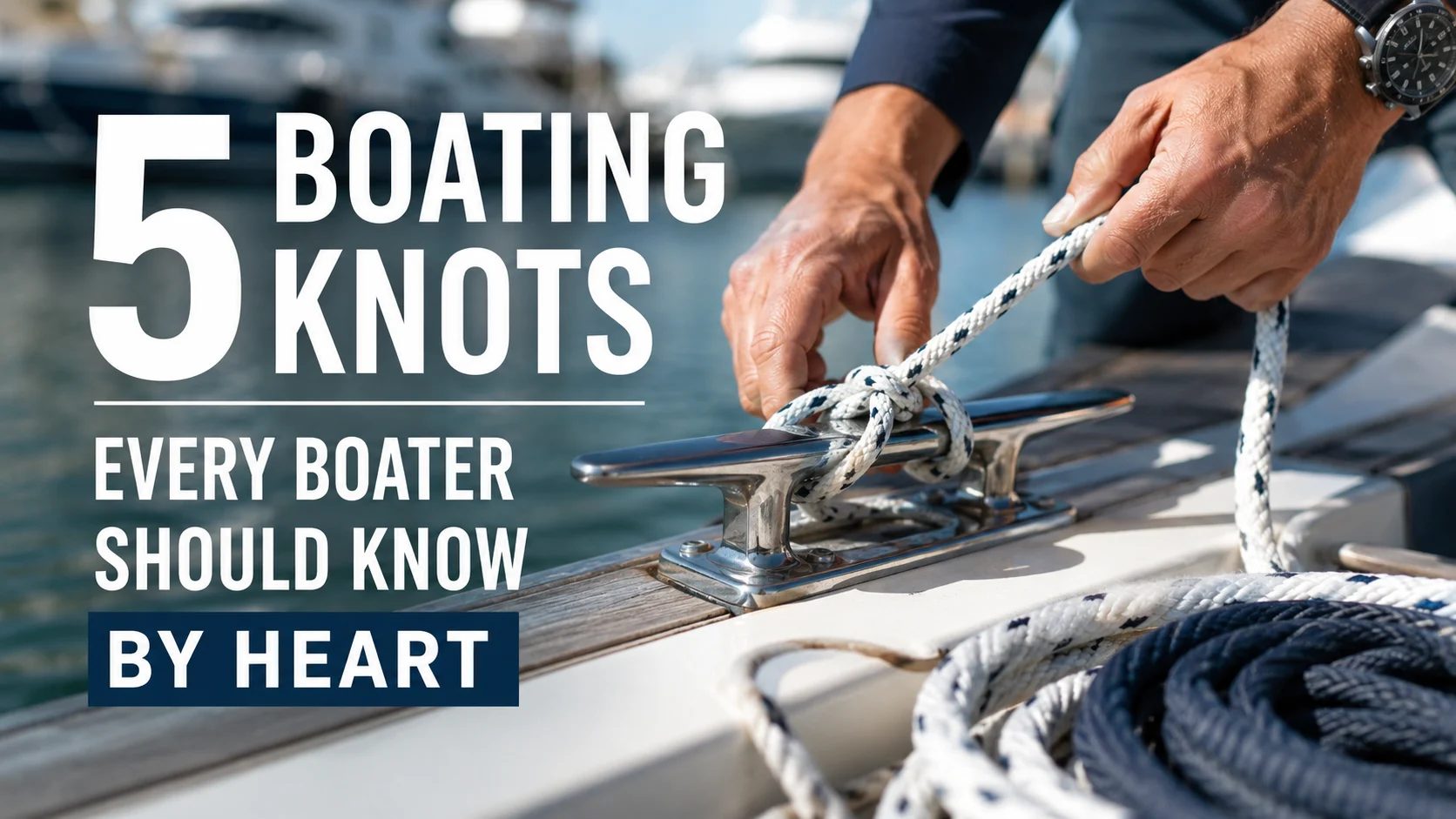

There are a hundred knots in the average sailing book, and you'll use maybe five of them for the rest of your boating life. The problem is that most people never learn those five cold, so they end up fumbling on the bow while the wind pushes them off the dock, or worse, they trust a tangle of half-remembered loops to hold their boat overnight. Knowing a handful of knots by heart is one of the cheapest, most useful skills you can build as a boat owner, and you can have them down in an afternoon.
Here's the thing about knots on the water: the best one is the one you can tie fast, in the dark, with cold hands, and untie just as fast when it's under load. That last part matters more than people realize. Let me walk you through the ones that actually earn their place on your boat and when to reach for each.
The Cleat Hitch: The Knot You'll Use Every Single Day
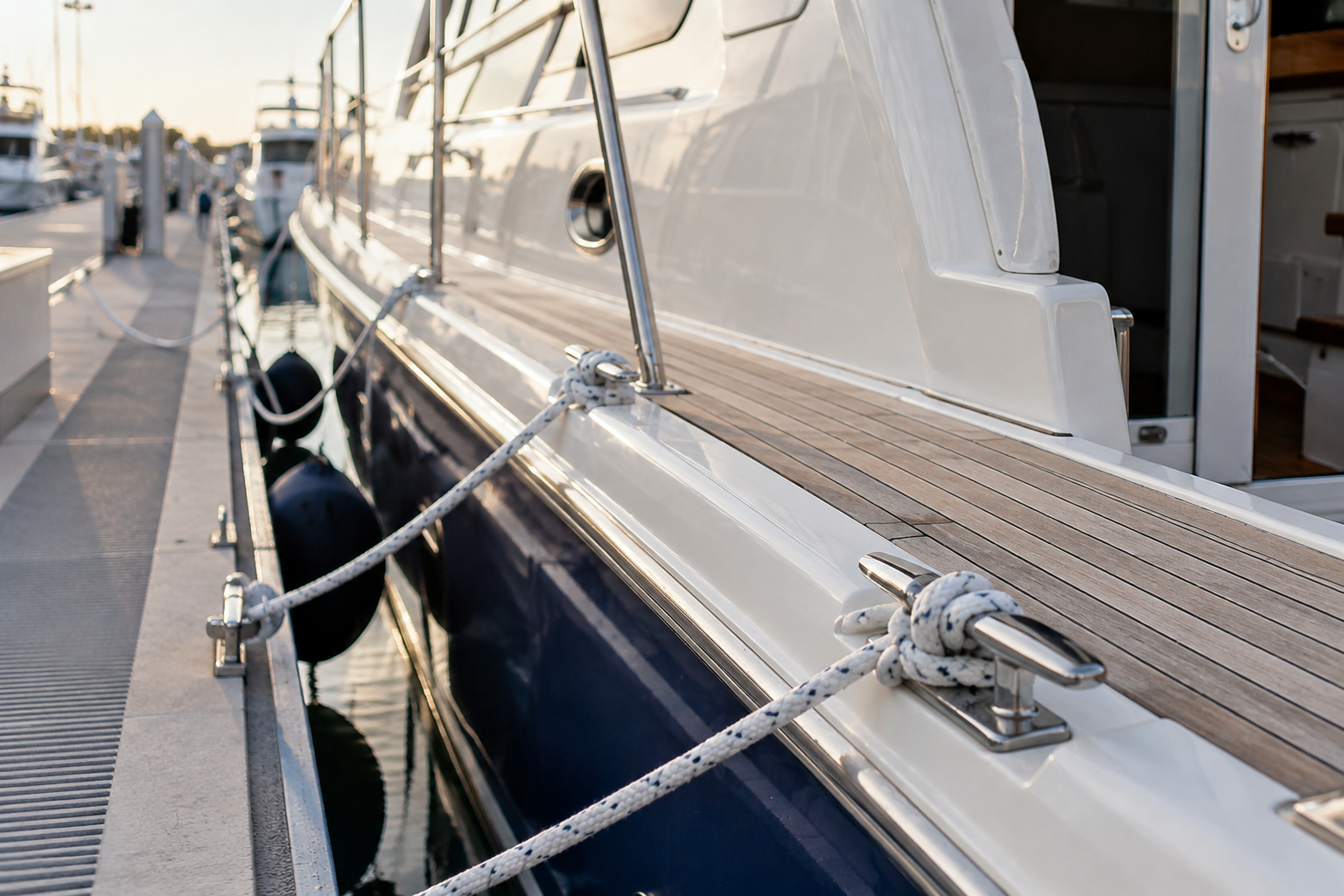
If you only learn one knot, make it the cleat hitch, because you'll tie it every time you dock, fuel up, or set a spring line. The mistake I see constantly is people wrapping a dozen frantic loops around a cleat and calling it good. All you really need is one turn around the base, a figure-eight over the horns, and a single locking hitch to finish. That's it. Done right, it holds under real load and comes free with one pull even after a boat has been surging against it all night. Whether you're grabbing a slip or waiting your turn at a crowded ramp, a clean cleat hitch is the difference between looking like you belong and holding up the whole line.
The Bowline: The Loop That Never Lets You Down
The bowline gives you a fixed loop that won't slip and won't jam, which is exactly what you want when the load is going to be serious. I use it to drop a loop over a piling, to tie onto a towline, and to make up a rode when I'm rigging something on the fly. The old rabbit-out-of-the-hole trick is worth memorizing because a bowline can be tied one-handed once you've got it, and it still unties easily after it's been loaded hard. When you're setting up to spend the night on the hook, a bowline is the knot I trust between my rode and the anchor shackle, and if you'd rather sleep than watch your anchor all night, that reliability is worth learning.
Half Hitches and the Clove Hitch for Fenders and Pilings
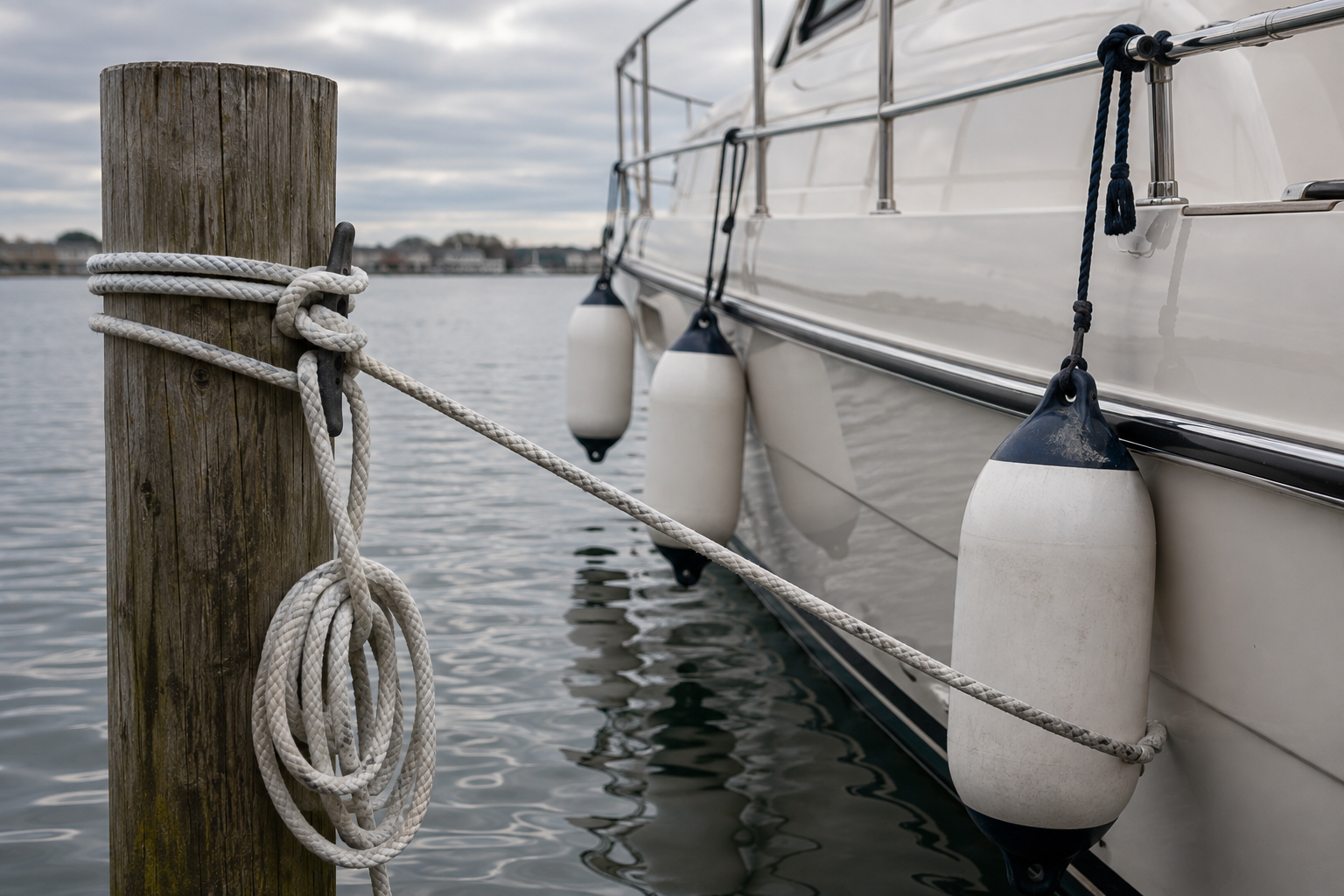
For everyday tying-off that doesn't need to be permanent, two half hitches and the clove hitch do most of the work. Two half hitches secures a line to a ring, a rail, or a piling and cinches down tight, which makes it my go-to for hanging fenders at the right height so they actually protect the hull instead of dragging in the water. The clove hitch is faster but can work loose if the load shifts, so I back it up with a half hitch anytime it's holding something I care about. The same simple hitches secure a line when you're pulling tubers and skiers off the stern, and they're what you'll reach for when you raft up with friends and need to tie boats together without anyone drifting into anyone else.
Why the Right Knot Beats the Fancy One
It's tempting to collect knots like party tricks, but on the water simplicity wins. A knot that's quick to tie and quicker to release will always beat an elegant one you have to think about. Practice these until your hands know them without your brain getting involved, because the moment you actually need a knot is usually the moment you don't have time to look it up. Tie them at home on a chair leg, tie them on the dock while you wait on the crew, and tie them until they're boring. Boring is exactly what you want when a gust is pushing you sideways toward the next boat.
None of this takes special talent, just a little repetition, and it pays off every single time you leave the dock. Learn these few, keep a short length of line in your pocket to practice, and you'll never be the one holding everybody up because you can't tie off. If you've got a knot that's saved you out there, drop it in the comments so the rest of us can add it to the rotation.