


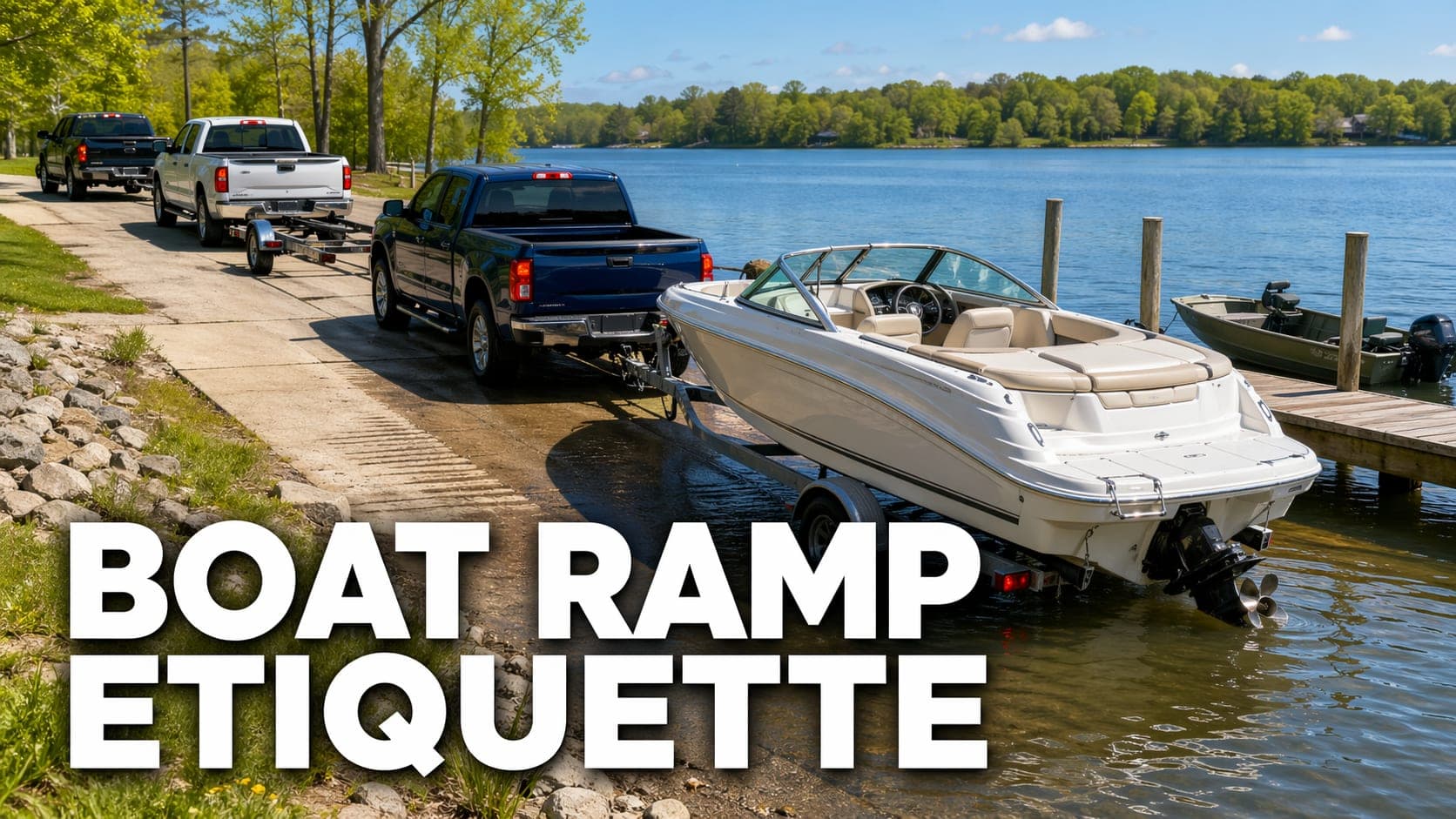

The boat ramp is where the boating season actually begins, and it's also where most rookies get publicly humiliated. Every spring I watch the same scene play out at launches up and down the coast — someone blocks the ramp for twenty minutes, someone else forgets the drain plug, someone tries to load their boat while another trailer is still rigging. None of this is complicated, but nobody teaches you the rules before you show up, and one bad launch can make you dread the ramp for a whole season.
Here's the real question: what separates a boater who launches in three minutes from the guy still fumbling twenty minutes in with a line of trucks behind him? It's not experience — it's preparation and a handful of unwritten rules that the regulars live by.
Rig in the Staging Area, Not on the Ramp
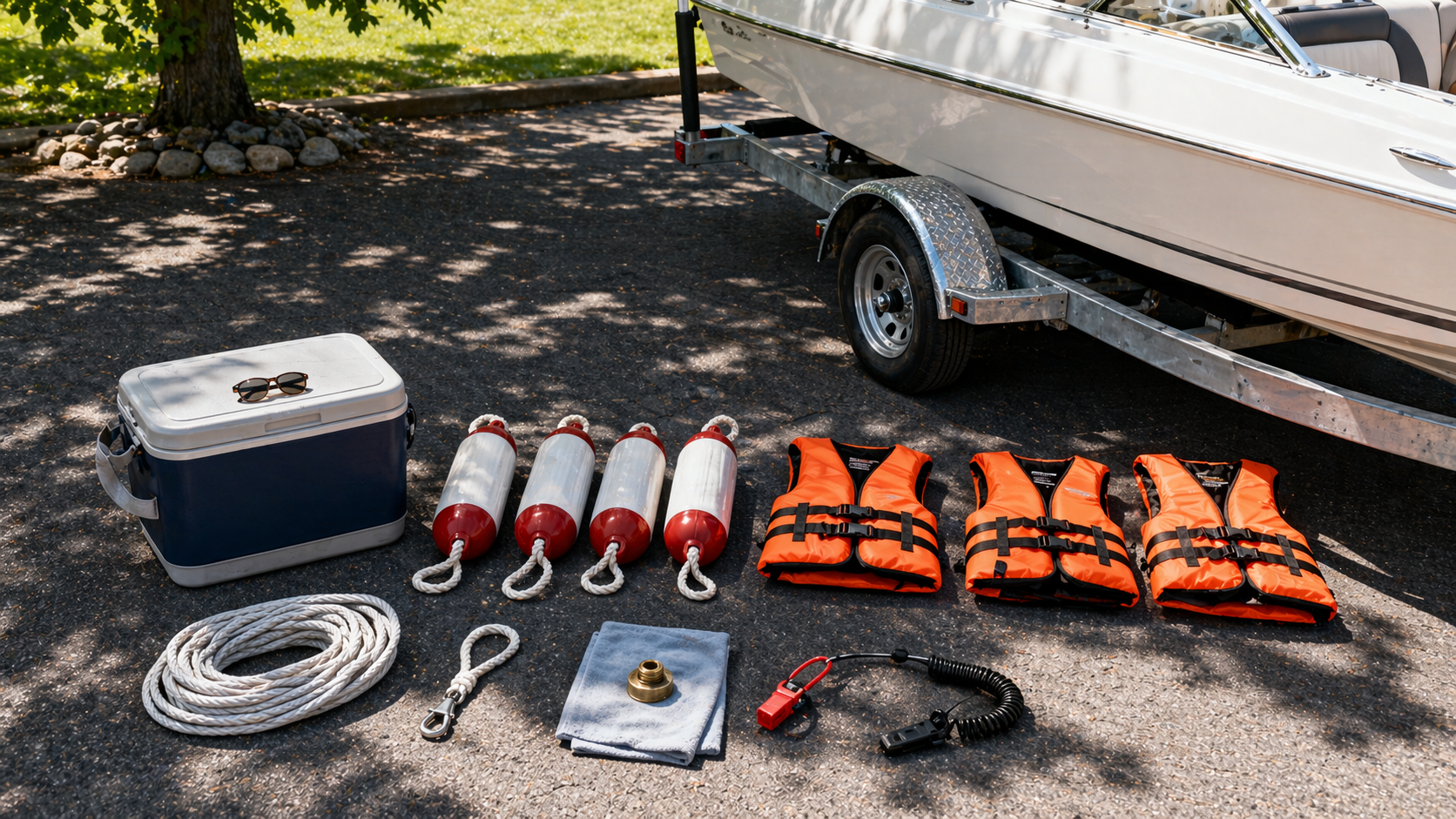
This is rule number one and the one most often broken. The staging area is where you load gear, remove tie-downs, install the drain plug, hook up the winch safety, and do every single thing that isn't "back down the ramp." Your boat should already have the cooler, fenders, lines, kill switch lanyard, and keys on board before the trailer touches the water. If you pull straight to the ramp and start unpacking, you're the reason six trucks are idling behind you. The ramp is for two motions only: back down and pull away.
If you're new to all this, run through your pre-launch checklist the night before you go. The same thinking from the first-weekend rookie mistakes piece applies — being prepared is how new boaters stop looking new.
Decide Who Does What Before You Get There
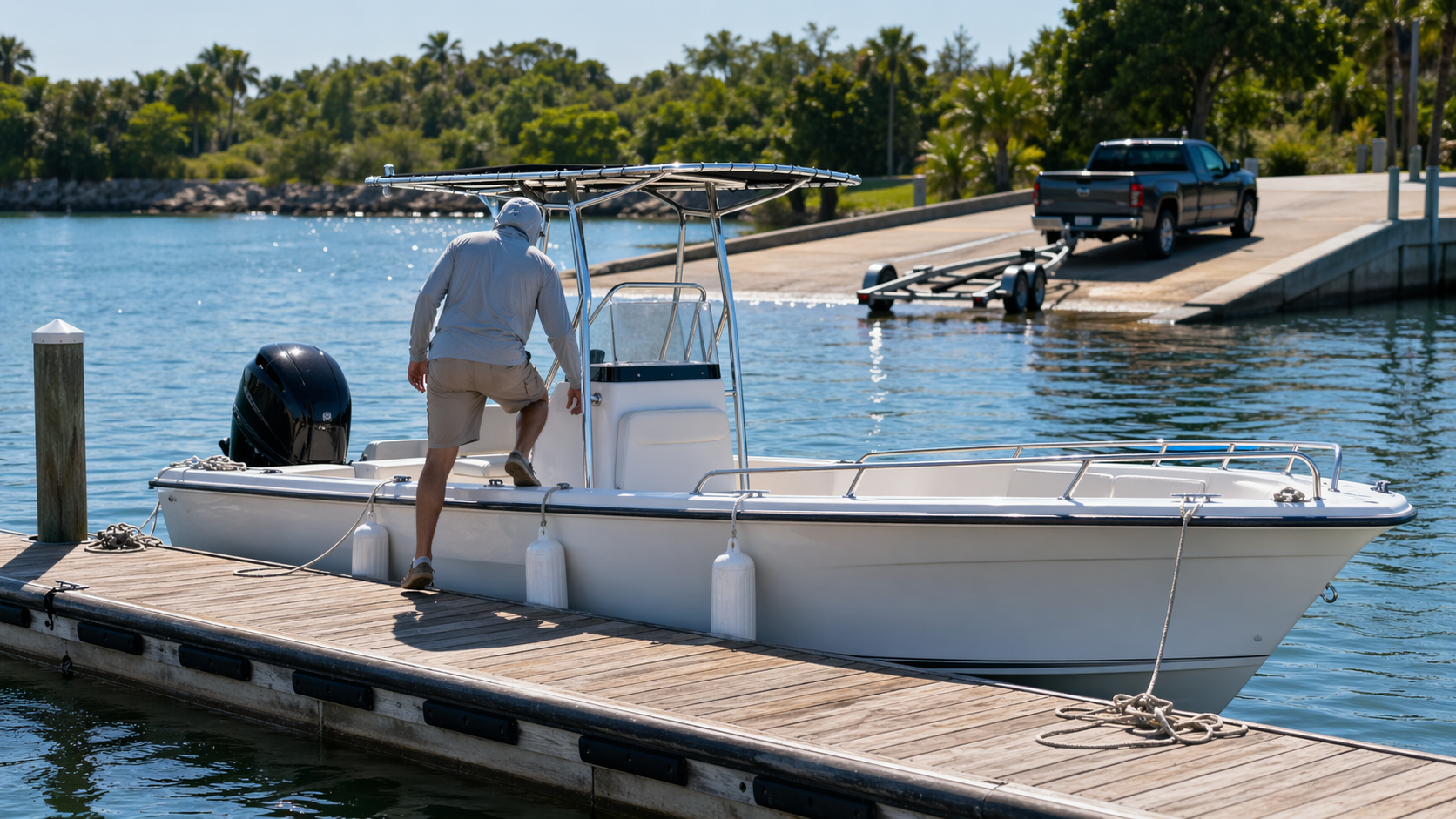
If you're launching with a partner, pick roles in the parking lot before the trailer hits the water. The classic mistake is standing on the ramp in confusion while the engine runs and the truck is blocking everyone. One person drives the trailer, one person runs the boat. Once the boat is off, the trailer driver parks immediately and the boat driver idles to the courtesy dock for pickup. Launching solo is fine too — tie a long bowline to the dock, back in, release the winch, push the boat back onto the line, then park the truck before boarding.
Don't Start the Engine Until the Boat Is Floating
You should never run a marine engine without water circulating through the intake. Starting your outboard or sterndrive while the boat is still on the trailer is a fast way to burn up an impeller or overheat a powerhead. On most outboards the intake sits below the cavitation plate — if that's not fully submerged, don't crank. Same rule on sterndrives with raw-water cooling. Wait until the boat is backed in deep enough that the props and intakes are under water, then fire it up and ease off the trailer.
Before the first launch of the season, run through a full spring commissioning check. A boat that won't start at the ramp is the longest twenty minutes of your life.
Back the Trailer Straight the First Time
Learning to back a trailer is the single biggest skill people wish they'd practiced in an empty parking lot before launch day. If you can't reliably back a trailer in a straight line, please don't learn on a Saturday morning with twelve trucks watching. Spend an hour on a Tuesday night in a church lot with a buddy spotting you. Hand on the bottom of the wheel, small inputs, look where the trailer is going — not at the truck. Go slow. If you overshoot, pull forward and try again; that's fine. Trying to save a bad angle by cranking the wheel is what jackknifes trailers and puts you on someone's dashcam.
Use the Courtesy Dock the Way It's Named
Courtesy docks exist to let people board, unload, and reload — not to tie up for an hour while you eat lunch or stock the cooler. Once your trailer is parked and everyone's aboard, push off and clear the dock. Same thing on the way back in: pull to the dock, load passengers and gear fast, drop the truck driver at the parking lot, and retrieve the boat. If you need a minute to wash down the deck or coil lines, do it at your slip or on a transient tie a hundred feet away. Anyone working a busy ramp will thank you.
Read the Ramp Before You Back Down
Every ramp has quirks — a drop-off that bottoms out deeper trailers, a current that pushes boats sideways, a crosswind funnel between launches, a section of concrete that gives way to algae and becomes a skating rink. Walk the ramp on your first visit. Watch how the regulars approach it. Check the tide if you're saltwater; some ramps are unusable at dead low. If it's busy and you're unsure, stand off to the side and watch a few launches before you commit. Five minutes of observation saves you from being the cautionary tale everyone retells at the next rendezvous.
The ramp is a microcosm of boating in general: the people who slow down, prepare, and stay aware of everyone around them launch cleanly and enjoy their day. The ones who don't hold up the line, dent their rig, and go home frustrated. Do it right three or four times and you'll be the relaxed one, not the one stressing at the top of the ramp.
What's the worst ramp disaster you've ever watched unfold? Drop it in the comments — this is one of those stories everyone has.
*If you enjoyed this one, check out a companion piece on the skill you need the moment you finish launching — docking in wind and current.*