

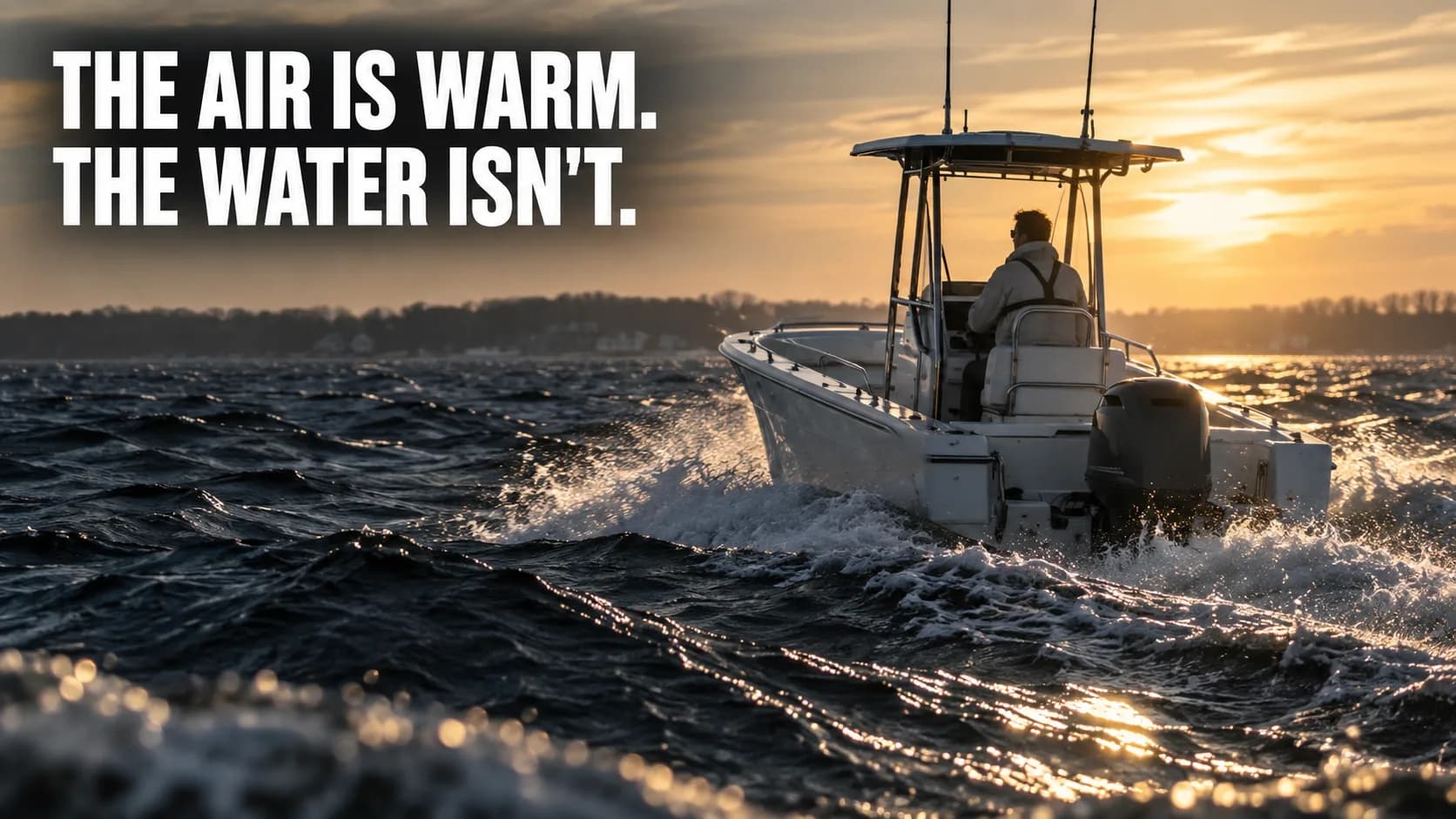

A seventy-degree afternoon in late September feels like a gift. The crowds are gone, the light is better than it is all summer, and you can finally get a slip without calling ahead. What has changed is the water underneath you, which has been shedding heat since August and is now cold enough to take your breath away in the most literal sense. Every fall, people go in wearing shorts on a beautiful day and are in real trouble inside a minute — not because they could not swim, but because cold water shock does not care whether you can swim.
The Air Temperature Lies to You in September
Water holds heat far longer than air does, and that cuts both ways. In June it is why the lake is still freezing on a warm day. In the fall it is why the surface stays pleasant long after the nights have turned. But surface temperature is the shallowest part of the story — a few feet down, or anywhere you get wind mixing or fresh runoff after rain, it is colder than the marina thermometer says.
The number worth knowing is roughly sixty degrees. Below that, immersion starts producing an involuntary physical response in most people regardless of fitness or swimming ability, and across most of the country water crosses that line in September and October while the afternoons are still in the seventies. If you are dressed for the air and the water is twenty or thirty degrees colder, you are dressed for the wrong environment.
What Cold Water Shock Actually Does to You
The first thing that happens is a huge involuntary gasp. If your head is under when it fires, you inhale water, and that is how strong swimmers drown in the first thirty seconds. What follows is a minute or two of hyperventilation you cannot consciously stop, a spike in heart rate, and a real panic response. None of that is a failure of nerve. It is a reflex, and it happens whether you approve or not.
The framework I give anyone who will listen is one-ten-one. You have about one minute to get the gasping under control. You have roughly ten minutes of useful muscle function before your hands and arms stop doing what you tell them — which is why the ladder you can clearly see becomes unusable long before you are actually hypothermic. And you have something like an hour before you are likely to lose consciousness. That order matters, because it means the first minute is about not drowning, and the next ten are the entire window you have to get out of the water.
The Fall Version of Wearing Your Life Jacket
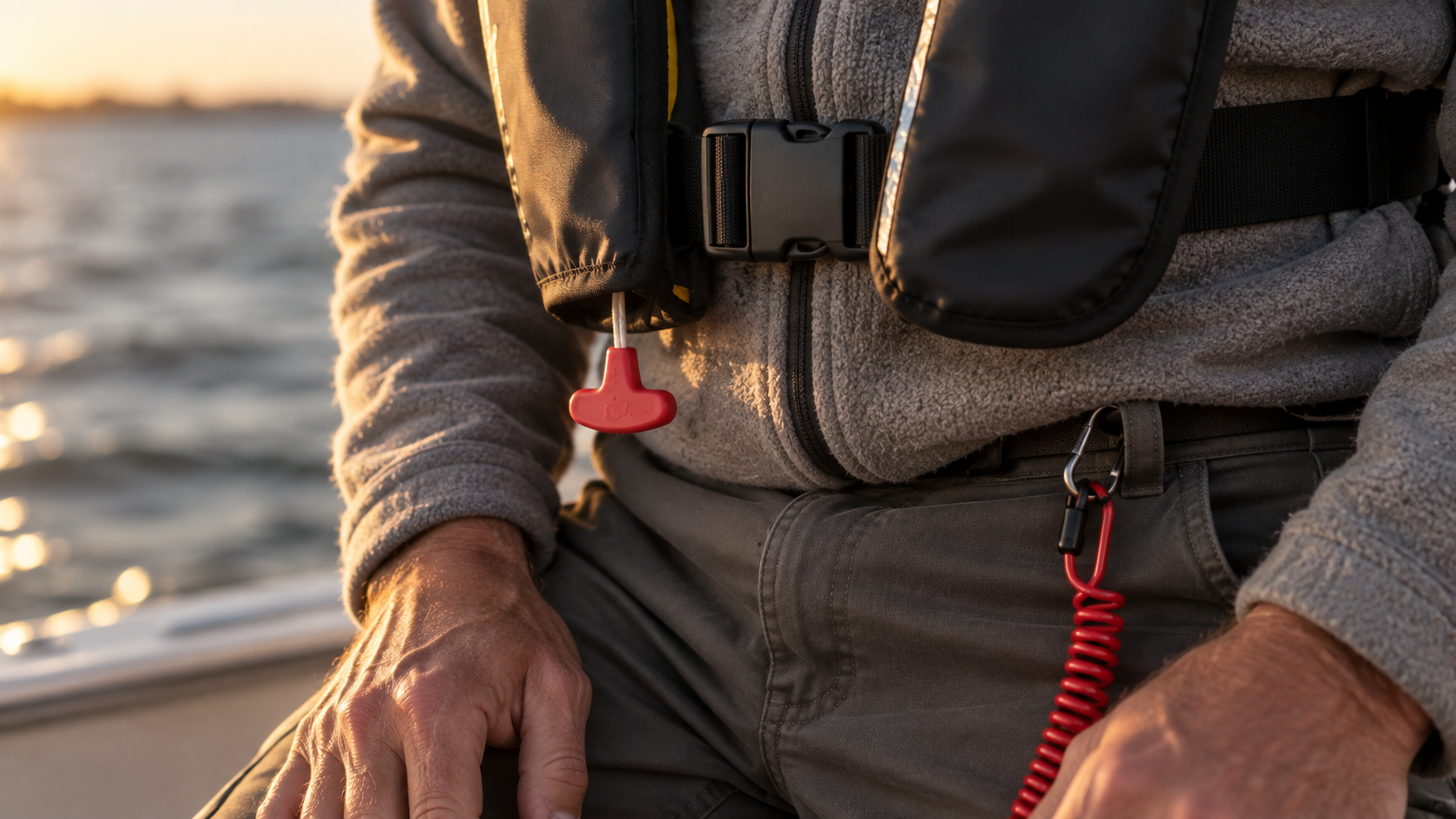
In summer a life jacket keeps you floating until someone circles back. In cold water it does something more important: it holds your head clear of the surface during the gasp reflex, when you have no control over your own breathing, and it keeps you up through the ten minutes when your arms quit. A jacket in a locker is worth nothing here, because nobody has ever managed to put one on after the shock hit. This is the season to actually wear it underway instead of sitting on it.
Dress for the water rather than the deck, too. Not a drysuit for a harbor cruise, but layers you can move in, a windproof shell, and dry clothes in a sealed bag aboard. Cotton is the enemy once it is wet. And take the engine cutoff lanyard seriously in a way most of us do not in July — a boat still running in a circle after you go over turns a bad afternoon into a fatal one.
Change How You Run the Boat, Not Just What You Wear
Fall is genuinely the best season on the water and I am not trying to talk anyone off it. The point is that the margin narrows once the water gets cold. Run with someone aboard when you can, and if you are going alone, telling one person where you are headed and when you expect to be back costs ninety seconds and decides whether a search starts at dusk or tomorrow.
Keep everybody inside the rails underway. Most cold-water incidents do not start with a dramatic capsize — they start with somebody stepping onto a wet swim platform or leaning out to fend off at the dock. Slow the approaches down and make the deck the boring place it ought to be this time of year.
If Someone Does Go In
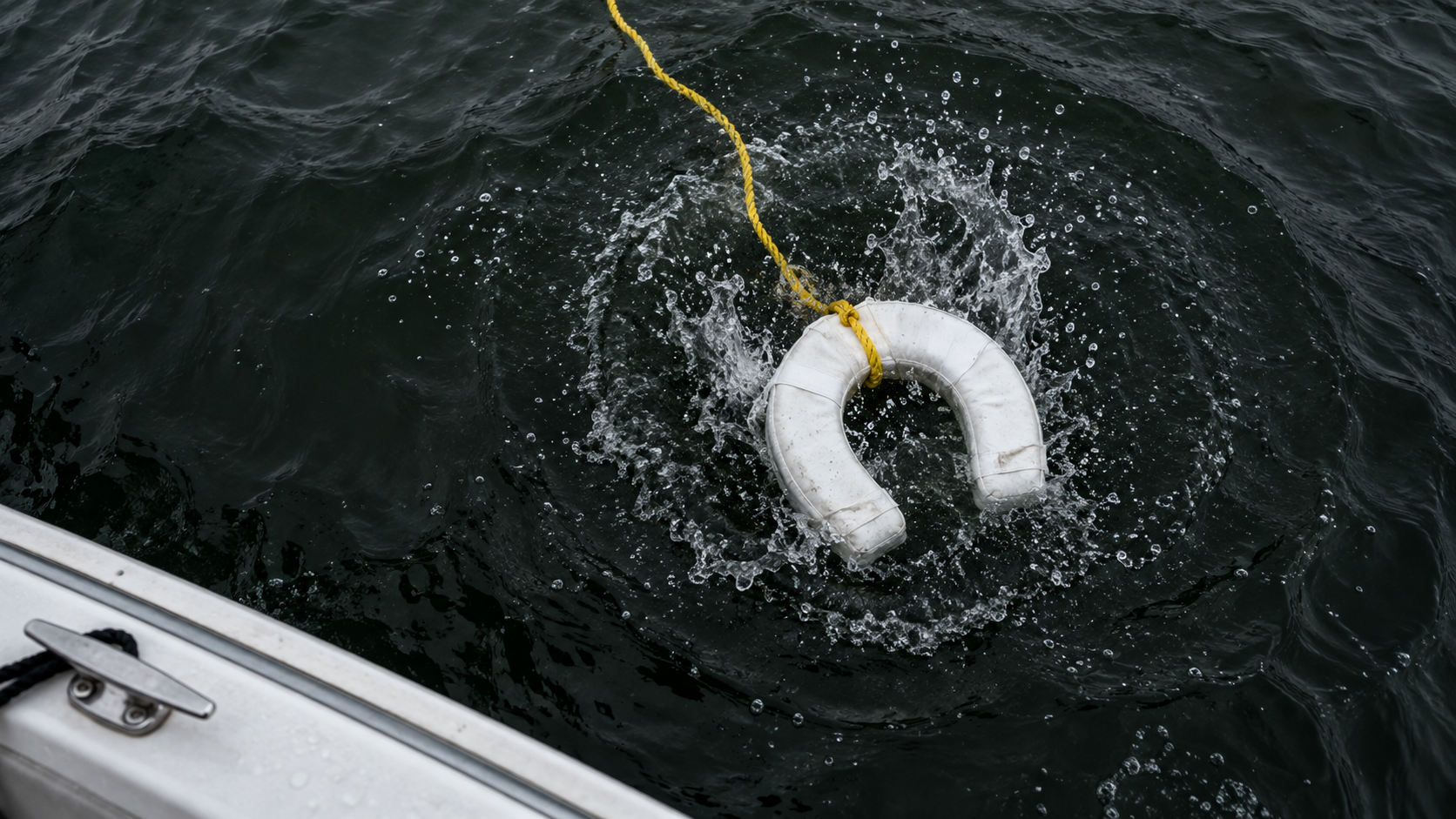
Assign one person to do nothing but point at them. Throw flotation immediately, before you do anything clever with the boat, because they may only have a usable minute or two of arm strength. Bring the boat to them with the engine out of gear as you close, and get them out horizontally rather than hauling them straight up. Once aboard they need dry layers, shelter from the wind, and watching even if they insist they are fine.
If your crew has never run through a recovery together, the fall is a strange time to find out how long it takes. Spend twenty minutes on it with a cushion and a calm afternoon. Nobody regrets that drill.
The water is cold now even when the sky is not. Wear the jacket, clip the lanyard, tell somebody where you are going, and go enjoy the best two months of the year. If you have had a cold-water scare of your own, put it in the comments — those stories change more minds than anything I can write.