


There are thousands of places to put a boat in the water in this country — and most of them are perfectly fine. But there's a smaller list that's actually worth planning a trip around. The kind of water where you remember individual days years later. After plenty of time exploring different coasts and watersheds, here's the short list I keep coming back to.
These aren't ranked. They're each the best version of something different — offshore cruising, sheltered island-hopping, big-water houseboating, classic East Coast sailing, and Southern California's iconic crossing. If one of these isn't already on your list, it should be.
The Florida Keys
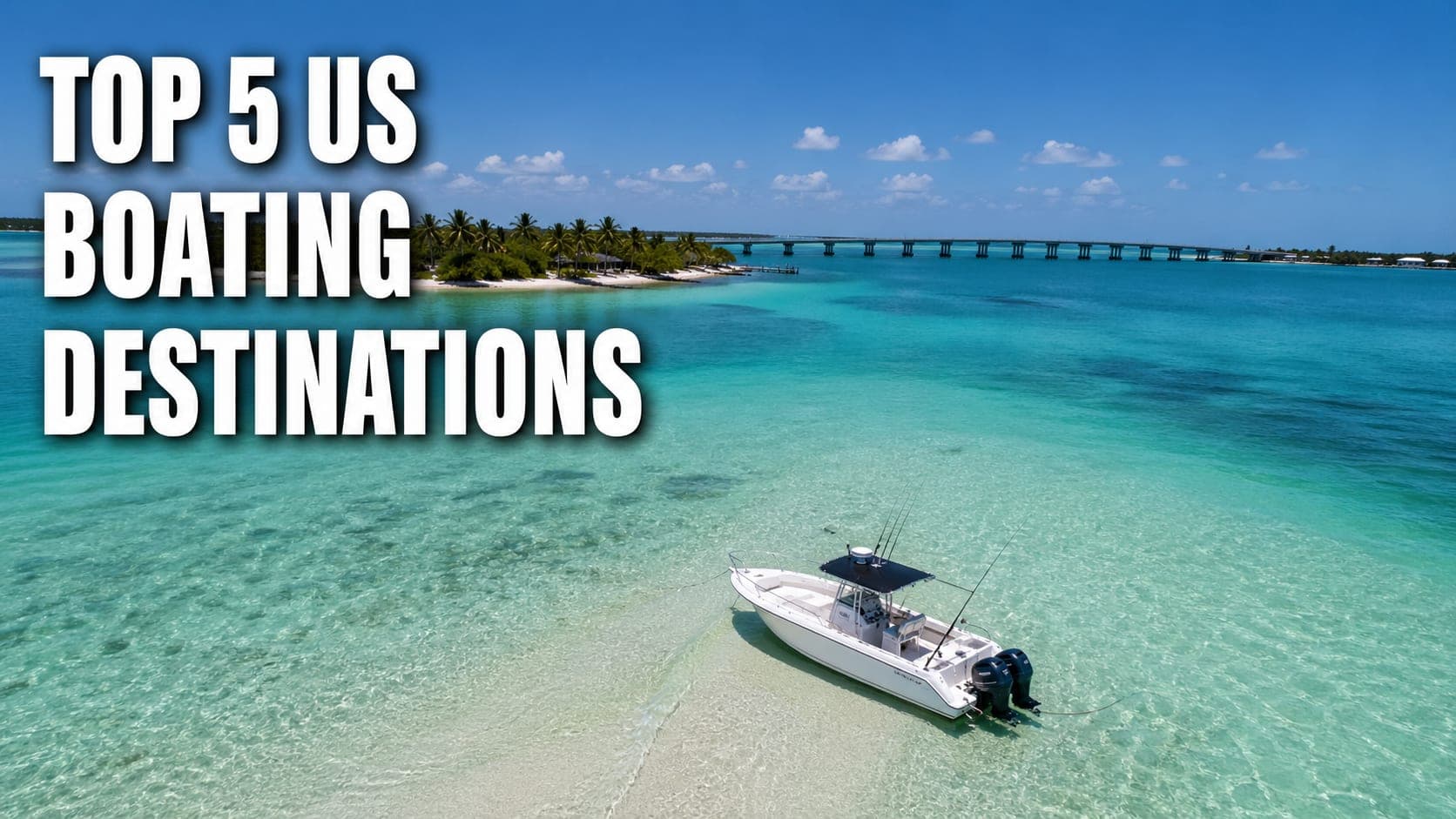
Nowhere else in the country gives you turquoise water, world-class fishing, and dock-and-dine culture in the same trip. Run from Key Largo down to Key West and you cross more reef, flats, and protected backcountry than most boaters see in a decade. The wind is friendlier than the open Atlantic, the bottom is shallow enough that anchoring is easy, and there's a marina or sandbar bar within reach almost anywhere you decide to stop. Watch the weather — squalls move fast in the Keys — and brush up on what to check before you leave the dock. Tides matter more here than people expect.
The San Juan Islands
Tucked between Washington State and Vancouver Island, the San Juans are what cruising in the Pacific Northwest is supposed to feel like. Cold water, evergreen islands, orcas, and so many quiet anchorages you can spend a full week without seeing the same one twice. Friday Harbor is the obvious base, but the gem is what's around it — Sucia Island, Stuart, Jones, the marine state parks. Bring a boat with a real heater and proper foul-weather gear. Even in July, the mornings have bite.

Lake Powell
If you've never spent a week on a houseboat in red rock canyons, you don't know what you're missing. Lake Powell straddles the Utah and Arizona border and gives you 1,900 miles of shoreline carved through sandstone. You can pilot a 60-foot houseboat into a side canyon, drop the swim platform, and have a private beach for a week. Bring a tow toy — wakeboarding, tubing, or a small fishing boat to explore the canyons the houseboat can't reach. Plan around water levels, which fluctuate, and book the houseboat early. Summer slots fill a year out.

Chesapeake Bay
The Chesapeake is the East Coast's best-kept secret to anyone who hasn't sailed it. From St. Michaels to Annapolis to the Eastern Shore, you get protected water, a hundred snug harbors, and crab cakes you'll think about for months. It's an excellent shake-down cruise destination if you're new to longer trips — the bay is shallow but forgiving, the navigation is well-marked, and the marina infrastructure is some of the best on the coast. Sailors particularly love it. Light summer winds, classic Bay-built boats, and the kind of waterside towns that look the same as they did fifty years ago.
Catalina Island
Twenty-two miles off the Southern California coast, Catalina is the closest most West Coast boaters get to a real offshore crossing without leaving the country. You can run out from Long Beach or Newport on a calm summer morning and be in Avalon Harbor by lunch. Two Harbors on the back side is where the real cruising crowd anchors — quieter, more protected, and a different vibe entirely. The crossing itself is the point. Plan for swell, watch the afternoon wind, and pick a window with a good forecast both directions. The kind of trip every Southern California boat owner should make at least once a year.
How to Pick Yours
Each of these destinations rewards a different kind of boater. The Keys and Catalina demand a boat that handles open water and weather. The San Juans want range, heat, and a tender. Lake Powell is for big rentals and crews. The Chesapeake is the gentlest of the five — and the best place to cut your teeth on multi-day cruising before you commit to something bigger.
Whichever one you pick, the work happens before you leave the dock. A clean engine room, fresh fluids, working electronics, and a real gear check will save you days of trip-killing problems. I've covered the broader pre-season safety check every boater should run before — that's the floor before any destination trip, regardless of where you're going.
Where's your top US destination? Drop it in the comments — I'm always looking for the next stretch of water worth planning around.