

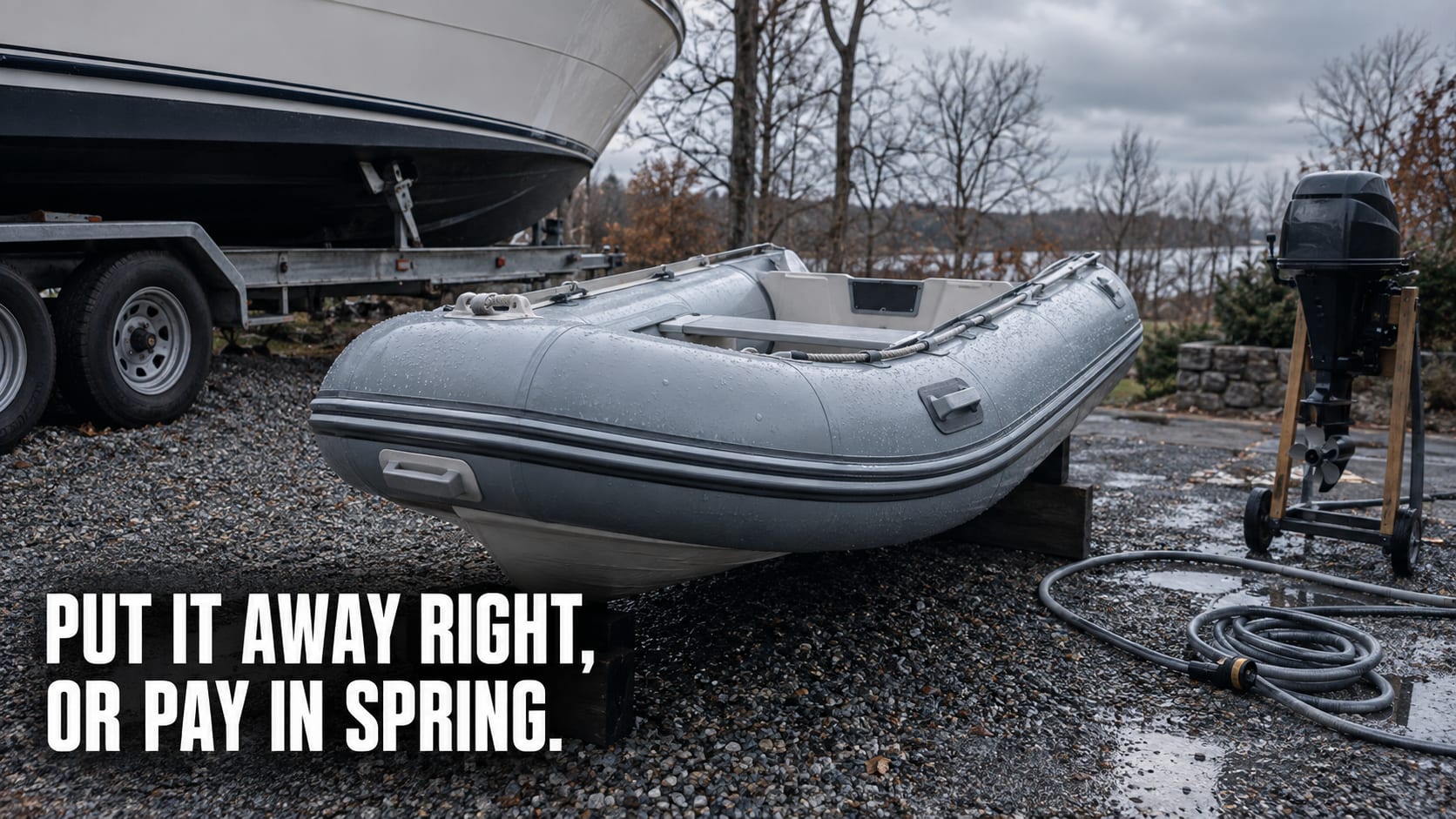

The tender is the last thing anybody deals with in the fall and the first thing that ruins a morning in the spring. You drag it out in May, put air in it, and find a chalky haze on the tubes, a seam lifting at the transom, and a fuel line that smells like varnish. None of that happened over the winter. It happened in the twenty rushed minutes you spent putting the boat away in October.
An inflatable is usually the cheapest boat you own and the easiest one to quietly destroy. Doing this right takes an afternoon.
Wash the Salt Off Before You Do Anything Else
Dried salt pulls moisture out of the air, so a tender put away salty stays faintly damp all winter no matter how dry the building is. That is what starts the mildew and works its way into the seam adhesive.
Inflate it firm, hose it down, and wash it with mild soap and a soft brush. Spend the extra minutes where you normally skip — the seam where the tube meets the floor, under the rubbing strake, and inside the hull under the floorboards, where sand and salt collect and never rinse out on their own. The same freshwater rinse habit that protects the big boat protects this one. Stay away from bleach, degreasers, and anything petroleum-based — those attack the coating on both PVC and Hypalon, and once the coating goes the fabric underneath goes fast.
Dry It Completely, Then Dry It Again
Most tenders that come out of storage smelling like a basement were put away wet. Water hides between the inflatable floor and the tube, and underneath rigid floorboards. Neither drains on its own with the boat sitting flat.
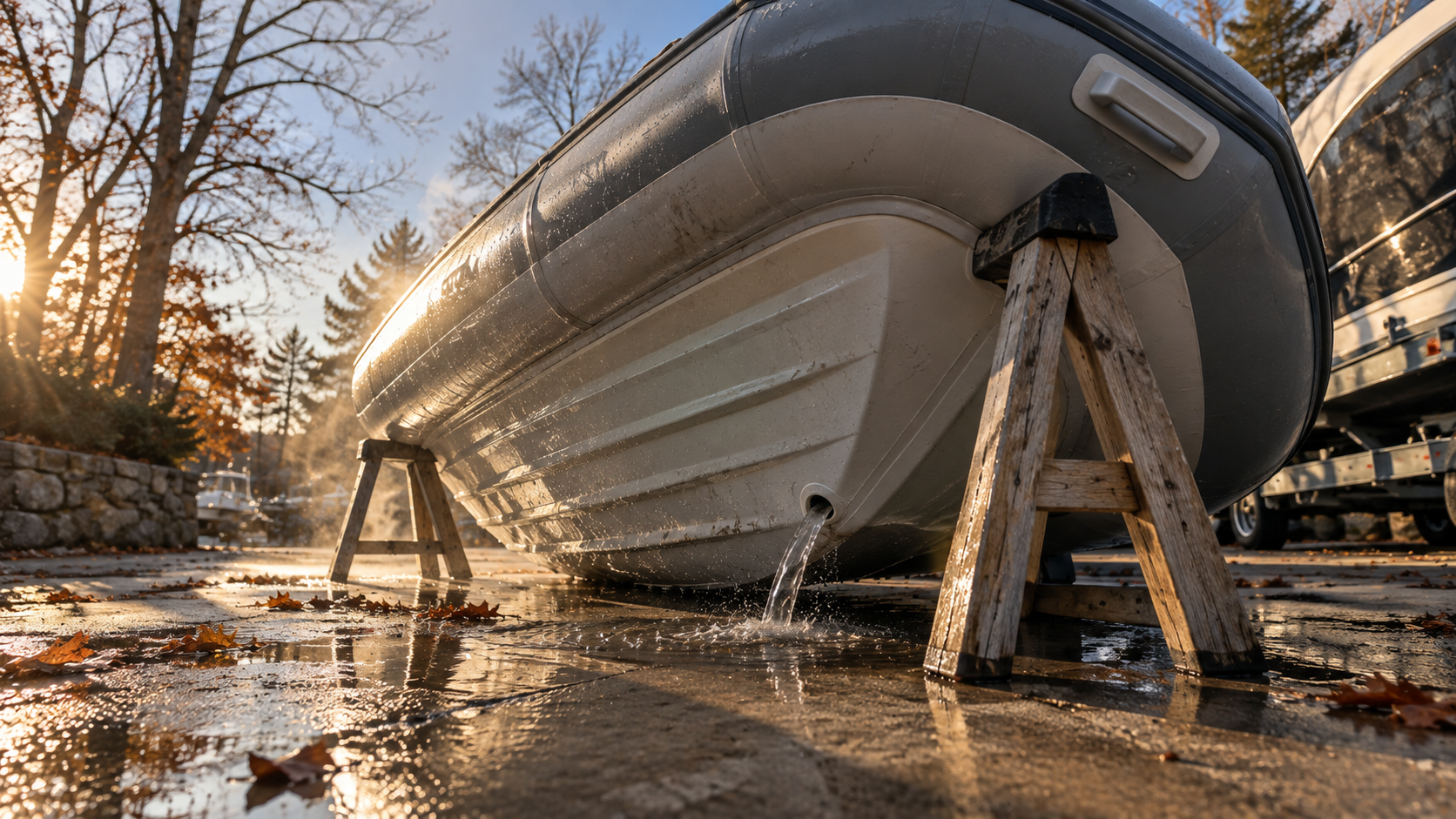
Leave it inflated in the sun for a full day with the drain plug open and the bow slightly high, then tip it on its side and dry the other half. If the floorboards lift out, take them out — the plywood core soaks up water at the edges and that is where delamination starts. Do not fold a tender you are not certain is dry.
What Actually Ruins a Tender in Storage
Four things, in order: mildew, ultraviolet light, rodents, and cold folds. Drying properly handles the first one, and airflow beats sealing it up tight every time — if you are already fighting mildew and moisture below decks, a zipped tender bag in the same space is just one more place for it to grow. Rodents are after the seat foam and the insulation on the fuel line, and they will chew through a tube to get to it, so an open, lit, occasionally-visited space beats a dark corner of a barn.
Cold folds are the one nobody sees coming. PVC stiffens below about forty degrees, and folding a cold boat puts a hard crease in the coating that can crack. If you have the room, store it partially inflated at roughly half pressure so the seams are not stressed as the air contracts. If you have to fold it, fold it on a warm afternoon, keep the folds loose, and stack nothing on top.
The Outboard Needs Its Own Half Hour
The motor on the transom is where the actual repair bills come from. Flush it with fresh water until it runs clear. Then deal with the fuel, because ethanol-blended gas left in a small carburetor separates and turns to varnish in the jets — the same ethanol problem that eats bigger fuel systems, except the passages here are small enough that a little deposit closes them off completely.
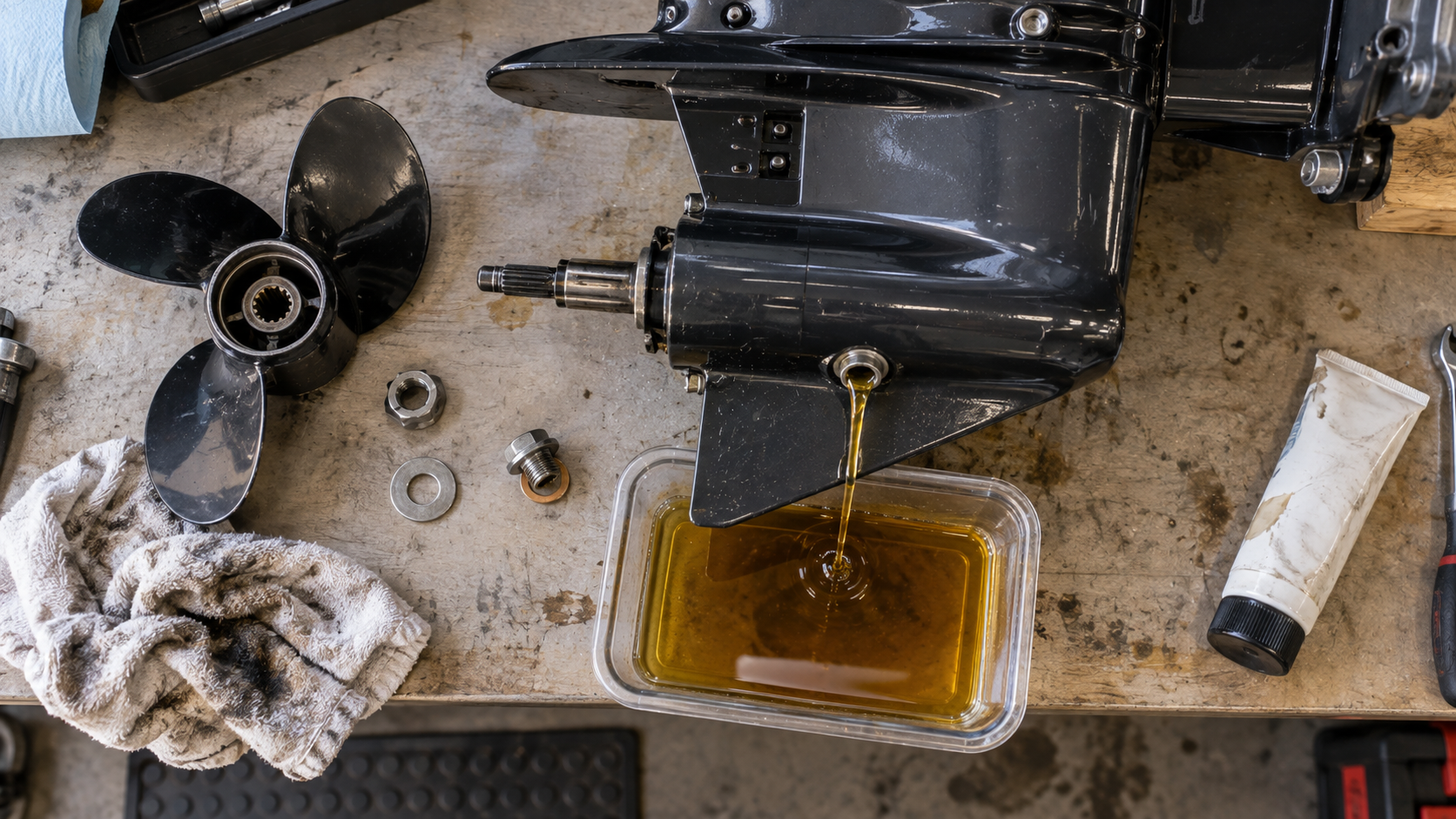
Shut the fuel valve, let it run until it dies, and drain the float bowl. Fog the cylinder if the manufacturer calls for it. Pull the prop, clear any fishing line off the shaft, and grease the splines. While it is off, drain a little gear oil onto a rag — if it comes out milky grey instead of clear amber, you have water in the lower unit. Finding that in October is a seal job. Finding it in May, after that water has frozen and expanded all winter, is usually a gearcase. Store the motor upright, never on its side.
Where You Put It Matters More Than How You Fold It
Indoors, off the concrete, out of direct light. Concrete wicks moisture into anything sitting on it, so get the boat onto a pallet or a couple of two-by-fours. If it has to live outside, use something breathable instead of a blue poly tarp — a tarp traps condensation against the fabric and does more damage over a winter than the weather would have. Same logic as cleaning and storing canvas properly: the cover has to let moisture out, not just keep rain off.
One last thing. Write down the pressure it holds and check it once in midwinter. A tender that has gone soft in January is telling you about a slow leak you would otherwise find on the first warm Saturday of the year, standing on a ramp with the family already in the car.
Do It Once, Properly
Wash it, dry it completely, keep it off the ground and out of the sun, and give the outboard its half hour. The tender is the boat that actually gets you to shore, and it is the one that gets taken for granted hardest.
If you have a storage trick that has kept a tender alive longer than it had any right to be, leave it in the comments — everybody has one small habit nobody else thought of.
