

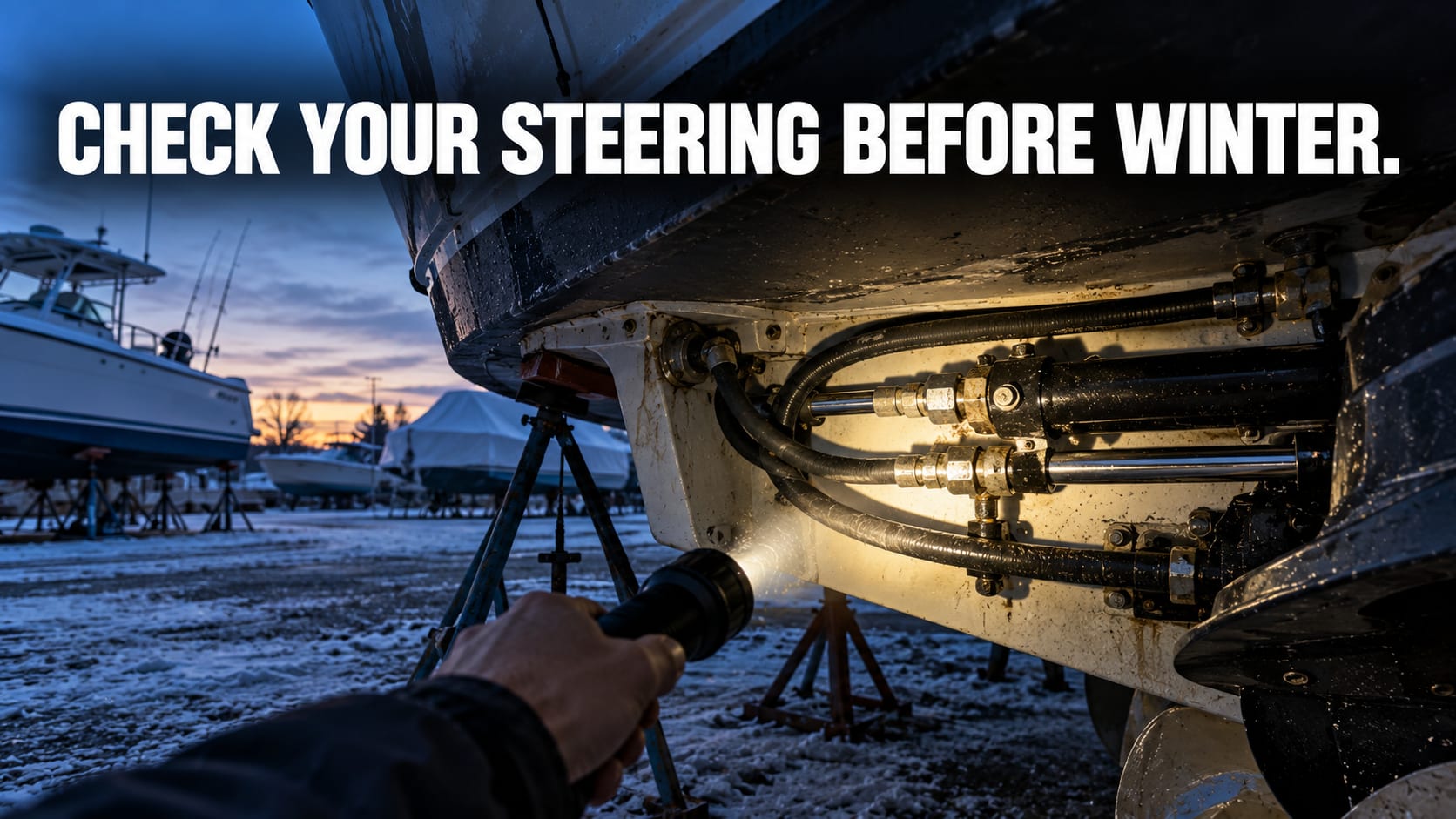

Steering is one of those systems you only notice when it misbehaves, and by then you are usually in a tight spot. A wheel that feels stiff, spongy, or loose is telling you something, and winter storage is the cheapest time to listen. Your boat is out of the water, nothing is moving, and you have weeks to fix what you find. A proper boat steering system inspection takes about an hour, and it can save you a tow in July.
Most recreational boats use one of two setups. Mechanical cable steering runs a push-pull cable from the helm to the engine or rudder, and hydraulic steering uses a pump at the helm, fluid-filled hoses, and a cylinder at the other end. Both are reliable, both fail quietly, and both reward a careful look. If you're not sure which one you have, follow the wheel back and see what comes out of the helm.
How to Inspect Your Boat Steering System: Start at the Helm
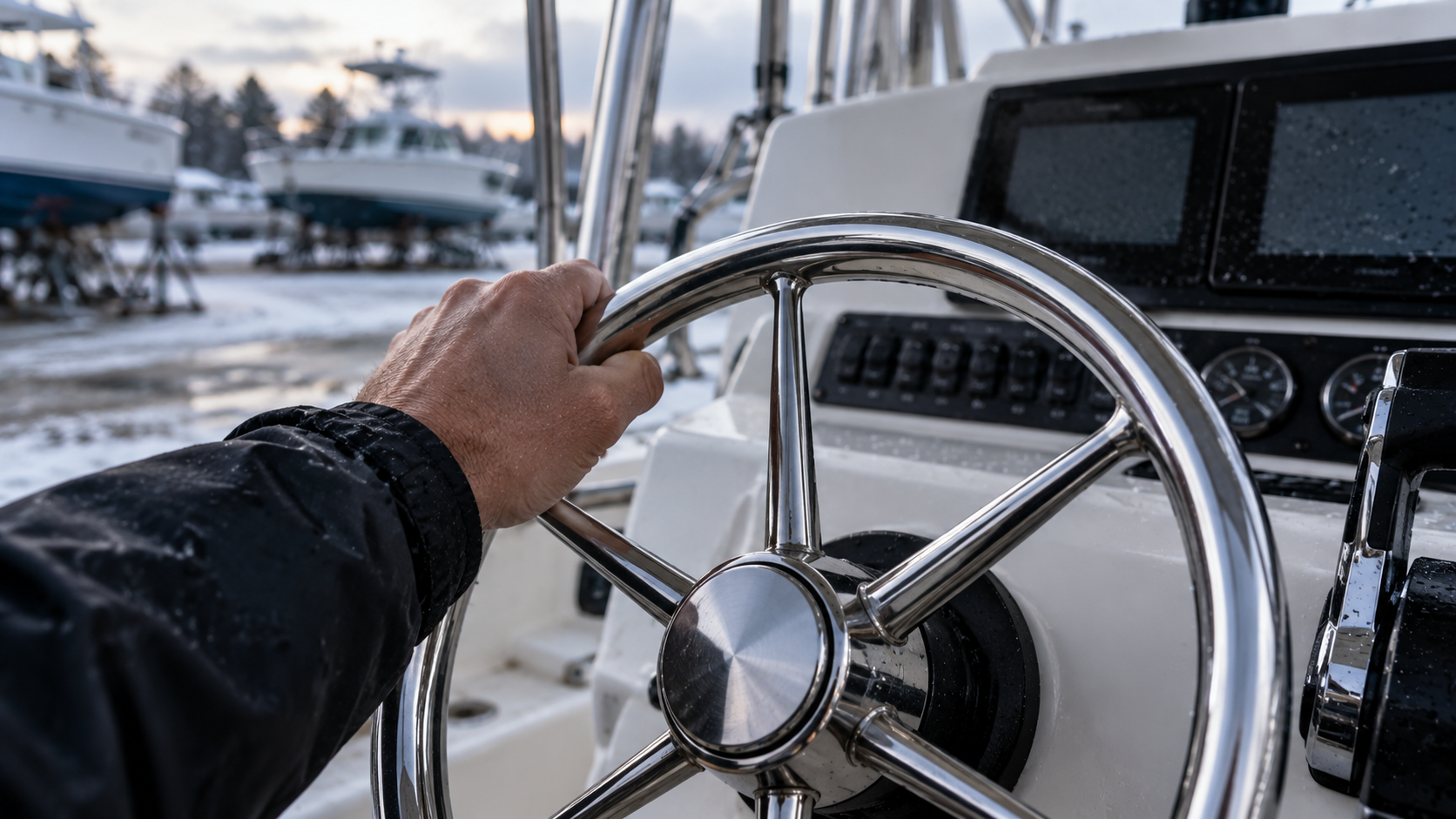
Before you touch a tool, turn the wheel lock to lock and pay attention. It should move smoothly, with consistent resistance from one end to the other. Tight spots point to corrosion or a binding cable. A gritty feel can mean dirt or a worn helm. Excess slop at the wheel, where you turn it a bit before anything moves, usually means a loose fitting, a worn connection, or air in a hydraulic system. Then go to the stern and have a helper turn the wheel while you watch the engine, drive, or rudder respond. Any delay or lurch is worth chasing down.
Inspect Cable Steering for Corrosion and Wear
On a cable system, look at the full length of the cable you can reach. You are checking for kinks, cracked or torn outer jackets, rust bleeding from the ends, and boots that have split or slipped off the fittings. Salt water gets inside a damaged boot and corrodes the cable from within, which is why a stiff cable that used to feel fine is rarely a surprise to someone who looked at it last fall. On outboards, the tilt tube is the usual trouble spot, so clean it, inspect it, and grease it with marine grease at the fitting if your manual calls for it. Check the helm fasteners and the engine-end connection for tightness while you're there.
Check Hydraulic Steering for Leaks and Air
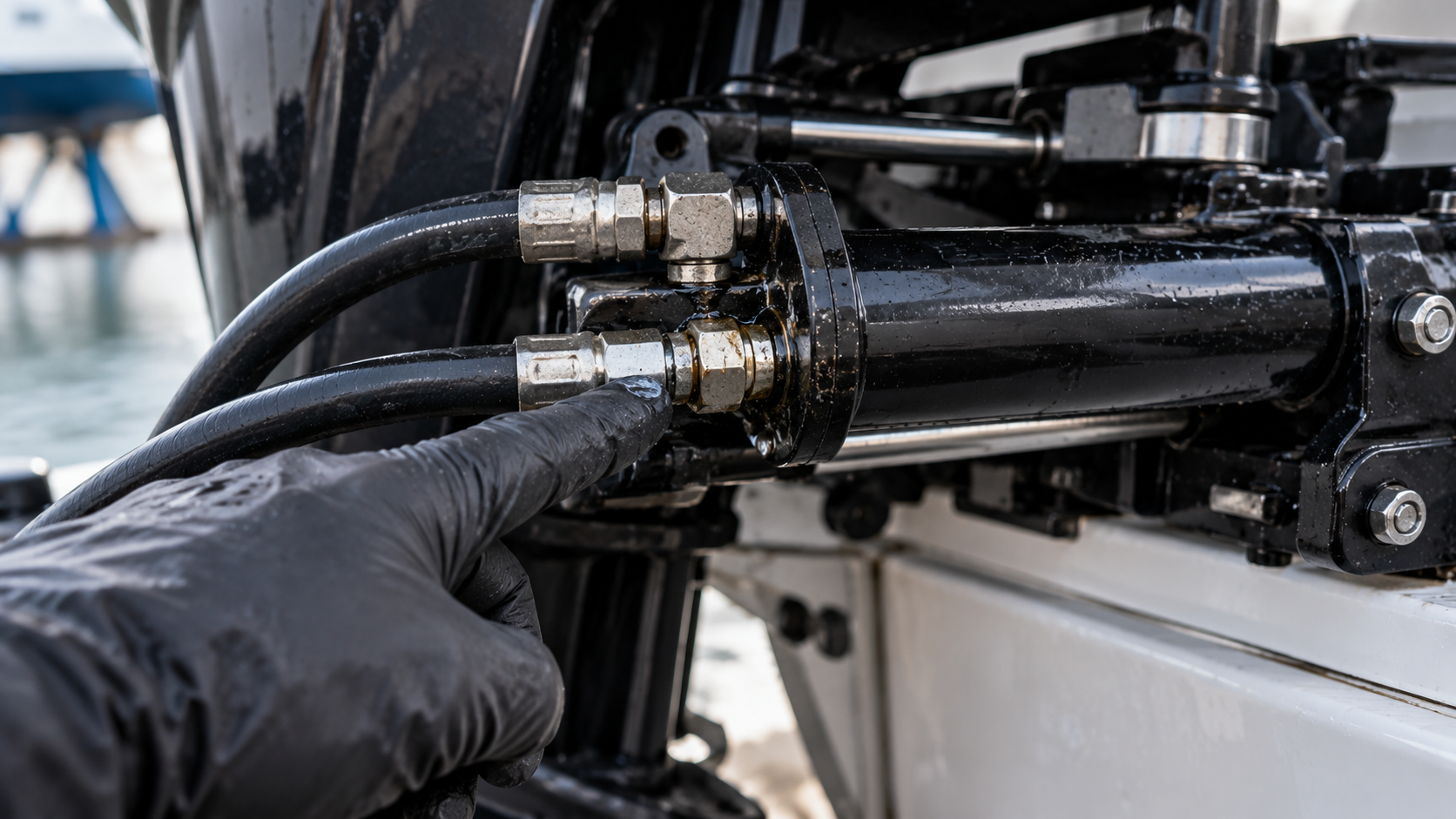
With hydraulic steering, the enemy is a slow leak or air in the lines. Look at every hose, fitting, and the cylinder for weeping fluid, damp spots, or crusty residue. Check the fluid level at the helm pump, and top it off only with the fluid your manufacturer specifies, since mixing types causes problems. A spongy wheel or a boat that wanders after you let go usually means air has crept in, and bleeding the system following the manufacturer's procedure is the fix. If the fluid is dark or you find repeated leaks, that is a job for a qualified marine technician rather than a guess.
Don't Forget the Backup and the Boat Around It
While you are looking, find your emergency steering option. Many boats carry an emergency tiller or a way to steer from the engine, and winter is when you confirm you can actually reach it and that it fits. Check anything that touches the steering path, like a rudder post, stuffing box, or a drive's bellows, which ties in with what you looked at when you hauled out the boat. It also fits neatly alongside the rest of winterizing your engine, since the two jobs often share the same access panels.
Write down what you find, order parts now instead of in April, and consider whether a spare fitting or a bottle of the right hydraulic fluid belongs in your spare parts kit. A steering problem you find in a quiet boatyard costs a little time. The same problem found offshore costs a lot more.
If you've found something strange in your steering over the years, drop it in the comments. Other boaters will learn from it.
