


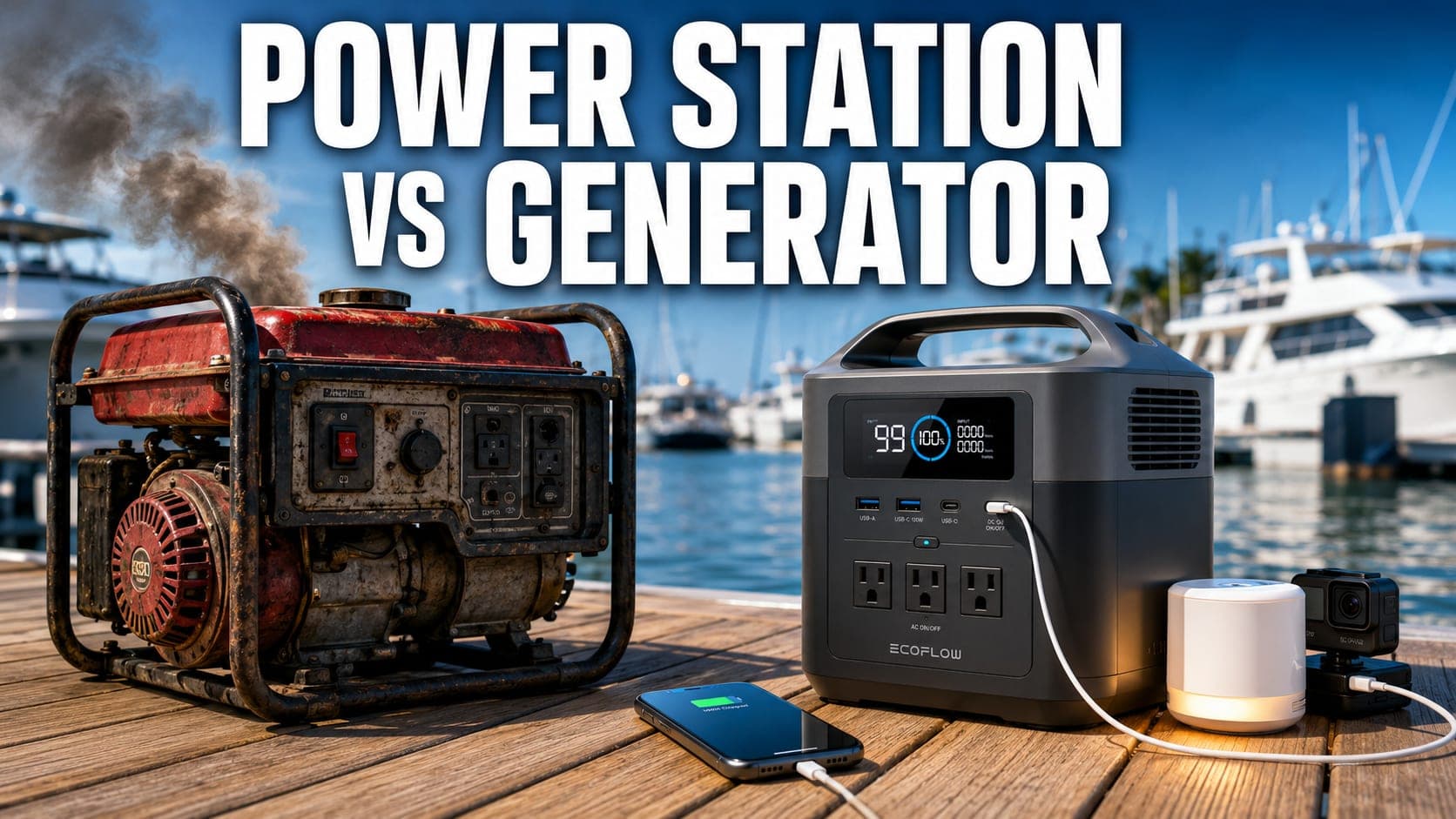

I spent two weeks living with the EcoFlow Delta Mini on my boat, and I have come to a simple conclusion: the average pleasure boater does not need a traditional generator anymore. Power stations are the future for house power on boats, and if you are running phones, tablets, speakers, and small appliances — which is basically everyone — you need to pay attention to what I found.
Why Generators Are Becoming Obsolete on Boats
Let me be direct about this. Traditional generators are loud, they produce fumes, and they require constant maintenance. Every time you fire one up, you are running an engine, burning fuel, dealing with oil changes, spark plugs, and all the hassle that comes with combustion engines. On a boat where you are trying to relax and enjoy peace on the water, a generator feels like bringing a construction site with you.
Power stations solve this problem completely. They are silent. There are no fumes, no exhaust, no maintenance. You charge them at home or via solar, and then they power your boat with the flip of a switch. For the average boater, this is genuinely a better solution than what we have been doing for the past 30 years.
The EcoFlow Delta Mini: The Best Value I Found
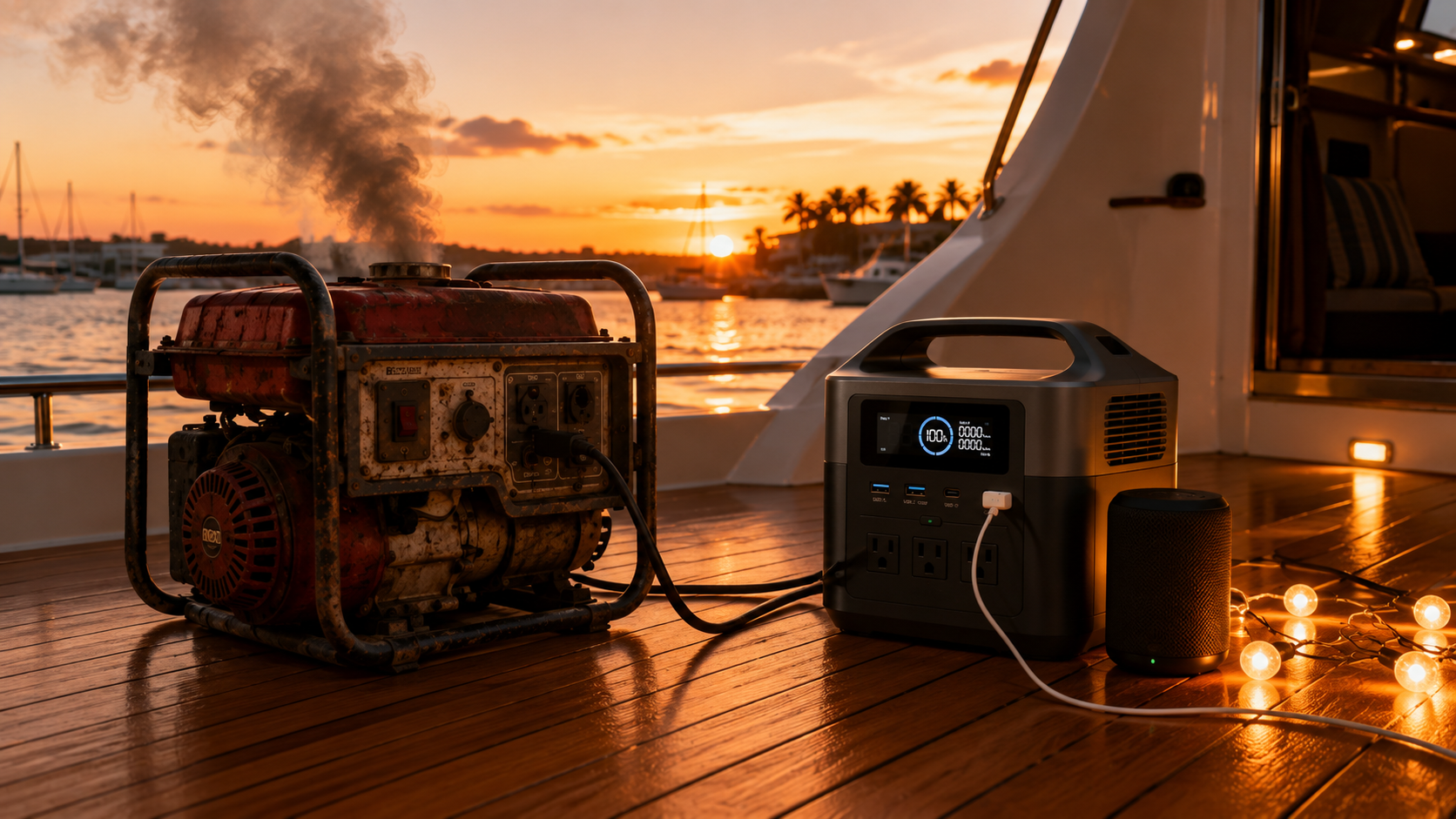
I purchased the EcoFlow Delta Mini at Sam's Club for $452. At that price, it offered the best watt-hour per dollar value I could find in the market. The specs alone tell the story: 882 watt-hours of capacity packed into a device that weighs just 23 pounds. That is manageable, portable, and powerful enough to handle real-world boat loads.
The battery maintains 80 percent health over 800 charge cycles, which means this device is built to last. You are not going to wear it out in a few years of normal use. The form factor is also excellent — it looks like a compact cooler, which makes it easy to find storage space even on a smaller vessel.
What You Get on the Front and Back
On the front face, you have two USB-C ports and two USB-A ports. These are genuinely useful for charging phones, tablets, and other small devices throughout the day. On the back, you will find two AC outlets and a car charger port. The display shows you exactly how many hours of runtime you have remaining and how many watts you are drawing at any given moment. That real-time feedback is incredibly helpful when you are trying to manage your power budget.
The beauty of the Delta Mini is its flexibility. You can charge it via a standard wall outlet at the marina. You can charge it from a car charger port using your boat's 12-volt system. Or, if you want to go fully off-grid, you can charge it using solar panels because the unit has an MPPT controller built right in. That means you can connect panels directly without additional equipment.
The Real-World Test: Two Weeks on the Water
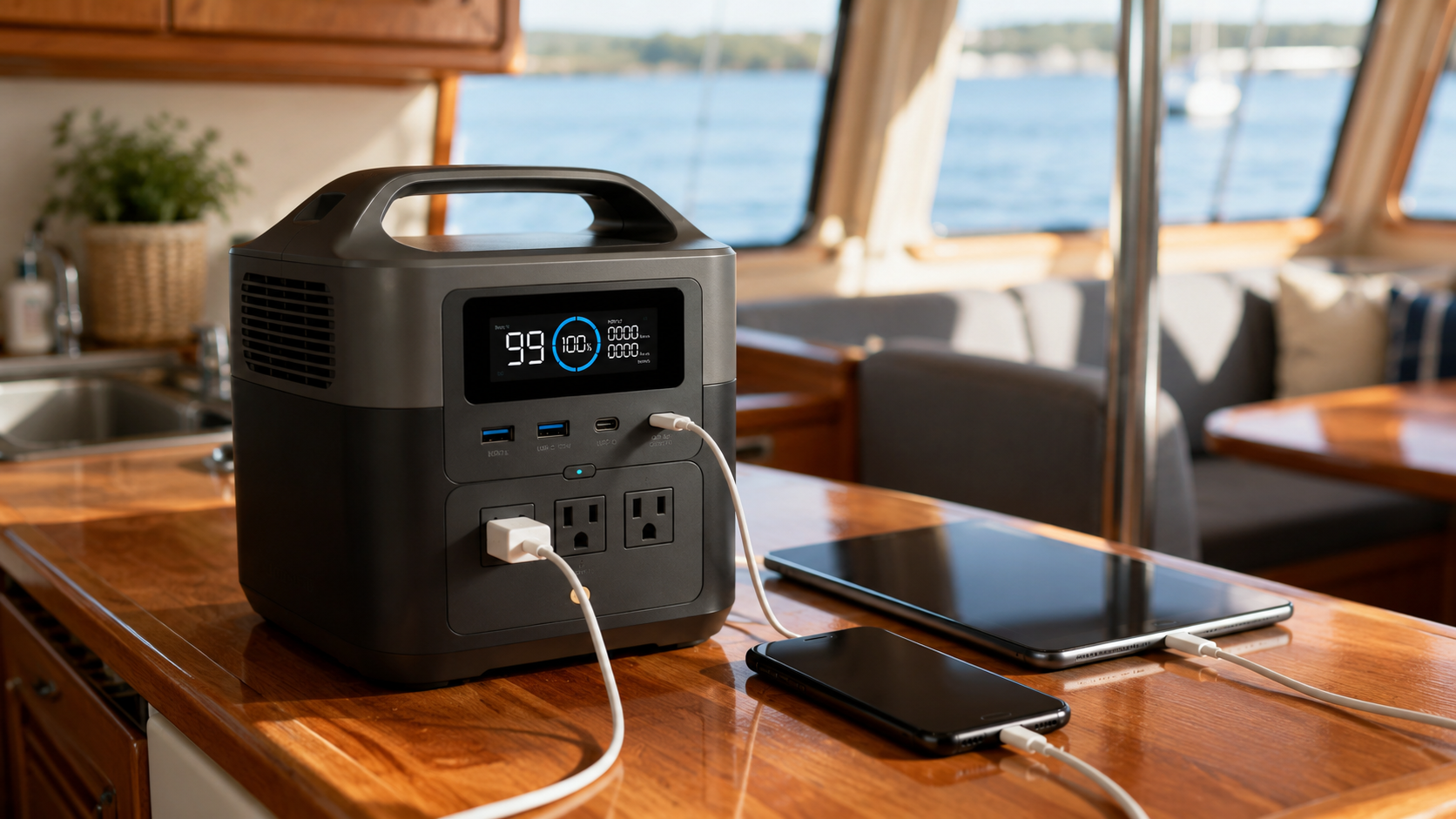
I lived with this power station on my boat for two weeks, and I ran it exactly like I would run a generator. I charged my phones, I ran Bluetooth speakers for entertaining, I powered small appliances, and I generally lived my normal boating life. The Delta Mini handled everything I threw at it without breaking a sweat. The silence was genuinely striking — you forget that real-time that you are powering anything, which is exactly the point.
The capacity of 882 watt-hours got me through two weeks of moderate use without needing to charge from shore power. If I had paired it with a solar setup, I could have extended that indefinitely. The lightweight design also meant I could move it around the boat as needed, which is something you cannot do with a traditional generator bolted to a mounting bracket.
What It Cannot Do
Let me be clear about the limitations. The EcoFlow Delta Mini is not going to run your air conditioning compressor or power electric cooking appliances. If you need to run high-load systems like that, you still need a traditional generator or a much larger power station setup. But here is the reality: most boaters do not run those systems regularly. Most of us want to power phones, run entertainment systems, charge tools, and use small kitchen appliances. For that, the Delta Mini is absolutely sufficient.
The Delta Mini has been discontinued, but EcoFlow released the Delta 2 as the successor. It offers improved specs and the same reliable design that made the original so appealing. I also picked up a 500 watt-hour unit from the same brand for $330 for comparison, which shows how accessible these power stations have become price-wise.
The Bottom Line
For the average boater, a power station absolutely can replace a generator. You get silence, zero maintenance, no fumes, and the flexibility to charge it however you want — shore power, car charger, or solar panels. The cost is competitive with quality generators, and the lifestyle advantage is significant. Once you experience the peace of running your boat without constant engine noise, you will never want to go back.
If you are thinking about upgrading your boat's power system, start by understanding how to add solar to your boat and build an off-grid power setup. Pair that with a power station like the Delta Mini or Delta 2, and you have a system that keeps you running for days without shore power. And if you want to monitor exactly what your batteries are doing, installing a battery monitor is the next logical step.