

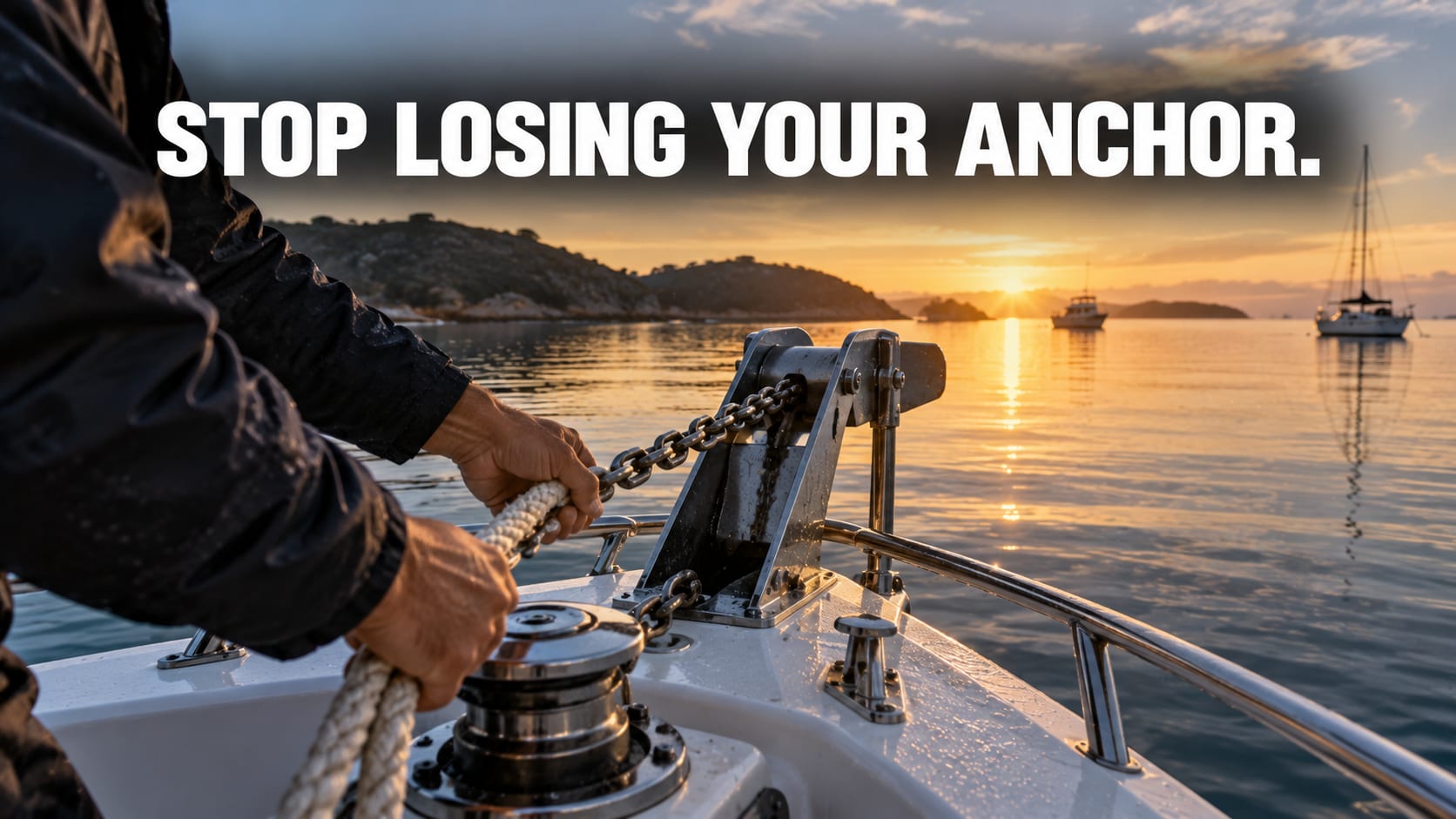

Anchor away. Anchoring is a simple and logical part of boating, but you would be amazed at how many times I have seen boaters make mistakes — from boats drifting to shore to completely losing their anchors. Having spent countless days in anchorages, the most common mistake I see is not properly setting the anchor, which can lead to drifting and in worst case scenarios losing your vessel.
Understanding Your Anchor Options
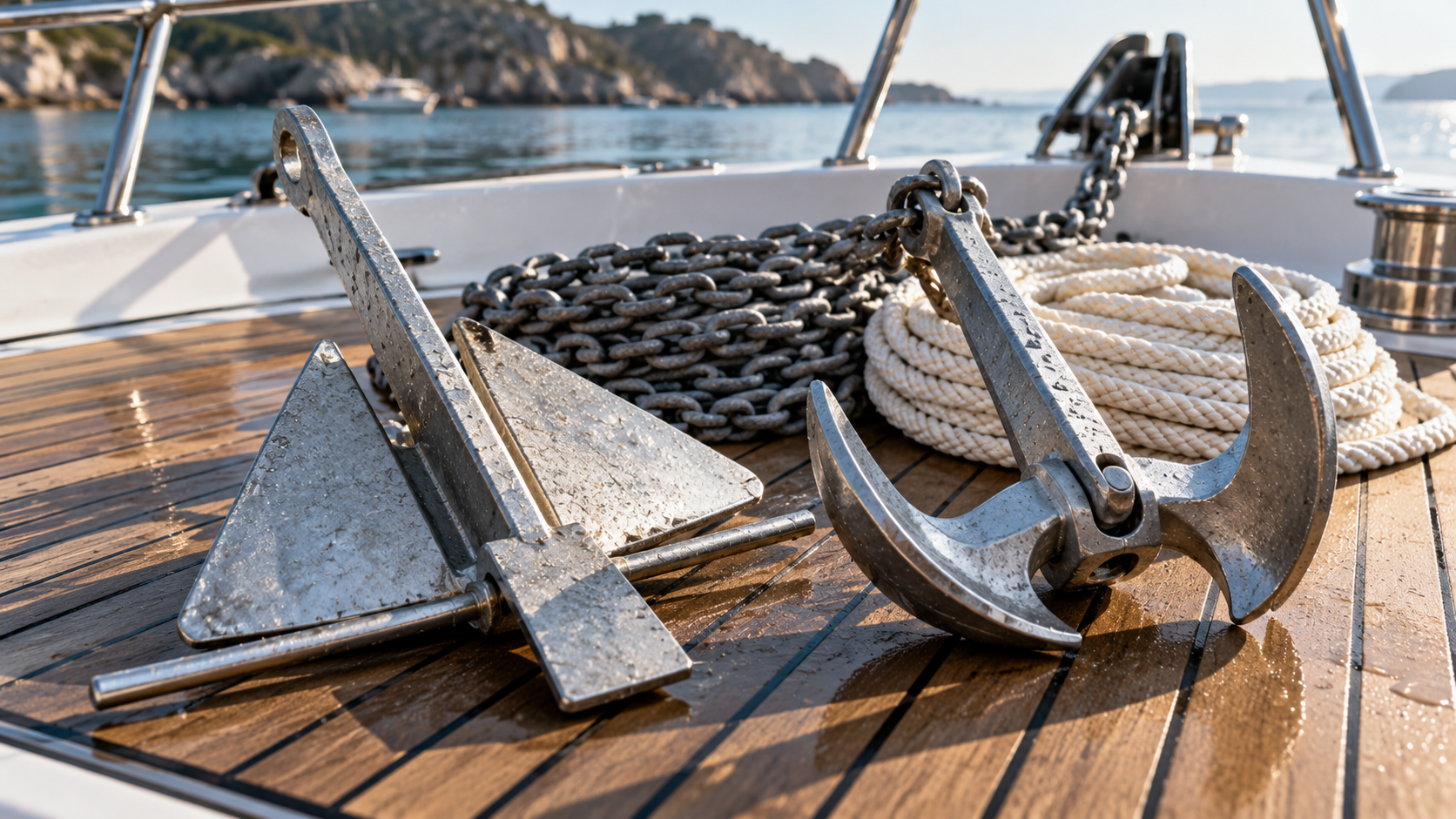
One of the most common anchors you will find on a boat is the fluke anchor. It is a good all-rounder but mainly thrives in sand and mud. When it falls and lands on its side, those long prongs make it fall flat. Once flat, the big flukes dig into the sand, and the large surface area holds the bottom. Another good all-around anchor is the claw anchor, named for its resemblance to an animal’s claw. It is specifically designed for rocky bottoms because its rigid and strong construction can hook into the nooks and crannies where most anchors would fail. Because of the smaller surface area though, the claw does not hold in sand as well as a fluke — but it can still hold in sand and even mud. The mushroom anchor gets its name from its shape and is typically found in smaller sizes around 10 to 15 pounds. You will see these on small boats, dinghies, and kayaks in calm waters like a lake, river, or bay. It is not recommended for open ocean.
Chain, Rode, and Scope
Chain is an integral part of setting your anchor. It acts as a weight that keeps your anchor pulled in the right direction across the bottom — without it, your line would just pull straight up on the anchor and you would come loose. Chain with rode is a section of line attached to a bit of chain which is then attached to your anchor. This setup is very common on vessels under 40 feet because it is light and allows you to retrieve your anchor by hand. All chain is exactly what it sounds like and is very common on larger vessels that have the equipment and ability to handle the extra weight.
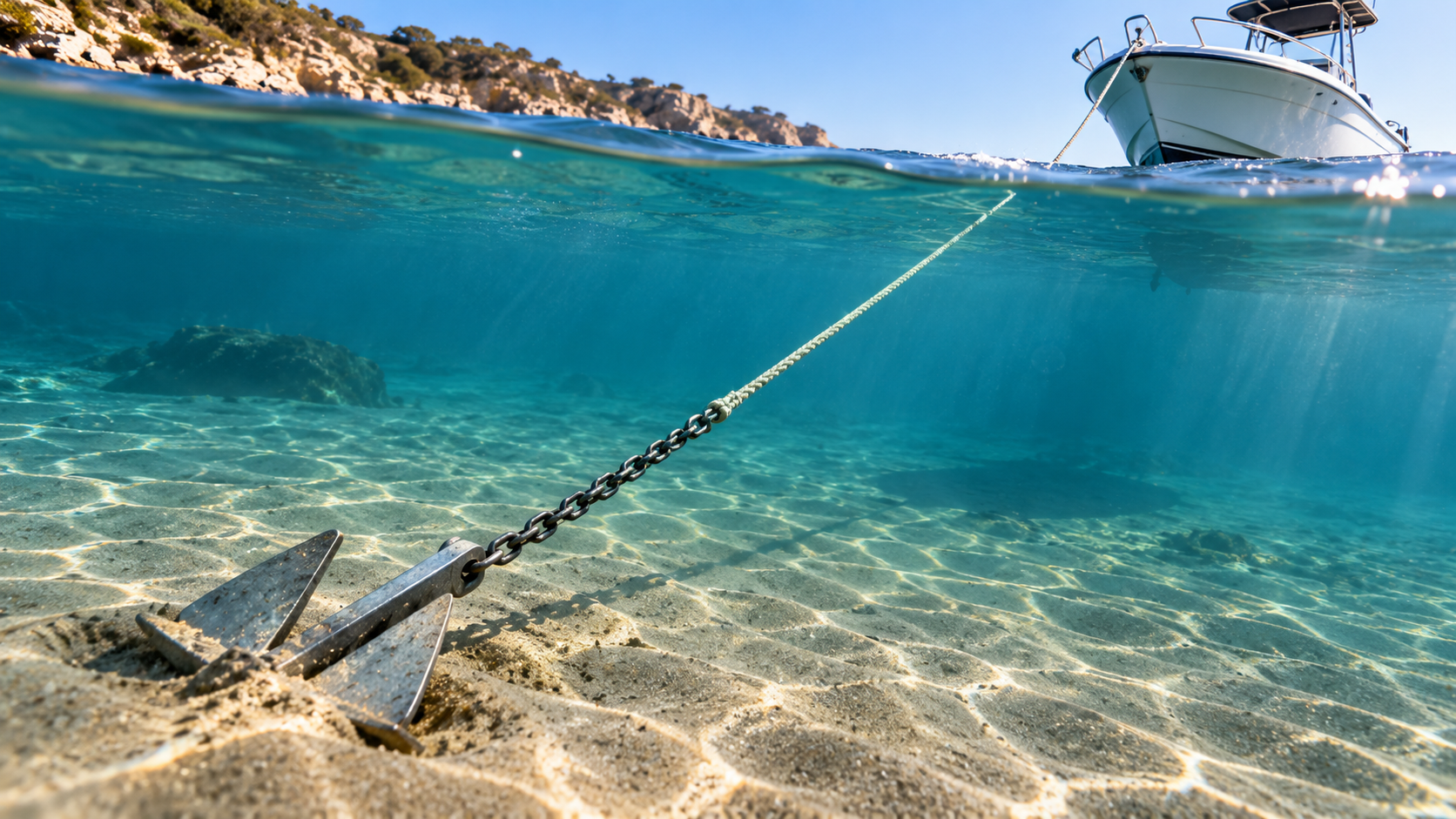
If you are wondering how big your anchor needs to be, you can never go too large, but for most boaters a pound of anchor per foot of vessel will do just fine. Once you have the right gear, you need to know how much rode to put out. Take your depth, add the height of your bow, and multiply by three for chain or by seven for chain and rode — that number is your scope. It guarantees that if the wind picks up or waves roll in, your anchor will still hold at a good angle to the bottom and not lift up.
How to Set Your Anchor
The first step is your approach. When you come into an anchorage that you find safe, make sure your bow is pointed into the wind — the wind will predominantly determine which direction your boat faces. Then once you determine your drop zone, step one is to make sure your anchor is actually attached to your vessel. I know that sounds like the dumbest thing in the world, but you would be surprised at how often people lose their anchors because they just drop them in the water without a line attached.
Step two — lower your anchor down to the bottom slowly. Once you feel it hit, step three — let your boat slowly drift back while you let out your rode until you hit your scope number. Step four — once your rode is at the correct length, give the line a nice pull and make sure it is tight. You can also turn around and slowly give the engine some gas to confirm the anchor is set. What you do not want to do is what most boaters out there do — drop the anchor from the bow and go at full speed all at once. You either rip the anchor right off the floor or it never gets a chance to set properly. Let your anchor set slowly. Pretty simple tip.
When Your Anchor Gets Stuck
It happens. The first thing to try is getting your anchor from a different angle by maneuvering your boat to the other side of where you set it. Be really careful when doing this because you do not want to accidentally wrap your anchor line around your prop.
Another slick pro tip is the zip-tie release trick. Instead of attaching your chain to your anchor at the back in the more common position, attach it at the top. Then use zip ties or metal twine to secure the chain back at the common location. That way if your anchor will not come up, you can break the zip ties and your anchor will release and come up from the other direction. Make sure whatever you use has the right breaking strength. I do not usually do this trick unless I know there is a high likelihood of getting stuck in the bottom I am anchoring in.
Now that you have all your anchoring tips down, you can avoid being a Rodney Dangerfield out there on the water.
