



I'm taking an old boat and dragging its electrical system into the modern era, and the whole project starts with one component: a new lithium house bank. Everything else, the wiring, the charging, the way I actually use the boat, gets built around the battery I choose. So before a single wire gets run, the first job is picking the right battery and giving it a home that can survive a decade at sea. The battery is a LiTime 12V 320Ah Mini Smart lithium, and it is the heart of this build.
Why I Went Lithium
I have lived with lead-acid house batteries long enough to know their tricks. They are heavy, they eat a mountain of space, and you only get to use about half of what you paid for before the voltage sags into uselessness. Lithium fixes all three, and once I started comparing brands, LiTime was the one I wanted in the boat. They sent me this battery to put through its paces, and so far it checks every box I care about.
The LiTime 320Ah Mini, Up Close
This is where the battery earns its spot. It is the LiTime 320Ah Mini Smart LiFePO4, and three things sold me on it.
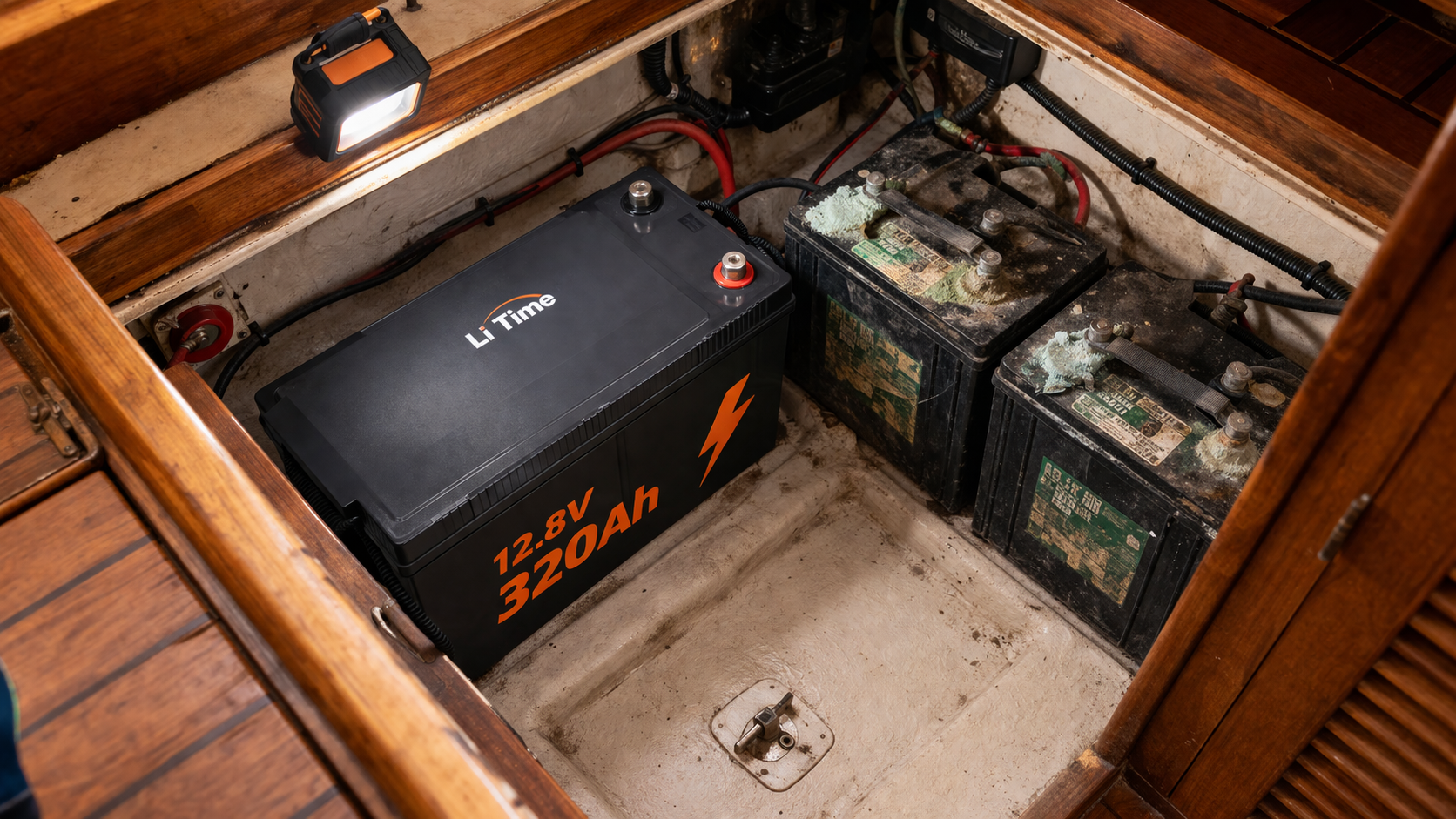
It is genuinely powerful. Lithium holds its voltage almost flat across the entire discharge curve, so you actually get to use nearly the full capacity before anything drops out. In real terms, this single 320Ah battery delivers more usable energy than two 8D lead-acids combined, and each of those 8Ds weighs more on its own than this LiTime does.
It is small and light. This is the Mini version, which runs about 30 percent smaller than a typical 300Ah lithium and roughly half the weight of three 100Ah lead-acids. On a boat, where every pound and every inch gets fought over, that is a massive advantage. It handed me back space I did not expect to get.
It is smart. A built-in battery management system keeps the cells from hurting themselves, and the Bluetooth connection lets me pull up voltage, state of charge, and live consumption right on my phone. No more guessing whether the bank will make it through another night on the hook. I open the app and I know.
If you are still on the fence about making the jump, I wrote a full breakdown of the lithium switch that walks through the trade-offs in more detail.
Building the Battery Box
This battery is the most valuable part of the whole system, and leaving it loose in a bilge is asking for trouble. Slosh, vibration, stray tools, salt spray, take your pick. Before I wire anything, I want this battery living in a purpose-built box that is bolted to the boat and sealed against everything it is about to face.
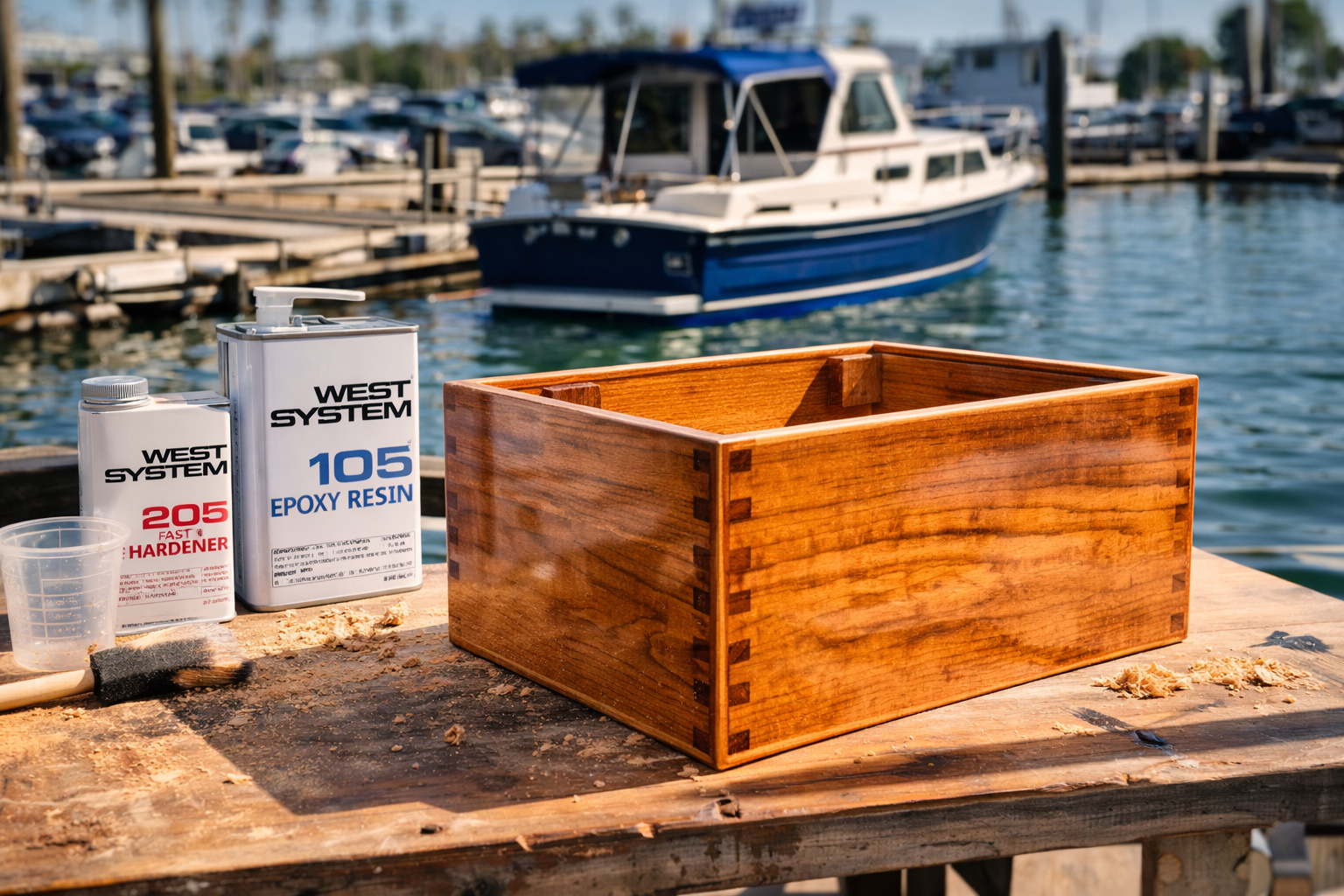
I built the box from marine plywood, cut to the exact footprint of the Mini so there is no shifting room inside. Then the whole thing got two coats of marine epoxy, inside and out, with extra buildup on the corners and anywhere water might sit. Epoxy is the difference between a box that lasts the life of the boat and one that turns to mulch after two seasons. Do not skip it, and finish the inside with a tough bilge-rated coating so any acid or coolant that ever gets in there has a hard time eating through.
The battery drops in snug, the lid seals down, and the whole assembly is ready to be through-bolted and wired up.
What Is Next
The battery and the box are only half the equation. Next I wire this LiTime bank into the boat's existing system alongside the lead-acid starter bank, which means DC-DC chargers, charging profiles, and keeping two very different battery chemistries from fighting each other. If you want to add lithium without tearing out every lead-acid on the boat, the next part of the build is the part you do not want to miss.
If you want to grab a LiTime of your own, it is over at litime.com, and code JSA6 gets you 6 percent off.