



Atlantic hurricane season officially starts June 1, and the storms that show up in June are the ones that catch people flat-footed. Most boat owners are still in summer-launch mode — uncovered, full tank, fenders out — and not really thinking about a named system until the cone shows up on the news. By then the dock lines you should have already bought are sold out, the haul-out yard has a four-week wait, and the marina office is just trying to get its own boats secured.
The work that actually keeps a boat off the bottom in a storm happens in June and early July, while the water is quiet. Here's what to lock in this month so you're not the boat owner scrambling in August.
Dock Lines Are the Cheapest Insurance You Can Buy
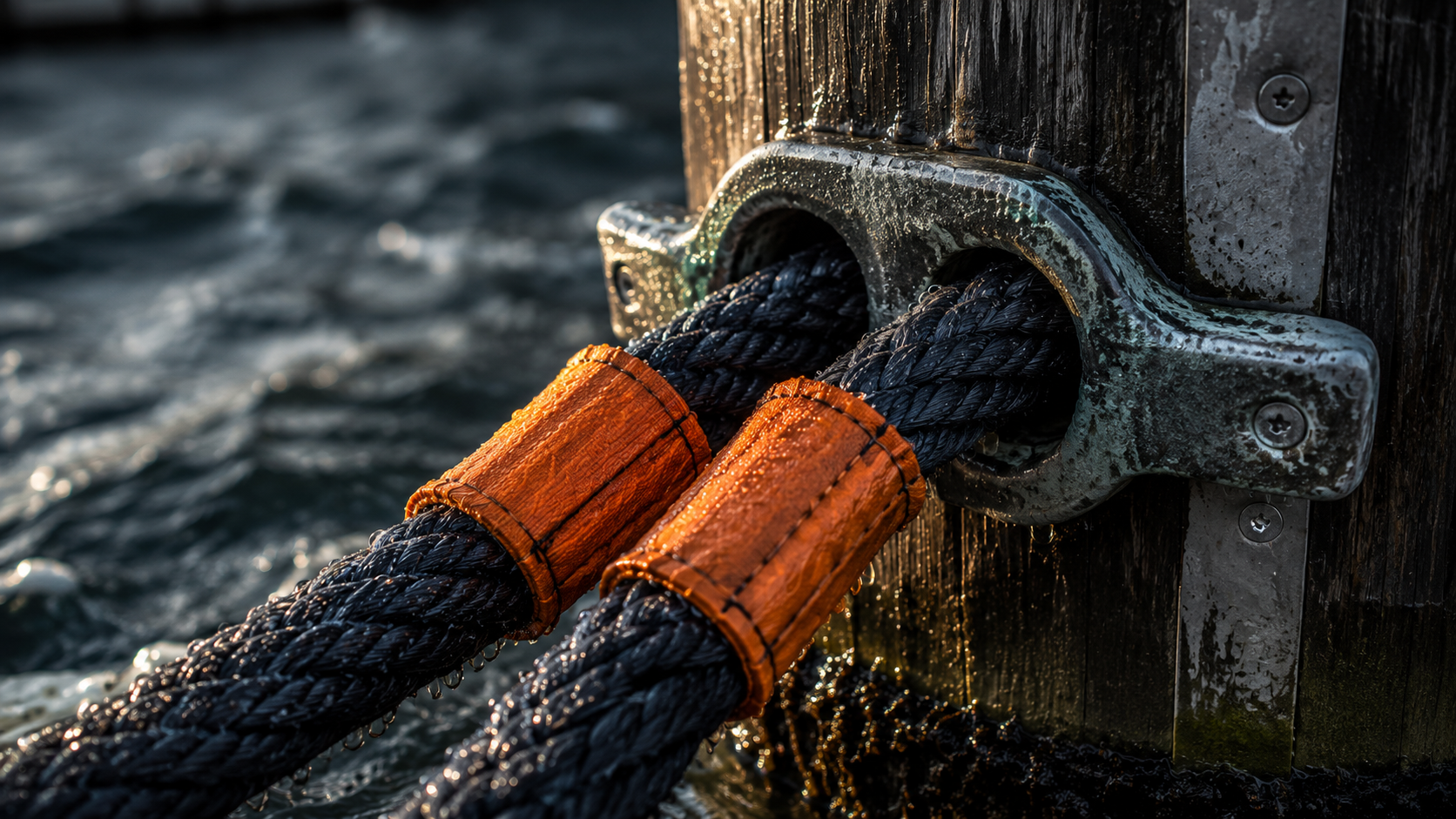
If your dock lines are the same ones the boat came with, replace them now. Sun, salt, and three seasons of sawing against pilings turn even good nylon into something that snaps when it matters. Hurricane lines are bigger than the lines you use day-to-day — half-inch minimum for most recreational boats, more for anything over thirty feet, and longer than you think you need. The whole point is to give the boat enough room to ride a storm surge up and back down without anything jerking tight.
Run a proper spider web pattern: bow line, stern line, two breast lines, and at least two springs going each direction. Chafe guards on every line where it touches a piling, a cleat, or a chock. Spare lines stored in a dry locker so you're not bagging up the night before. None of this is expensive — a full set of new lines and chafe protection is a few hundred dollars and the cheapest insurance you'll ever buy.
Have a Real Storm Plan Before the Cone Shows Up
Every marina has a hurricane plan in writing. Read yours. Some require you to haul, some require you to move to a designated hurricane hole, some kick you out entirely above a certain wind speed. Find out what your slip contract actually says — the time to learn the rules is not the morning the storm names itself.
Your personal plan needs to answer three questions in advance. Where does the boat go? Who is moving it? What is the trigger? "When a named storm enters the forecast cone with five days out" is a real trigger. "When my wife says she's worried" is not. If you live somewhere that gets hit, you should be able to call your plan from memory by the time peak season rolls around in August.
Read Your Insurance Policy Before You Need It
Most boat insurance policies have specific named-storm clauses. Some have a higher deductible for hurricane damage. Some require you to take "reasonable measures" to protect the vessel, which in their fine print means "move it or haul it." Some have geographic exclusions during peak months — if your boat is below a certain latitude after June 1, the policy doesn't cover storm damage at all unless you got an endorsement. None of this is obvious if you just renewed without reading.
Pull up the policy, find the named-storm section, and call your agent if anything is unclear. While you're at it, make sure they have current photos of the vessel, the engine, the electronics, and the major hardware. The time to document is now, not after the boat is upside down. If you also want to take a careful pass at your batteries and electrical before the season, I went through that on my own boat with a proper battery monitor install and a few other quiet upgrades — the same kind of work that pays you back when a storm cuts shore power for three days.
Move the Boat, or Strip It Bare
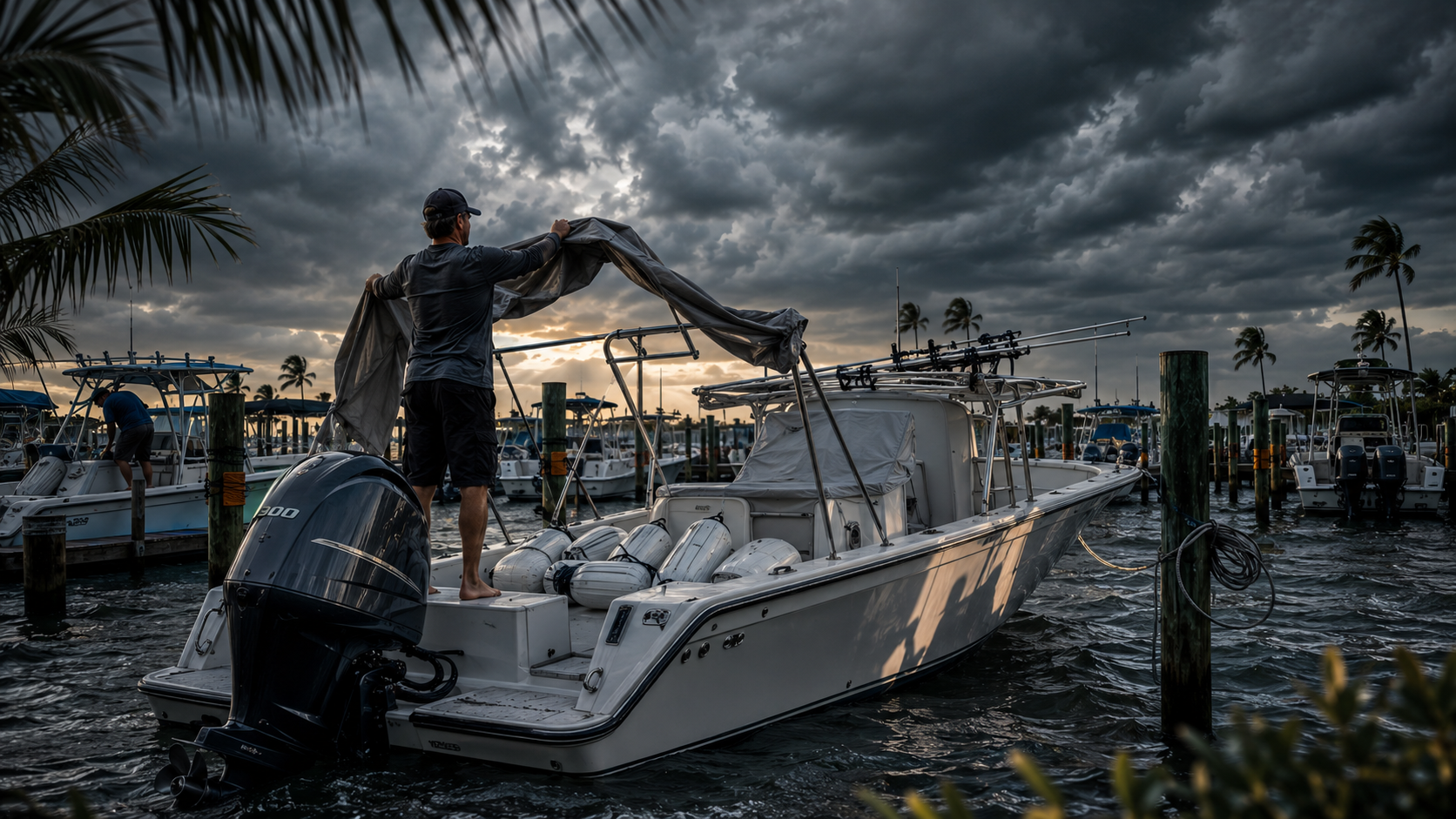
When a storm is actually inbound and you can't haul, the rule is simple: anything that can catch wind needs to come off. Canvas, biminis, dodgers, t-tops if they come off, antennas if they fold, fenders pulled inside, electronics covered. Topside hatches dogged down. Cockpit drains clear. Anchor and rode ready to deploy if you're staying on a mooring. Anything on deck that isn't bolted down — chairs, coolers, fishing rods — comes off the boat or goes below.
If you have time to move the boat, do it. A boat that's already in a hurricane hole or hauled to high ground is a boat that survives. A boat that's in its regular slip is a boat that depends on dock lines, neighbors, and luck. Bet on the parts of that equation you can actually control.
Closing Thought
June is the month most boaters lose to a hurricane — not because the storm is worse than later in the season, but because they aren't ready yet. Get the lines, write the plan, read the policy, and document the boat now while the bay is glassy. Then the next time the cone shows up on the news, you're the one having a coffee while everyone else is at West Marine looking for line that isn't there.