

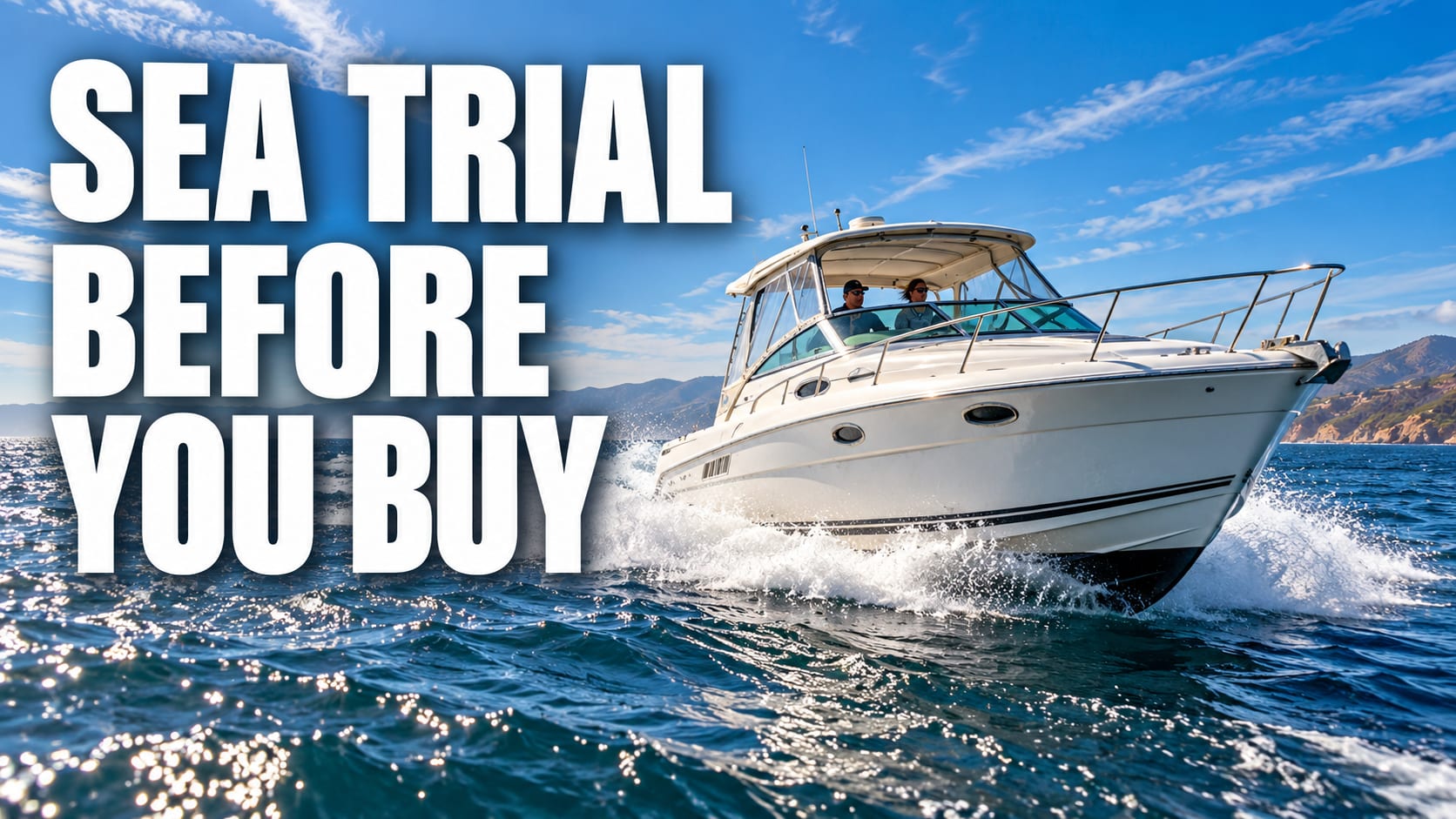

A used boat can look perfect at the dock and still fall apart the moment you push the throttles down. That's why a sea trial is the single most important hour of any used boat purchase, and it's the one buyers are most tempted to rush.
A sea trial is a test run on open water where you see how the engines, steering, and systems behave under load, not just while the boat sits tied to a slip. Here's how I'd run one, from the first cold start to the last look in the engine room.
Why a Sea Trial Is Worth Doing Before You Buy
A walkthrough tells you how a boat looks. A sea trial tells you how it runs. Engines that idle smoothly at the dock can overheat, smoke, or refuse to reach their rated rpm once they're working, and steering that feels fine in the slip can turn vague at speed. Everything you checked while shopping for a used boat is about condition. The sea trial is about performance.
If you're already planning a pre-purchase survey, schedule the sea trial around it. A surveyor and a mechanic on board will see and hear things you'll miss.
Plan the Day Before You Go
Agree on the details ahead of time: who drives, who pays for fuel, and how long you get on the water. Buyers often cover the fuel, and you want enough time for a full run, not a quick lap around the harbor. Bring a flashlight, a notepad, and a phone for photos. Pick a day with a little chop if you can, because a glassy morning hides a lot of sins.
Start Cold and Watch How the Engines Wake Up
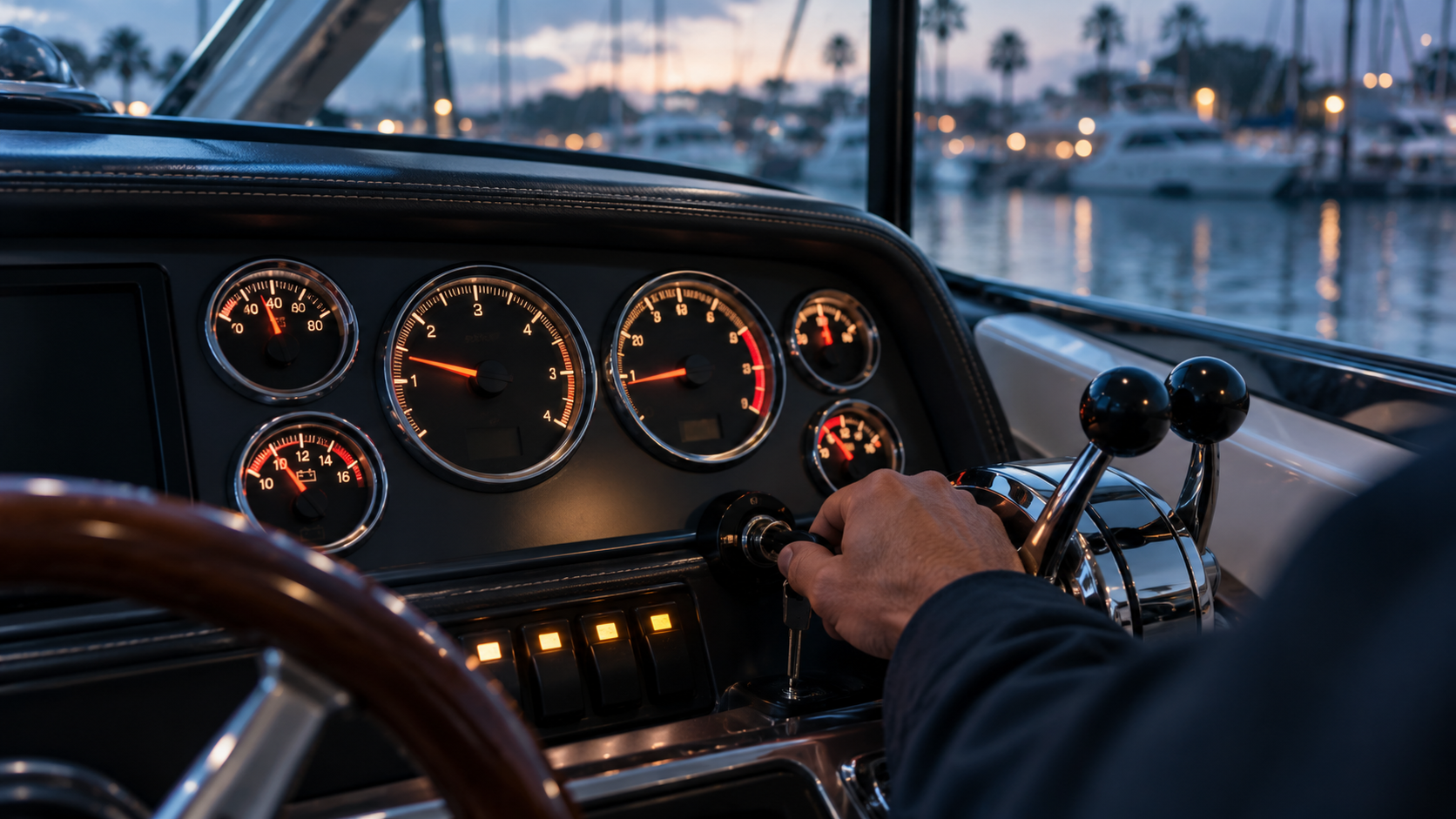
Ask the seller not to warm the engines before you arrive. A cold start is where weak batteries, tired starters, and fuel problems show up first. Listen for how quickly each engine catches, watch the exhaust for heavy smoke that doesn't clear, and confirm the gauges come alive with oil pressure and charging voltage where they should be. Make sure cooling water is flowing from the exhaust, then work the shifters, steering, trim, and any thrusters while you're still tied up.
Run It Through Every Speed, Including Wide Open
Once you're clear of the harbor, don't just cruise. Take the boat through idle, a slow trolling speed, a comfortable cruise, and then wide-open throttle. The number that matters most is rpm at full throttle. Look up the manufacturer's rated range for that engine and see whether the boat gets there. If it falls well short, something is wrong, whether that's a fouled bottom, a damaged or mismatched prop, or an engine that isn't making its power. Watch the temperature gauges the whole time. They should settle and hold steady, not creep upward.
Listen and Feel for What the Gauges Won't Tell You
Gauges only report what the sensors know. Your hands, ears, and eyes catch the rest. A vibration through the wheel or deck at a certain speed often points to a bent shaft or a damaged prop. A hard pull to one side suggests a steering or trim problem. RPM that surges at a steady throttle can mean fuel delivery trouble. Run tight turns in both directions, back down hard enough to be sure the transmissions engage cleanly, and run every system the boat has, from the chartplotter and autopilot to the generator and air conditioning. A sea trial is often the only time you can see them work under real conditions.
Check the Engine Room Right After You Tie Up
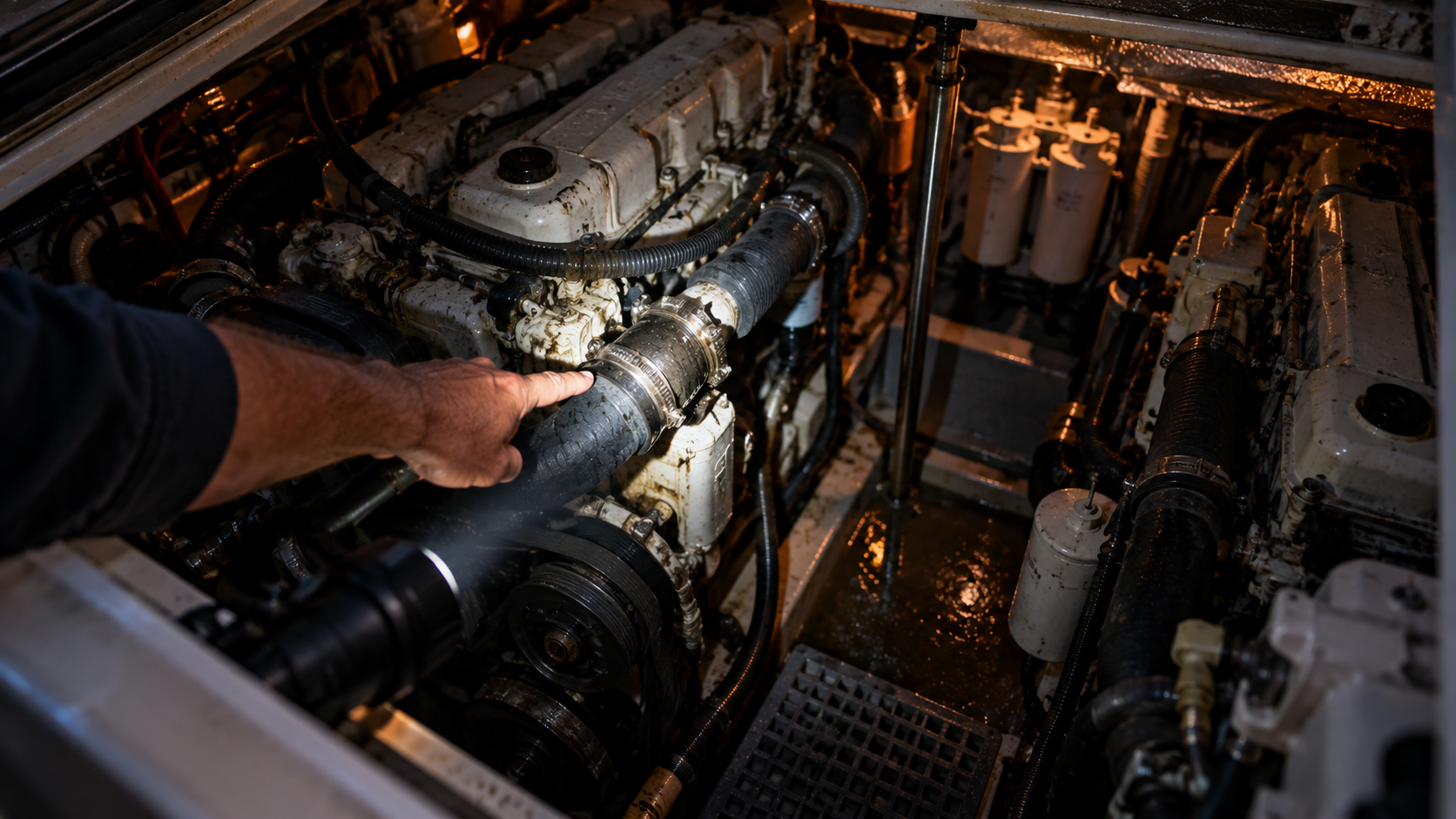
The most revealing look comes right after the run. Open the engine room while everything is hot and look for fresh drips, wet spots around hoses and fittings, the smell of fuel or coolant, and any water in the bilge that wasn't there when you started. Confirm the bilge pumps cycle and that the engines restart hot, because a hard hot start is a classic warning sign. Feel the hoses and belts for anything glazed, cracked, or loose. Take notes and photos while it's fresh, then bring every finding back to your survey and your negotiation.
Don't Skip the Sea Trial
If you're shopping this fall, a smart time to buy, don't let anyone talk you out of a full test run. A boat that passes a thorough sea trial earns your trust, and one that doesn't just saved you from an expensive mistake.
Fellow boat owners, if a sea trial caught a problem for you, or you wish you'd run one, drop your story in the comments.
