


A marine survey is the single most important document you will read before buying a used boat, and most first-time buyers have never seen one. You spend weeks finding the right vessel, negotiate a price, get emotionally attached — then a surveyor walks through it in a few hours and either confirms you're making a smart move or tells you the hull is soft and the engines need thirty grand of work. A proper pre-purchase survey is how you stop guessing and start buying with your eyes open.
Here's the thing though: not every survey is a good survey. Some surveyors are thorough, some are going through the motions, and some were recommended by the seller for a reason. If you're about to buy, you need to know exactly what a proper survey covers so you can tell the difference between real protection and a piece of paper that tells you nothing.
Why You Never Skip the Survey
I've watched people skip the survey because they liked the boat and trusted the seller. It never ends well. Even a clean-looking boat can hide blistered gelcoat below the waterline, a weeping transom, corroded engine mounts, or electrical work that violates every ABYC standard in the book. A used boat is a mechanical, electrical, and structural system that has spent years in saltwater — problems are the default, not the exception.
A good surveyor charges twenty to twenty-five dollars per foot in most markets, so a 30-foot cruiser runs about six or seven hundred dollars to survey properly. That number is nothing compared to one missed issue. If the seller resists a survey or wants to steer you to their own guy, walk away — that hesitation is already a red flag.
Hull and Structural Integrity
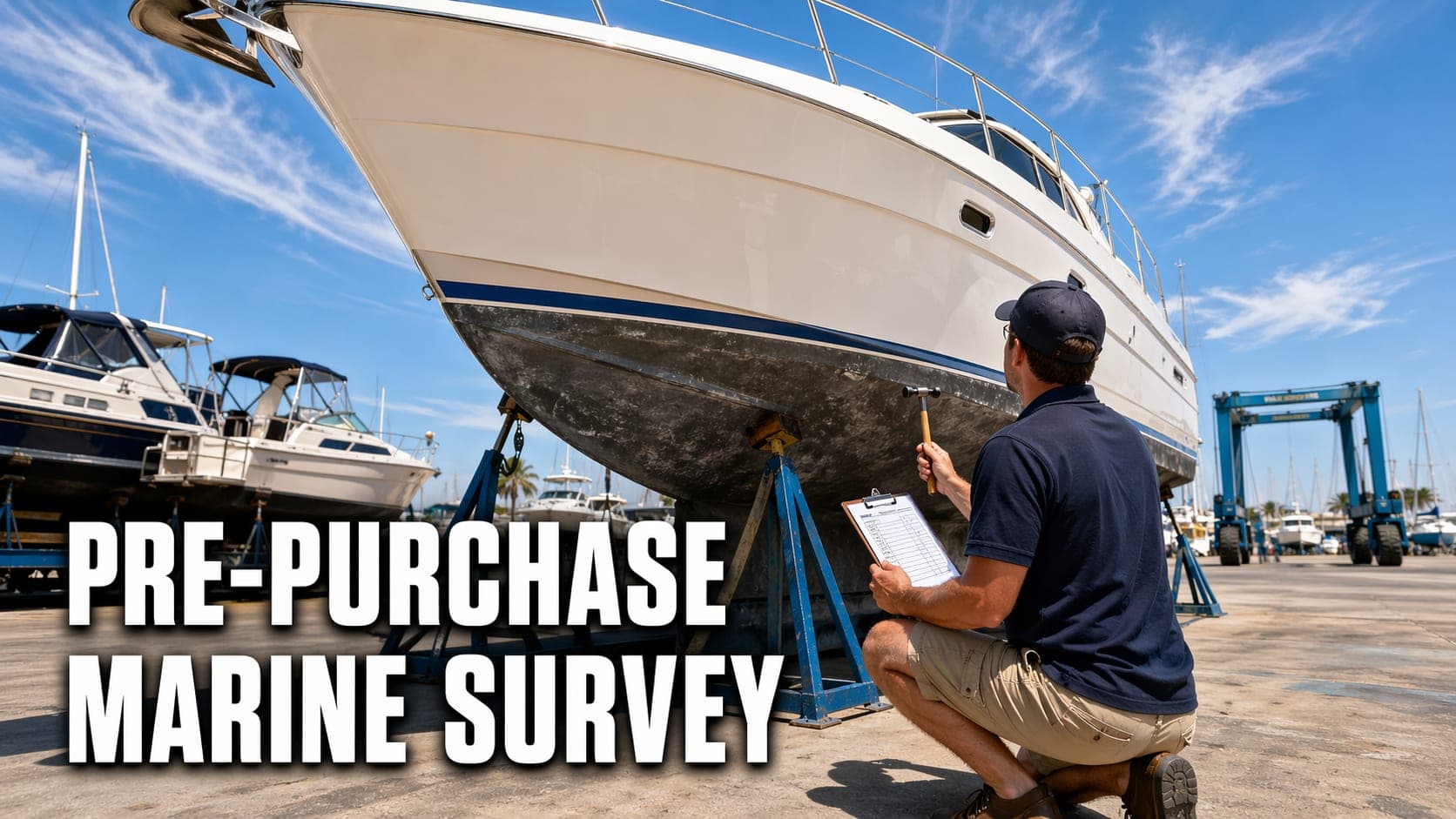
The surveyor starts with the hull because that's where hidden damage lives. They'll go over the exterior with a phenolic hammer, listening for dead spots that indicate delamination or water intrusion. They'll check for blisters, stress cracks radiating from through-hulls, and soft decks around stanchions, hatches, and any spot where fasteners penetrate the laminate. Below the waterline, they examine the keel-to-hull joint, running gear, rudder, and shaft alignment. Skip the haul-out on a boat over twenty feet and you're buying blind.
Engines and Mechanical Systems
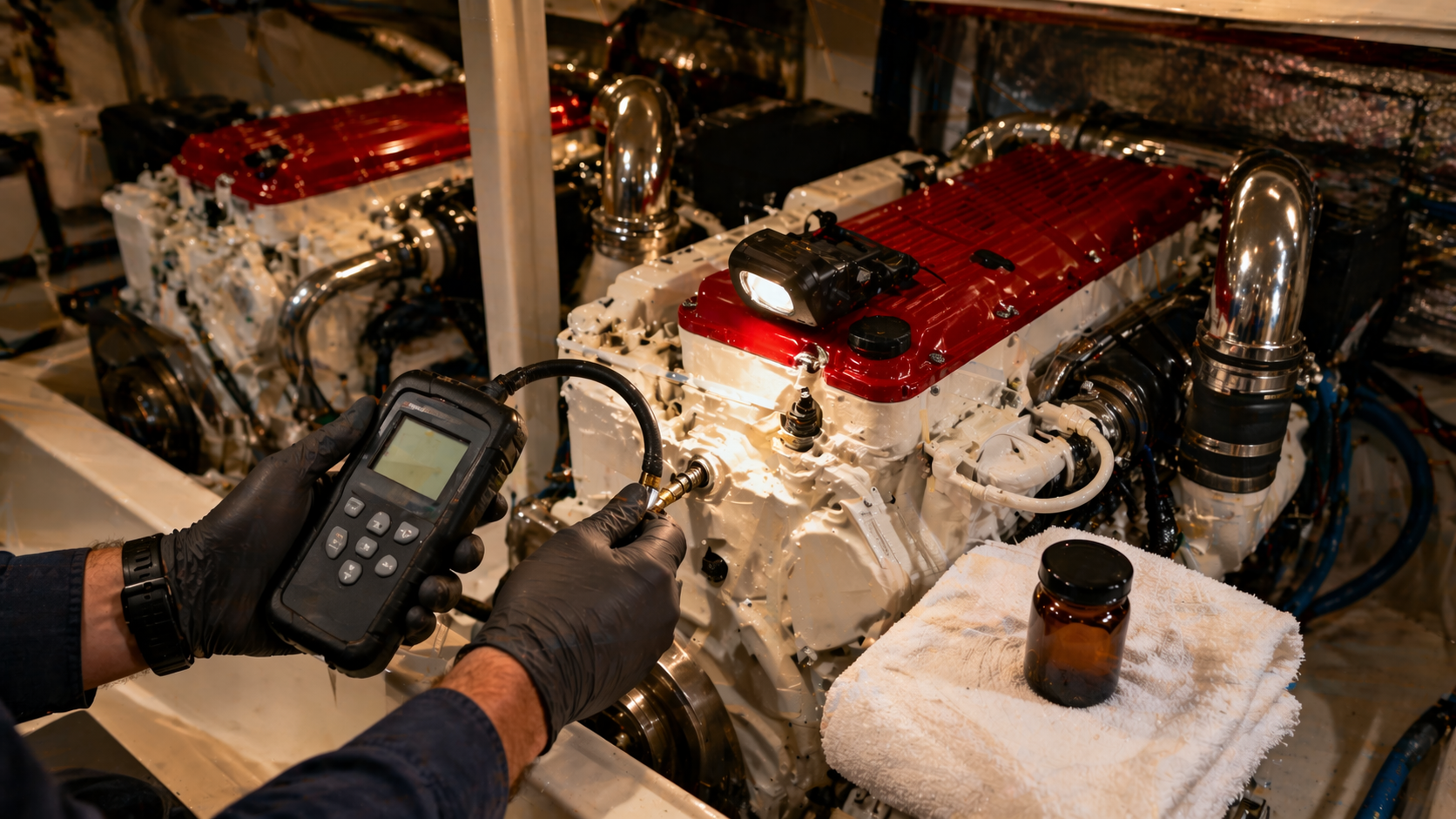
On the mechanical side, expect compression tests, oil analysis, exhaust riser inspection, and a close look at engine mounts and alignment. For diesels, the surveyor should pull samples for lab analysis — fuel or coolant contamination shows up there long before it reaches the dipstick. For outboards, they should check the lower unit, water pump impeller, and powerhead corrosion. A surveyor who doesn't pull a spark plug or look at a compression reading isn't doing an engine survey.
If the boat has been sitting, expect flags on starting batteries, belts, hoses, and aged fuel. None of these are deal breakers on their own, but they belong on your negotiating list. This is exactly the stage where having already read up on what to look for when buying a used boat pays off — you'll recognize the issues your surveyor flags instead of nodding along blindly.
Electrical, Plumbing, and Safety Gear
Marine electrical systems are where a lot of surveys get lazy. A proper one covers battery age, shore power wiring, galvanic isolation, bonding continuity, and whether AC and DC systems are separated correctly. Undersized wiring, missing fuses, and sketchy splices are everywhere on older boats — especially ones refit by the owner. If the previous owner ran a lithium upgrade without the right charging setup, that's the finding that saves you from a fire later.
On the plumbing side, every through-hull should turn freely without leaking and every hose below the waterline should be double-clamped. Safety gear gets inventoried too — PFDs, flares, fire extinguishers, MOB equipment, EPIRB registration. A boat failing a safety gear check isn't a disaster, but it tells you how the previous owner cared for the vessel.
Sea Trial and Final Verdict
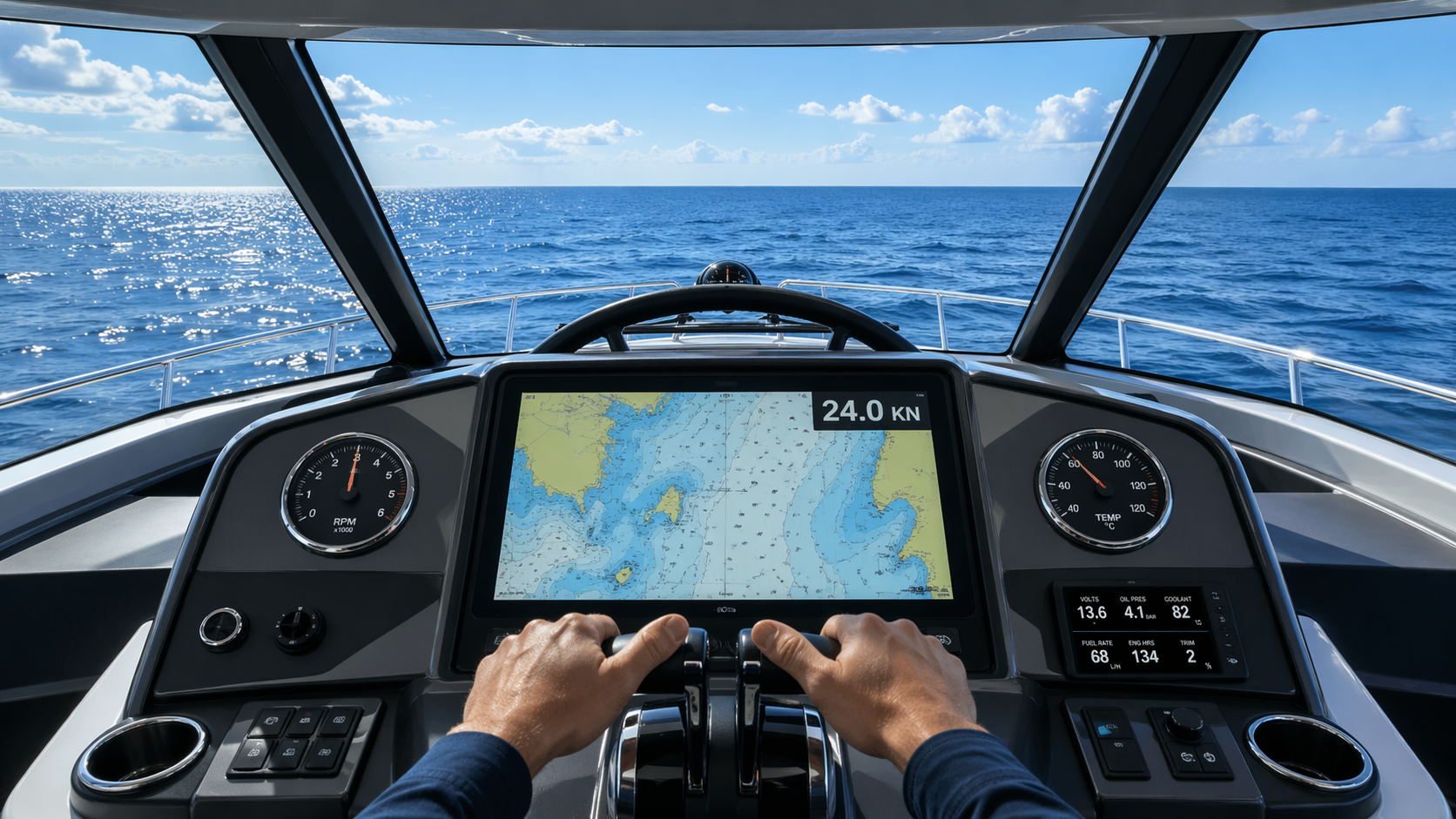
No survey is complete without a sea trial. The surveyor needs to see the boat run under load — idle, cruise, wide open throttle — while watching temperatures, pressures, and hull performance. Steering, shifting, trim, and every electronic system get tested under real conditions. A quiet harbor run at 800 RPM tells you almost nothing; the surveyor needs real operating time to catch heat issues, vibration, and hidden failures.
At the end you'll get a written report, usually thirty to sixty pages on a sizable boat, with every finding prioritized into safety concerns, recommended repairs, and long-term items. This is the document you bring back to renegotiate, and it's the document your insurance carrier will ask to see. Read it twice. Ask the surveyor to walk you through anything you don't understand — a good one will spend thirty minutes on the phone at no extra charge.
A pre-purchase survey is the last step before a boat becomes yours, and it's not the place to cut corners. Hire your own surveyor, not the seller's. Insist on a haul-out and a sea trial. Use the findings to negotiate in writing. When you close on a properly surveyed boat, you're buying certainty about what you're getting — and on the water, certainty is worth every dollar.
If you're weighing a specific boat right now and wondering whether the survey findings are dealbreakers, drop your questions in the comments.
*If you enjoyed this one, check out another buying-side guide that pairs well with survey planning — timing the used boat market.*