

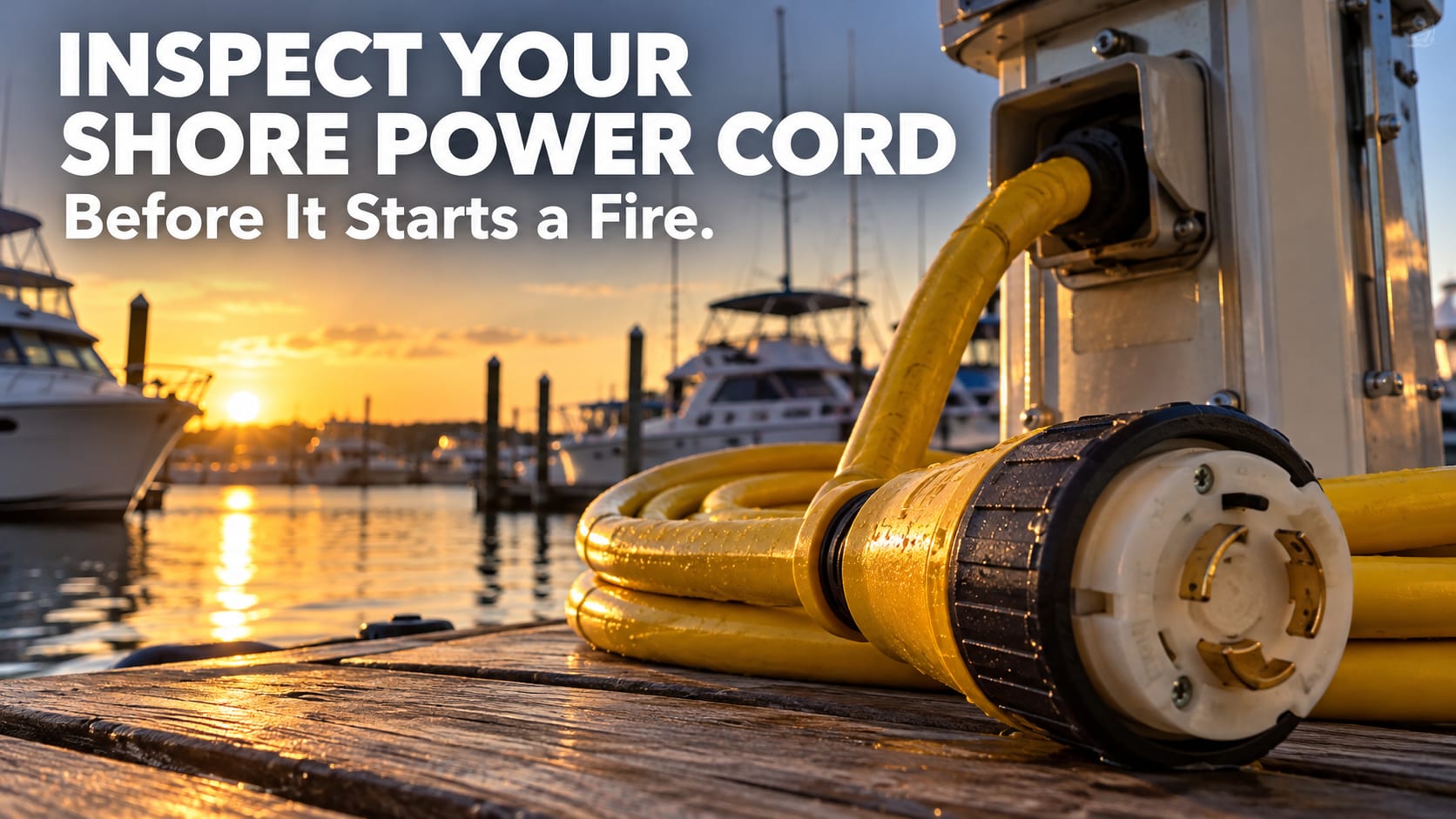

Your shore power cord is the most abused piece of electrical gear on your boat, and most of us never look at it twice. It sits in the sun, gets stepped on, gets dunked in the marina water, and carries a heavy electrical load for months at a time. When it fails, it does not fail politely. It melts, and it does it while you are asleep below.
Here's the thing: almost every shore power fire starts with a connection that was running hot long before anything went wrong. The good news is that a bad cord tells you about it ahead of time if you know where to look. Ten minutes with your cord and your pedestal is the cheapest fire insurance you will ever buy.
Look at the Plug Ends First
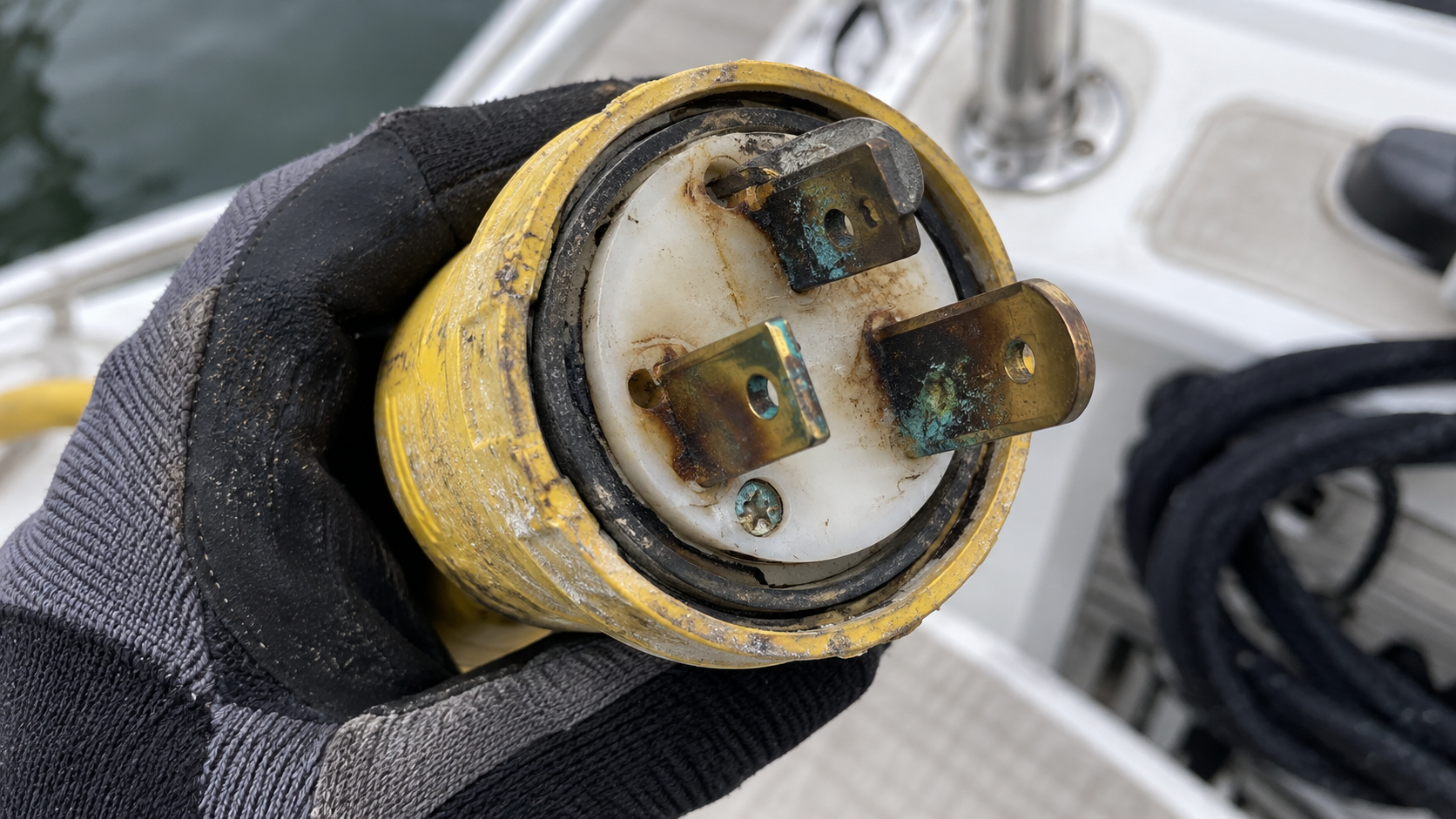
Unplug the cord at both ends and look hard at the metal blades and the plastic around them. You are looking for discoloration, scorch marks, pitting, or plastic that looks soft or slightly warped. Any of those means the connection was arcing or running hot. Green or white crusty corrosion on the blades is a warning too, because corrosion adds resistance, and resistance turns into heat.
Feel the plug the next time you come back to the boat with the air conditioner or heater running. A plug that is warm is normal. A plug that is too hot to hold comfortably is not. If you ever notice that, shut the load down and replace the cord rather than hoping it behaves.
Check the Length of the Cord and the Pedestal Outlet
Run your hands along the whole cord and watch for cuts, flat spots, cracked jacketing, and stiff sections where the sun has cooked the insulation. Pay extra attention close to each plug, since that is where the cord flexes the most and where water likes to sneak in. A cord that has been repaired with electrical tape is a cord that needs to be replaced.
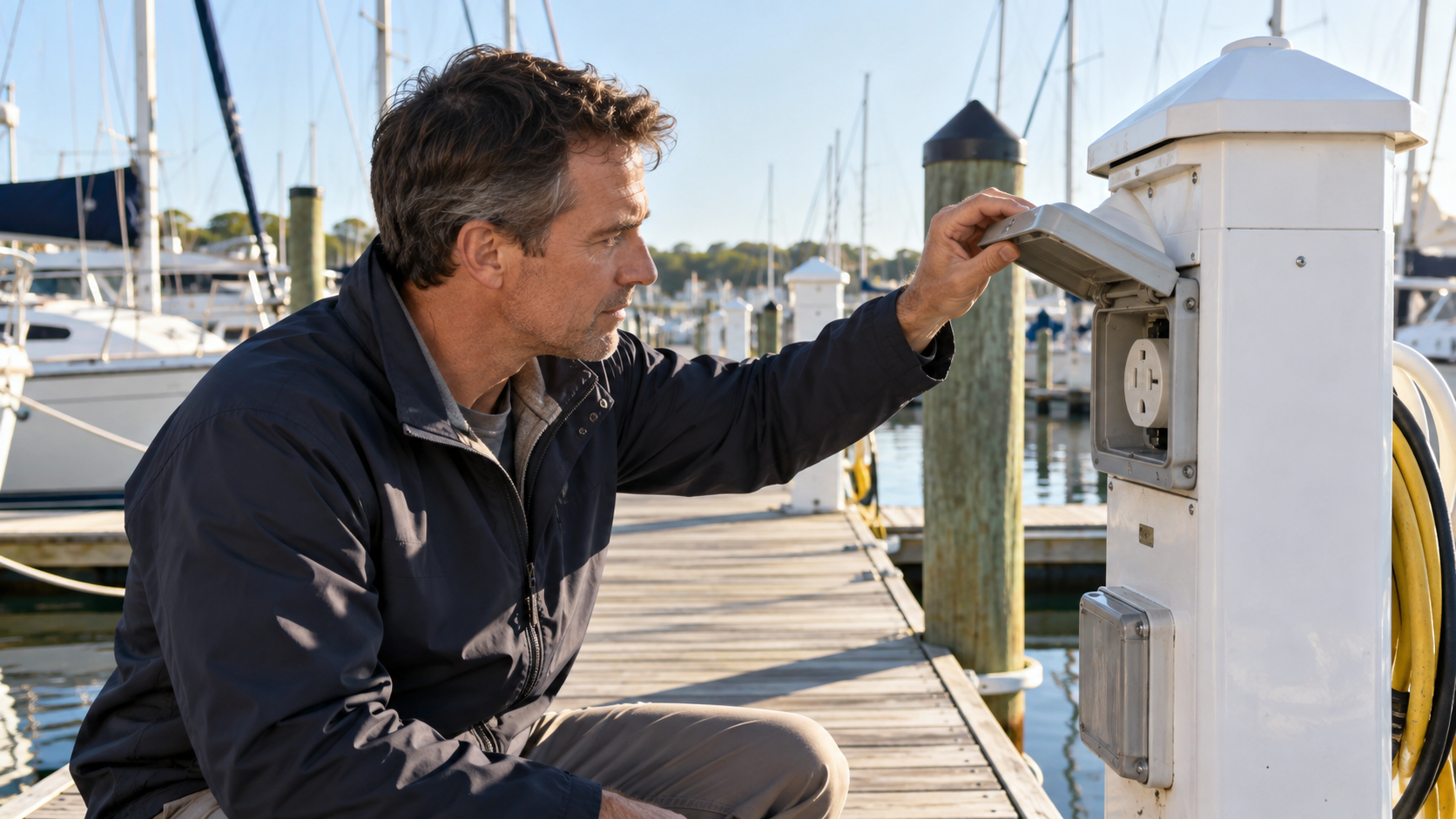
The dock side matters just as much as your side. Open the pedestal outlet and look for the same burn marks and corrosion you checked on the plug. If the outlet looks cooked or the plug feels loose when you push it in, do not use that pedestal and tell the marina office. Moving to another slip beats arguing with a melted receptacle.
Match the Cord to the Load
A cord that is too small or the wrong type for what you are asking of it will run hot even when it is brand new. Use a marine-rated shore power cord sized for your boat's service, with locking collar plugs that twist into place so they cannot back out and arc. Never use a household extension cord, and avoid stacking adapters on top of adapters just to reach a different pedestal. Every extra connection is one more place for heat to build up.
Your reverse polarity light and your galvanic isolator or isolation transformer are part of the same system, and the isolator ties directly into the stray current problem I covered when I explained why your zincs keep disappearing. A bad shore connection can chew through anodes and hardware long before it starts a fire.
Make the Check a Habit
Put a cord inspection on the list when you launch, at haul-out, and any time you plug in somewhere new. Coil the cord loosely when you put it away, keep the plug ends out of the bilge, and cap the boat inlet when the cord is unplugged so spiders and water stay out. Replace a cord the moment it shows heat damage, because it is a small expense next to the alternative.
Electrical faults rank among the most common ways boats catch fire, and I walked through how to prevent and respond to a boat fire in more detail in another post. Keep a charged extinguisher near the companionway and you have covered the other half of the job.
If you have found a scorched plug or a questionable pedestal at your own marina, drop it in the comments so other boaters know what to watch for. Walk down your dock this week, look at your cord, and fix it before the weather turns and the heaters come on.
