


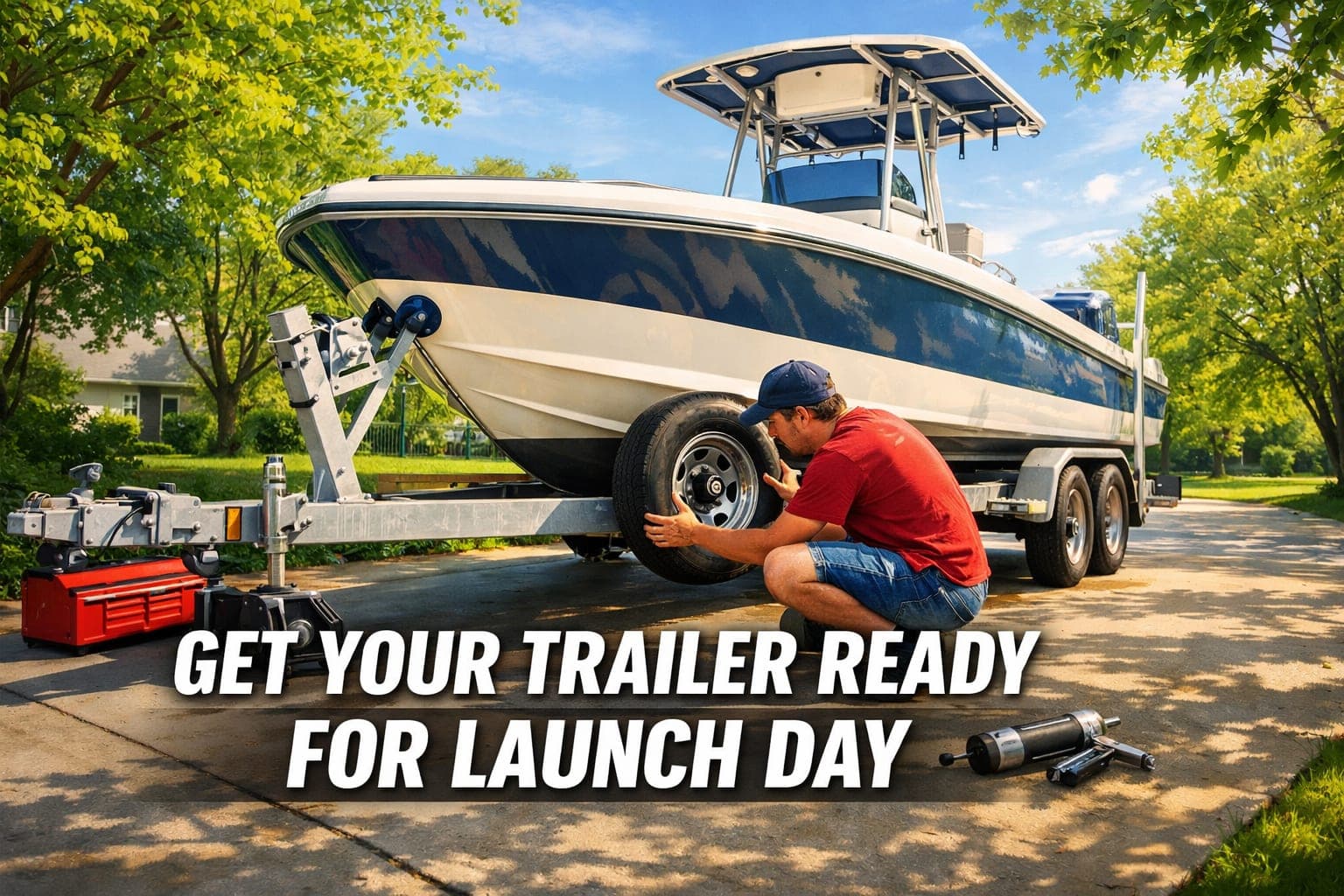

Everyone talks about de-winterizing the boat when spring rolls around — flushing the engine, checking the batteries, scrubbing the hull. But the thing that actually gets your boat to the water? That’s the trailer. And most boaters completely ignore it until something goes wrong on the side of a highway.
I’ve seen blown tires, seized bearings, and dead trailer lights ruin what should have been the first trip of the season. Every one of those problems was preventable with about an hour in the driveway. Here’s how I get my trailer ready before launch day.
Start With the Tires
A failed tire from low air pressure is the number-one cause of boat trailer trouble on the road. After sitting all winter, your tires have probably lost pressure, and the sidewalls may have developed dry rot from UV exposure. Check every tire’s pressure against the max PSI rating stamped on the sidewall — trailer tires often run at 60 PSI or higher, which surprises people used to passenger car pressures.
Inspect the tread depth while you’re down there. The penny trick still works: stick a penny into the groove with Lincoln’s head facing down. If you see the top of his head, those tires are done. Most trailer tires should also be replaced every five years regardless of tread — rubber degrades over time, and a blowout at highway speed with a boat in tow is not something you want to experience.

Repack or Replace the Wheel Bearings
This is the maintenance task that matters most on any boat trailer. Every time you back into the water, hot wheel bearings plunge into cold water. That temperature change creates a vacuum inside the hub that sucks water past the seals and into the grease. Over time the bearings corrode, the grease breaks down, and eventually they seize.
If your trailer has bearing protectors like Bearing Buddy caps, pump fresh marine grease into them until the spring-loaded piston pushes out slightly. If it’s been more than two seasons since a full repack, pull the hubs off and inspect the bearings for pitting, discoloration, or rough spots. Fresh marine-grade grease and new seals are cheap insurance against a roadside disaster. I repack mine every other year and have never had an issue.
Test Every Light on the Trailer
Trailer lights are the first thing a cop will notice and the last thing most boaters check. Hook up the wiring harness and test every function: running lights, brake lights, turn signals, and reverse lights. If something’s out, the most common culprit is a bad ground connection — the white wire secured to the trailer frame with a small screw. Corrosion builds up on the contact point over winter. Pull the screw, hit the contact with sandpaper until you see bare metal, and reconnect. Nine times out of ten, that fixes it.
Check every wiring connection along the frame while you’re at it. Salt and road spray eat through exposed wire and connectors over a season. A tube of dielectric grease on every connector will save you headaches down the road.
Inspect the Winch, Straps, and Safety Chain
The winch strap is the thing holding your boat on the trailer when you’re pulling it up the ramp. If it’s frayed, sun-bleached, or showing signs of wear, replace it before you load the boat — a nylon strap runs about fifteen to twenty dollars. The winch mechanism itself should crank smoothly without slipping. If the gears are grinding or the ratchet doesn’t hold, it’s time for a new one.
Check your safety chains for rust, weak links, and proper length. They should cross under the tongue in an X pattern so they’d cradle the tongue if the coupler came loose. Give the coupler itself a look too — make sure the latch locks securely onto the hitch ball and the safety pin is in place.

Check the Brakes
If your trailer has surge brakes or electric brakes, they need attention too. Cycle surge brake actuators by hand and confirm they move freely, and check hydraulic fluid levels for leaks. For electric brakes, test the breakaway switch and brake controller communication. Drum brakes take a beating from saltwater immersion, so inspect the pads if it’s been a couple of seasons.
An Hour Now Saves a Day Later
None of this takes long. An hour in the driveway with a grease gun, a tire gauge, and a wiring tester will save you from being the person on the shoulder of the interstate wondering how this happened. The boat gets all the attention in spring, but the trailer is what gets it to the water and back. Treat it like part of the vessel and it’ll never let you down.
If you’ve already knocked out your common boat repairs and spring engine service, add the trailer to the list. It’s the one thing between your boat and the water — make sure it’s ready.