


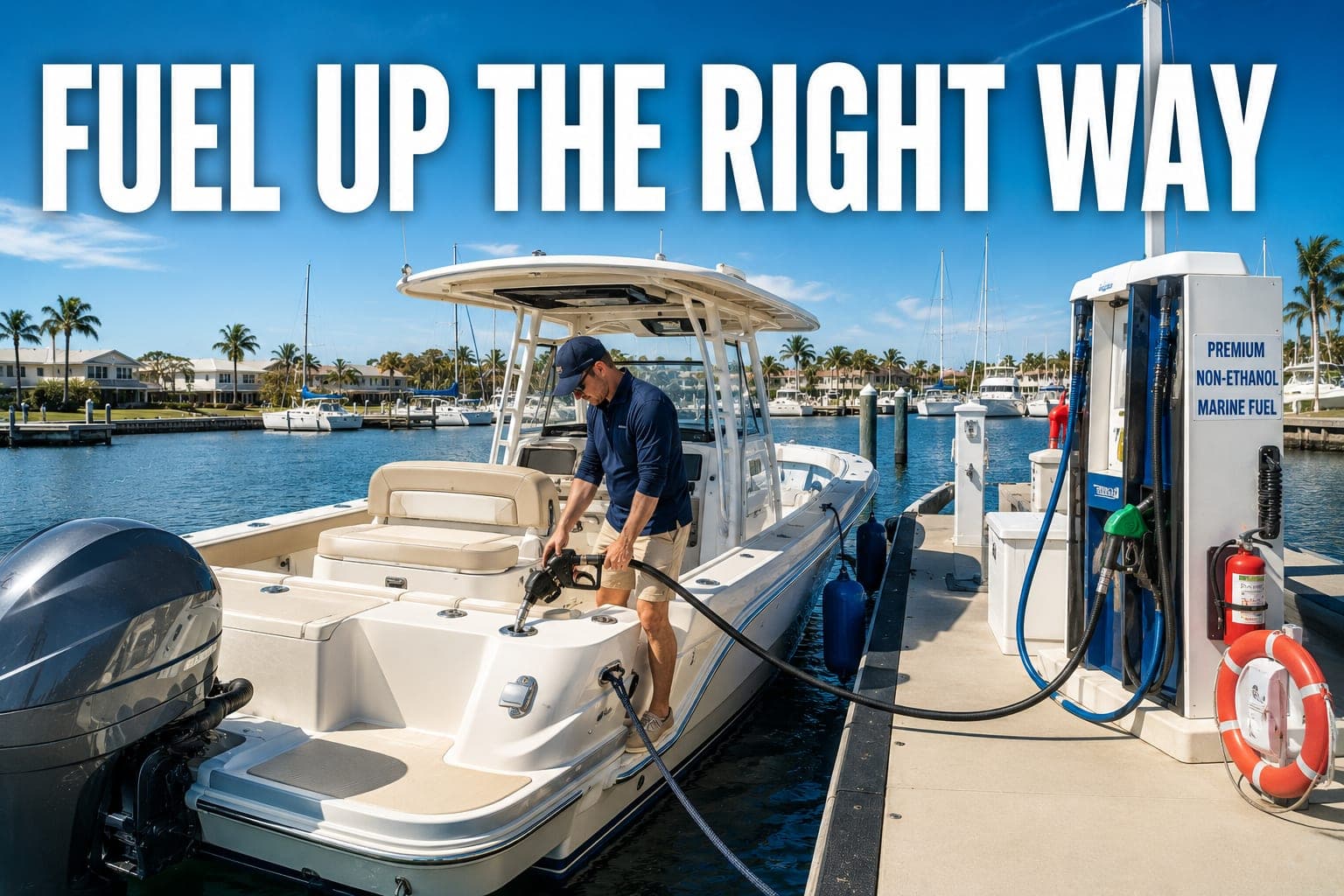

Fueling a boat is nothing like filling up a car, and treating it that way is how people get hurt. A car sits in open air, so gasoline vapors blow away. A boat has a bilge and enclosed compartments that trap those same heavy fumes right where they can find a spark. That's the whole reason marine fueling has its own routine, and it's worth doing exactly the same way every single time until it's automatic. Here's how I fuel up at the dock without drama, spills, or a knot in my stomach.
Why the Fuel Dock Deserves Your Full Attention
Gasoline vapor is heavier than air, so when it escapes it sinks and pools in the lowest parts of your boat instead of drifting off. Add an ignition source to a bilge full of fumes and you have the ingredients for an explosion, not just a fire. This isn't me trying to scare you off the water; it's the reason every step below exists. The good news is that the risk is almost entirely preventable with a handful of habits, and once they're second nature you'll barely think about them. The same mindset that keeps you ahead of a fire aboard is exactly what keeps the fuel dock uneventful.
Approach and Tie Off Before You Touch the Pump
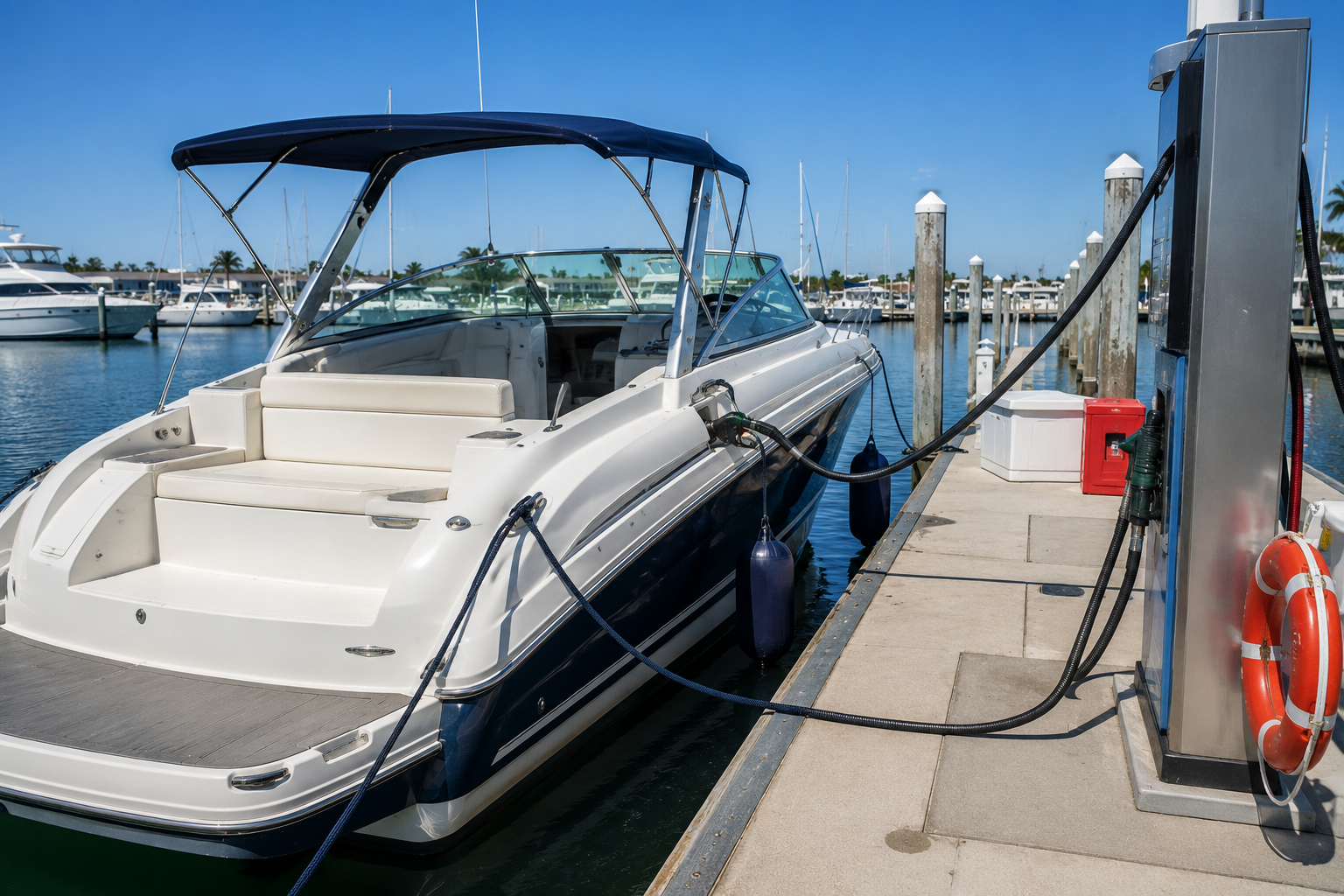
A good fill-up starts with a clean approach. Come into the fuel dock slow and into the wind or current whenever you can, because a controlled drift is a lot easier to manage than fighting the boat at the last second. Get your lines and fenders ready before you arrive, and tie off properly so the boat sits still against the dock while you work. Rushing this part is where dings and spills happen. If wind and current are giving you trouble, the same fundamentals behind docking in a stiff breeze apply here, and there's no prize for a fast landing at the fuel dock. Once you're secure, shut the engine down completely before anything else happens.
Shut It All Down Before the Nozzle Comes Out
Before you pick up the nozzle, kill every source of ignition and ventilation you can. Turn off the engine, and shut down anything with a flame or a spark, like the galley stove, water heater, or grill. Get all passengers off the boat and onto the dock while you fuel, so you have room to work and fewer people near the fumes. Extinguish any smoking, and don't answer a call on the dock with the fill going. Close hatches, ports, and doors so vapors can't roll below into the cabin and bilge. It only takes twenty seconds to run through this, and it's the difference between a boring fill-up and a bad day.
Fuel Without Spills or Overflows
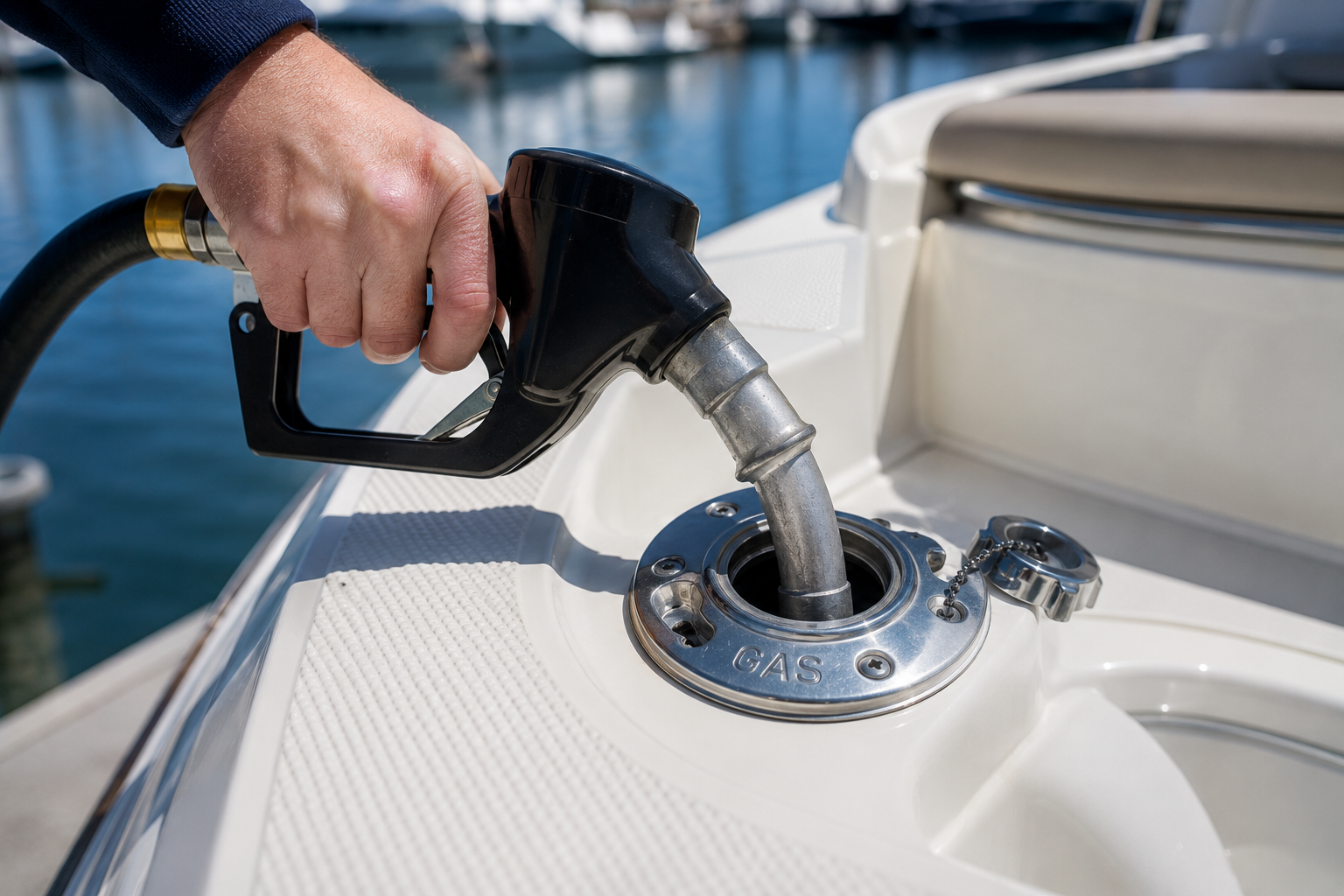
Find the fuel fill deck plate, which is usually marked "GAS" or "DIESEL," and make sure you're using the right one, because plenty of boats have a water fill right next to it that looks nearly identical. Keep the metal nozzle in firm contact with the fill fitting while you pump, which helps bleed off static electricity. Go slow, especially as the tank gets close to full, and listen to the sound change as it fills rather than trusting an auto shutoff you can't see. Never top it off to the brim, because fuel expands as it warms and will burp right back out the vent. If you do spill, stop, wipe it up immediately with an absorbent pad, and never hose it into the water, where it's both illegal and a real environmental problem.
The Sniff Test and Blower Before You Start
When the tank is topped off and the cap is back on tight, don't just twist the key. Open the engine compartment and give it the sniff test, because your nose is genuinely one of the best gasoline-vapor detectors you own. If you smell fuel, do not start the engine, and find the source first. Run your bilge blower for at least four full minutes to clear any vapors that settled below before you ever hit the starter, and reload your passengers only after the engine is running clean. Getting into this rhythm also pays off in the long run, because careful fueling and a habit of using good, fresh gas is part of protecting your motor from the damage ethanol fuel can do over a season sitting in the tank.
None of this takes long once it's habit, and the payoff is that fueling stops being a moment of worry and becomes just another quiet part of a good day on the water. Run the same routine every time, and it'll be there when you need it. If you've got a fuel-dock habit of your own that keeps you safe, drop it in the comments so we can all pick up something new.