


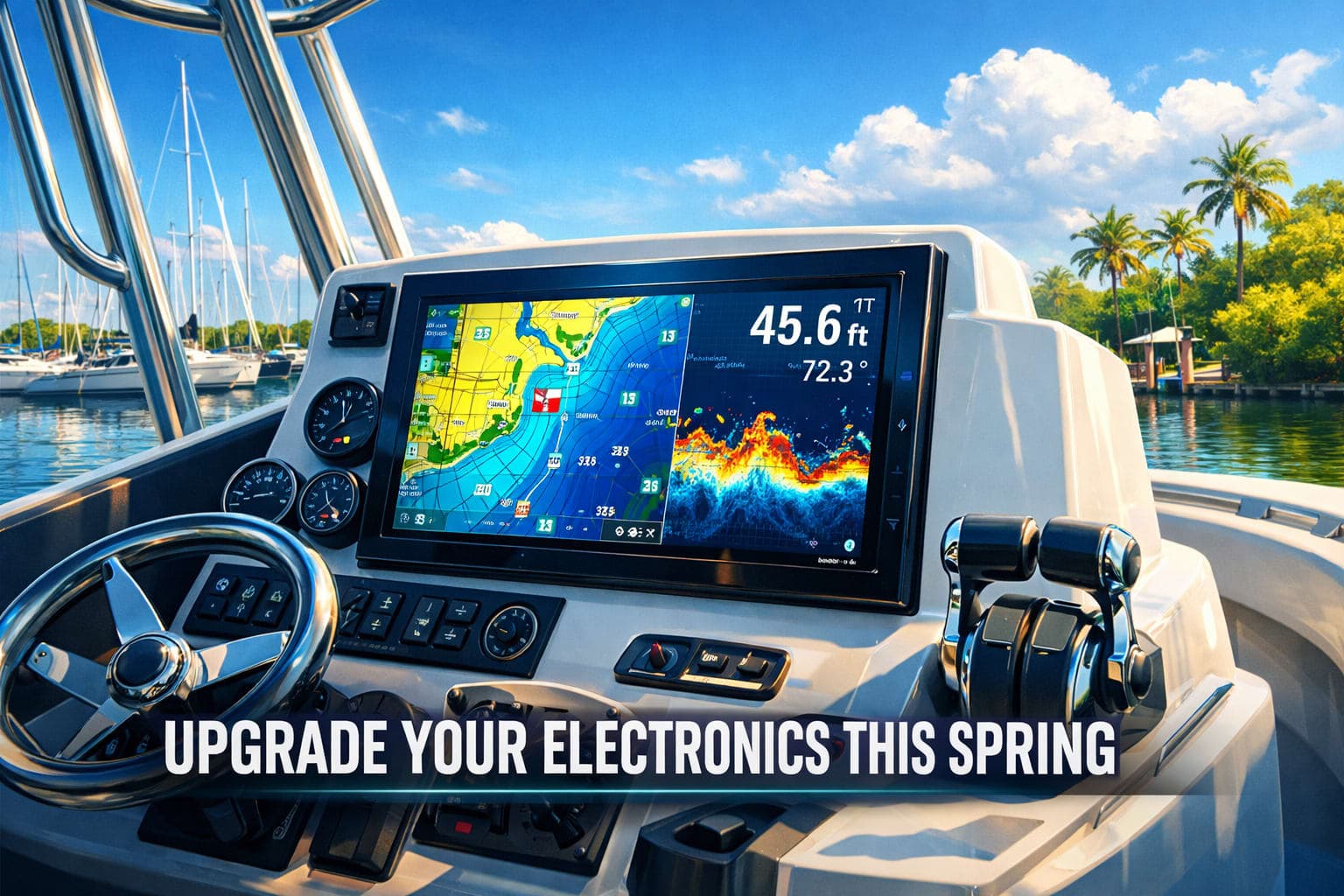

If you've been thinking about upgrading your chartplotter, adding radar, or finally installing that fishfinder you've been researching all winter, right now is the time to pull the trigger. Spring — before the season really kicks off — is the window when you'll get the best deals, the best installer availability, and enough time to actually learn the system before you need it.
I've upgraded electronics on my own boats at every point in the season, and doing it in spring is hands down the smartest move. Here's why the timing matters more than most people realize.
Post-Boat-Show Pricing Works in Your Favor
Boat show season wraps up in late February and early March, and that's when the deals start flowing. Manufacturers launch their newest models at the big shows — Miami, New York, Atlantic City — which means last year's units get marked down to clear inventory. A 2025 Garmin GPSMAP or Simrad NSS that was full price in January might have a meaningful discount by March. Dealers want to move old stock before the new season's demand picks up.
The same applies to bundle deals. Retailers and marine electronics shops often package a chartplotter with a transducer, radar dome, or mounting hardware at a lower combined price in spring to capture early-season buyers. If you've been watching the price on a smart boating upgrade, this is when the numbers start making sense.
Installers Actually Have Time Right Now
Here's what happens every year: boaters wait until May or June to schedule an electronics install, then wonder why the shop can't fit them in for three weeks. Marine electronics installers are slammed once the season starts. Everyone wants their boat ready at the same time, and installation work backs up fast.
In March and early April, most shops are still catching up from winter projects and have open slots. You'll get better scheduling, more attention from the installer, and the work gets done right instead of rushed. A clean, careful install makes a real difference with marine electronics — proper cable routing, sealed connections, and correct transducer placement all affect performance. That's harder to get when the shop is racing through a backlog.
You Get Time to Learn Before You Need It
A new chartplotter or fishfinder combo isn't like plugging in a phone charger. Modern units from Garmin, Lowrance, Simrad, and Furuno are packed with features — CHIRP sonar, live sonar, autopilot integration, radar overlay, weather routing, C-MAP charts — and every one of those features has a learning curve. If you install in spring, you get a few shakedown trips to figure out the menus, dial in the sonar sensitivity, and customize the display layouts before you actually need them on a serious offshore run or a new-water crossing.
I've watched people install a new Garmin system the week before a fishing tournament and spend half the trip fumbling through settings. Install early, run it on a few calm-day cruises, and by the time you need it to perform, you'll know exactly where everything is.
What to Prioritize in 2026
If you're upgrading from an older system, the jump in screen technology alone is worth it. The newest IPS displays from Lowrance and Humminbird are readable even with polarized sunglasses in direct sunlight — something that was a real problem with older LCD panels. Touchscreens have gotten faster and more responsive, and the combination of touchscreen with physical buttons means you can still operate everything with wet hands or in rough conditions.
Live sonar is the other big category worth looking at. Humminbird's MEGA Live 2 and Lowrance's ActiveTarget 2 have changed the way anglers fish, showing real-time movement of fish and structure below and ahead of the boat. Even if you're not a tournament fisherman, seeing what's under you in real time adds a level of awareness that makes you a better, safer boater. Pair that with a solid battery monitoring setup and your helm becomes a real command center.
Don't Wait Until You Need It
The best time to upgrade your marine electronics is before you're relying on them. Spring gives you better prices, better availability, and the time to get comfortable with new gear before the season demands it. Whether you're adding your first chartplotter or swapping in a full multifunction display system, doing it now means you're ready when the weather breaks and the water calls.
If you've been putting it off, stop putting it off. Call your installer, check the spring deals, and get it on the boat while the schedule is still open. Your future self will thank you the first time you're navigating unfamiliar water on a summer evening and everything on your helm just works.