


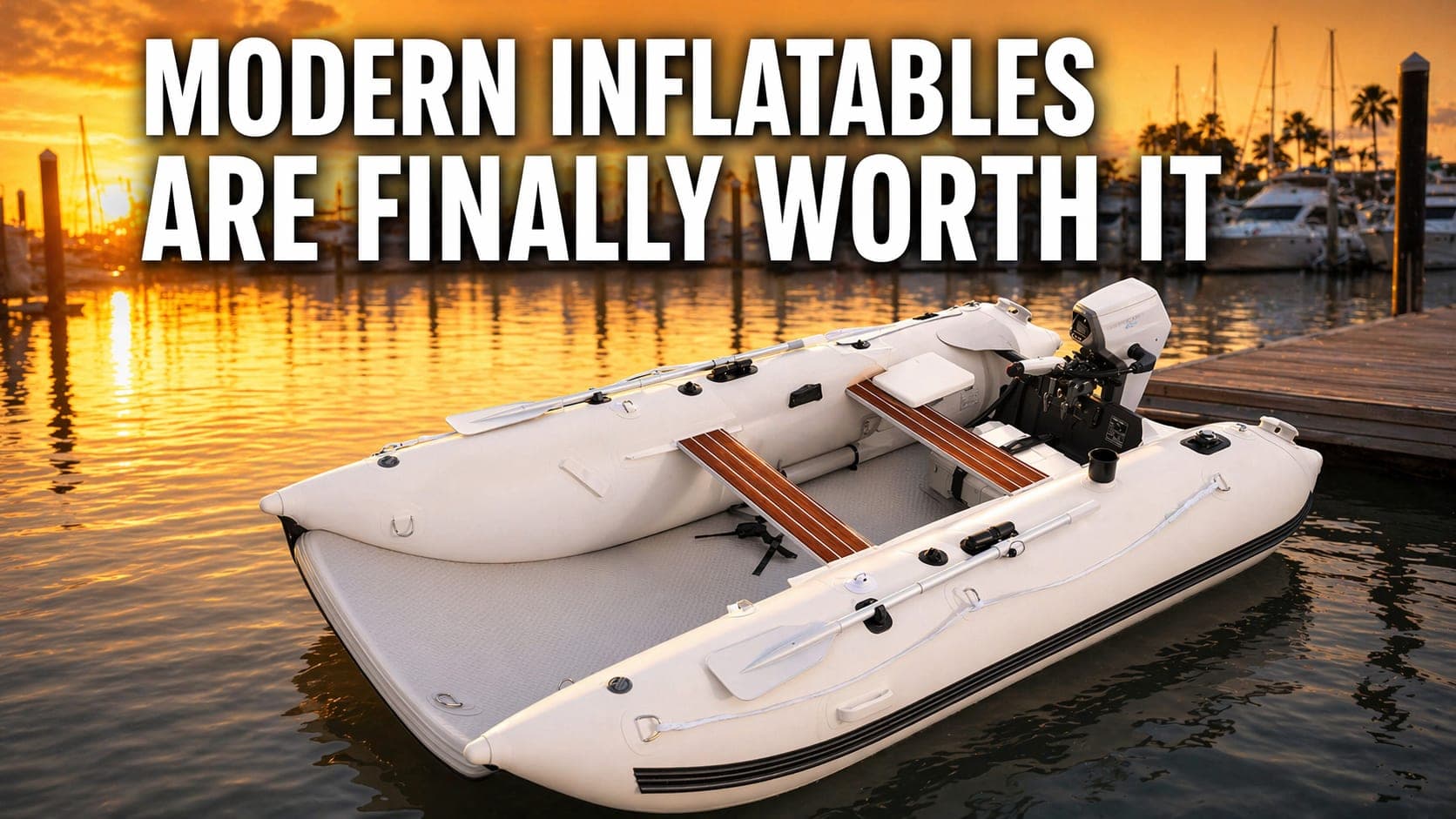

In the tender food pyramid, I used to put inflatable boats at the very bottom. Cheap, slow, soft, and kind of a joke — I wasn't going to take one seriously unless it had a hard bottom. That was my line in the sand for years.
Then two pieces of gear changed my mind: a high-pressure drop-stitch floor and an electric outboard. Put those two things together on a fully inflatable boat and the compromise I used to assume isn't actually there anymore. This is how I set one up, why it works, and why I think the modern inflatable is one of the smartest tender moves you can make right now.
Why I Was Wrong About Inflatables
My old picture of an inflatable was a soft, saggy floor that felt like you were standing on a pool toy, tubes that wouldn't hold their shape under load, and a boat that behaved more like a raft than a vessel. So for the longest time, if a tender didn't have a rigid bottom, I wasn't interested.
What actually changed isn't marketing. It's the drop-stitch floor. Once you inflate one of these high-pressure floors, it's rigid, it's flat, and it's genuinely something you can stand and move around on. Pair that with durable PVC tubes and you stop asking whether the boat will hold up and start asking where you're going to take it.
Space Is the Real Unlock
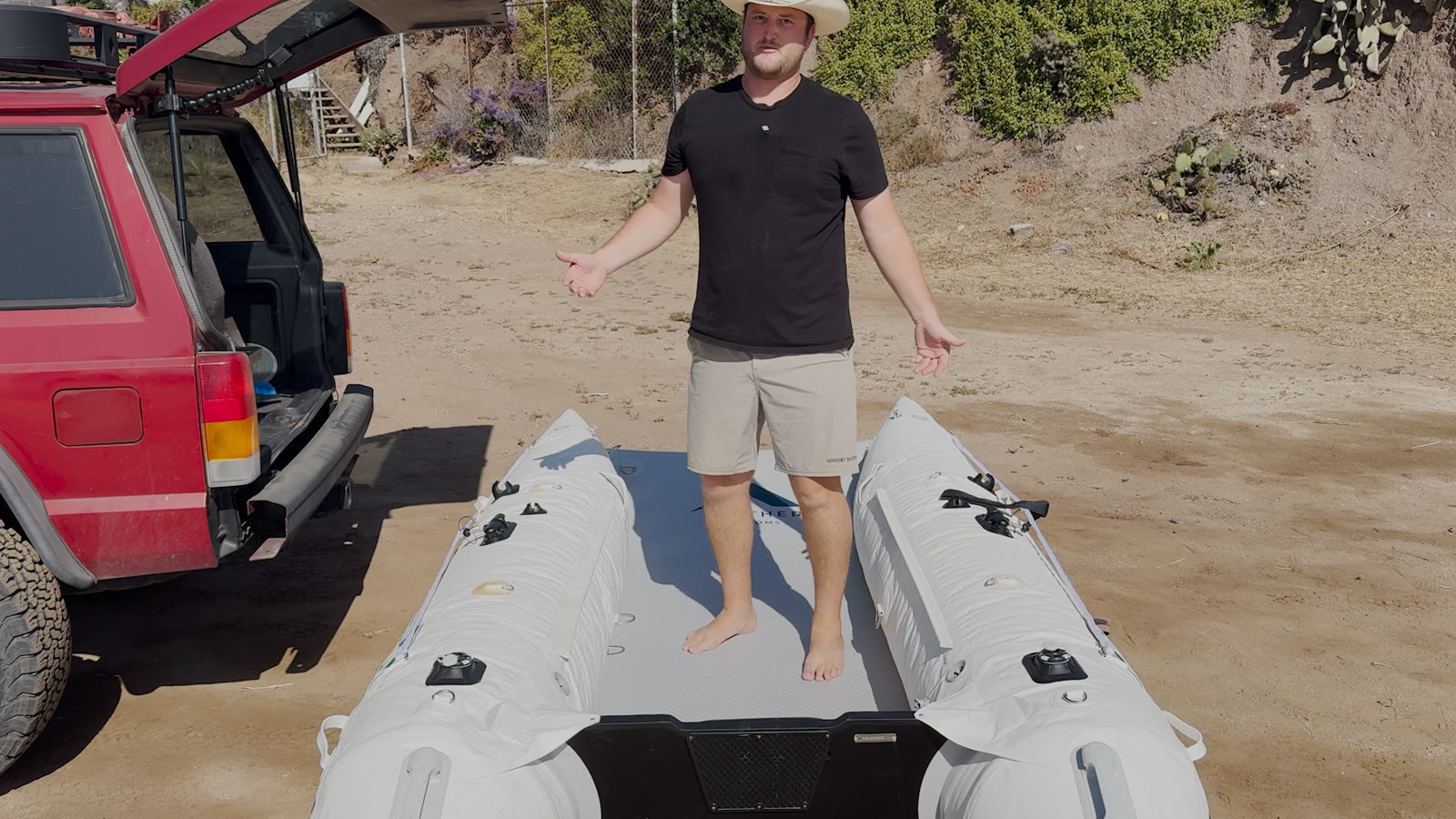
The first reason a modern inflatable earns its keep has nothing to do with how it rides. It's storage. This entire boat packs down into something you can realistically store, move, and deal with. No trailer, no slip, no launch ramp headache. I set mine up in the parking lot of a marina in Mexico, and when I'm done with it, the whole thing fits in my trunk.
That one fact opens boating up to a completely different type of owner. If you've been holding off on a tender because of where you'd put it, or you're tired of dragging a second vessel behind the first, a boat that folds up into a bag solves a problem nothing else solves. It's one of those upgrades that actually pays you back in convenience every single time you use it.
How to Actually Set One Up
Setting up an inflatable is simple, but the order matters more than people realize. Start with the outer pontoons, and only partially inflate them. You just want enough air to give the boat its frame — think of it like setting the skeleton before you put the floor in. If you fully inflate the tubes first, the drop-stitch floor will fight you every step of the way.
Once the tubes hold their shape, slide the high-pressure floor into place and tuck the edges in so the whole thing locks together. Then go back and finish inflating the pontoons to full pressure. That's it. Floppy PVC turns into a rigid, usable platform in a few minutes. An electric pump makes the job easier if you inflate and deflate often, but hand and foot pumps work just fine. If yours came with a bimini — like the Laguna does — throw that up last and you've got shade for the ride.
The Electric Outboard Is the Other Half of the Equation
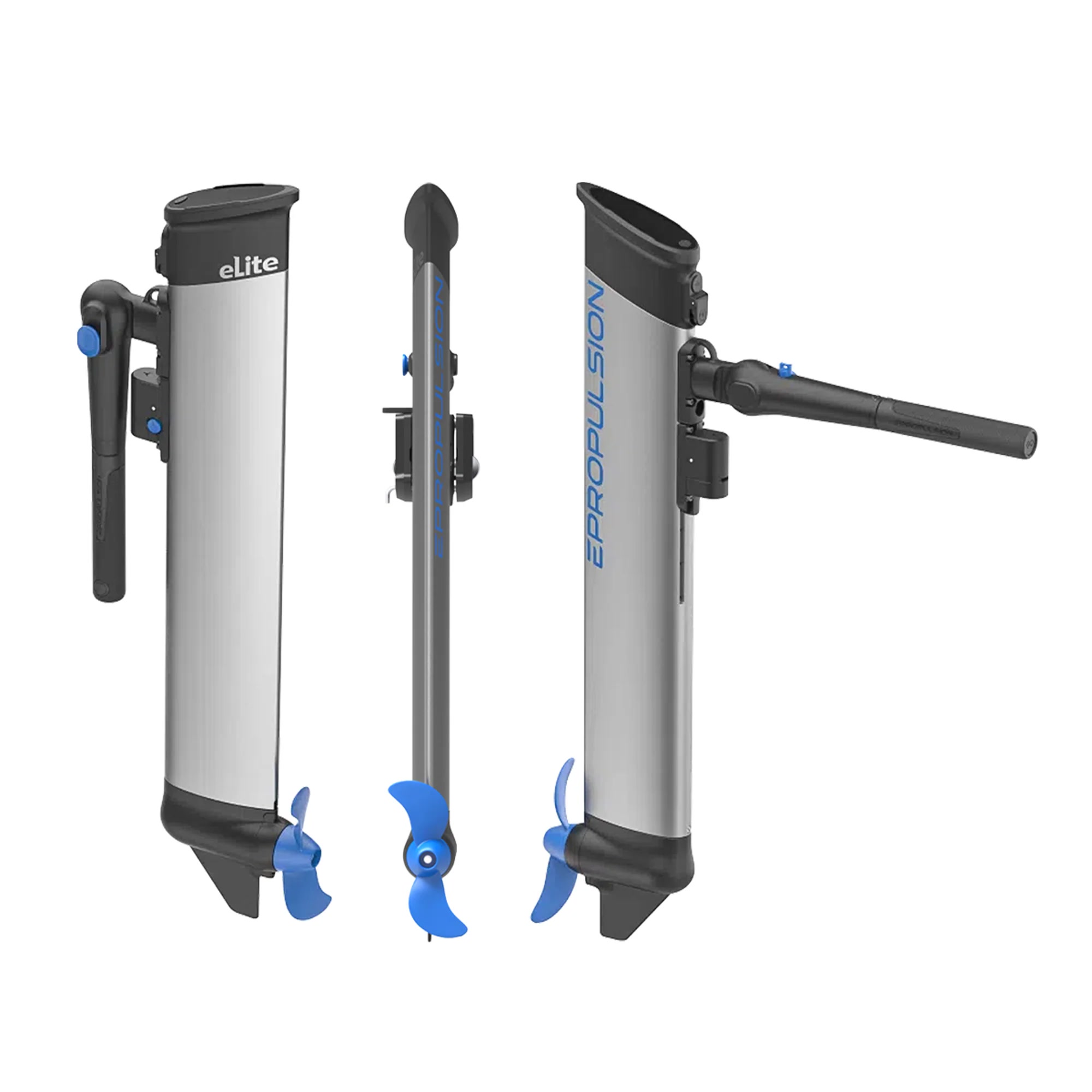
The floor changed my mind about whether these are real boats. The electric outboard is what made me actually want one. I didn't go through all the trouble of bringing an electric pump just to row around, so I paired the Laguna 330 from Further Customs with an ePropulsion Elite. A transfer bracket goes over the stern, a couple of screws hold it down, the motor clips on, and you're off.
The thing I didn't expect is how much simpler the whole boating experience gets once the gasoline leaves the picture. No jerry cans, no stinky compartments full of fumes, no leaking oil, no lugging a heavy two-stroke around when you're not using it. Electric motors have quietly gotten good enough that the tender world is genuinely one of the best places to run one, and I've already made the case for electric propulsion in 2025 in a longer piece — inflatables are where I think it'll show up first for most people.
The Full-Time Solution Without the Full-Time Commitment
The tender world has always been about compromise — stability versus weight, ease of setup versus a fully outfitted second vessel, and most of all, space. Drop-stitch floors and electric outboards take those trade-offs and collapse them into one package you can fold up, store in a closet, and launch off a sidewalk if you need to.
Unless you've got 80 feet of waterline and a davit you actually want to use, an inflatable like this is the full-time solution without the full-time commitment. If you've been considering one, this is the year to stop writing them off. Watch the full setup walkthrough on the JakeSea channel, and if you've already made the jump to an inflatable tender, drop a comment with how it's changed the way you use your boat.