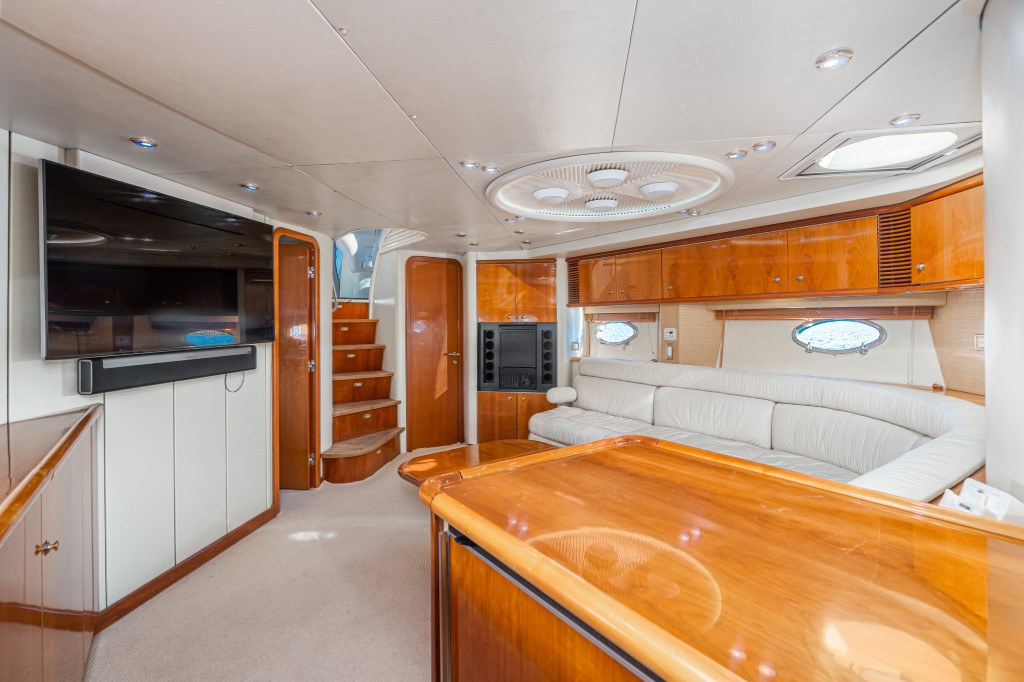



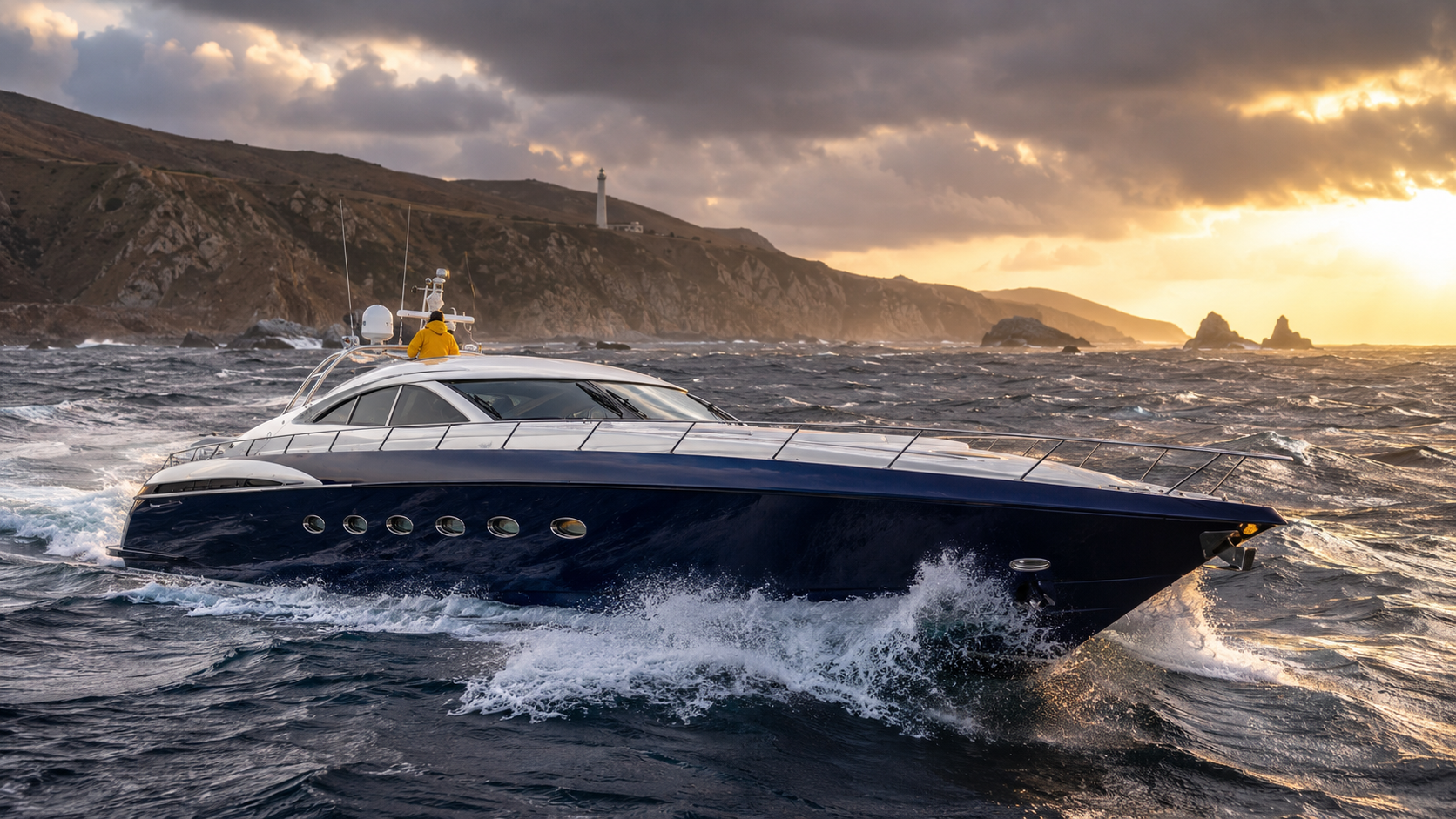
I recently delivered a 63-foot Sunseeker Predator from the San Francisco Bay Area down to Marina del Rey — 350 nautical miles along the California coast. I’ve got a separate video showing the actual trip, but this one is more educational: how do you plan a delivery like that? Different captains have their own routines, but mine breaks down into three core areas — scheduling, routing, and crew. Here’s how I approach it.
Figuring Out Your Route and Range
The first thing you need is to know your distance, your vessel’s speed, and your fuel range at different RPMs. I use an app called C-MAP on my iPad — it used to be called Embark. You plug in your start and destination, and it plots the route around land, gives you your headings, tells you the distance, and can even guide you during navigation. For this trip, start point was Sausalito and the destination was Marina del Rey — 350 nautical miles.
The owner had provided a performance chart showing what the boat could do at different RPMs. Looking at that chart, we could make the full 350 miles at anything below 1,750 RPM. But we wanted wiggle room in case the trip took longer, we couldn’t refuel, or an emergency came up. Between 1,000 and 1,500 RPM there isn’t much change in fuel economy, so that became our efficiency sweet spot — roughly 10 to 24 knots. Divide 350 miles by those speeds and you get a trip window of 15 to 35 hours depending on conditions. Fuel availability is limited along the central California coast, so knowing your range and planning for stops is not optional.
Finding Your Weather Window
Of everything in the planning process, weather is your biggest priority. Without a good weather window, you risk the safety of your crew and the vessel. I use an app called Windy — it gives you a color-coded view of wind in hourly increments and is typically accurate about three to four days in advance. Most of these apps pull NOAA data, so the farther out you look the more it changes. On the West Coast, wind is my primary concern. Anything over 20 knots is going to be a really bad time and hard on the boat. Waves get a little more leeway — bigger rolling swells without wind aren’t as dangerous, but add wind chop on top of a swell in the same direction and it’ll ruin the trip. Understanding the real costs of ownership means understanding that deliveries like this require patience — you don’t just go when it’s convenient, you go when the weather says you can.
You don’t just need a window that covers the trip — you need one that gives you a safe grace period. If you get holed up at a port or need repairs, you want enough time to either wait for conditions to improve or push through to your destination. We actually had to cancel our first attempt because it was windy the entire way down. When we finally went, the wind had died down substantially, and we had great weather the whole trip with just a slight rush at the end as conditions were due to pick up again Thursday afternoon.
Building Your Crew and Provisioning
Once you’ve got your weather window, you can start putting together crew. The most important thing is bringing people you trust who have experience. I personally never advertise for crew — I’d rather bring people I know. For anything over 12 hours, I like to use three crew members so you can rotate shifts: three hours on, six hours off. That system works well because three hours is manageable, and six hours off gives you close to a full night’s sleep. If you draw a rough shift like 9 PM to midnight, you can still sleep until 6 AM. Budget matters here too — depending on who you’re looking to hire, crew costs can vary.
For provisioning, plan at least a gallon of water per person per day, then add a day or two of grace period depending on the trip. Same with food — it’s always better to have extra than to need it when you’re out there. Make sure the boat is outfitted with safety equipment: life jackets, first aid kits, fire extinguishers. I also like to bring personal locator beacons so the person on watch always has one in case they go overboard while the others are sleeping. If the boat doesn’t have everything you need, bring your own.
Every captain has their own routine for deliveries, and there are tons of different ways to do it. But this approach — nail the route, respect the weather, and bring crew you trust — has worked well for me. If you want to see how all this planning played out in practice, check out the companion video of the actual trip. Smooth sailing.