


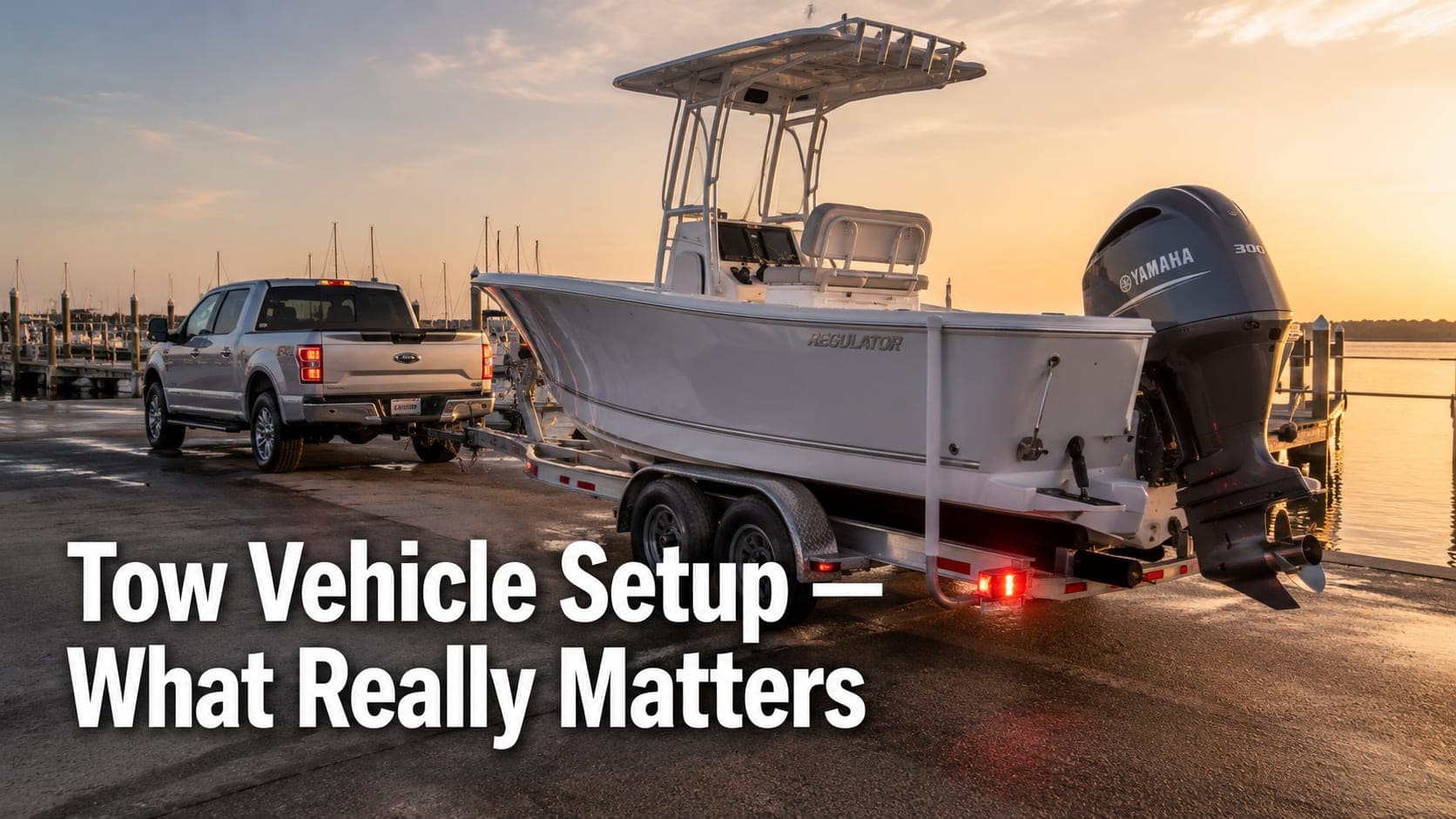

Most boaters I know spend a fortune obsessing over the boat and almost nothing thinking about the truck behind it. That's the wrong order. Your tow vehicle is the difference between a smooth Saturday at the ramp and a 90-minute, hazard-blinking nightmare on the interstate. Before the first launch of the year, you owe it a real walk-through.
This isn't about whether you bought enough truck. Plenty of mid-size SUVs tow plenty of boats safely. It's about whether the setup — the hitch, the wiring, the brake controller, the tongue weight, the tires — is actually right for the rig you're pulling. Most aren't. Here's what to check before you white-knuckle a freeway for the first time this season.
Match the Hitch to the Real Load
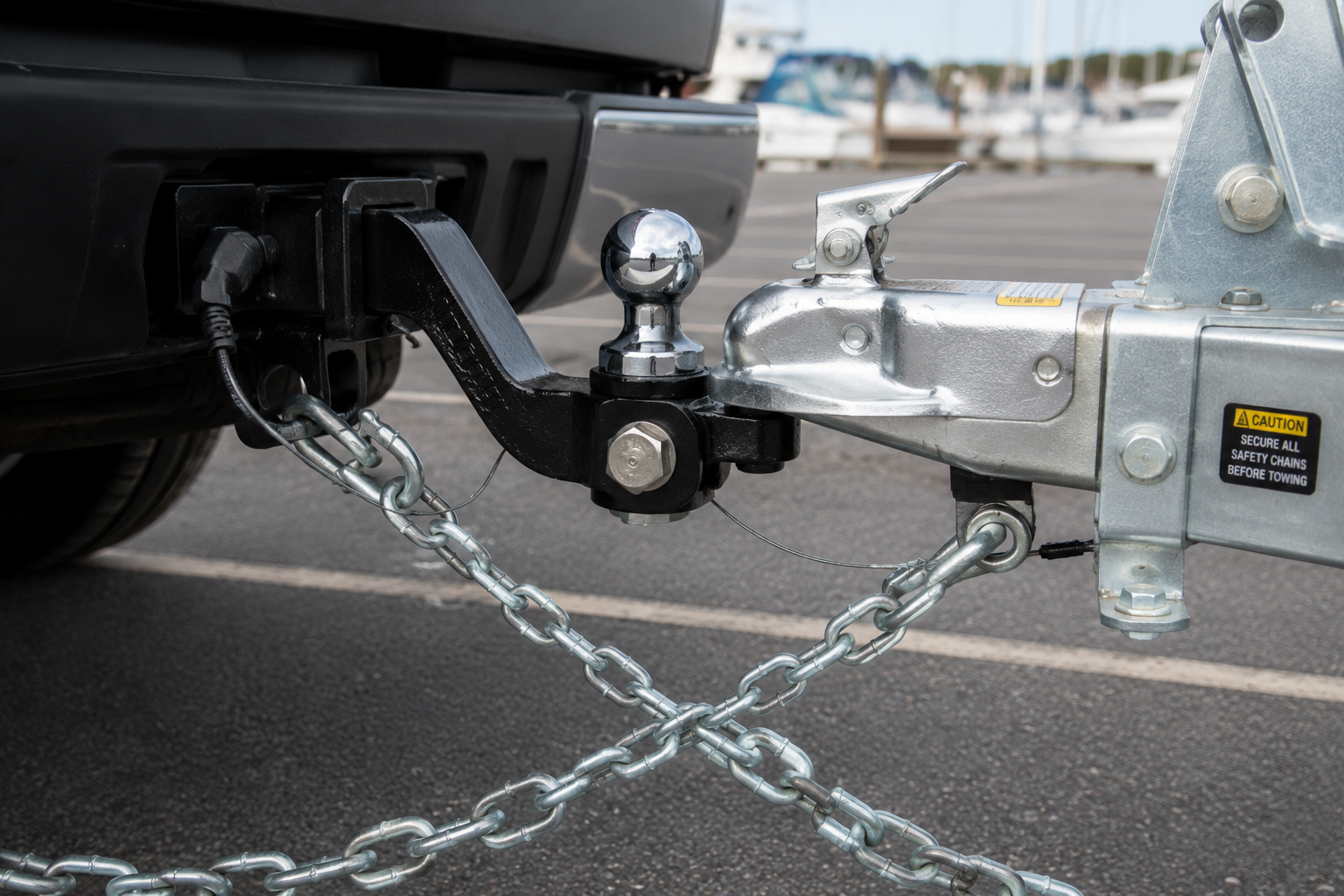
Start with the hitch class and the receiver. A Class III is good to about 6,000 pounds of trailer weight and 600 pounds of tongue weight. A Class IV jumps that to 10,000 and 1,000. If you've upgraded your boat or added a heavy bracket, gas tank, or extra batteries, you may have quietly walked yourself past your hitch rating without realizing it.
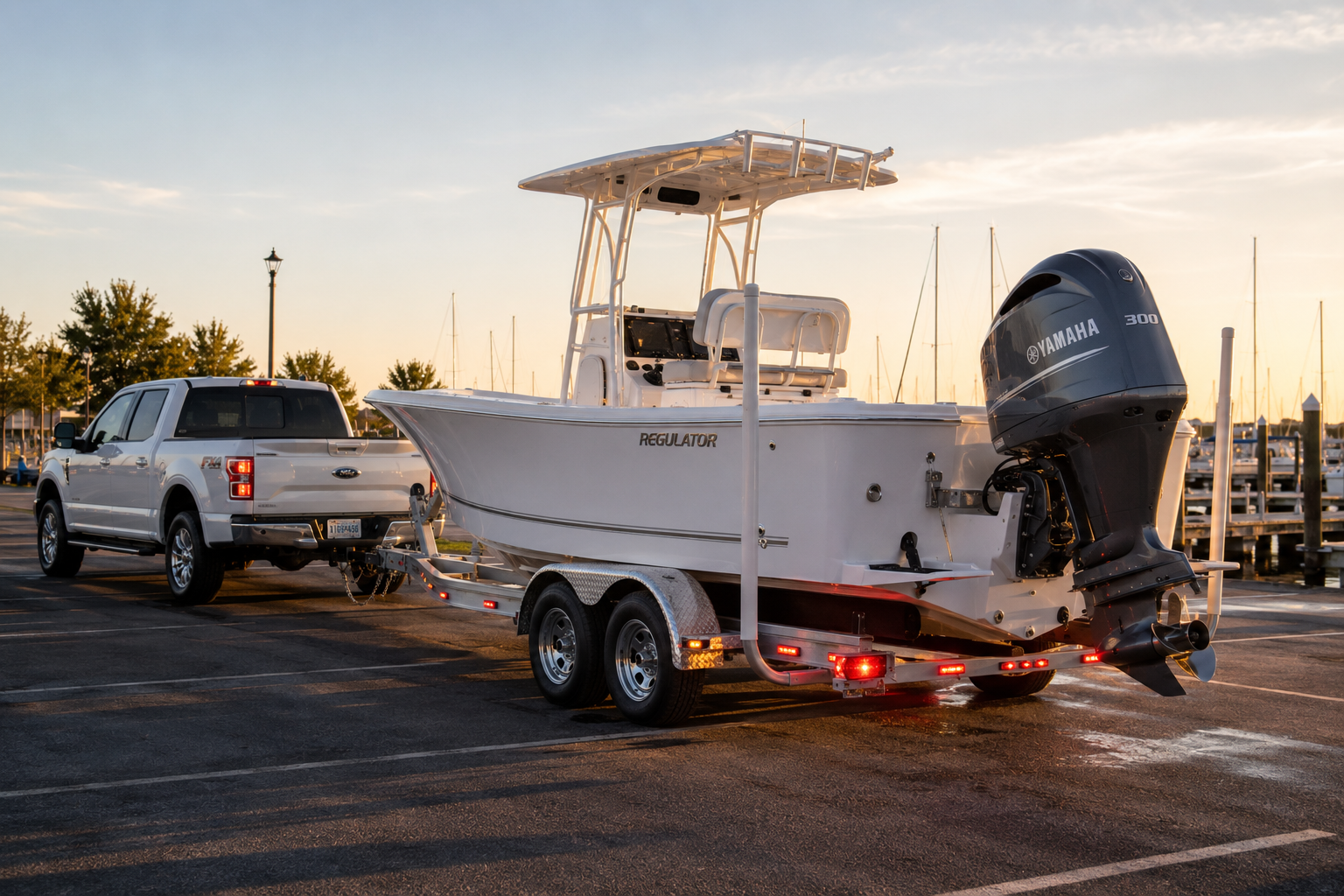
Drop and rise on the ball mount matter just as much. The trailer should ride level — not nose-up, not nose-down — when fully loaded. A nose-up trailer transfers weight off the front axle of your tow vehicle and makes the steering feel light and squirrelly at highway speed. A nose-down trailer scrubs the front tires of the trailer and chews them up by mid-summer. Swap ball mounts until the trailer sits flat. It's a $30 fix that prevents a small list of expensive problems.
Wiring, Lights, and the Brake Controller
Run every light before you leave the driveway. Tail, brake, left turn, right turn, and reverse — every time. Trailer wiring corrodes in salt water and shakes loose in a winter of garage storage. The 60 seconds it takes to walk around the trailer with a helper hitting blinkers is the cheapest part of your day, and the lights are the first thing a highway patrolman will pull you over for.
If your trailer has electric or surge brakes — and it should, anything over about 1,500 pounds in most states — confirm the brake controller in the cab is set right for the load. A controller cranked too high will lock the trailer brakes on a panic stop and turn the trailer into a sled. Too low and the tow vehicle is doing all the braking work itself, which is how rotors warp and pads disappear by July. Adjust the gain on an empty lot before your first long tow, the same way you'd want to start any season with a clean spring maintenance pass on the whole rig.
Tongue Weight Is Doing More Work Than You Think
Tongue weight should sit between 10 and 15 percent of the loaded trailer weight. Too little tongue weight and the trailer will sway behind you on the highway, especially when a semi blows past. Too much and you'll squat the rear suspension of the tow vehicle, lighten the steering, and overheat the rear tires.
The fastest way to get it right is to redistribute weight in the boat, not on the trailer. A full bow tank and an empty stern fish-cooler shift the tongue weight down. A loose battery box, a couple of fenders, a 30-pound cooler — these all move freely while you tow and quietly change the dynamic. Lock things down, then weigh the rig at a CAT scale or any truck-stop scale near you. You'll learn more in the four minutes it takes to weigh than in a season of guessing.
Tires, Bearings, and the Stuff That Quietly Kills You
Trailer tires are the single most under-maintained part of any boating rig. They look fine until the moment they don't. Check the DOT code on the sidewall — anything over five years old is suspect, regardless of tread depth. UV and heat kill trailer tires far faster than mileage. If you can't remember when you replaced them, you're due.
Bearings are the same story. Repack them every season or replace with sealed bearing buddies if you back into salt water. A wheel bearing failing at 70 miles an hour on I-5 is a tow-truck day at best and a much worse day at worst. While you're under there, check the trailer brakes, the leaf springs, the U-bolts, and the safety chains. None of it is glamorous, but skipping any of it is exactly the kind of avoidable disaster that shows up on the wrong end of real ownership cost.
The Ramp Itself
Even the best setup doesn't make up for ramp habits. Back the trailer in just deep enough that the boat floats — not so deep that the rear tires of the tow vehicle are in the water. Use the parking brake. Use chocks. Leave the engine running with the transmission in park if you're solo, never in neutral. And take the line of cars behind you seriously — a calm, prepared rig at the ramp keeps the rest of the day pleasant for everyone, including the guy who launched a week ago and forgot half his routine.
Closing Thought
The truck behind your boat does about 90 percent of the unglamorous work and gets about 10 percent of the love. Spend an afternoon getting the hitch level, the brake controller dialed, the lights working, and the tires confirmed, and you'll save yourself a tow-truck story and a few hundred dollars of avoidable wear by the end of the season.
If you've got a setup tip that saved your bacon at the ramp — a hitch lock, a level adjustment, a wiring trick — drop it in the comments. The trailer crowd talks less than the boat crowd, but they all learn from the same handful of close calls.