

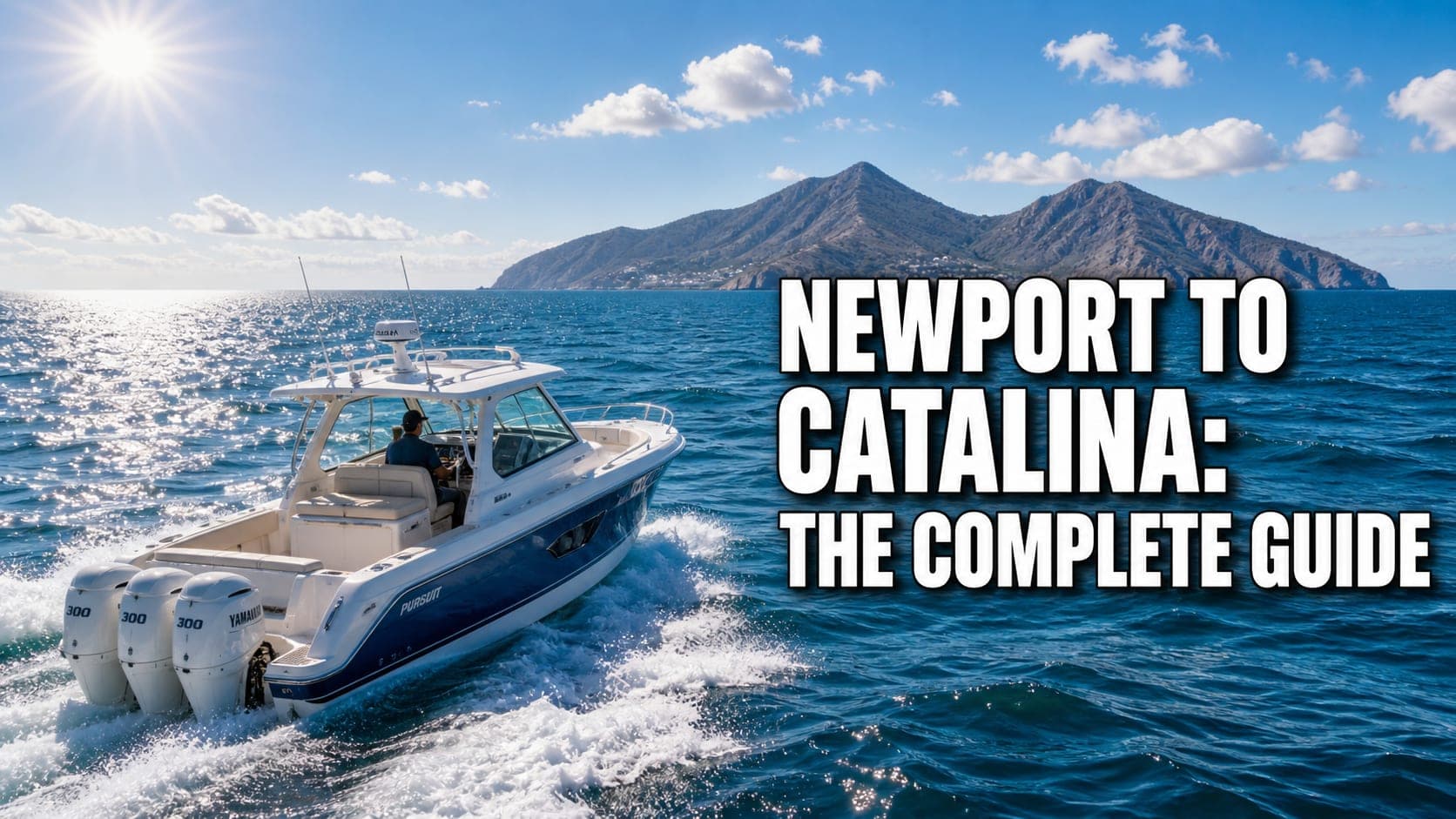

Catalina is one of those runs every Southern California boater either makes regularly or wishes they did. It's only thirty nautical miles offshore, but the channel has a way of looking bigger than it actually is â and if you've never run your boat across yourself, the planning can feel like more of a project than it really is. I make this trip a lot, and over enough crossings you start to settle into a rhythm with it. This is the version of that rhythm I'd hand to someone who's getting ready to make the run for the first time, told through one particular crossing that hit just about every condition you might run into out there.
Getting Loaded and Fueled Up
Half of any Catalina trip is the prep, and most of the prep is fuel. Diesel on the water doesn't get taxed the way road diesel does â it's closer to tractor fuel â which makes marina pump prices a little easier to swallow than what you'd pay at a gas station. Whatever your situation, fill up before you leave the mainland. Avalon has a fuel dock, but anything you saved on the round trip you'll give back at the pump there. I'll get into that lesson later. Top off, run your provisions, and try not to lose too much time at the slip.
Pushing Off Late
I'd planned to leave the harbor by two. I pushed off at three. That's pretty much how it always goes â every prep step takes a little longer than you think it will, and you end up untying lines an hour after you meant to. Once I cleared the harbor and the boat settled into a rhythm, I had thirty miles of open water ahead and no real reason to rush. My boat will do twenty-five knots cruising, but I throttled back to about twenty at eighteen hundred RPM. That's the speed where the ride feels right and the fuel burn isn't ugly. The one wrinkle nobody warns you about: I don't have a seat at the helm. So I stand. The whole way. If you're running the kind of boat where the captain stays on his feet, plan accordingly â better shoes than you think you need, and don't underestimate how long an hour and forty-five minutes is on your legs.
Reading the Channel Without a GPS
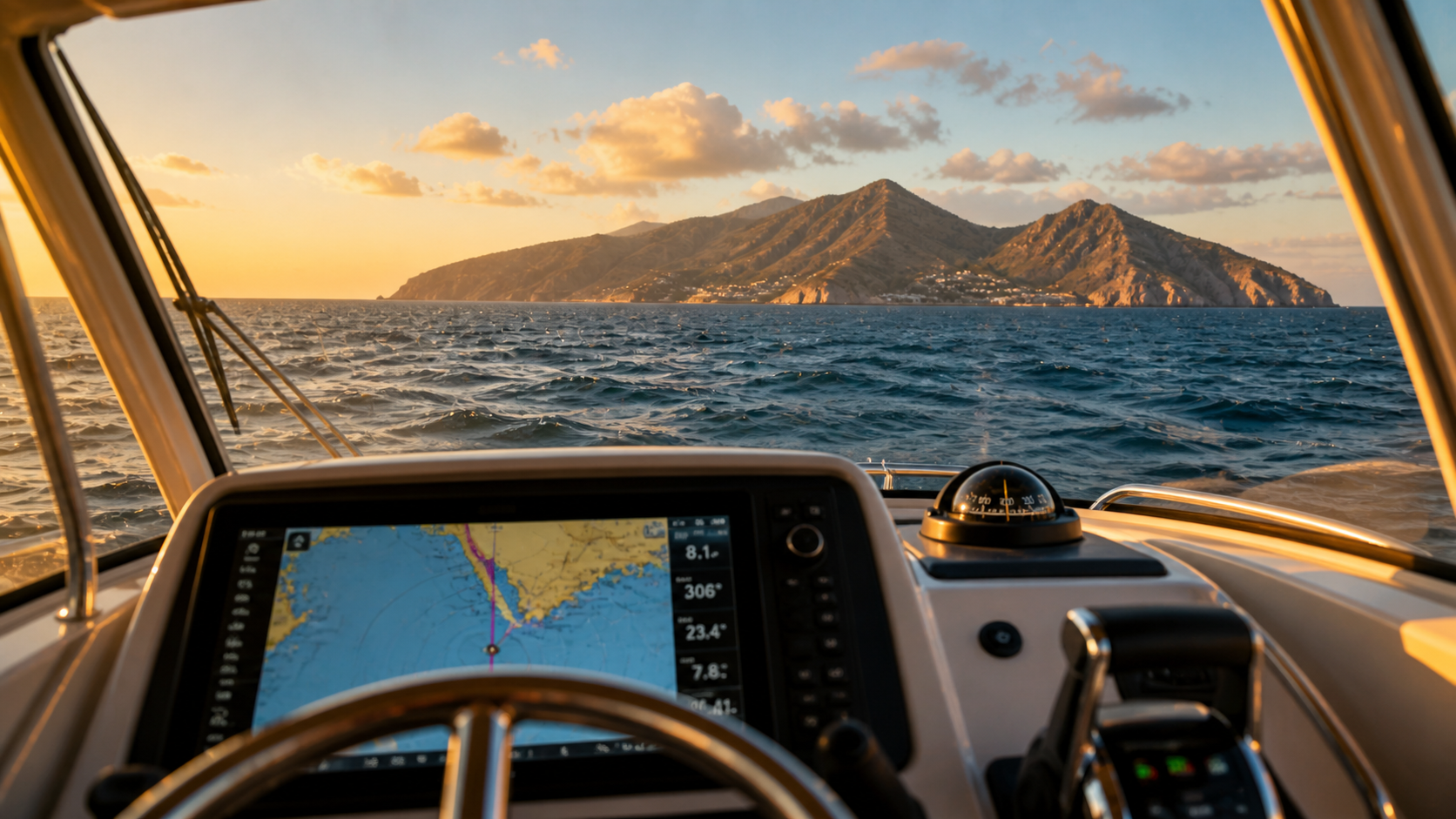
I don't run a chartplotter, and you don't strictly need one for this crossing. The first thing I do leaving Newport is look around for whoever else is heading offshore. On any given afternoon there are boats pointed toward Avalon, and you can just line up off them and aim a touch to the right of their wake to find White's Cove instead of going all the way to town. If nobody's out, the compass tells you what you need to know. Avalon sits at about two-twenty from the mainland, White's is closer to two-thirty â right under the highest peak on the island. Pull up Apple Maps if you have to. You're not threading a needle, you're aiming at a mountain.
The most useful landmark, though, is the cluster of oil rigs sitting in the channel between Long Beach and the island. Once those rigs line up in a row in front of you, you're roughly halfway. That checkpoint matters because Catalina is deceivingly large â you can see it from thirty miles out and it never really seems to grow as you close in. You'll feel like you're nearly there, look at the clock, and realize you've still got forty minutes left. Knowing what the day is supposed to do before you leave matters as much as the route does â I look at the marine weather before any open-water run, because the channel can wind up faster than the dock will tell you.
The Last Mile and Getting Soaked
Even when you've made the run plenty of times, the channel keeps its right to surprise you. Northwesterlies blow through this channel as a rule â that's just the wind direction the geography gives you â but the forecast on this particular crossing said it would lay down by mid-afternoon. It didn't. About halfway across, the northwest chop picked up and started throwing spray over the bow, and the rest of the run I was wearing it. I never touched the throttles even when we hit waves â twenty knots was working â but I was going to need a towel by the time we tied up. The crossing took an hour and forty-five minutes from leaving Newport to drifting up to a mooring ball.
Settling In at White's
We grabbed A1, the first mooring open in White's Cove. White's is private, so the yacht club facilities and the roped-off beach sections are members-only, but most of the cove is open to anyone who shows up â there's just a line in the sand for the club sections. The moorings themselves are either maintained by Two Harbors or leased out to clubs, so picking one up is straightforward enough once you've done it a few times. If you're staying overnight in a cove like this, it pays to know how to handle a mooring or anchor properly, because the wind kicks back up after dark and a sloppy hold makes for a long night.
If you don't have your own boat to make the trip, the express ferries from San Pedro, Long Beach, Newport Beach, and Dana Point run all day. The Flyer from Newport makes one round trip a day. Either way, the island is worth the run.
This was Part 1. Day two turned into a beach morning, a swim, a side trip over to Avalon for fuel that ended up being a seven-dollar-a-gallon mistake, and the run back to Newport. Watch the full crossing below, and if you've taken your boat to Catalina yourself â or you're working up the nerve to â drop it in the comments.