


Some of my best days on the water are family days. They're also, hands down, the days that take the most preparation. Kids on a boat are not a problem to be managed — they're the whole point — but the rules that keep them safe need to be in place before the engine starts, not figured out somewhere off the breakwater. The captains who get this right are not the strictest ones. They're the ones who set the expectation early and then don't make a big deal out of it.
Here's the rule set that's worked on my boat for years. Most of it is the boring version of common sense. All of it earns its keep the moment something goes sideways.
The Rules That Have to Be in Place Before the Engine Starts
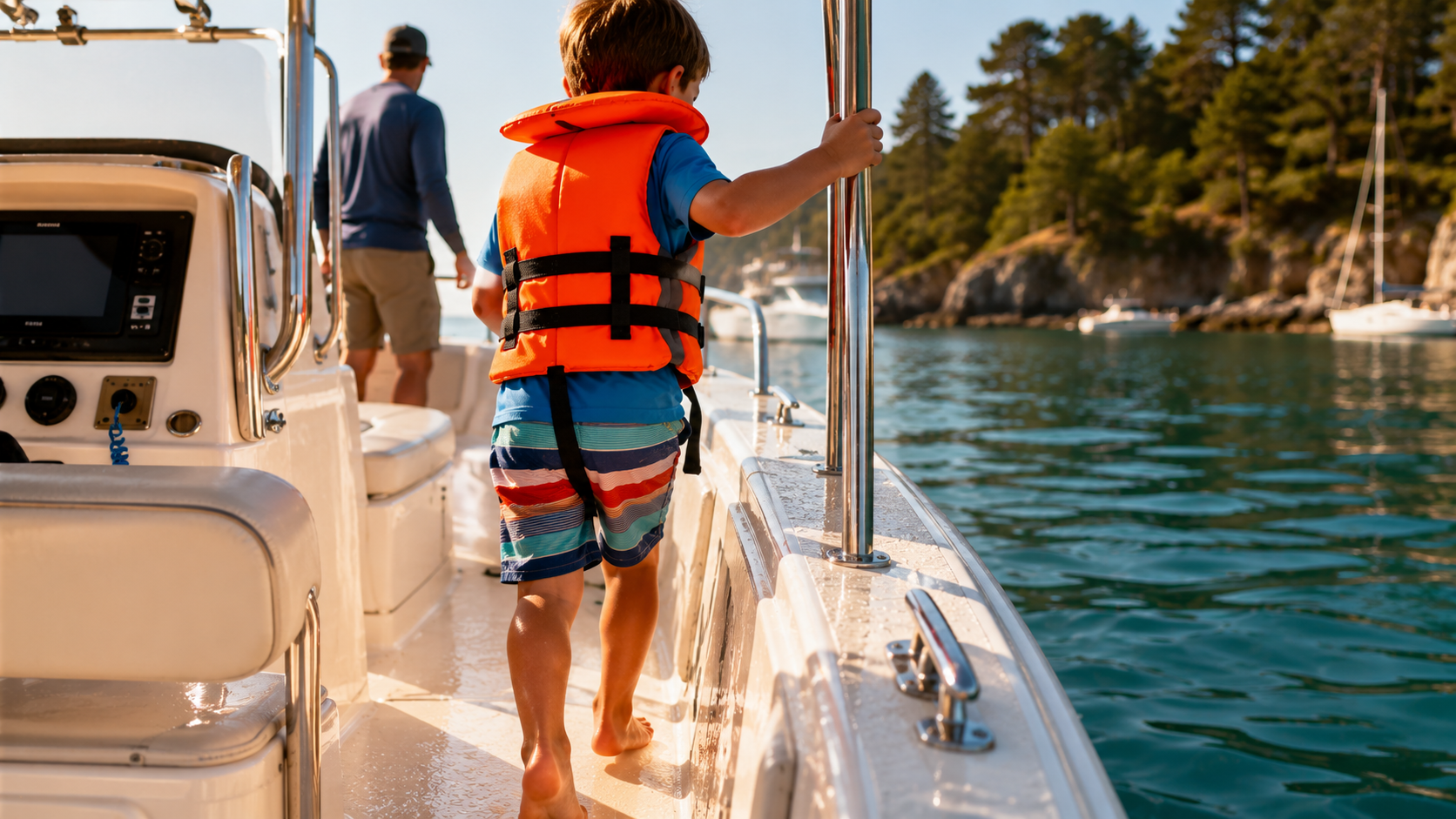
First — life jackets, properly sized, every kid, every time, the second they step onto the dock. Not when the boat leaves the slip, not when it gets choppy, not when mom asks. Onto the dock, onto the kid. The second rule is closed-toe shoes or proper boat shoes — bare feet earn busted toes faster than anything else, and a slippery deck plus a stubbed pinky toe will end a day before you've even cleared the channel.
Third — every adult on the boat needs to know how to operate the radio, kill the engine, and where the throwable is. Not just the captain. If the worst happens, the worst is almost always that the captain is the one in the water. The crew that can recover you is the crew you've already drilled with. Even running through it once on the dock makes a real difference. If you've never put your spouse or your kids through that drill, this season is the season to do it.
"One Hand for the Boat" Isn't Just for Sailors
The old offshore rule is one of the best ones you can teach a kid. When you're moving around the boat, one hand is always on a rail, a stanchion, a lifeline, a t-top — something solid. The other hand is for whatever you're trying to do. It sounds obvious. It is not obvious to a six-year-old chasing a goldfish cracker across the deck.
Make it a verbal cue. "One hand!" when you see them moving. After a few weekends, they yell it before you do. The same kid who would have face-planted on the bow now grabs a stanchion automatically. That's the win.
The Kid Goes In — Now What?
The single most useful drill you'll ever run with the family is the recovery drill. Brief everyone on the boat: if a kid goes in, the closest adult points and yells, and does not look away. Someone else throws the [Type IV cushion](https://setsalemarine.com/blogs/how-to-choose-the-right-life-jacket-for-every-person-on-your-boat) toward the swimmer. The captain handles the boat. No one jumps in until and unless the situation absolutely requires it.
Practice it once with a fender as the "kid." Once. The whole drill takes ten minutes. The difference between a family that's run it and one that hasn't is the difference between a clean recovery and a panicked thirty seconds where nobody's sure who's doing what. If your crew has never put a hand on the [VHF microphone](https://setsalemarine.com/blogs/what-every-boater-should-know-about-using-a-marine-vhf-radio) either, that's the second drill — channel 16 exists for a reason and it gets a lot easier when you've actually keyed it up before you needed to.
Watch Shifts Without Killing the Day
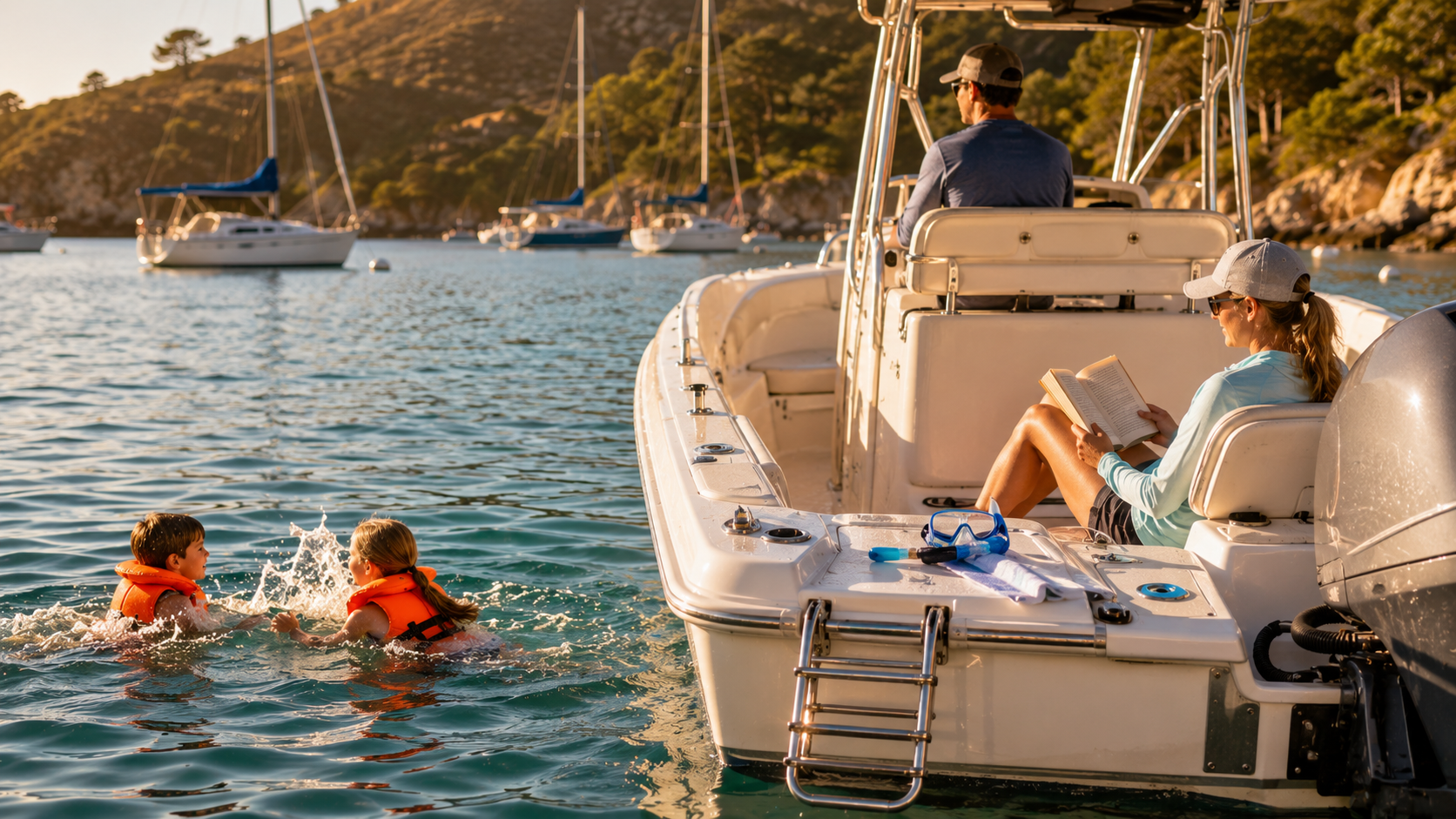
On a longer day, no single adult should be the one watching all the kids all the time. Set rotating watch shifts — twenty minutes on, an hour off, however you want to structure it. The watching adult is not on their phone, not in a conversation, not below making sandwiches. They are watching. Everyone else is genuinely off duty.
Frame it as a kindness, not a chore. The watching parent gets twenty minutes of total focus, and then they get a real break — instead of the default version, where everyone is half-watching, half-relaxing, and nobody's actually fully doing either. It works for cruising boats, for fishing days, for anchored-out swim days. Kids feel watched without feeling smothered. Adults actually get to enjoy the boat.
The Conversation to Have on the Drive Down
The last piece is the simplest. Talk through the rules on the drive to the marina. Not a lecture — a conversation. "Remember, life jackets the second we step on the dock, one hand for the boat when we're moving around, and if anyone falls in we yell and point." The whole thing takes thirty seconds. Then you don't have to repeat any of it once you're on the water.
Kids who hear the rules before the boat is even in the water treat them like the price of admission. The kids who hear the rules for the first time mid-trip treat them like they're being singled out. That's a really small difference in how you front-load the day. It changes everything about how the day actually feels.
Closing Thought
Family boating safety is not about scaring the kids. It's about making the rules so normal that they're the background, not the topic. Get the life jackets on early, drill the recovery once, run watch shifts on longer days, and have the thirty-second conversation on the drive. Then the rest of the day is just water and kids and the part of summer you actually got the boat for.