

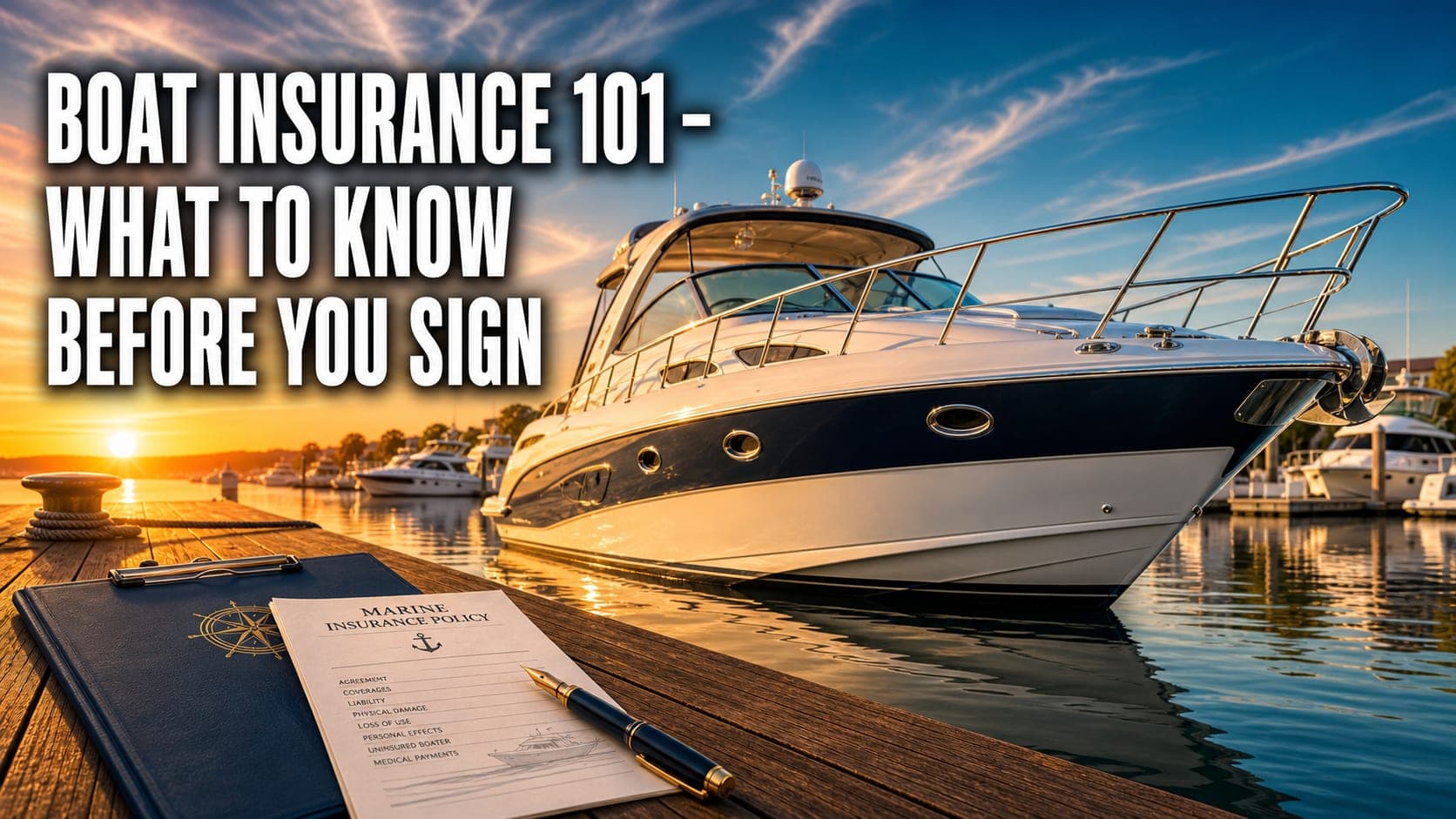

Boat insurance is one of those line items most owners skim, sign, and never look at again until something goes wrong â at which point they discover the policy doesn't actually cover what they thought it did. The cheapest quote on a comparison site is almost never the right policy, and the policy your insurance agent for the car and the house bundles into a homeowner's rider almost certainly isn't either.
Marine insurance has its own language. If you've never bought a policy â or you've owned a boat for years and never read yours â here's what actually matters before you sign anything.
Agreed Value vs. Actual Cash Value â This Is the Big One
There are two ways a boat policy pays out a total loss, and the gap between them is the difference between getting a check that replaces your boat and one that barely covers your trailer. Agreed value means you and the insurer agree on what the boat is worth at the time the policy is written, and that's what gets paid if it's totaled. Actual cash value means the insurer pays whatever they decide the boat is worth at the moment of the claim â minus depreciation, minus their adjuster's opinion, minus whatever the market did that month.
Agreed value costs more. It's also what every experienced boater I know carries. If you're buying a boat that holds value â which any well-kept vessel does â actual cash value is a trap. The premium difference is small. The payout difference is enormous. Pay the extra and get the agreement in writing.
What Actually Gets Covered (And What Doesn't)
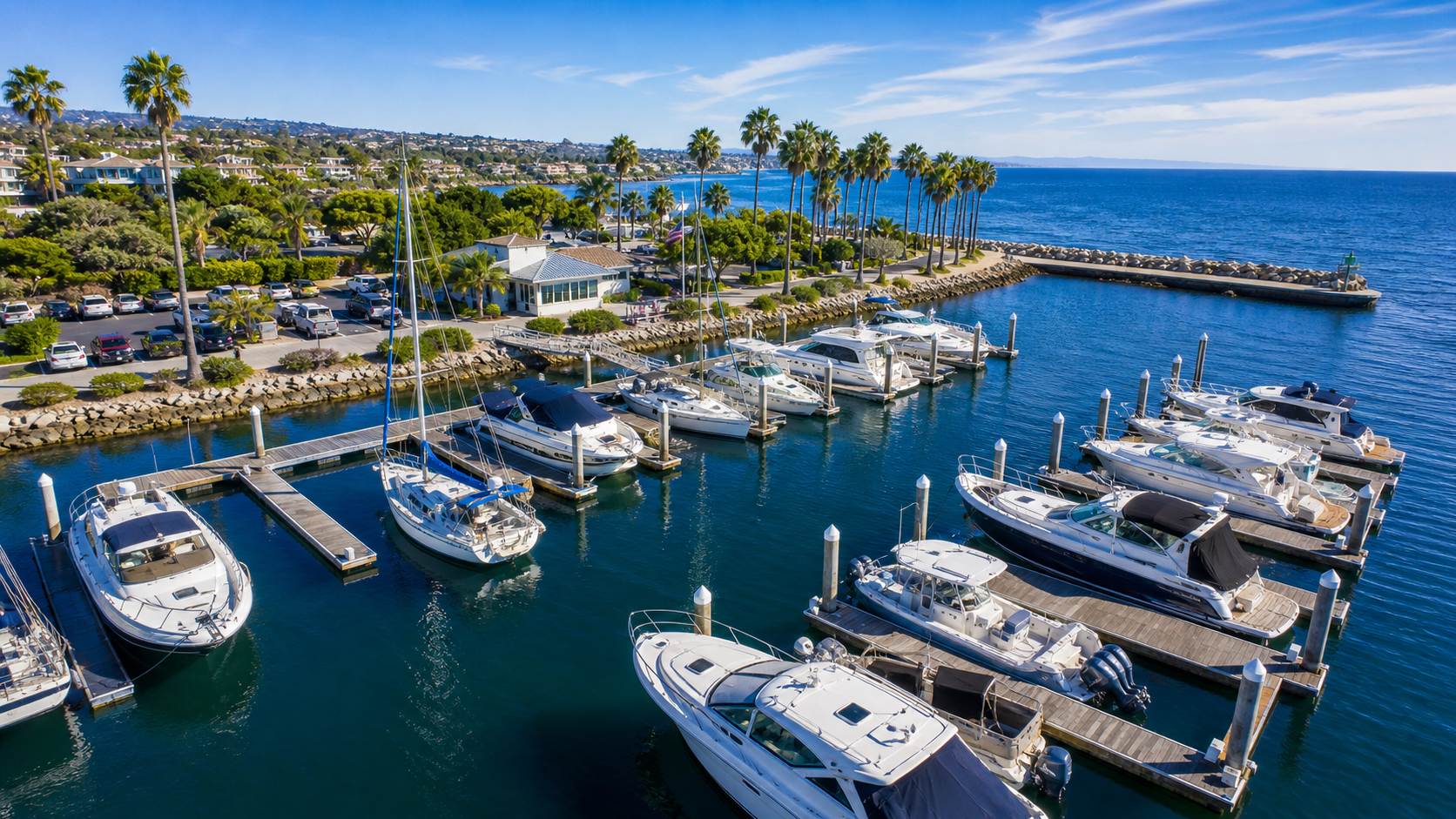
Hull coverage protects your physical boat. Liability coverage protects you if you damage someone else's boat, dock, or person. Both should be on every policy, but the limits matter more than the line item. A $300,000 liability limit sounds like a lot until you read about a runabout that hits a weekender's $1.2 million Sea Ray on a busy holiday. Carry enough liability to cover a worst case, not just an average case â most agents will quote you up to a million in liability for surprisingly little additional money.
Where policies start to differ is in the extras. Look for fuel-spill coverage, which can run into six figures fast if you sink at the dock. Look for towing and salvage. Look for personal effects coverage â your fishing gear, electronics, and tender don't necessarily ride along on the hull policy by default. And read the navigational limits. A policy that covers you in protected waters but excludes the open ocean is fine if you stay in the bay, useless if you cross to Catalina.
Some of these line items are negotiable, some aren't. The real cost of owning a boat almost always works out higher than the sticker price suggests, and underinsuring is one of the easiest ways to find that out the hard way.
Specialty Marine Insurers Beat the Bundlers
The companies that specialize in marine insurance â Progressive Boat, BoatU.S., Markel, Geico Marine â write better policies than auto-and-home carriers that treat boats as a side product. They understand surveys, they understand named storms, they understand what a thru-hull failure looks like at 3 a.m. Their adjusters have seen a thousand boats. Your homeowner's agent has not.
Bundling can save a few hundred dollars on small runabouts. Once you're past about 24 feet, a dedicated marine policy almost always wins on coverage, and often on price too once you factor in agreed value. Get quotes from at least two specialty marine carriers before you let an agent talk you into a rider on your homeowner's policy.
What the Insurer Will Want From You
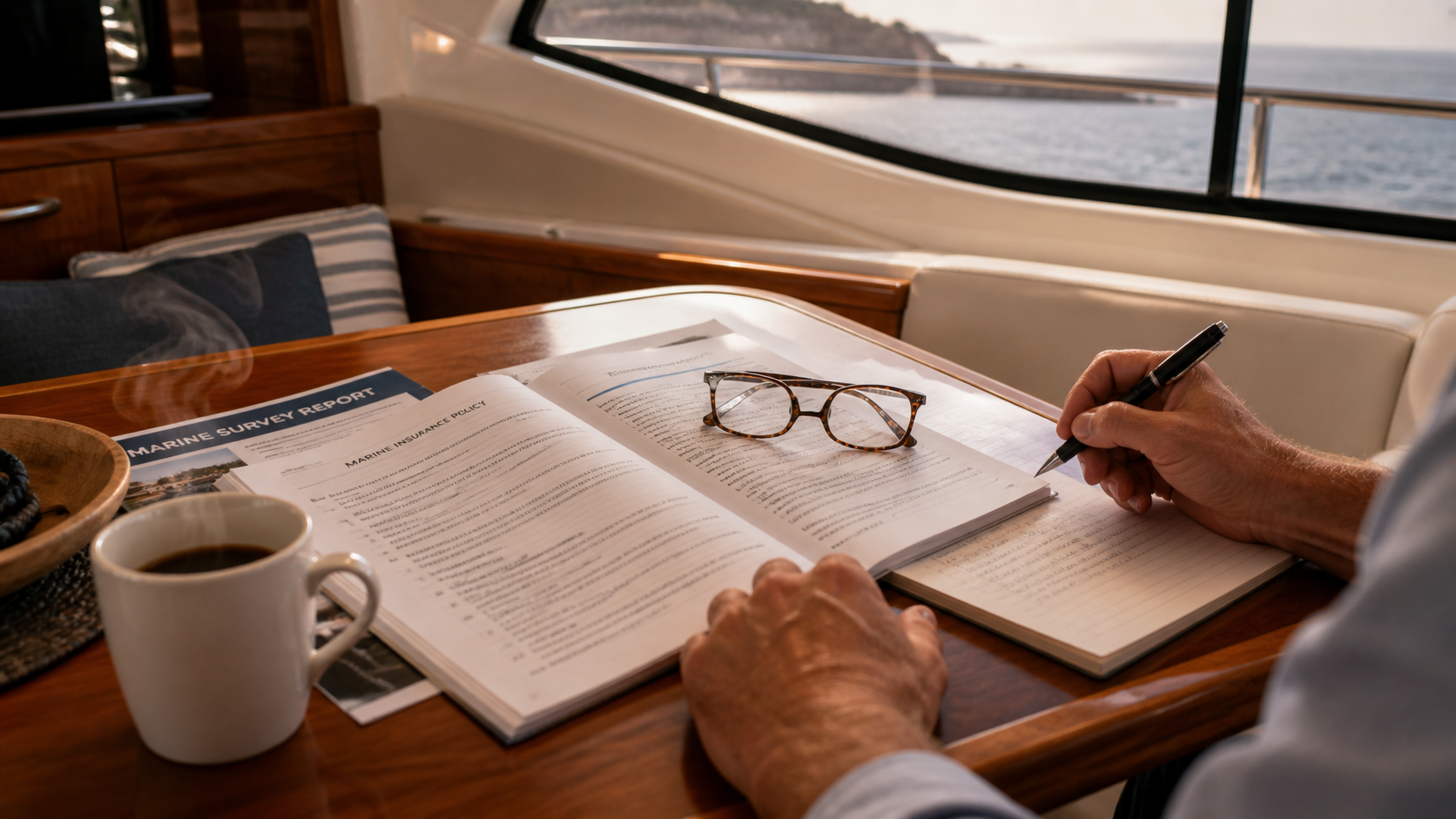
On any boat older than about ten years, expect a survey requirement. The insurer wants a recent marine survey on file before they write the policy or renew it. This is the same survey you'd commission as a buyer â hull, mechanical, electrical, the works â and it's worth the cost regardless. A good survey catches problems before they become claims. I broke down what a survey should cover if you're not sure what to ask for.
Boating experience matters too. New owners, first-time captains, and anyone moving up from a 22-footer to a 42-footer will see higher premiums until they've logged a season or two without claims. A boater safety course knocks the rate down at most carriers. So does keeping the boat in a slip with a marina that has fire suppression and security. None of these are deal-breakers â they're just levers you can pull to bring the cost down.
Read the Policy Like You'll Need It
The best advice I can give any boat owner about insurance is to read your own policy as if a claim is coming next week. Find the agreed-value clause. Find the navigational limits. Find what's excluded for hurricanes and named storms. Find the deductible for hull versus liability. If anything reads like it might surprise you in the wrong way, call your agent and ask questions until you understand it. The policy is a contract. It only protects you to the extent you actually know what's in it.
If you've had a claim and learned something the hard way â or if you've found a carrier that treats their customers right â drop it in the comments. The collective experience of fellow boat owners is more useful than any agent's pitch.